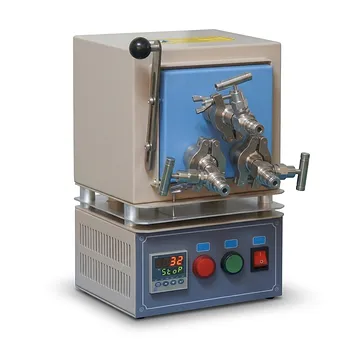
How does Joule Heating using a high-power DC power supply compare to traditional oven heating? Seconds vs. Hours
Updated 3 months ago
Joule heating using a high-power DC supply represents a fundamental shift from external to internal thermal management. Unlike traditional ovens that rely on slow heat transfer from the outside in, Joule heating utilizes the internal electrical resistance of conductive networks—such as Carbon Nanotubes (CNTs)—to generate heat directly within the material. This allows for target temperatures to be reached in less than 5 seconds, effectively replacing hours of oven-based soaking with near-instantaneous processing.
Core Takeaway: Joule heating bypasses the thermal lag of convection and radiation by driving charge carriers directly through the material, achieving nearly 100% energy conversion efficiency and reducing processing times from hours to seconds.
The Fundamental Shift in Heat Transfer Mechanics
Surface-Inward vs. Volumetric Heating
Traditional ovens operate via convection and radiation, where heat must travel from the heating elements to the air, and finally through the surface of the composite. This creates significant thermal gradients, as the core of the material lags behind the surface temperature.
Direct Charge Carrier Activation
Joule heating, or resistive heating, drives electrical current through a conductive medium within the composite. This transforms the material itself into the heating element, ensuring volumetric heating where the temperature rises simultaneously throughout the conductive network.
Theoretical Energy Efficiency
Because Joule heating directly drives charge carriers within the material, it achieves a theoretical energy conversion efficiency of 100%. Traditional tube furnaces and ovens suffer from massive energy losses due to heating the surrounding air, insulation, and furnace walls.
Impact on Processing Speed and Control
Rapid Thermal Cycling
While traditional ovens require long ramp-up and cool-down periods—often totaling several hours—DC-driven Joule heating can hit processing temperatures in under 30 seconds. In specialized nanomaterial applications, this window can be as short as 5 seconds.
Precise Phase Transformation Control
The use of a high-power DC supply allows for instantaneous adjustments to the energy input. This precision enables engineers to control local temperatures and phase transformation processes with a level of granularity that is impossible in a slow-reacting convective environment.
Eliminating Thermal Conduction Delays
In traditional processing, the "start-up" time is a major bottleneck. Joule heating minimizes thermal conduction delays, allowing for a "pulsed" processing approach that can increase manufacturing throughput by orders of magnitude.
Understanding the Trade-offs and Limitations
Requirement for Electrical Conductivity
The most significant limitation is that Joule heating requires the material to be electrically conductive. For non-conductive composites, such as pure glass fiber or certain polymers, conductive fillers like carbon nanotubes or graphene must be integrated to create a resistive path.
Risk of Hot Spots and Thermal Runaway
Because the material heats itself based on its internal resistance, any structural inhomogeneities can lead to localized "hot spots." If one area is more resistive than another, it may overheat, potentially leading to material degradation or "thermal runaway" if the power supply is not precisely regulated.
Scalability and Contact Resistance
While highly efficient for small-to-medium electrodes and components, scaling Joule heating to very large structures requires complex electrode placement. Ensuring uniform current distribution across a large surface area is a significant engineering challenge compared to the "set it and forget it" nature of an oven.
How to Apply This to Your Project
Choosing the Right Method for Your Goal
The transition from oven heating to Joule heating should be dictated by your material composition and production requirements.
- If your primary focus is rapid throughput and energy savings: Joule heating is the superior choice, as it eliminates hours of idle furnace time and maximizes energy conversion directly within the part.
- If your primary focus is processing non-conductive, bulk materials: Traditional oven heating remains the standard, as it does not require the integration of conductive networks or complex electrode setups.
- If your primary focus is high-performance nanomaterials: Utilize Joule heating to achieve precise phase transformations and localized heat treatment that a convective oven cannot replicate.
By moving the heat source from the environment to the material's internal architecture, you can achieve unprecedented control over the speed and efficiency of composite processing.
Summary Table:
| Feature | Traditional Oven Heating | Joule Heating (DC Supply) |
|---|---|---|
| Heat Transfer | External (Convection/Radiation) | Internal (Volumetric/Resistive) |
| Heating Speed | Hours (Slow thermal ramp) | Seconds (<30s instantaneous) |
| Energy Efficiency | Lower (Heats air/insulation) | ~100% (Direct conversion) |
| Process Control | Slow response due to thermal lag | Instantaneous & Granular |
| Material Requirement | Any material type | Must be electrically conductive |
Elevate Your Material Research with THERMUNITS
Are you looking to revolutionize your composite processing or scale up your high-temperature R&D? THERMUNITS is a leading manufacturer specializing in high-precision laboratory equipment designed for the most demanding material science applications.
Whether you are exploring rapid Joule heating or require the stable, uniform environment of our Muffle, Vacuum, Atmosphere, or Tube furnaces, we provide the thermal processing power you need to succeed. Our comprehensive range includes:
- Advanced Furnaces: Rotary, Hot Press, and Dental Furnaces.
- Specialized Systems: CVD/PECVD systems and Vacuum Induction Melting (VIM) furnaces.
- Industrial Solutions: Electric rotary kilns and high-performance Thermal Elements.
Maximize your lab's efficiency and achieve superior heat treatment results. Contact our experts today to find the perfect heating solution tailored to your project goals!
References
- Shegufta Upama, Juan J. Vilatela. Joule Heating in Controlled Atmospheres to Process Nanocarbon/Transition Metal Oxide Composites and Electrodes. DOI: 10.1021/acsanm.4c02081
Mentioned Products
- High Temperature Vacuum Lamination Hot Press Furnace Machine for Semiconductor Wafer Bonding and Advanced Composite Thermal Processing
- High Frequency Desktop Induction Heater 35KW 30-80 KHz with Precision Timer Control for Industrial Material Research and Metal Processing
- Desktop High Frequency Induction Heater for Precision Metal Melting and Laboratory Thermal Processing 0.6 to 1.1MHz
- Triple Tube Compact Hybrid Muffle Furnace 1000C High Vacuum Thermal Processing System
People Also Ask
- What types of heating systems and insulation are used in Vacuum Hot Press Furnaces? Optimize Your Thermal Processing
- What is a Vacuum Hot Press Furnace and what are its primary industrial applications? Achieve Maximum Material Density
- What are the structural features of the furnace body and chamber in a Vacuum Hot Press Furnace? Master Material Density
- Why is graphite the preferred material for dies and heating elements in Vacuum Hot Press Furnaces? High-Temp Solutions
- What are the primary operational components and mechanisms of a vacuum hot press furnace? A Technical Breakdown

Tech Team · ThermUnits
Last updated on Jun 02, 2026
Related Products
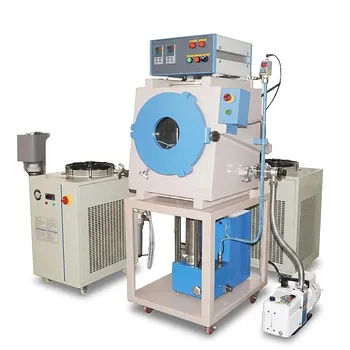
High Temperature Vacuum Lamination Hot Press Furnace Machine for Semiconductor Wafer Bonding and Advanced Composite Thermal Processing
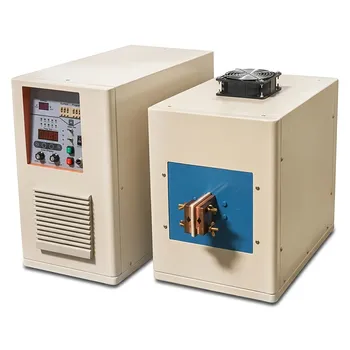
High Frequency Desktop Induction Heater 35KW 30-80 KHz with Precision Timer Control for Industrial Material Research and Metal Processing
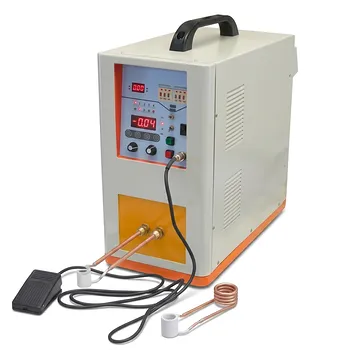
Desktop High Frequency Induction Heater for Precision Metal Melting and Laboratory Thermal Processing 0.6 to 1.1MHz