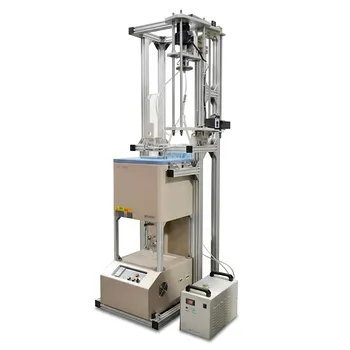
What is a Vacuum Hot Press Furnace and what are its primary industrial applications? Achieve Maximum Material Density
Updated 5 months ago
A Vacuum Hot Press Furnace is an advanced thermal processing system that simultaneously applies high heat, uniaxial mechanical pressure, and a high-vacuum environment to consolidate materials. This specialized equipment is primarily used to transform loose powders or preforms into exceptionally dense, high-performance solids. By integrating these three forces, the furnace allows for the creation of materials with near-theoretical density and fine microstructures that are impossible to achieve through conventional heating alone.
The core value of a Vacuum Hot Press Furnace lies in its ability to drive rapid densification at lower temperatures than standard sintering. This unique "thermo-mechanical coupling" prevents unwanted grain growth while ensuring maximum material purity and structural integrity.
The Mechanics of Vacuum Hot Pressing
Simultaneous Three-Way Processing
This furnace functions by applying uniaxial mechanical pressure (typically between 10 and 100 MPa) directly to a material while it is being heated. This happens within a sealed vacuum chamber that eliminates atmospheric gases like oxygen and nitrogen.
Enhanced Densification Mechanisms
The combination of heat and pressure triggers several physical responses, including particle rearrangement, plastic flow, and creep. These mechanisms force the material to densify much faster than it would through heat alone.
Controlled Vacuum Environment
Operating in a vacuum (often reaching $10^{-3}$ to $10^{-5}$ Pa) prevents the oxidation of sensitive materials. This is critical for processing reactive alloys and high-purity ceramics where even trace amounts of oxygen could compromise the final product.
Primary Industrial Applications
Advanced Technical Ceramics
Industries use these furnaces to produce technical ceramics and cemented carbides that require extreme hardness and heat resistance. A specific example is the production of $Al_{3}BC_{3}$ ceramics, where simultaneous pressure and 1800°C heat are used to achieve a porosity level below 2%.
Refractory Metals and Specialty Alloys
The furnace is essential for processing refractory metals—metals with exceptionally high melting points—and composite materials. Because the process occurs in a vacuum, it maintains the chemical integrity of these high-value metals by preventing contamination.
Diffusion Bonding of Dissimilar Materials
Vacuum hot pressing facilitates diffusion bonding, a process that joins two similar or dissimilar materials at the atomic level. This creates high-strength joints without the need for filler metals or brazing alloys, which is vital for aerospace and nuclear components.
Understanding the Trade-offs
Uniaxial Pressure Limitations
Because the pressure is uniaxial (applied in one direction), this equipment is generally limited to producing relatively simple geometric shapes like discs, plates, or cylinders. It is not suitable for complex, near-net-shape components that require pressure from all sides.
High Operational Complexity
Managing temperatures up to 2400°C alongside precise mechanical loads and high-vacuum levels requires sophisticated control systems. This complexity results in higher capital costs and longer cycle times compared to atmospheric sintering.
Thermal Gradient Risks
Operators must carefully manage heating and cooling rates to avoid thermal gradients within the material. If the material is heated or cooled too unevenly, internal stresses can lead to cracking or warping, especially in large-scale ceramic components.
How to Apply This to Your Project
Making the Right Choice for Your Goal
The decision to use a Vacuum Hot Press Furnace depends on your specific material requirements and the desired properties of the final part.
- If your primary focus is achieving maximum density: Utilize the simultaneous application of pressure and heat to reach near-theoretical density while keeping grain size small.
- If your primary focus is joining reactive materials: Use the vacuum environment to perform diffusion bonding, ensuring clean, oxide-free interfaces without using secondary filler metals.
- If your primary focus is processing high-purity powders: Leverage the high-vacuum levels ($10^{-5}$ Pa) to eliminate atmospheric contamination and prevent oxidation during the sintering cycle.
By mastering the balance of pressure, temperature, and vacuum, you can engineer materials with the superior mechanical properties required for the most demanding industrial environments.
Summary Table:
| Feature | Description |
|---|---|
| Core Mechanism | Simultaneous Uniaxial Pressure + High Heat + High Vacuum |
| Pressure Range | Typically 10 to 100 MPa |
| Vacuum Levels | $10^{-3}$ to $10^{-5}$ Pa |
| Key Benefits | Near-theoretical density, minimal grain growth, oxide-free processing |
| Main Applications | Technical ceramics, refractory metals, and diffusion bonding |
| Common Shapes | Discs, plates, and cylinders (simple geometries) |
Elevate Your Material Research with THERMUNITS
Are you looking to achieve near-theoretical density and superior structural integrity in your material development? THERMUNITS is a leading manufacturer specializing in high-performance thermal processing solutions for material science and industrial R&D.
Our expertise covers a comprehensive range of equipment designed for precision and durability:
- Advanced Furnaces: Vacuum Hot Press, Muffle, Atmosphere, Tube, Rotary, and Dental furnaces.
- Specialized Systems: CVD/PECVD systems, Vacuum Induction Melting (VIM) furnaces, and Electric Rotary Kilns.
- Components: High-quality Thermal Elements and custom heat treatment solutions.
Whether you are processing technical ceramics or performing complex diffusion bonding, THERMUNITS provides the reliability your project demands.
Contact our engineering team today to discuss your specific requirements and discover how our thermal solutions can accelerate your R&D success!
Mentioned Products
- High Pressure 600T Vacuum Induction Hot Press Furnace for Advanced Material Heat Treatment and Sintering
- High Temperature Vacuum Lamination Hot Press Furnace Machine for Semiconductor Wafer Bonding and Advanced Composite Thermal Processing
- Industrial Vacuum Hot Press Furnace Machine and High Temperature Heated Vacuum Press for Advanced Material Sintering
- Industrial High Temperature Vacuum Hot Press Furnace and Heated Vacuum Press Machine for Material Science Sintering
- Ultrafast Thermal Pressing Furnace 2900C Max Temperature 200K per Second Heating Rate Vacuum Atmosphere Rapid Processing System
People Also Ask
- What are the structural features of the furnace body and chamber in a Vacuum Hot Press Furnace? Master Material Density
- What types of heating systems and insulation are used in Vacuum Hot Press Furnaces? Optimize Your Thermal Processing
- Why is graphite the preferred material for dies and heating elements in Vacuum Hot Press Furnaces? High-Temp Solutions
- What are the primary operational components and mechanisms of a vacuum hot press furnace? A Technical Breakdown
- How do vacuum, heat, and pressure work together in a Vacuum Hot Press Furnace? Achieving Near-Theoretical Density

Tech Team · ThermUnits
Last updated on Apr 14, 2026
Related Products
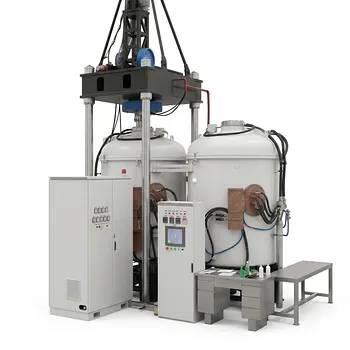
High Pressure 600T Vacuum Induction Hot Press Furnace for Advanced Material Heat Treatment and Sintering
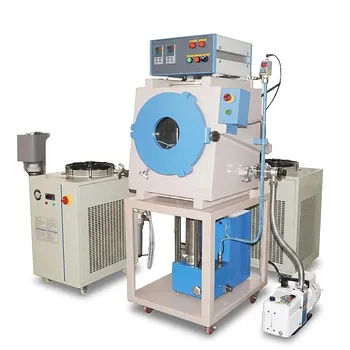
High Temperature Vacuum Lamination Hot Press Furnace Machine for Semiconductor Wafer Bonding and Advanced Composite Thermal Processing
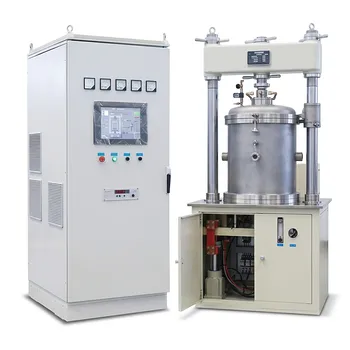
Industrial Vacuum Hot Press Furnace Machine and High Temperature Heated Vacuum Press for Advanced Material Sintering
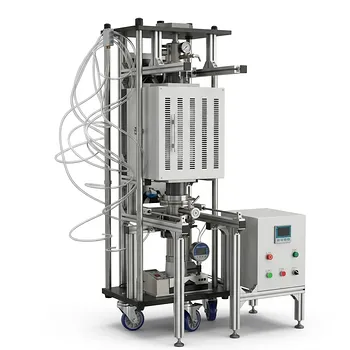
Industrial High Temperature Vacuum Hot Press Furnace and Heated Vacuum Press Machine for Material Science Sintering
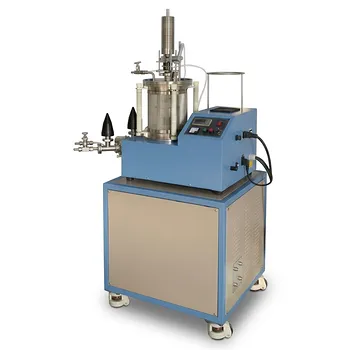
Ultrafast Thermal Pressing Furnace 2900C Max Temperature 200K per Second Heating Rate Vacuum Atmosphere Rapid Processing System
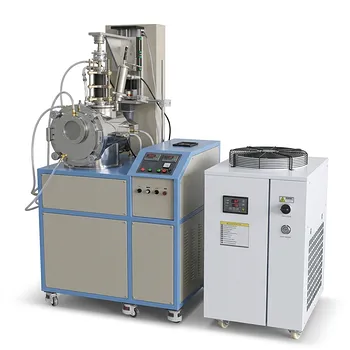
High Temperature Ultrafast Heating Pressing Furnace 2900C Max 100kgf Rapid Thermal Processing System
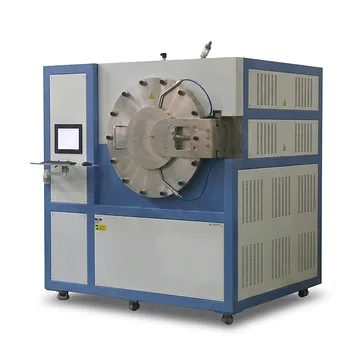
High Vacuum Pressure Chamber Furnace 800C 3.5 Bar Sintering System for Superconducting Materials
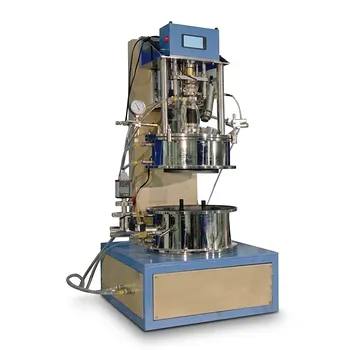
2500C High Vacuum Ultrafast Heating Pellet Press with Automated 8 Sample Loading System
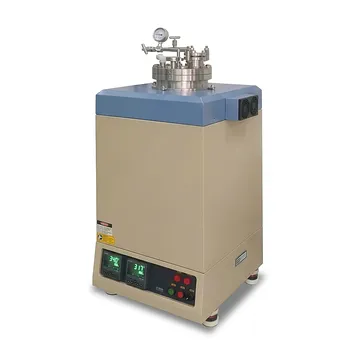
High Temperature 1000C Vacuum Furnace with 8 Inch ID Chamber for Material Sintering and Research Annealing
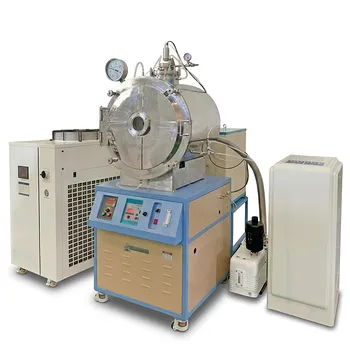
Ultra High Temperature Induction Heated Vacuum Furnace with Molten Salt Electrolysis Capability and 3000 Degree Precision Control
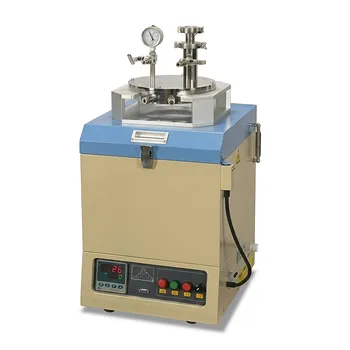
Vertical Vacuum Furnace 1100C High Temperature 8 Inch Quartz Chamber Water Cold Flange System
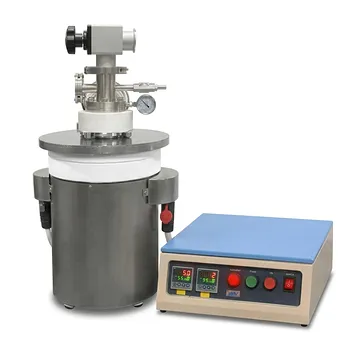
1100C High Temperature Vacuum Crucible Furnace with Quartz Chamber for Thermal Processing and Sintering
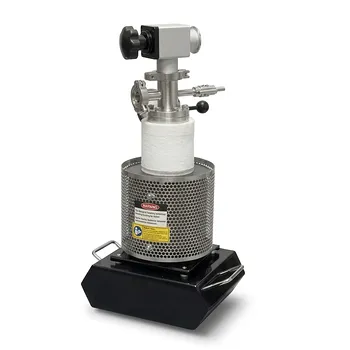
High Temperature 1100C Compact Top Loading Vertical Vacuum Tube Furnace for High Vacuum Noble Metal Melting and Material Research
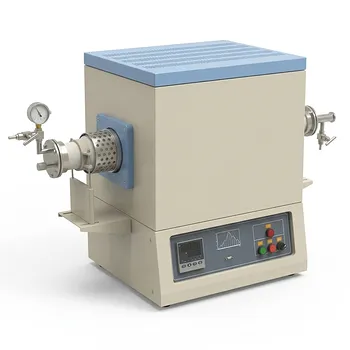
1750°C High Temperature Benchtop Vacuum Atmosphere Tube Furnace with Kanthal Super 1800 Heating Elements and 60mm Alumina Processing Tube

1800C High Temperature Compact Vacuum Tube Furnace with 60mm OD Alumina Tube and Kanthal MoSi2 Heating Elements

High Temperature 1700C Tube Furnace with High Vacuum Turbomolecular Pump System and Multi Channel Mass Flow Controller Gas Mixer
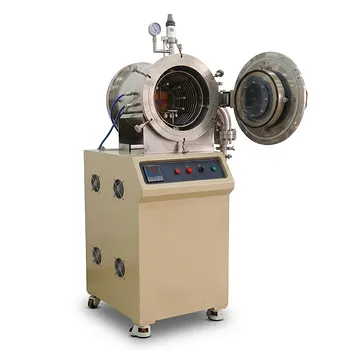
High Temperature Cold Wall High Vacuum Chamber Furnace 1400C for Advanced Material Processing
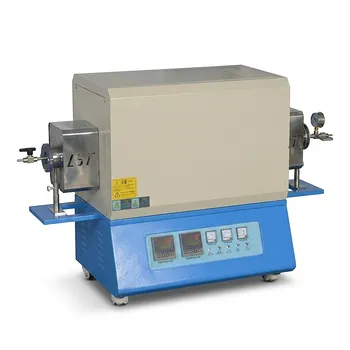
High Temperature Dual Zone Vacuum Tube Furnace for Material Research and CVD Processing
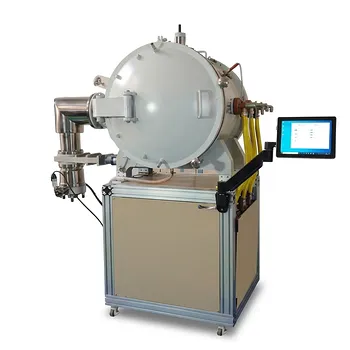
High Temperature Cold Wall Vacuum Furnace for Advanced Material Sintering and Annealing 1600C Heating Area 200x200x300mm