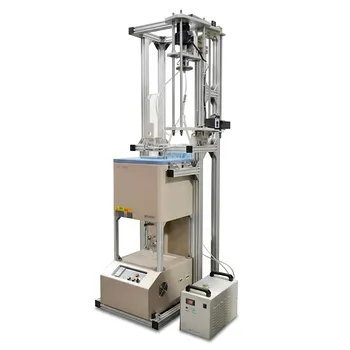
What are the structural features of the furnace body and chamber in a Vacuum Hot Press Furnace? Master Material Density
Updated 5 months ago
The furnace body of a Vacuum Hot Press Furnace is a high-rigidity, double-walled stainless-steel vessel engineered to maintain extreme internal conditions while protecting the external environment. It features integrated water-cooling jackets on all non-heating surfaces, allowing the inner chamber to host a high-temperature hot zone while the outer wall remains at room temperature. This structure is specifically designed to withstand the simultaneous stresses of high vacuum loading, intense thermal expansion, and significant uniaxial mechanical pressure.
Core Takeaway: The structural design of a Vacuum Hot Press Furnace functions as a specialized pressure vessel that enables the simultaneous application of extreme heat and mechanical force within a controlled vacuum, ensuring maximum material densification through precise environmental isolation.
The Engineering of the Furnace Body
The Double-Walled Cooling System
The furnace body is typically constructed as a double-walled stainless-steel vessel to manage extreme internal temperatures. Water-cooling jackets are integrated into all non-heating surfaces to ensure the outer shell remains safe to touch and dimensionally stable. This thermal management is vital for protecting the vacuum seals and structural integrity of the unit during long heating cycles.
High Rigidity and Mechanical Stability
The structure must be engineered for high rigidity to handle the three-fold stress of thermal expansion, vacuum pressure, and mechanical pressing. Because the furnace applies uniaxial pressure (ranging from 10 to 100 MPa), the frame and body must not deflect under load. Any structural shifting could lead to misalignment of the press rams or a compromise in the vacuum seal.
Chamber Access and Vacuum Integrity
Access to the internal chamber is provided through a sealed door, which is frequently hydraulically actuated for precision and ease of use. This door must provide a perfect airtight seal to maintain high vacuum levels, often reaching $10^{-3}$ to $10^{-5}$ Pa. The sealing mechanism is critical for preventing atmospheric contamination, which is essential when processing oxygen-sensitive materials.
The Internal Chamber Environment
The High-Temperature Hot Zone
Inside the chamber, the hot zone is designed to house the workpiece and heating elements, supporting temperatures between 1000°C and 2400°C. This zone is often insulated with specialized materials to focus heat on the sample and minimize radiation toward the water-cooled walls. The materials used in the hot zone are selected based on their ability to withstand these temperatures without outgassing or degrading.
Integration of Uniaxial Pressing
The chamber is designed to accommodate a mechanical press that applies uniaxial force to the material compact. This mechanical pressure works in tandem with the heat to drive densification mechanisms like plastic flow, creep, and diffusion. The alignment of the pressing rams through the furnace body is a key structural feature that ensures uniform density in the final product.
Atmosphere Control and Outgassing
The vacuum environment within the chamber serves a dual purpose: it removes trapped gases and eliminates surface contaminants. This structural capability is what allows for the production of near-theoretical density in technical ceramics and refractory metals. By removing obstacles to grain boundary movement, the chamber structure facilitates superior bonding between particles.
Understanding the Trade-offs
Cooling Requirements vs. Energy Efficiency
While the water-cooling jackets are essential for safety and structural stability, they represent a significant path for heat loss. Operators must balance the flow of cooling water to protect the furnace body without excessively draining the energy required to maintain the hot zone's temperature.
Seal Wear and Maintenance
The high-vacuum seals on the hydraulically actuated door and the pressing rams are subject to thermal cycling and mechanical wear. Frequent maintenance is required because even a microscopic leak can introduce oxygen, leading to the oxidation of expensive components or the failure of the sintering process.
Uniaxial Pressure Limitations
A Vacuum Hot Press Furnace is structurally limited to uniaxial pressure, meaning force is applied from one or two directions. While this is effective for many shapes, it can lead to slight density gradients in complex parts compared to Hot Isostatic Pressing (HIP), which applies pressure from all directions.
Making the Right Choice for Your Material Goals
How to Apply This to Your Project
Selecting or operating a Vacuum Hot Press Furnace requires aligning its structural capabilities with your specific material requirements.
- If your primary focus is technical ceramics or composites: Prioritize a furnace with a hot zone capable of at least 2000°C and high-vacuum integrity to ensure theoretical density.
- If your primary focus is refractory metals or carbides: Ensure the furnace body is rated for high uniaxial pressures (up to 100 MPa) to overcome the high yield strength of these materials during consolidation.
- If your primary focus is high-throughput production: Look for systems with advanced hydraulic door actuation and rapid cooling capabilities to minimize cycle times between runs.
Understanding these structural features allows you to master the complex interplay of heat, pressure, and vacuum required to produce the world's most advanced materials.
Summary Table:
| Feature | Structural Detail | Key Benefit |
|---|---|---|
| Furnace Body | Double-walled stainless steel | Efficient thermal management & water-cooling safety. |
| Mechanical Frame | High-rigidity construction | Resists uniaxial pressure (10-100 MPa) without deflection. |
| Hot Zone | Specialized insulation (1000°C-2400°C) | Focuses heat on samples and protects vacuum integrity. |
| Chamber Access | Hydraulically actuated sealed door | Ensures airtight environment ($10^{-3}$ to $10^{-5}$ Pa). |
| Pressing System | Integrated uniaxial rams | Drives densification through plastic flow and diffusion. |
Elevate Your Material Research with THERMUNITS
As a leading manufacturer of high-temperature laboratory equipment, THERMUNITS provides the precision and reliability required for the most demanding R&D environments. Whether you are working on technical ceramics, refractory metals, or advanced composites, our Vacuum Hot Press Furnaces are engineered for maximum densification and thermal control.
Our comprehensive range includes:
- Thermal Processing: Muffle, Vacuum, Atmosphere, Tube, and Rotary Furnaces.
- Advanced Systems: Hot Press Furnaces, CVD/PECVD systems, and Vacuum Induction Melting (VIM).
- Specialized Equipment: Dental Furnaces, Electric Rotary Kilns, and high-quality Thermal Elements.
Ready to optimize your heat treatment process? Contact our engineering team today to discuss a custom solution tailored to your material science goals.
Mentioned Products
- High Pressure 600T Vacuum Induction Hot Press Furnace for Advanced Material Heat Treatment and Sintering
- High Temperature Vacuum Lamination Hot Press Furnace Machine for Semiconductor Wafer Bonding and Advanced Composite Thermal Processing
- Industrial Vacuum Hot Press Furnace Machine and High Temperature Heated Vacuum Press for Advanced Material Sintering
- Industrial High Temperature Vacuum Hot Press Furnace and Heated Vacuum Press Machine for Material Science Sintering
- Ultrafast Thermal Pressing Furnace 2900C Max Temperature 200K per Second Heating Rate Vacuum Atmosphere Rapid Processing System
People Also Ask
- What is a Vacuum Hot Press Furnace and what are its primary industrial applications? Achieve Maximum Material Density
- What types of heating systems and insulation are used in Vacuum Hot Press Furnaces? Optimize Your Thermal Processing
- Why is graphite the preferred material for dies and heating elements in Vacuum Hot Press Furnaces? High-Temp Solutions
- What are the primary operational components and mechanisms of a vacuum hot press furnace? A Technical Breakdown
- How do vacuum, heat, and pressure work together in a Vacuum Hot Press Furnace? Achieving Near-Theoretical Density

Tech Team · ThermUnits
Last updated on Apr 14, 2026
Related Products
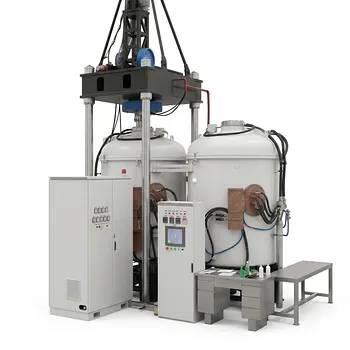
High Pressure 600T Vacuum Induction Hot Press Furnace for Advanced Material Heat Treatment and Sintering
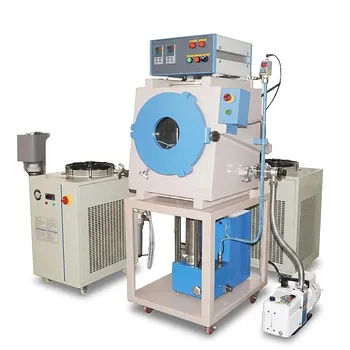
High Temperature Vacuum Lamination Hot Press Furnace Machine for Semiconductor Wafer Bonding and Advanced Composite Thermal Processing
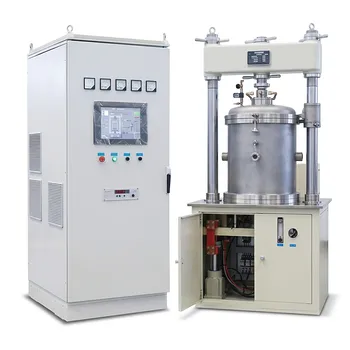
Industrial Vacuum Hot Press Furnace Machine and High Temperature Heated Vacuum Press for Advanced Material Sintering
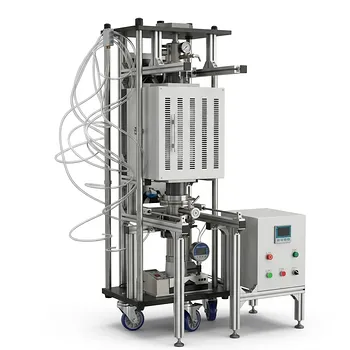
Industrial High Temperature Vacuum Hot Press Furnace and Heated Vacuum Press Machine for Material Science Sintering
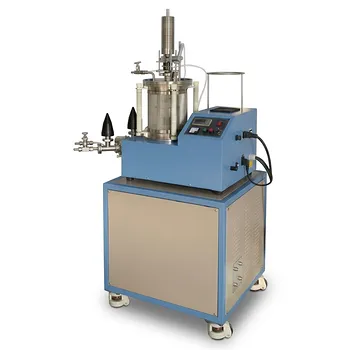
Ultrafast Thermal Pressing Furnace 2900C Max Temperature 200K per Second Heating Rate Vacuum Atmosphere Rapid Processing System
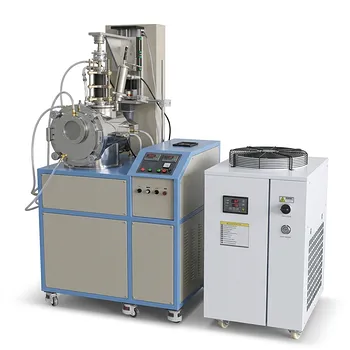
High Temperature Ultrafast Heating Pressing Furnace 2900C Max 100kgf Rapid Thermal Processing System
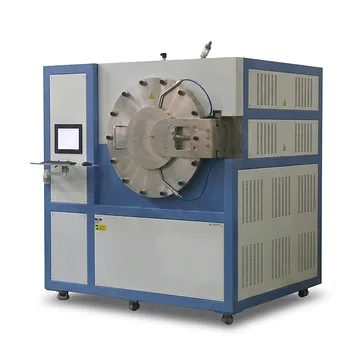
High Vacuum Pressure Chamber Furnace 800C 3.5 Bar Sintering System for Superconducting Materials
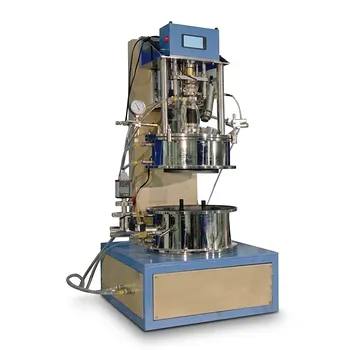
2500C High Vacuum Ultrafast Heating Pellet Press with Automated 8 Sample Loading System
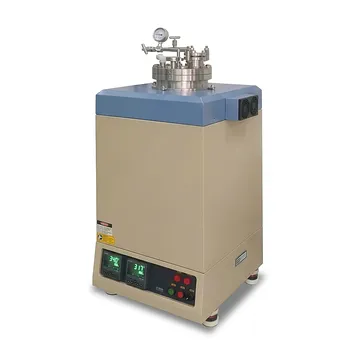
High Temperature 1000C Vacuum Furnace with 8 Inch ID Chamber for Material Sintering and Research Annealing
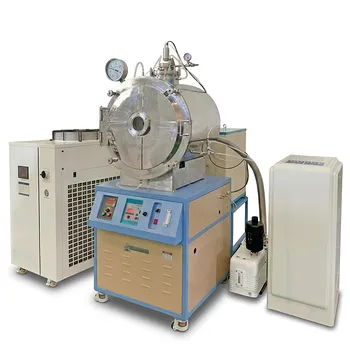
Ultra High Temperature Induction Heated Vacuum Furnace with Molten Salt Electrolysis Capability and 3000 Degree Precision Control
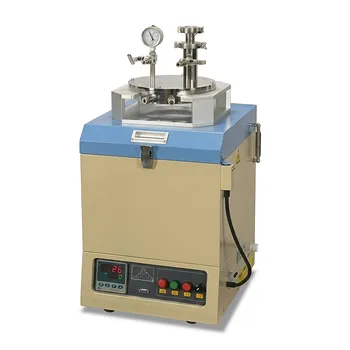
Vertical Vacuum Furnace 1100C High Temperature 8 Inch Quartz Chamber Water Cold Flange System
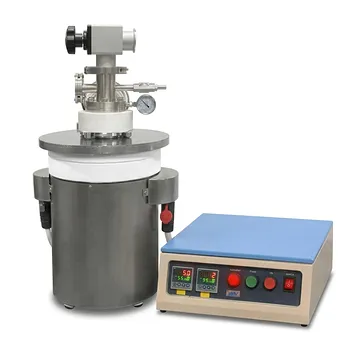
1100C High Temperature Vacuum Crucible Furnace with Quartz Chamber for Thermal Processing and Sintering
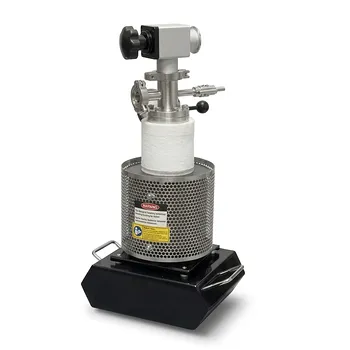
High Temperature 1100C Compact Top Loading Vertical Vacuum Tube Furnace for High Vacuum Noble Metal Melting and Material Research
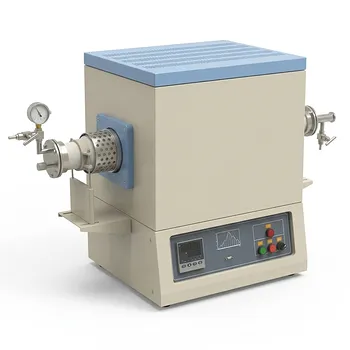
1750°C High Temperature Benchtop Vacuum Atmosphere Tube Furnace with Kanthal Super 1800 Heating Elements and 60mm Alumina Processing Tube

1800C High Temperature Compact Vacuum Tube Furnace with 60mm OD Alumina Tube and Kanthal MoSi2 Heating Elements

High Temperature 1700C Tube Furnace with High Vacuum Turbomolecular Pump System and Multi Channel Mass Flow Controller Gas Mixer
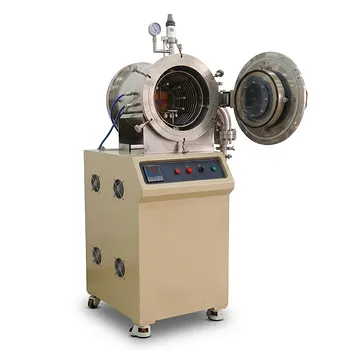
High Temperature Cold Wall High Vacuum Chamber Furnace 1400C for Advanced Material Processing
High Temperature Dual Zone Vacuum Tube Furnace for Material Research and CVD Processing
High Temperature Cold Wall Vacuum Furnace for Advanced Material Sintering and Annealing 1600C Heating Area 200x200x300mm