How does the baffle angle affect particle flow in a rotary calcination furnace? Master Flow & Heat Efficiency
Updated 3 months ago
The baffle angle is the primary governor of radial velocity within a rotary calcination furnace, directly dictating the speed and direction at which particles travel across rotating plates. By increasing the baffle angle—for example, from 40 to 50 degrees—operators can force particle trajectories to align more closely with the intended design flow, significantly reducing the tendency for material to migrate prematurely toward the plate edges.
Core Takeaway: Adjusting the baffle angle allows for precise calibration of particle trajectories, ensuring uniform movement across heating surfaces to optimize residence time and heat exchange efficiency.
The Mechanics of Radial Velocity Control
Directing Particle Momentum
The baffle angle functions as a mechanical guide that transforms the rotational energy of the furnace into specific radial velocity. This velocity determines how quickly a particle moves from the center of a plate toward its periphery.
Aligning Trajectories with Design Flow
When the baffle angle is increased, the physical path of the particle is constrained. This alignment ensures that the material follows a predictable spiral path rather than drifting randomly due to centrifugal forces.
Preventing Edge Migration
A critical function of a steeper baffle angle is the suppression of edge migration. By keeping particles away from the extreme outer limits of the plates, the system maintains a more consistent density of material across the active heating surface.
Impact on Calcination Quality and Consistency
Optimizing Heat Exchange
The internal structure of these furnaces relies on alternating small and large plates equipped with fins. As the baffle angle stabilizes the flow, particles engage more effectively with these heating surfaces, ensuring that every grain receives uniform thermal exposure.
Precision in Residence Time
The residence time of the catalyst on the plates is a direct product of its flow pattern. A well-calibrated baffle angle ensures that particles do not exit the plate too quickly or linger in "dead zones," allowing for precise control over the calcination effect.
Synergizing with Internal Fins
The baffles work in tandem with external and internal fins to guide particles through a complex inward and outward flow. This movement ensures that the material falls to subsequent levels of the furnace at the exact point required for continuous processing.
Understanding the Trade-offs
The Balance of Flow and Retention
While increasing the baffle angle improves flow alignment, it can also reduce the time a particle spends on an individual plate. This necessitates a careful balance with the baffle overlap ratio; a higher overlap can reduce back-mixing but may further shorten residence time.
Interaction with Rotational Speed
Baffle geometry is a fixed physical parameter, whereas rotational angular velocity is a variable operational parameter. If the rotation speed is too high, even an optimized baffle angle may not be enough to prevent particles from bypassing critical heating zones.
Overlap Ratio vs. Baffle Angle
Choosing a high baffle angle without considering the overlap ratio (e.g., 5% vs. 15%) can lead to efficiency gaps. While the angle directs the path, the overlap ratio is what ultimately prevents the "short-circuiting" of particles between levels.
Applying These Insights to Furnace Calibration
Strategies for Process Optimization
To achieve the highest quality calcination, the baffle geometry must be matched to the specific physical properties of the raw material and the desired throughput.
- If your primary focus is trajectory precision: Increase the baffle angle to approximately 50 degrees to ensure particles adhere to the design flow and avoid edge accumulation.
- If your primary focus is reducing back-mixing: Prioritize increasing the baffle overlap ratio toward 15% to ensure a more one-way flow through the furnace tiers.
- If your primary focus is adjusting for different raw materials: Use the motor frequency to vary the rotational angular velocity, as this is the most flexible way to alter Mean Residence Time (MRT) without mechanical teardowns.
Ultimately, the baffle angle serves as the fundamental stabilizer that ensures particle flow remains predictable and thermally efficient throughout the calcination process.
Summary Table:
| Parameter | Primary Effect | Benefit to Calcination |
|---|---|---|
| Higher Baffle Angle | Increases radial velocity control | Ensures uniform heat exposure and prevents edge migration. |
| Baffle Overlap Ratio | Reduces material back-mixing | Improves flow consistency and prevents "short-circuiting." |
| Rotational Speed | Adjusts Mean Residence Time (MRT) | Provides operational flexibility for different raw material types. |
| Internal Fins | Guides inward/outward flow | Maximizes contact between particles and heating surfaces. |
Optimize Your Thermal Processing with THERMUNITS
Achieving precise particle flow and thermal consistency is critical for high-performance material R&D. THERMUNITS is a leading manufacturer specializing in high-temperature laboratory equipment. We provide advanced solutions including Electric Rotary Kilns, Muffle, Vacuum, and Tube Furnaces, alongside specialized CVD/PECVD systems, Vacuum Induction Melting (VIM) furnaces, and Hot Press systems.
Our equipment is engineered to give researchers and industrial R&D teams the precise control needed for superior material synthesis and heat treatment. Whether you are optimizing residence time or scaling up industrial production, our technical experts are ready to design the perfect thermal solution for your needs.
Ready to enhance your lab's efficiency? Contact THERMUNITS Today!
References
- Tiezhuang Zhou, Wenchun Jiang. Impact of Structure Parameters on the Critical Performance of a Novel Calciner—A DEM-Based Study. DOI: 10.2478/pjct-2024-0036
Mentioned Products
- 900°C Max Rotary Tube Furnace with 8 Inch 310S Alloy Tube and Optional Multi Zone Heating for Industrial Material Calcination
- Dual Zone Rotary Tube Furnace for Uniform Powder Calcination 1000C 2 Inch Quartz Tube
- 4 Inch Two Zone Rotary CVD Tube Furnace for High Temperature Battery Material Synthesis and Advanced Material Calcination
- Electric Rotary Kiln Continuous Working Small Rotary Furnace Heating Pyrolysis Plant
- Desktop Induction Melting Furnace with Automatic Rotary Casting Function up to 1700C for Advanced Metal Alloy Research
People Also Ask
- How does a rotary tube furnace improve the processing of granular materials? Enhance Uniformity and Reaction Kinetics
- Why use a rotary tube furnace for FACS carbonization? Ensure uniform morphology and prevent sphere agglomeration.
- Why is the precise optimization of residence time essential in the catalyst calcination process? Maximize Your Yields.
- In what ways do rotary tube furnaces enhance chemical and specialty mineral processing? Drive Precision and Uniformity.
- What parameters must operators control to maintain product quality in a rotary furnace? Master Your Heat Treatment.

Tech Team · ThermUnits
Last updated on Jun 03, 2026
Related Products
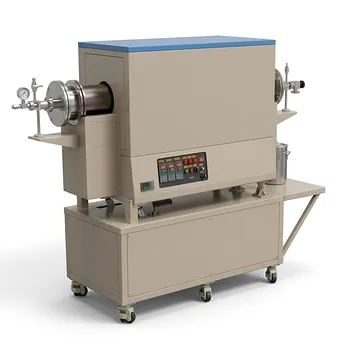
900°C Max Rotary Tube Furnace with 8 Inch 310S Alloy Tube and Optional Multi Zone Heating for Industrial Material Calcination
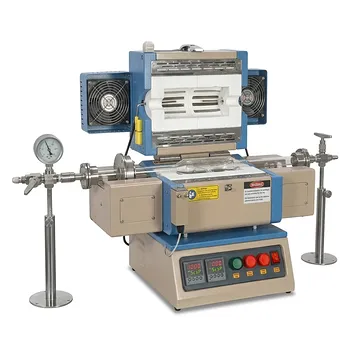
Dual Zone Rotary Tube Furnace for Uniform Powder Calcination 1000C 2 Inch Quartz Tube
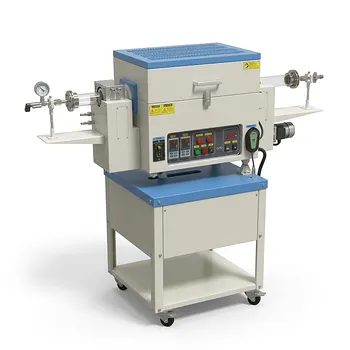
4 Inch Two Zone Rotary CVD Tube Furnace for High Temperature Battery Material Synthesis and Advanced Material Calcination
Electric Rotary Kiln Continuous Working Small Rotary Furnace Heating Pyrolysis Plant
Desktop Induction Melting Furnace with Automatic Rotary Casting Function up to 1700C for Advanced Metal Alloy Research
1500C 3-Zone Rotary Tube Furnace 60mm with Automatic Powder Feeding and Receiving System for Continuous Material Synthesis
Mini Rotary Tubular Furnaces for Precision Powder Heat Treatment and Thermogravimetric Analysis
High Temperature 1700C Dual Zone Rotary Tube Furnace with 60mm Alumina Tube and Precision Rotation Control
Three Zone Rotary Tube Furnace for High Temperature Powder Processing and Material Research
Two Zone Rotary Tube Furnace for Powder CVD Coating and Core Shell Material Synthesis 1100C
High Temperature Rotary Tilt Tubular Furnaces for Advanced Powder Sintering and Material Processing
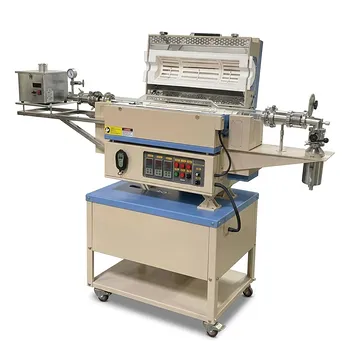
5 Inch Rotary Tube Furnace with Automatic Feeding and Receiving System 1200C Three Zone CVD Powder Processing
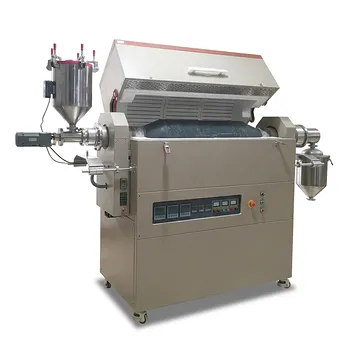
High Temperature Tilting Rotary Tubular Furnace for Continuous Powder Thermal Processing and Controlled Atmosphere Sintering
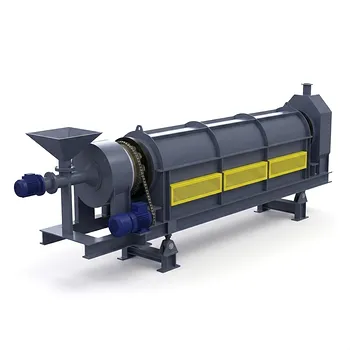
Electric Rotary Kiln Small Rotary Furnace for Activated Carbon Regeneration
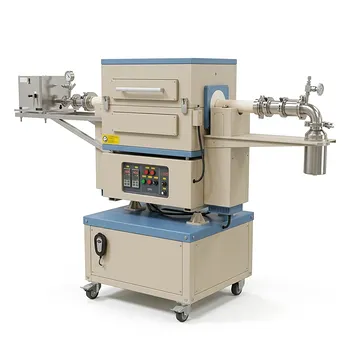
1500C Max Dual Zone Rotary Tube Furnace with 60 mm OD Alumina Tube for High Temperature Material Synthesis
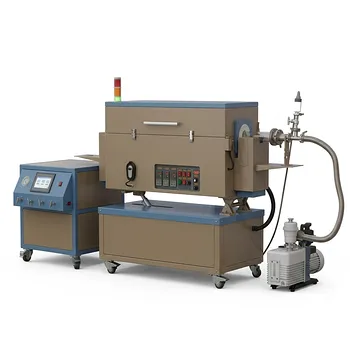
5 Inch Three Zone Rotary Tube Furnace with Integrated Gas Delivery System and 1200C Capability for Advanced Material CVD Processing
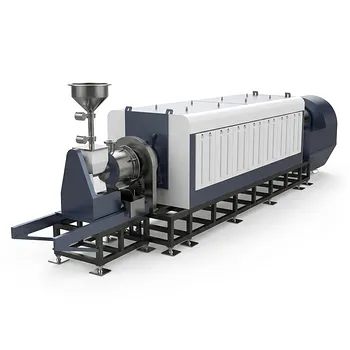
Electric Rotary Kiln Small Rotary Furnace Biomass Pyrolysis Plant
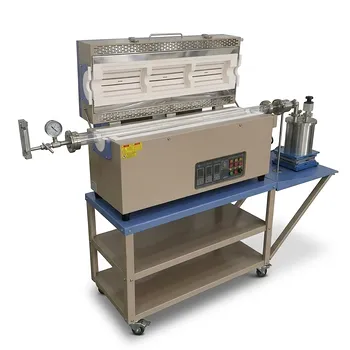
5 Inch Two Zone Rotary Tube Furnace 1100C for Powder CVD and Material Synthesis
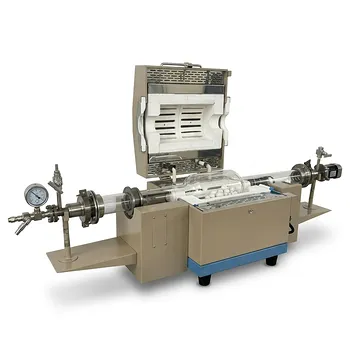
High Temperature Rotary Tube Furnace with Integrated Ball Milling and Gas Flow Function for Powder Nitriding