How does the carrier gas delivery system regulate the morphology of zinc oxide nanostructures? Master Precision Growth
Updated 3 months ago
Carrier gas delivery systems act as the primary kinetic regulator for zinc oxide (ZnO) synthesis. By precisely modulating the flow rates and mixing ratios of gases like argon and oxygen, these systems control the oxygen partial pressure and the vapor transport rate within the reaction chamber. This level of gas dynamic control is what allows researchers to transition between specific geometric shapes, including nanorods, nanopencils, and nanocombs.
The carrier gas delivery system dictates the morphology of ZnO nanostructures by managing the physical transport of precursors and the chemical environment of the growth zone. Through the adjustment of gas ratios, the system shifts the balance between vapor concentration and oxidation rates to determine final crystal geometry.
The Mechanics of Gas Dynamic Control
Regulating Oxygen Partial Pressure
The ratio of oxygen to an inert carrier gas, such as argon, directly determines the oxygen partial pressure in the furnace. This pressure is a critical variable that governs the oxidation rate of zinc vapor, influencing how quickly the nanostructure solidifies.
When oxygen levels are high, the rapid oxidation often leads to different growth orientations compared to oxygen-poor environments. This chemical tuning is essential for achieving the specific stoichiometry required for complex ZnO shapes.
Influencing Vapor Transport Rates
The total flow rate of the carrier gas determines the velocity and concentration of zinc vapor as it moves from the source material to the substrate. High flow rates can lead to a "forced" transport that favors certain growth directions, while lower rates allow for more diffusion-controlled growth.
This transport mechanism is often managed by mass flow meters, which ensure that the delivery of precursors remains constant throughout the synthesis process. Stable transport is the foundation for achieving uniform nanostructure distribution across a surface.
Morphological Evolution and Geometric Shaping
Achieving Geometric Diversity
The transition from simple nanorods to more complex structures like nanopencils or nanocombs is a result of altering the supersaturation levels of the vapor. By fine-tuning the gas dynamics, the system can trigger secondary growth on the sides of primary rods, forming comb-like structures.
If the gas flow is adjusted to favor axial growth over radial growth, the resulting structures will be thinner and more elongated. Conversely, changing the gas ratio mid-growth can create "nanopencils" by tapering the tips of existing rods.
The Role of Reducing Atmospheres
While ZnO typically uses oxygen, some systems incorporate hydrogen to create a reducing atmosphere, similar to the processes used in other semiconductor synthesis. This can be used to etch surfaces or modify the component ratio between the precursor and the atmosphere.
Such adjustments induce morphological evolution, allowing for thickness-controllable growth and the transition between different structural phases. This demonstrates the versatility of gas delivery systems in managing both the chemical and structural identity of the material.
Understanding the Trade-offs
Sensitivity to Turbulence and Pressure
One significant challenge in gas delivery is maintaining laminar flow within the reaction tube. Sudden changes in flow rates can introduce turbulence, leading to non-uniform nanostructure growth or unpredictable geometric deviations across the substrate.
The Precision-Throughput Paradox
While high-precision mass flow control allows for extreme morphological detail, it often requires slower growth cycles to maintain stability. Increasing the flow rate to speed up production can lead to a loss of control over the fine features of the nanostructures, such as the sharp tips of nanopencils.
How to Apply Gas Control to Your Project
The effectiveness of your synthesis depends on aligning gas delivery parameters with your desired structural outcome.
- If your primary focus is high aspect ratio nanorods: Maintain a steady, moderate flow of inert gas with a low oxygen ratio to favor long-range axial growth.
- If your primary focus is complex branching or nanocombs: Increase the oxygen partial pressure mid-cycle to encourage secondary nucleation and lateral growth on primary structures.
- If your primary focus is structural uniformity: Use high-precision mass flow controllers to ensure a constant vapor transport rate, minimizing fluctuations in the furnace atmosphere.
By mastering the balance between gas flow and chemical concentration, you can transform the carrier gas system from a simple delivery tool into a powerful engine for morphological engineering.
Summary Table:
| Parameter | Mechanism | Resulting Morphology |
|---|---|---|
| Oxygen Partial Pressure | Controls oxidation rates & stoichiometry | Nanopencils, Nanocombs |
| Gas Flow Rate | Manages vapor velocity & concentration | Nanorods (High Aspect Ratio) |
| Gas Mixing Ratio | Adjusts supersaturation levels | Geometric Diversity (Branching) |
| Flow Stability | Ensures laminar flow & uniformity | Uniform Nanostructure Distribution |
Elevate Your Nanomaterial Synthesis with THERMUNITS
Precise morphological control of ZnO nanostructures requires world-class thermal stability and gas delivery precision. THERMUNITS is a leading manufacturer of high-temperature laboratory equipment specifically designed for material science and industrial R&D.
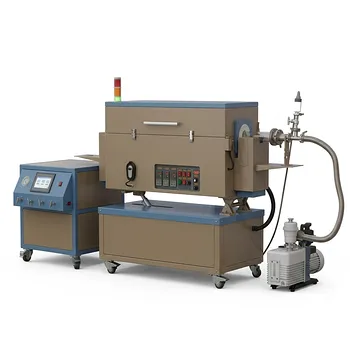
Our advanced CVD/PECVD systems, Tube Furnaces, and Atmosphere Furnaces are engineered to provide the exact gas dynamic control needed for complex nanostructure growth. Whether you are developing semiconductors or advanced sensors, we offer a comprehensive range of solutions including Muffle, Vacuum, and Rotary furnaces to suit your research needs.
Ready to achieve superior heat treatment results? Contact our technical experts today to discuss how our laboratory equipment can optimize your R&D workflow.
References
- The‐Long Phan, Dang Ngoc Toan. Various CVD-grown ZnO nanostructures for nanodevices and interdisciplinary applications. DOI: 10.3762/bjnano.15.112
Mentioned Products
- 5 Inch Three Zone Rotary Tube Furnace with Integrated Gas Delivery System and 1200C Capability for Advanced Material CVD Processing
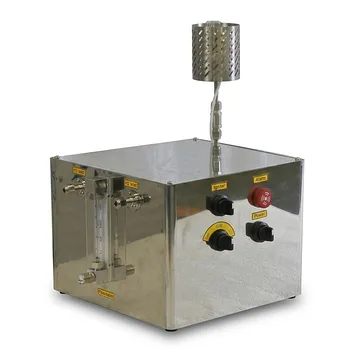
- Flammable Gas Control and Disposal Device with H2 Gas Leaking Detector and Safety Interlock System
People Also Ask
- What is the primary function of a three-zone tube furnace in the synthesis process of corn-derived carbon nanotubes?
- What role does an industrial-grade three-zone tube furnace play in VOx@VACNT synthesis? Precision Phase-State Control
- Why Use a Three-Zone vs. Single-Zone Furnace for Fe-Ni-Cu Diffusion? Key Benefits for Lab Accuracy
- What advantages does a three-zone tube furnace offer for nanoparticle synthesis? Unlock Superior Thermal Precision.
- What is the core function of an industrial-grade three-zone tube furnace in MgCO3 layer formation?

Tech Team · ThermUnits
Last updated on Jun 03, 2026