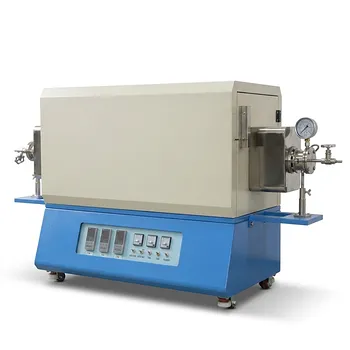
What advantages does a three-zone tube furnace offer for nanoparticle synthesis? Unlock Superior Thermal Precision.
Updated 5 months ago
The primary advantage of a three-zone tube furnace is its ability to create a significantly wider and more uniform constant temperature zone within the reaction chamber. For the synthesis of $\beta$-$\text{Mo}_2\text{C}$, $\text{Ni}_3\text{C}$, and $\text{WC}$ nanoparticles, this uniformity ensures that the propane and hydrogen gas mixture reacts consistently as it flows through the catalyst bed. This precise thermal environment results in superior crystallinity and highly consistent nanoparticle grain sizes across different production batches.
A three-zone configuration allows for independent control of segmented heating units, enabling the creation of an extended isothermal region or precise temperature gradients. This specialized control stabilizes reaction kinetics and ensures that all materials experience an identical thermal history, which is critical for high-purity nanoparticle synthesis.
Enhancing Material Quality through Thermal Uniformity
Achieving Superior Crystallinity and Grain Consistency
In the high-temperature reduction-carburization processes used to create metal carbides, even minor temperature fluctuations can lead to phase impurities. A three-zone furnace maintains a stable thermal field (typically around 800 °C for these materials), which allows the carbon source to integrate into the metal lattice evenly.
This stability directly translates to improved crystallinity in the resulting $\text{Mo}_2\text{C}$, $\text{Ni}_3\text{C}$, and $\text{WC}$ nanoparticles. Because the temperature is locked across the entire catalyst bed, the grain size remains uniform, preventing the "oversized" grains often found in the hotter center of single-zone furnaces.
Optimizing Gas-Phase Reaction Kinetics
The synthesis of metal carbides relies on the precise interaction between hydrogen and carbon-carrying gases like propane. In a three-zone setup, the outer zones can be used to preheat the gas mixture before it reaches the primary reaction site in the center zone.
This preheating ensures that the gases are at the optimal catalytic decomposition temperature the moment they contact the precursor. This prevents localized cooling of the substrate and ensures that the carburization reaction occurs at a steady, predictable rate.
Advanced Control and Gradient Management
Compensation for End-Tube Heat Dissipation
Single-zone furnaces naturally suffer from significant heat loss at the ends of the tube, where the quartz or alumina meets the atmosphere. This creates a "bell curve" temperature profile where only a tiny fraction of the furnace is actually at the setpoint.
Three-zone furnaces solve this by using the two outer zones to compensate for heat dissipation. By running the outer heating elements at slightly different power levels, the furnace can "flatten" the temperature curve, providing a much larger usable volume for high-capacity synthesis.
Independent Control of Multiple Thermal Stages
Some synthesis protocols require distinct stages, such as an initial annealing phase followed by a high-temperature growth phase. The independent power control of a three-zone system allows researchers to establish precise temperature gradients.
This is particularly useful when dealing with different precursors that have varying sublimation or reaction temperatures. For example, one zone can be set to evaporate a precursor while the central zone is maintained at a much higher temperature for the final chemical vapor deposition (CVD) or carburization.
Understanding the Trade-offs
While three-zone furnaces offer superior control, they come with increased operational complexity. Users must carefully calibrate each zone to prevent "thermal oscillations," where the controllers fight each other to maintain their respective setpoints.
Furthermore, these systems are generally more expensive and consume more power than single-zone alternatives. For simple processes where the sample size is small and placed exactly in the center of the tube, the benefits of a three-zone system may be marginal compared to the higher capital investment required.
How to Apply This to Your Project
Making the Right Choice for Your Goal
- If your primary focus is high-volume batch consistency: Utilize a three-zone furnace to maximize the isothermal zone, ensuring that nanoparticles at the edges of the crucible are identical to those in the center.
- If your primary focus is synthesizing complex or doped carbides: Leverage the independent zone control to establish specific temperature gradients that optimize the decomposition of different precursors or doping agents.
- If your primary focus is rapid prototyping of small samples: A single-zone furnace may be sufficient, provided the sample is placed precisely in the thermal center and gas flow rates are low enough to avoid significant cooling.
Precise thermal management is the bridge between successful laboratory synthesis and the scalable production of high-performance metal carbide nanoparticles.
Summary Table:
| Feature | Single-Zone Furnace | Three-Zone Furnace | Impact on Nanoparticles |
|---|---|---|---|
| Temperature Zone | Narrow, "bell-curve" profile | Wide, extended isothermal region | Ensures uniform grain size across batches |
| Gas Management | Cold gas hits reaction site | Integrated gas preheating zones | Stabilizes reaction kinetics & purity |
| Heat Dissipation | Significant loss at tube ends | Active compensation at both ends | Prevents phase impurities & improves yield |
| Control | Single setpoint control | Independent multi-stage control | Allows for precise temperature gradients |
Maximize Your Material Synthesis with THERMUNITS
As a global leader in high-temperature laboratory equipment, THERMUNITS provides the precision tools required for cutting-edge material science. Our high-performance Tube Furnaces, CVD/PECVD systems, and Vacuum furnaces are engineered to deliver the thermal stability necessary for synthesizing high-purity carbides and advanced nanoparticles.
Whether you are scaling up industrial R&D or refining laboratory heat treatments, our comprehensive range of thermal processing solutions—from Rotary Kilns to Hot Press furnaces—ensures your research meets the highest standards of excellence.
Contact our engineering team today to find the perfect three-zone solution for your synthesis needs!
References
- Zinnabu Tassew Redda, Asnakech Laß‐Seyoum. Synthesis and Characterization of AlPO4-18 Supported Mesoporous and Crystalline β-Mo2C, Ni3C, and WC Nanoparticles. DOI: 10.1007/s10562-024-04791-y
Mentioned Products
- Three Zone Tube Furnace with 24 Inch Heating Length and Hinged Flange Quartz Tube System
- Three Zone Hydrogen Gas Tube Furnace with 82mm Superalloy Tube and Dual Hydrogen Detectors 1200C High Temperature Material Processing System
- 1100°C Three Zone Tube Furnace with 8.5 to 11 Inch OD Quartz Tube and Vacuum Flanges for Large Wafer Processing
- Three Zone Tube Furnace with 11 Inch or 15 Inch Quartz Tube and Hinged Flanges for Vacuum Atmosphere Heat Treatment
- High Temperature 1700C Three Zone Tube Furnace with Alumina Tube 50mm 60mm 80mm OD for Material Research and Industrial Heat Treatment
People Also Ask
- What is the primary function of a three-zone tube furnace in the synthesis process of corn-derived carbon nanotubes?
- What role does an industrial-grade three-zone tube furnace play in VOx@VACNT synthesis? Precision Phase-State Control
- Why Use a Three-Zone vs. Single-Zone Furnace for Fe-Ni-Cu Diffusion? Key Benefits for Lab Accuracy
- What role does a 3-zone tube furnace play in CCO ceramic conductivity testing? Ensure Isothermal Precision.
- What are the technical advantages of using a three-zone tube furnace for MoS2 CVD growth? Achieve Precision Control

Tech Team · ThermUnits
Last updated on Apr 14, 2026
Related Products
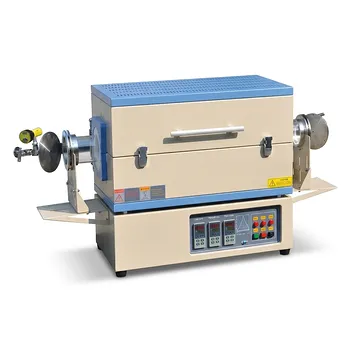
Three Zone Tube Furnace with 24 Inch Heating Length and Hinged Flange Quartz Tube System
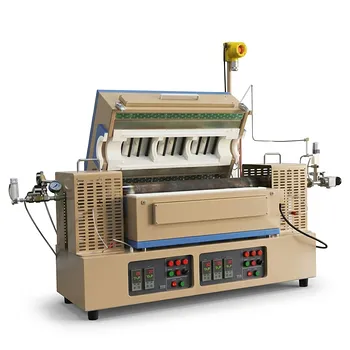
Three Zone Hydrogen Gas Tube Furnace with 82mm Superalloy Tube and Dual Hydrogen Detectors 1200C High Temperature Material Processing System
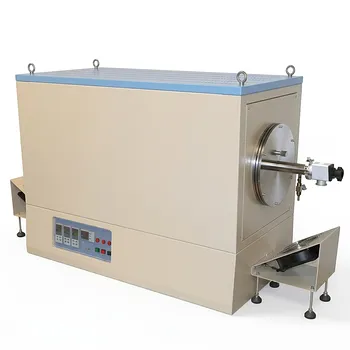
1100°C Three Zone Tube Furnace with 8.5 to 11 Inch OD Quartz Tube and Vacuum Flanges for Large Wafer Processing

Three Zone Tube Furnace with 11 Inch or 15 Inch Quartz Tube and Hinged Flanges for Vacuum Atmosphere Heat Treatment
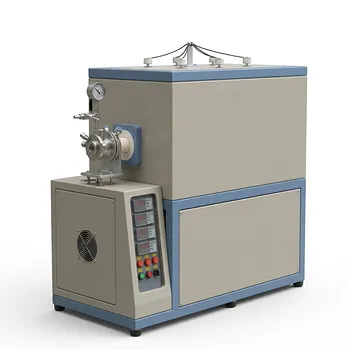
High Temperature 1700C Three Zone Tube Furnace with Alumina Tube 50mm 60mm 80mm OD for Material Research and Industrial Heat Treatment

5 Inch Three Zone Rotary Tube Furnace with Integrated Gas Delivery System and 1200C Capability for Advanced Material CVD Processing
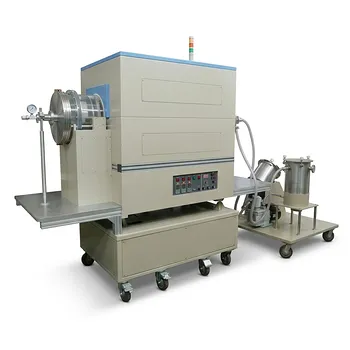
Three Zone Rotary Tube Furnace with Automatic Powder Feeding for Large Scale CVD Coating 1100C
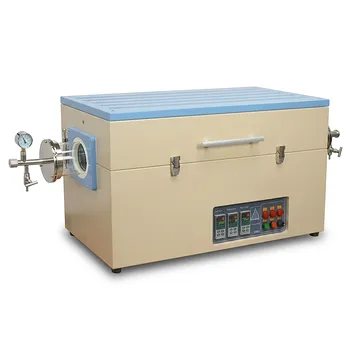
Three Zone Split Tube Furnace 36 Inch Heating Length High Temperature 1200C Material Research Furnace with Vacuum Flanges
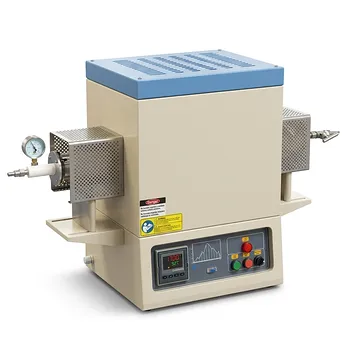
High Temperature Three Zone Tube Furnace 1700C with Alumina Tube and Water Cooled Flanges
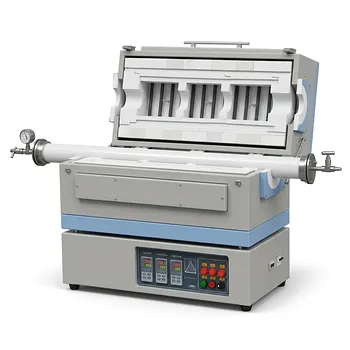
High Temperature 1500C Three Zone Split Tube Furnace with 80mm Alumina Tube and Vacuum Flange
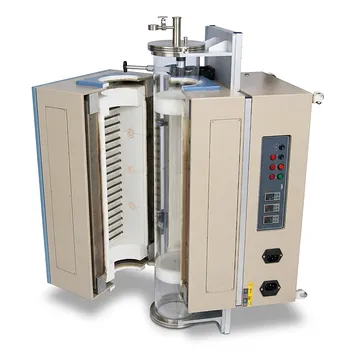
Large Vertical Three Zone Tube Furnace with 8 Inch or 11 Inch Quartz Tube and High Vacuum Flanges 1200C
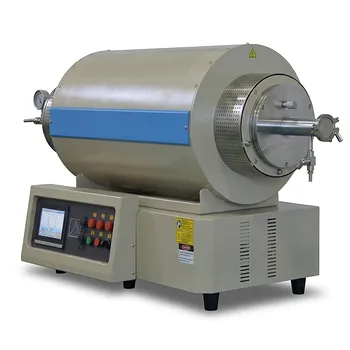
1200C Max Three Zone Tube Furnace 6 Inch OD Max with Tube and Flange
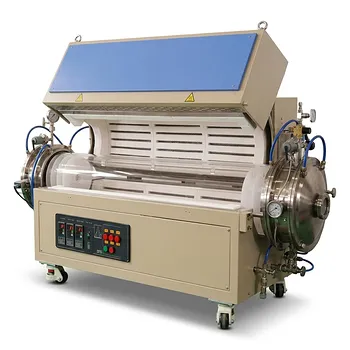
High Temperature Three Zone Split Tube Furnace 1200C Max 35.4 Inch Heating Length 8 Inch ID Tube
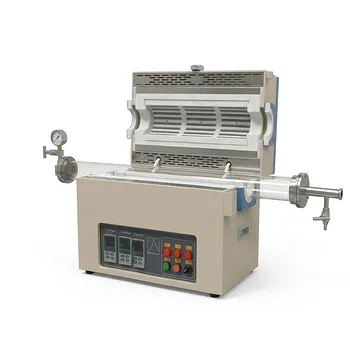
1200°C Three Zone Split Tube Furnace with 18 Inch Heating Length and Vacuum Flanges
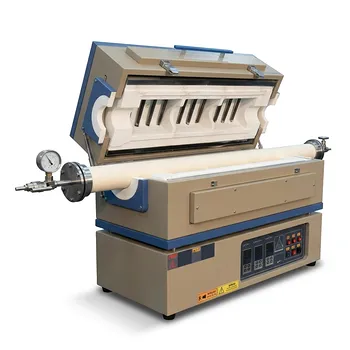
1600C Three Zone Split Tube Furnace with Alumina Tube and Vacuum Flange
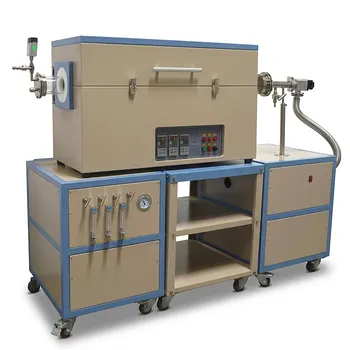
Three Zone Quartz Tube Furnace with 3 Channel Gas Mixer Vacuum Pump and Anti Corrosive Vacuum Gauge
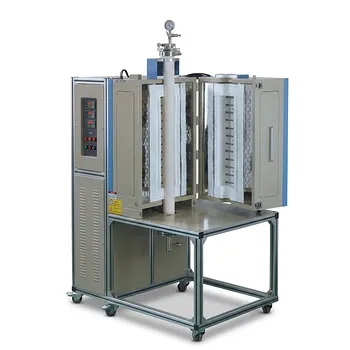
Three Zone Heating Split Vertical Tube Furnace 1700 High Temperature Vacuum Atmosphere Thermal Process System
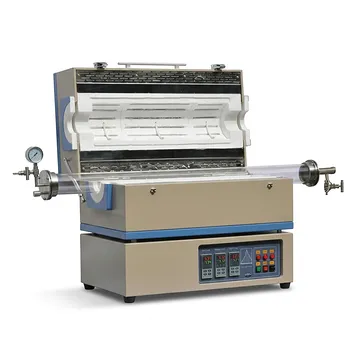
24 Inch Three Zone Split Tube Furnace with Optional Quartz Tube and Vacuum Flange System for High Temperature Material Synthesis
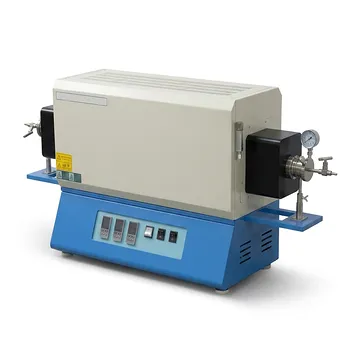
High Temperature Three Temperature Zone Tube Furnace for Advanced Material Science Sintering and Chemical Vapor Deposition Applications