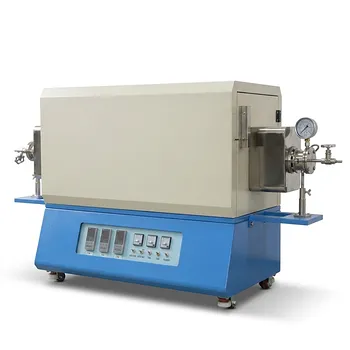
Why Use a Three-Zone vs. Single-Zone Furnace for Fe-Ni-Cu Diffusion? Key Benefits for Lab Accuracy
Updated 3 months ago
The primary technical advantage of a three-zone tube furnace is its ability to create a significantly longer and more stable isothermal zone through independent power control. This configuration allows for the precise compensation of heat loss at the furnace ends, ensuring that Fe-Ni-Cu diffusion couples are maintained at a perfectly uniform 1000°C. By eliminating internal temperature gradients, the three-zone system ensures that every part of the sample undergoes an identical thermal history, which is essential for calculating accurate diffusion coefficients.
A three-zone furnace provides superior thermal stability by independently managing three heating sections, effectively neutralizing the "edge effects" that plague single-zone models. This precision is critical for diffusion studies where even minor temperature fluctuations can lead to significant deviations in atomic transport rates and experimental data.
Achieving Thermal Uniformity in Diffusion Studies
Eliminating the "Edge Effect"
In a single-zone furnace, heat naturally dissipates toward the cooler ends of the reaction tube, creating a "bell curve" temperature profile.
Three-zone furnaces solve this by allowing the two outer zones to operate at higher power levels than the center zone.
This localized power adjustment compensates for heat loss, resulting in a flat, uniform temperature profile across the entire length of the sample.
Expanding the Isothermal Zone
A single-zone furnace typically offers a very narrow "sweet spot" where the temperature is truly constant.
By contrast, the segmented control of a three-zone system creates a significantly wider constant temperature zone.
For diffusion couples, this means researchers can process larger samples or multiple samples simultaneously without risking variations in their thermal exposure.
Impact on Fe-Ni-Cu Diffusion Kinetics
Consistency in Homogenization
The homogenization of Fe-Ni-Cu alloys at 1000°C requires absolute thermal consistency to ensure a uniform chemical distribution.
If gradients exist, different regions of the alloy will homogenize at different rates, leading to microstructural inconsistencies.
The independent zone control ensures the entire alloy reaches the target temperature simultaneously and remains there with high precision throughout the soaking period.
Precision in Diffusion Coefficient Calculations
Diffusion rates are exponentially dependent on temperature; a deviation of just a few degrees can render experimental data invalid.
By providing a stable thermal field, the three-zone furnace eliminates diffusion rate deviations caused by spatial temperature gradients.
This level of control is the only way to ensure that the measured diffusion distances in Fe-Ni-Cu couples are a result of time and material properties rather than thermal fluctuations.
Understanding the Trade-offs
Increased System Complexity
While three-zone furnaces offer superior control, they require more sophisticated PID controllers and multiple thermocouples.
Achieving a perfectly flat profile often requires a more intensive calibration process compared to the "set-and-forget" nature of single-zone units.
Improperly tuned zones can inadvertently create "steps" or oscillations in the temperature profile, which can be just as detrimental as a single-zone gradient.
Cost and Maintenance
These units generally carry a higher initial capital cost due to the tripled requirement for heating elements and control electronics.
The maintenance of three separate heating circuits also introduces more potential failure points within the system.
However, for high-stakes metallurgical research, the reduction in experimental error usually justifies the additional investment.
Making the Right Choice for Your Goal
How to Apply This to Your Project
Choosing between these systems depends on the level of precision required for your metallurgical analysis.
- If your primary focus is high-accuracy diffusion modeling: A three-zone furnace is essential to ensure that temperature remains a constant rather than a variable in your equations.
- If your primary focus is simple bulk heat treatment of small samples: A high-quality single-zone furnace may suffice if the sample is small enough to fit entirely within the central isothermal peak.
- If your primary focus is high-throughput processing: The expanded isothermal zone of a three-zone furnace allows for the treatment of longer diffusion couples or larger batches with consistent results.
Ultimately, the three-zone tube furnace transforms the heating environment from a variable to a controlled constant, providing the thermal foundation necessary for definitive diffusion research.
Summary Table:
| Feature | Single-Zone Furnace | Three-Zone Furnace |
|---|---|---|
| Temperature Profile | Bell-curve (heat loss at ends) | Flat & uniform across the segment |
| Isothermal Zone | Narrow "sweet spot" | Significantly wider & stable zone |
| Control Method | Single PID controller | Three independent PID controls |
| Data Accuracy | Risk of diffusion rate deviations | High precision for diffusion coefficients |
| Best For | Simple bulk heat treatment | High-accuracy metallurgical R&D |
Elevate Your Research Precision with THERMUNITS
Don't let thermal gradients compromise your metallurgical data. THERMUNITS is a leading manufacturer of high-temperature laboratory equipment designed specifically for material science and industrial R&D. We provide the advanced thermal processing solutions you need to ensure absolute consistency in every experiment.
Our comprehensive range includes:
- Precision Furnaces: Tube (Single/Multi-zone), Muffle, Vacuum, and Atmosphere models.
- Specialized Systems: CVD/PECVD, Rotary, Hot Press, and Vacuum Induction Melting (VIM) furnaces.
- Expert Support: Thermal elements and customized heat treatment equipment for complex applications.
Ready to optimize your Fe-Ni-Cu diffusion studies?
Contact our technical team today to discover how our three-zone technology can transform your lab's results!
References
- Susanta Kumar Nayak, Kaustubh N. Kulkarni. Effect of Gibbs Free Energies of Terminal Alloys on the Diffusion Paths and Diffusion Depths in Couples Assembled with γ-Phase Fe-Ni-Cu Alloys at 1000 °C. DOI: 10.1007/s11669-024-01101-2
Mentioned Products
- Three Zone Tube Furnace with 24 Inch Heating Length and Hinged Flange Quartz Tube System
- Three Zone Hydrogen Gas Tube Furnace with 82mm Superalloy Tube and Dual Hydrogen Detectors 1200C High Temperature Material Processing System
- 1100°C Three Zone Tube Furnace with 8.5 to 11 Inch OD Quartz Tube and Vacuum Flanges for Large Wafer Processing
- Three Zone Tube Furnace with 11 Inch or 15 Inch Quartz Tube and Hinged Flanges for Vacuum Atmosphere Heat Treatment
- High Temperature 1700C Three Zone Tube Furnace with Alumina Tube 50mm 60mm 80mm OD for Material Research and Industrial Heat Treatment
People Also Ask
- What is the primary function of a three-zone tube furnace in the synthesis process of corn-derived carbon nanotubes?
- What role does an industrial-grade three-zone tube furnace play in VOx@VACNT synthesis? Precision Phase-State Control
- What advantages does a three-zone tube furnace offer for nanoparticle synthesis? Unlock Superior Thermal Precision.
- What role does a 3-zone tube furnace play in CCO ceramic conductivity testing? Ensure Isothermal Precision.
- What are the technical advantages of using a three-zone tube furnace for MoS2 CVD growth? Achieve Precision Control

Tech Team · ThermUnits
Last updated on Jun 03, 2026
Related Products
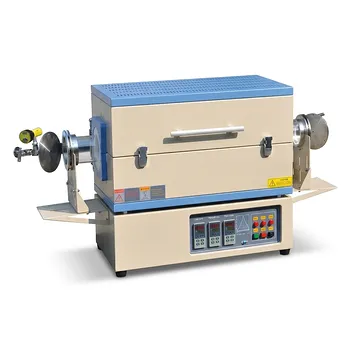
Three Zone Tube Furnace with 24 Inch Heating Length and Hinged Flange Quartz Tube System
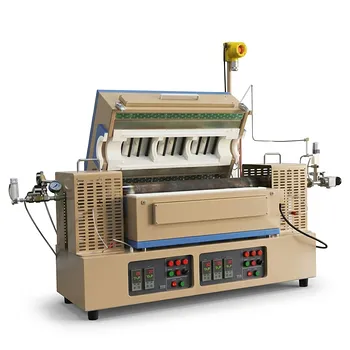
Three Zone Hydrogen Gas Tube Furnace with 82mm Superalloy Tube and Dual Hydrogen Detectors 1200C High Temperature Material Processing System
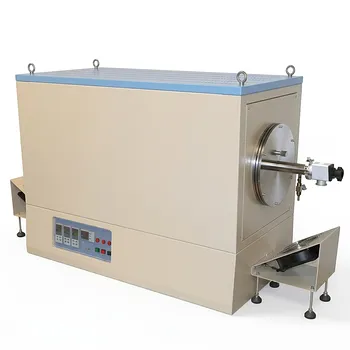
1100°C Three Zone Tube Furnace with 8.5 to 11 Inch OD Quartz Tube and Vacuum Flanges for Large Wafer Processing

Three Zone Tube Furnace with 11 Inch or 15 Inch Quartz Tube and Hinged Flanges for Vacuum Atmosphere Heat Treatment
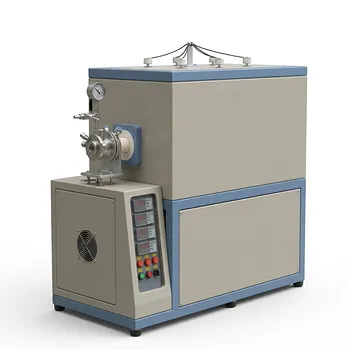
High Temperature 1700C Three Zone Tube Furnace with Alumina Tube 50mm 60mm 80mm OD for Material Research and Industrial Heat Treatment

5 Inch Three Zone Rotary Tube Furnace with Integrated Gas Delivery System and 1200C Capability for Advanced Material CVD Processing
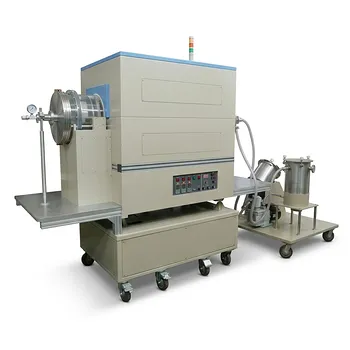
Three Zone Rotary Tube Furnace with Automatic Powder Feeding for Large Scale CVD Coating 1100C
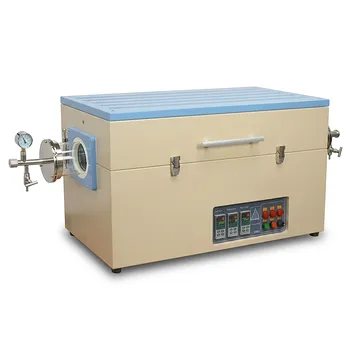
Three Zone Split Tube Furnace 36 Inch Heating Length High Temperature 1200C Material Research Furnace with Vacuum Flanges
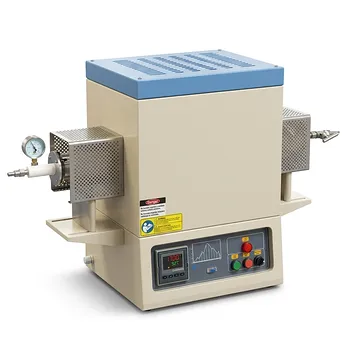
High Temperature Three Zone Tube Furnace 1700C with Alumina Tube and Water Cooled Flanges
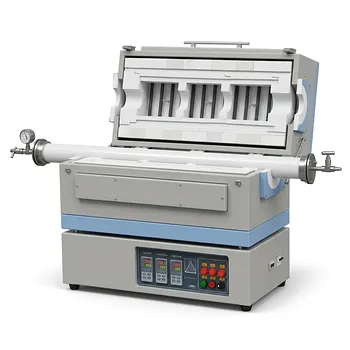
High Temperature 1500C Three Zone Split Tube Furnace with 80mm Alumina Tube and Vacuum Flange
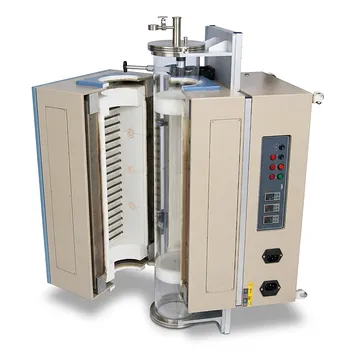
Large Vertical Three Zone Tube Furnace with 8 Inch or 11 Inch Quartz Tube and High Vacuum Flanges 1200C
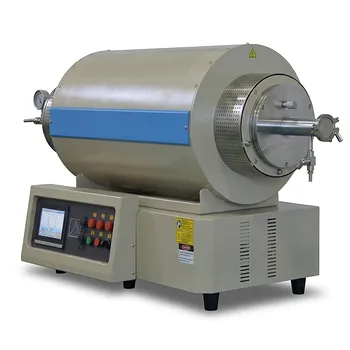
1200C Max Three Zone Tube Furnace 6 Inch OD Max with Tube and Flange
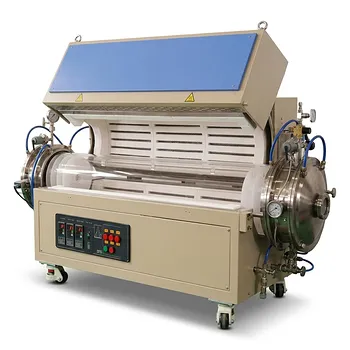
High Temperature Three Zone Split Tube Furnace 1200C Max 35.4 Inch Heating Length 8 Inch ID Tube
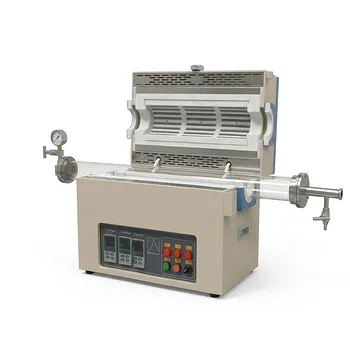
1200°C Three Zone Split Tube Furnace with 18 Inch Heating Length and Vacuum Flanges
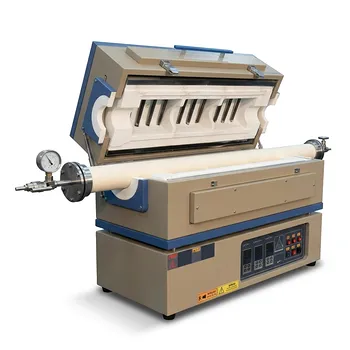
1600C Three Zone Split Tube Furnace with Alumina Tube and Vacuum Flange
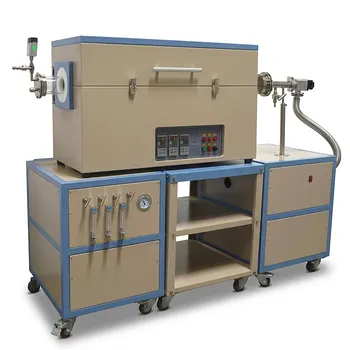
Three Zone Quartz Tube Furnace with 3 Channel Gas Mixer Vacuum Pump and Anti Corrosive Vacuum Gauge
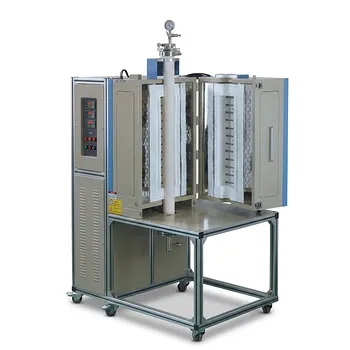
Three Zone Heating Split Vertical Tube Furnace 1700 High Temperature Vacuum Atmosphere Thermal Process System
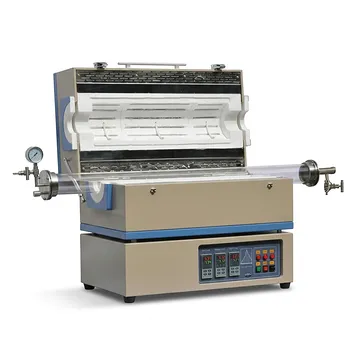
24 Inch Three Zone Split Tube Furnace with Optional Quartz Tube and Vacuum Flange System for High Temperature Material Synthesis
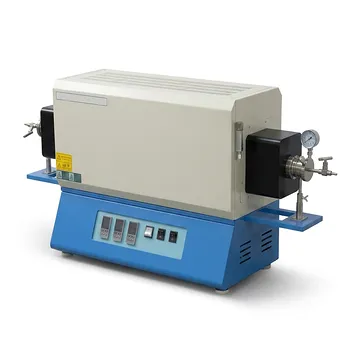
High Temperature Three Temperature Zone Tube Furnace for Advanced Material Science Sintering and Chemical Vapor Deposition Applications