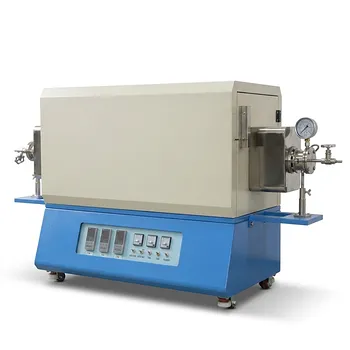
What is the primary function of a three-zone tube furnace in the synthesis process of corn-derived carbon nanotubes?
Updated 3 months ago
The primary function of a three-zone tube furnace in the synthesis of corn-derived carbon nanotubes is to establish a highly stable and uniform 1050°C thermal field. This precise environment is required to drive the pyrolysis of corn seeds, the subsequent release of gases, and the physical reconstruction of carbon atoms into high-quality multi-walled carbon nanotubes (MWCNTs).
The three-zone configuration transforms a standard heating element into a precision instrument by extending the isothermal zone. By independently controlling three separate heating sections, the furnace eliminates temperature gradients, ensuring that the entire precursor volume undergoes identical chemical transformation at 1050°C.
Achieving Thermal Uniformity Across the Reaction Zone
Extending the Constant Temperature Field
In standard single-zone furnaces, temperature often drops significantly near the ends of the tube due to heat dissipation. A three-zone furnace uses independent controllers to compensate for this loss, creating a much longer "sweet spot" or constant temperature field.
Precise Control of the 1050°C Environment
For corn-derived MWCNTs, the primary reference establishes 1050°C as the critical threshold for synthesis. The furnace ensures this temperature is maintained with high precision across the entire length of the reaction boat, preventing "cold spots" that could lead to incomplete carbonization.
Facilitating Carbon Atom Reconstruction
The synthesis process is not merely about heating; it is about the reconstruction of carbon atoms. A stable thermal environment provides the consistent kinetic energy necessary for carbon atoms to arrange themselves into the specific tubular structures characteristic of MWCNTs.
The Role of Pyrolysis and Gas Release
Pyrolysis of Organic Precursors
Corn seeds serve as a complex organic carbon source that must undergo pyrolysis—the thermal decomposition of materials in an inert atmosphere. The three-zone furnace provides the sustained heat required to break down the organic structure of the corn seeds into reactive carbon intermediates.
Managing Gas Release and Pressure
As the corn seeds decompose, they release specific gases that contribute to the synthesis environment. The furnace's ability to maintain a stable atmospheric pressure and temperature ensures these gases react predictably with any catalysts or substrates present in the tube.
Integration with Chemical Vapor Deposition (CVD)
While corn-derived synthesis is unique, it shares principles with Chemical Vapor Deposition (CVD). The furnace provides the high-temperature reaction space where carbon-source gases (derived from the corn) undergo efficient decomposition and directional growth.
Understanding the Trade-offs
Precision vs. Energy Consumption
Operating three independent heating zones requires more complex electronics and higher energy consumption than single-zone models. However, for nanomaterial synthesis, the uniformity of the product usually outweighs the increased operational costs.
Complexity of Calibration
Maintaining a perfectly flat temperature profile across three zones requires careful calibration of each PID controller. If the zones are not synchronized correctly, it can create localized "hot spots" that might damage the quartz tube or lead to structural defects in the nanotubes.
Scaling Limitations
While a three-zone furnace is excellent for laboratory-scale synthesis and high-quality MWCNT growth, scaling this process to industrial volumes requires moving beyond batch tube furnaces to continuous flow systems, which present different thermal management challenges.
How to Apply This to Your Project
Selecting the Right Configuration for Your Goal
- If your primary focus is high-purity MWCNT growth: Prioritize a three-zone furnace with a long heating length to ensure the precursor stays within the 1050°C isothermal zone for the entire reaction duration.
- If your primary focus is experimental precursor testing: Use the independent zones to create a deliberate temperature gradient if you need to study how different temperatures (e.g., 850°C vs 1050°C) affect the carbon yield.
- If your primary focus is structural controllability: Ensure your furnace is equipped with a high-quality quartz tube and vacuum-sealed flanges to maintain the inert atmosphere required for stable pyrolysis.
By masterfully controlling the thermal landscape, the three-zone tube furnace turns the unpredictable decomposition of organic matter into a precise, repeatable manufacturing process for advanced carbon nanomaterials.
Summary Table:
| Feature | Role in MWCNT Synthesis | Impact on Final Product |
|---|---|---|
| Three-Zone Heating | Extends the isothermal "sweet spot" | Eliminates temperature gradients for uniformity |
| Independent PID Control | Maintains precise 1050°C stability | Prevents cold spots and incomplete carbonization |
| Isothermal Environment | Provides consistent kinetic energy | Facilitates orderly carbon atom reconstruction |
| Atmosphere Control | Manages pyrolysis and gas release | Ensures predictable decomposition of precursors |
Elevate Your Nanomaterial Research with THERMUNITS
Achieving precise carbon atom reconstruction requires world-class thermal stability. THERMUNITS is a leading manufacturer of high-temperature laboratory equipment, providing the precision-engineered tools necessary for advanced material science and industrial R&D.
From our high-performance Three-Zone Tube Furnaces designed for MWCNT synthesis to our advanced CVD/PECVD systems, Muffle, Vacuum, and Atmosphere furnaces, we offer comprehensive heat treatment solutions tailored to your specific research goals. Our equipment—including Rotary kilns, Hot Press furnaces, and Vacuum Induction Melting (VIM) units—ensures the repeatability and thermal uniformity your lab demands.
Why partner with THERMUNITS?
- Precision Engineering: Guaranteed 1050°C stability for sensitive pyrolysis processes.
- Versatile Solutions: Equipment ranging from dental furnaces to industrial rotary kilns.
- Expert Support: Deep expertise in thermal elements and heat treatment technology.
Ready to optimize your synthesis process? Contact us today to request a quote or consultation!
References
- El‐Shazly M. Duraia, Gary W. Beall. Efficient eco-friendly synthesis of carbon nanotubes over graphite nanosheets from yellow corn: a one-step green approach. DOI: 10.1038/s41598-024-65893-6
Mentioned Products
- Three Zone Tube Furnace with 24 Inch Heating Length and Hinged Flange Quartz Tube System
- Three Zone Hydrogen Gas Tube Furnace with 82mm Superalloy Tube and Dual Hydrogen Detectors 1200C High Temperature Material Processing System
- 1100°C Three Zone Tube Furnace with 8.5 to 11 Inch OD Quartz Tube and Vacuum Flanges for Large Wafer Processing
- Three Zone Tube Furnace with 11 Inch or 15 Inch Quartz Tube and Hinged Flanges for Vacuum Atmosphere Heat Treatment
- High Temperature 1700C Three Zone Tube Furnace with Alumina Tube 50mm 60mm 80mm OD for Material Research and Industrial Heat Treatment
People Also Ask
- What role does an industrial-grade three-zone tube furnace play in VOx@VACNT synthesis? Precision Phase-State Control
- Why Use a Three-Zone vs. Single-Zone Furnace for Fe-Ni-Cu Diffusion? Key Benefits for Lab Accuracy
- What advantages does a three-zone tube furnace offer for nanoparticle synthesis? Unlock Superior Thermal Precision.
- What role does a 3-zone tube furnace play in CCO ceramic conductivity testing? Ensure Isothermal Precision.
- What are the technical advantages of using a three-zone tube furnace for MoS2 CVD growth? Achieve Precision Control

Tech Team · ThermUnits
Last updated on Jun 02, 2026
Related Products
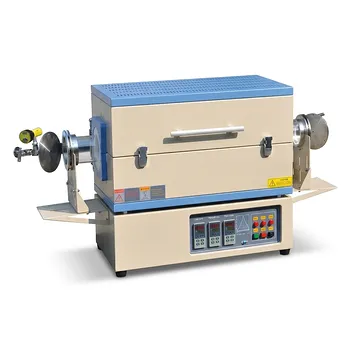
Three Zone Tube Furnace with 24 Inch Heating Length and Hinged Flange Quartz Tube System
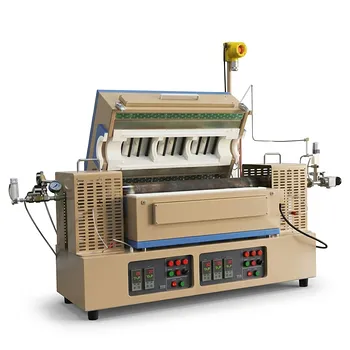
Three Zone Hydrogen Gas Tube Furnace with 82mm Superalloy Tube and Dual Hydrogen Detectors 1200C High Temperature Material Processing System
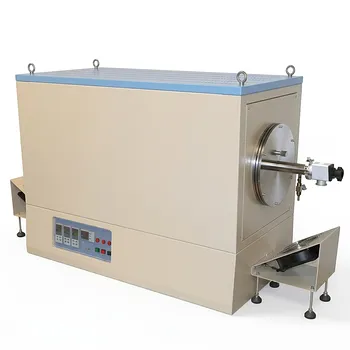
1100°C Three Zone Tube Furnace with 8.5 to 11 Inch OD Quartz Tube and Vacuum Flanges for Large Wafer Processing
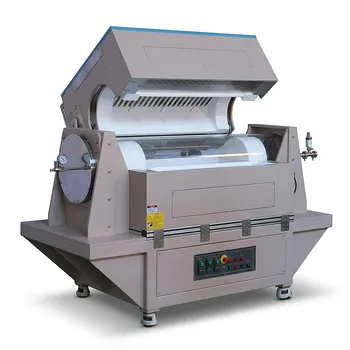
Three Zone Tube Furnace with 11 Inch or 15 Inch Quartz Tube and Hinged Flanges for Vacuum Atmosphere Heat Treatment
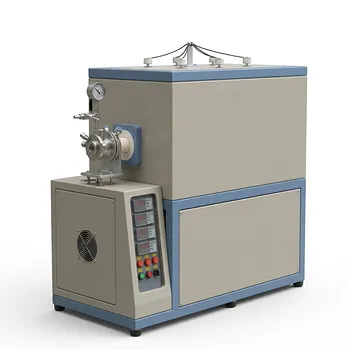
High Temperature 1700C Three Zone Tube Furnace with Alumina Tube 50mm 60mm 80mm OD for Material Research and Industrial Heat Treatment
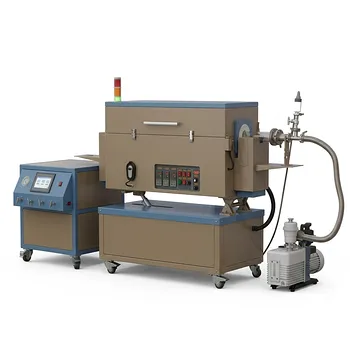
5 Inch Three Zone Rotary Tube Furnace with Integrated Gas Delivery System and 1200C Capability for Advanced Material CVD Processing
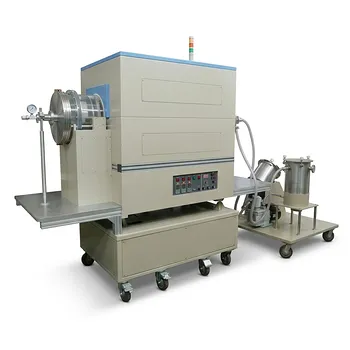
Three Zone Rotary Tube Furnace with Automatic Powder Feeding for Large Scale CVD Coating 1100C
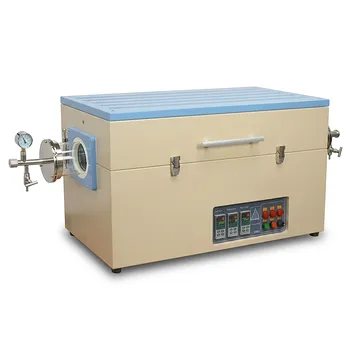
Three Zone Split Tube Furnace 36 Inch Heating Length High Temperature 1200C Material Research Furnace with Vacuum Flanges
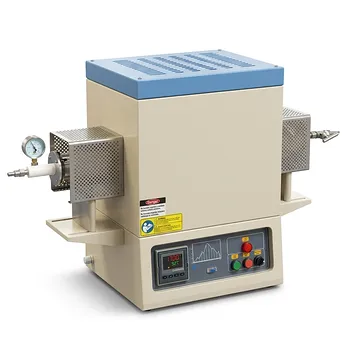
High Temperature Three Zone Tube Furnace 1700C with Alumina Tube and Water Cooled Flanges
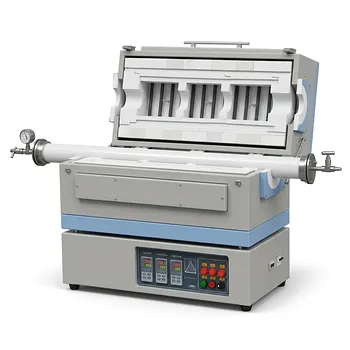
High Temperature 1500C Three Zone Split Tube Furnace with 80mm Alumina Tube and Vacuum Flange
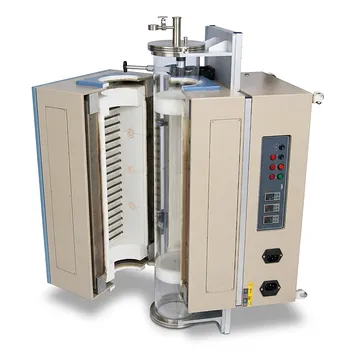
Large Vertical Three Zone Tube Furnace with 8 Inch or 11 Inch Quartz Tube and High Vacuum Flanges 1200C
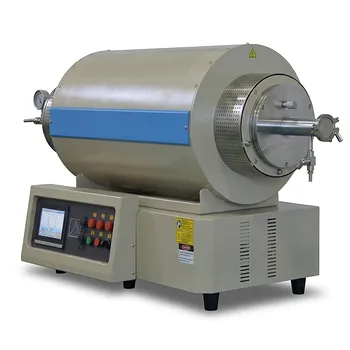
1200C Max Three Zone Tube Furnace 6 Inch OD Max with Tube and Flange
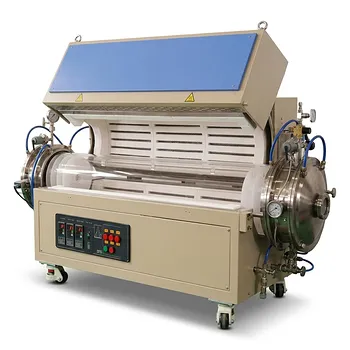
High Temperature Three Zone Split Tube Furnace 1200C Max 35.4 Inch Heating Length 8 Inch ID Tube
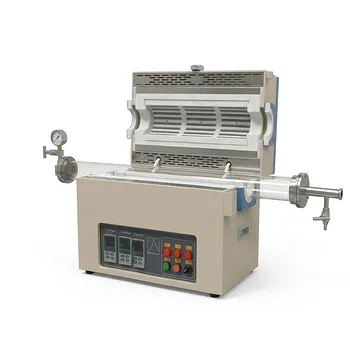
1200°C Three Zone Split Tube Furnace with 18 Inch Heating Length and Vacuum Flanges
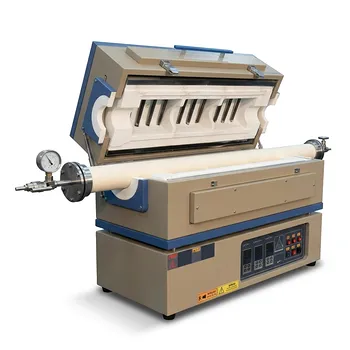
1600C Three Zone Split Tube Furnace with Alumina Tube and Vacuum Flange
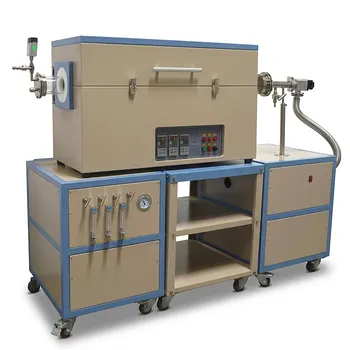
Three Zone Quartz Tube Furnace with 3 Channel Gas Mixer Vacuum Pump and Anti Corrosive Vacuum Gauge
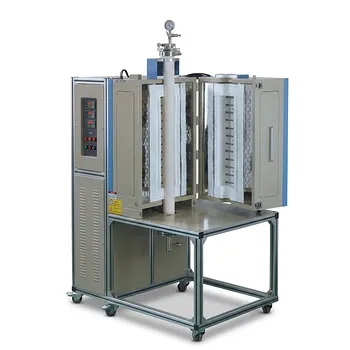
Three Zone Heating Split Vertical Tube Furnace 1700 High Temperature Vacuum Atmosphere Thermal Process System
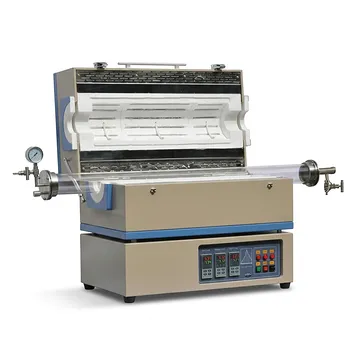
24 Inch Three Zone Split Tube Furnace with Optional Quartz Tube and Vacuum Flange System for High Temperature Material Synthesis
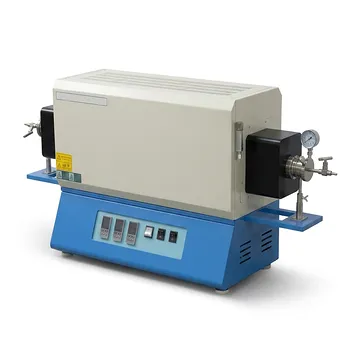
High Temperature Three Temperature Zone Tube Furnace for Advanced Material Science Sintering and Chemical Vapor Deposition Applications