How does the material of a reaction tube, such as Hastelloy versus quartz, affect the product structure? Selection Guide
Updated 3 months ago
The choice between Hastelloy and quartz reaction tubes significantly alters the physical and chemical characteristics of pyrolysis products. In laboratory-scale units, Hastelloy tubes tend to produce solid bio-chars with a higher degree of structural order and modified pore networks compared to quartz. This divergence is driven primarily by the metallic components of the Hastelloy alloy, which act as subtle catalysts during high-temperature decomposition.
Core Takeaway: While quartz is largely chemically inert, Hastelloy actively participates in the pyrolysis process by providing catalytic sites that promote specific cracking pathways, resulting in a more structured and morphologically distinct solid product.
The Mechanism of Catalytic Influence
The Role of Metallic Composition
Hastelloy is a high-performance alloy containing metals like nickel, molybdenum, and chromium. At high temperatures, these metallic surfaces can interact with the volatile vapors and solid intermediates generated during pyrolysis.
This interaction triggers catalytic cracking, which differs from the purely thermal degradation typically observed in quartz reactors. The result is a shift in the chemical equilibrium of the reaction zone.
Enhancement of Structural Order
Research indicates that the metallic environment of a Hastelloy tube facilitates the formation of more ordered carbon structures. This leads to a solid product that exhibits higher crystallinity or a more organized molecular framework than bio-char produced in an inert environment.
This increased ordering is a direct result of the alloy's ability to influence the recombination of carbon atoms during the final stages of devolatilization.
Impact on Physical Morphology and Porosity
Alterations in Microscopic Morphology
The material of the reaction tube dictates the "landscape" in which the biomass or polymer decomposes. In Hastelloy reactors, the microscopic morphology of the char often displays different surface textures compared to quartz-derived samples.
These changes are linked to how the metallic surface influences the viscosity and flow of intermediate liquid phases (tars) before they solidify into char.
Development of Pore Structures
The pore structure—including the distribution of micro, meso, and macropores—is sensitive to the rate of gas evolution and secondary cracking. Hastelloy’s catalytic effect can alter the rate at which gases escape the solid matrix.
Because the alloy promotes specific gas-phase reactions, the resulting internal void spaces in the bio-char are often more developed or specifically distributed compared to the more "natural" pore evolution seen in quartz.
Understanding the Trade-offs
Chemical Inertness vs. Heat Transfer
Quartz tubes are prized for their chemical neutrality, ensuring that the resulting data reflects the intrinsic properties of the feedstock. However, quartz is a poor thermal conductor and is highly susceptible to thermal shock and physical breakage.
Hastelloy tubes offer superior durability and thermal conductivity, allowing for more precise temperature control and faster heating rates. The trade-off is the "contamination" of the pure thermal data by the catalytic effects of the tube wall.
Cleaning and Longevity
Over time, Hastelloy tubes can undergo surface oxidation or carbon deposition (coking), which may change their catalytic activity from one experiment to the next. Quartz is easier to clean with aggressive acids or high-temperature oxidation but remains a fragile component in a high-pressure or high-flow environment.
How to Apply This to Your Project
Making the Right Choice for Your Goal
The selection of your reactor material should be dictated by whether you are studying fundamental kinetics or simulating industrial processes.
- If your primary focus is fundamental kinetic modeling: Use quartz tubes to ensure that the reaction pathways are purely thermal and not influenced by external metallic catalysts.
- If your primary focus is simulating industrial-scale metal reactors: Use Hastelloy tubes to more accurately reflect the secondary catalytic reactions that occur in commercial stainless steel or alloy-based pyrolyzers.
- If your primary focus is maximizing structural carbon quality: Lean toward Hastelloy or other metallic reactors, as the catalytic effect can assist in achieving a more organized carbon matrix.
Selecting the appropriate material ensures that your laboratory findings are both scientifically valid and practically applicable to your specific research objectives.
Summary Table:
| Feature | Quartz Reaction Tube | Hastelloy Reaction Tube |
|---|---|---|
| Chemical Nature | Chemically Inert | Catalytically Active (Ni, Mo, Cr) |
| Product Structure | Natural/Intrinsic Morphology | Highly Ordered/Crystalline |
| Thermal Conductivity | Low (Poor heat transfer) | High (Excellent heat transfer) |
| Durability | Fragile; Susceptible to thermal shock | Highly Durable; Impact resistant |
| Best Application | Fundamental kinetic modeling | Industrial simulation & coking studies |
Elevate Your Research with Precision Thermal Solutions
Choosing the right reactor material is critical for accurate material science outcomes. As a leading manufacturer of high-temperature laboratory equipment, THERMUNITS empowers industrial R&D with advanced thermal processing solutions.
Whether you require high-purity Tube furnaces for kinetic studies or robust Atmosphere and Vacuum furnaces for industrial scaling, we offer a comprehensive range including:
- Muffle, Rotary, and Hot Press Furnaces
- CVD/PECVD Systems and Dental Furnaces
- Electric Rotary Kilns and Vacuum Induction Melting (VIM) Furnaces
- High-quality Thermal Elements
Ready to optimize your heat treatment process? Contact our engineering experts today to find the perfect equipment for your specific application requirements.
References
- Ana B. Cuevas, M.P. Dorado. An Overview of Pyrolysis as Waste Treatment to Produce Eco-Energy. DOI: 10.3390/en17122852
Mentioned Products
- 1500C Three Zone Vertical Pyrolysis Furnace for Nanoparticle Synthesis and Advanced Oxide Coating
- Electric Rotary Kiln Small Rotary Furnace Biomass Pyrolysis Plant
- Electric Rotary Kiln Continuous Working Small Rotary Furnace Heating Pyrolysis Plant
- Gas Pre-Heating Tube Furnace for High Temperature Pyrolysis Reactors and Material Science Research
People Also Ask
- Why is high-precision temperature control essential in a pyrolysis furnace? Master Pd NPs/NO-C Catalyst Synthesis
- Why is Nitrogen (N2) required for 3D carbon electrodes? Ensure material purity and structural integrity.
- What is the technical necessity of multiple high-temperature thermocouples in a pyrolysis furnace? Precision Control
- Why is it necessary to maintain a strict nitrogen (N2) atmosphere during the operation of a pyrolysis furnace? (Pro Tips)
- Why are precise nitrogen supply systems and flow meters necessary in the pyrolysis process? Optimize Purity & Yield.

Tech Team · ThermUnits
Last updated on Jun 03, 2026
Related Products
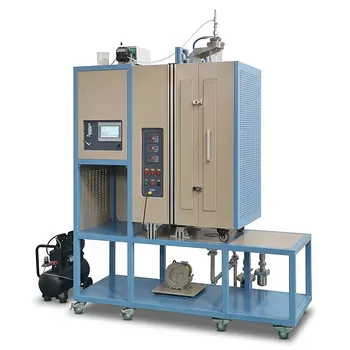
1500C Three Zone Vertical Pyrolysis Furnace for Nanoparticle Synthesis and Advanced Oxide Coating
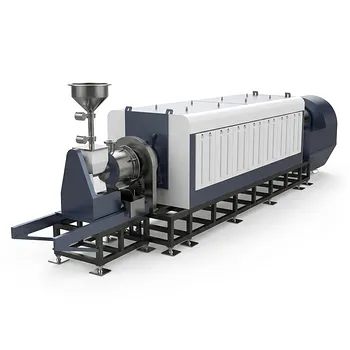
Electric Rotary Kiln Small Rotary Furnace Biomass Pyrolysis Plant
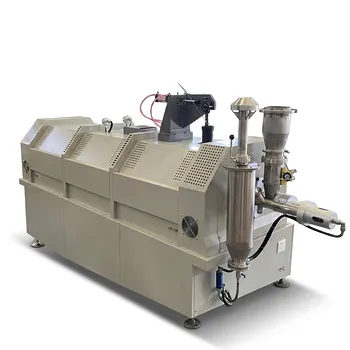
Electric Rotary Kiln Continuous Working Small Rotary Furnace Heating Pyrolysis Plant