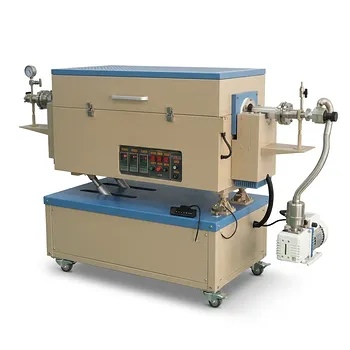
What is the technical necessity of multiple high-temperature thermocouples in a pyrolysis furnace? Precision Control
Updated 3 months ago
Precision thermal management in a pyrolysis furnace requires a multi-node sensor strategy to map non-linear heat distributions. This configuration is technically necessary to monitor temperature gradients across critical zones—such as the coil inlet and radiation chamber outlet—to ensure the material reaches its cracking point without exceeding equipment limits. By capturing real-time data at these specific nodes, operators can optimize burner loads, prevent coil damage, and validate the accuracy of complex thermal simulations.
The installation of multiple high-temperature thermocouples is the primary mechanism for transforming a furnace from an unmonitored "black box" into a controlled chemical reactor. It provides the high-fidelity data required to manage axial temperature gradients and ensure both product consistency and structural integrity.
Managing Complex Thermal Gradients
Tracking Axial and Radial Heat Distribution
Pyrolysis furnaces operate in non-equilibrium environments where significant axial temperature gradients exist along the furnace tubes. Single-point monitoring is insufficient because it fails to capture how heat is distributed from the burner zone to the convection sections.
Installing sensors at the coil inlet and radiation chamber outlet allows operators to visualize the thermal profile of the process gas as it moves through the system. This visibility is essential for maintaining specific heating rates that dictate the quality of the final product.
Stabilizing Exothermic and Endothermic Reactions
Many pyrolysis processes involve reactions that either release or absorb massive amounts of heat, such as CO2 methane production. Multi-point thermocouples distributed across a catalyst bed allow operators to detect "hot spots" or "cold zones" in real-time.
By monitoring these fluctuations, the furnace control system can adjust heating power distribution to keep temperature swings within a minimal range (often as narrow as 20 °C). This level of control is necessary to acquire accurate kinetic parameters and maintain stable throughput.
Protecting Structural Integrity and Efficiency
Preventing Localized Overheating and Coking
One of the greatest risks in high-temperature furnace operation is localized overheating of the reactor coils. When a specific section of a coil exceeds its design temperature, it can lead to rapid "coking" (carbon buildup) or catastrophic mechanical failure.
Multi-node monitoring acts as an early warning system, identifying imbalances in burner load distribution before they cause thermal damage. This ensures that the heat flux remains uniform across the entire surface area of the furnace internals.
Validating Numerical Thermal Simulations
Modern furnace operations rely heavily on numerical thermal simulations to predict behavior and optimize efficiency. These mathematical models are only as good as the real-world data used to calibrate them.
Data from nodes at the transition zones and flue gas stack provide the empirical evidence needed to "tune" these simulations. This validation allows engineers to push the boundaries of furnace performance with a high degree of confidence in the safety margins.
Understanding the Trade-offs
Calibration Drift and Harsh Environments
While more data is generally better, high-temperature thermocouples are subject to thermal degradation and calibration drift over time. Using specialized sensors, such as Type B or Type C thermocouples, increases precision but also raises the complexity of the control system maintenance.
Data Management vs. Sensor Lag
Increasing the number of nodes creates a more complex data stream that must be processed by the control program. Furthermore, the use of heavy-duty thermowells to protect sensors can introduce a time lag between a temperature change and its detection, requiring sophisticated closed-loop logic to manage.
Implementing an Effective Monitoring Strategy
How to Apply This to Your Facility
- If your primary focus is Equipment Longevity: Prioritize installing thermocouples on the external furnace walls and coil transition points to detect and mitigate localized hotspots.
- If your primary focus is Product Yield and Quality: Focus on high-precision sensors directly within the biomass or catalyst layer to ensure strict adherence to intended thermal cycles and heating rates.
- If your primary focus is Energy Efficiency: Utilize multi-point sensors in the convection zone and stack to monitor flue gas temperatures and optimize the air-to-fuel ratio in the burners.
By treating the furnace as a dynamic thermal field rather than a single-temperature environment, you ensure a safer, more predictable, and more profitable pyrolysis operation.
Summary Table:
| Monitoring Focus | Key Sensor Locations | Technical Necessity & Benefit |
|---|---|---|
| Thermal Gradients | Coil inlet & radiation chamber outlet | Maps axial/radial heat distribution; ensures consistent material cracking. |
| Reaction Stability | Catalyst bed & biomass layers | Detects hot/cold spots; stabilizes exothermic/endothermic fluctuations. |
| Structural Safety | Furnace walls & coil transition points | Prevents localized overheating, carbon buildup (coking), and coil failure. |
| Process Optimization | Convection zone & flue gas stack | Validates numerical simulations; optimizes burner loads and energy efficiency. |
Optimize Your Thermal Processing Precision with THERMUNITS
Precise temperature monitoring is the backbone of successful material science and industrial R&D. THERMUNITS provides industry-leading high-temperature laboratory equipment designed for the most demanding thermal environments.
Whether you need Muffle, Vacuum, Atmosphere, Tube, Rotary, or Hot Press furnaces, or complex CVD/PECVD and Vacuum Induction Melting (VIM) systems, our solutions offer the high-fidelity control required to manage complex thermal gradients and ensure product consistency.
Ready to elevate your furnace performance? Contact our engineering experts today to discuss custom sensor configurations and advanced heat treatment solutions tailored to your specific research goals.
References
- Д. Б. Вафин, Yuri Vankov. Thermal calculation of the radiation chamber of a hydrocarbon pyrolysis furnace with a non-symmetric arrangement wall-mounted burners. DOI: 10.30724/1998-9903-2023-25-5-126-140
Mentioned Products
- 1500C Three Zone Vertical Pyrolysis Furnace for Nanoparticle Synthesis and Advanced Oxide Coating
- Electric Rotary Kiln Small Rotary Furnace Biomass Pyrolysis Plant
- Electric Rotary Kiln Continuous Working Small Rotary Furnace Heating Pyrolysis Plant
- High Temperature 1700C Vertical Tube Furnace for Powder Spherification and Material Sintering
- Five Side Heating Muffle Furnace High Purity Alumina Fiber 27L Chamber 1200C High Temperature Thermal Processing System for Sintering Annealing and Materials Research
People Also Ask
- Why is high-precision temperature control essential in a pyrolysis furnace? Master Pd NPs/NO-C Catalyst Synthesis
- Why is Nitrogen (N2) required for 3D carbon electrodes? Ensure material purity and structural integrity.
- Why is it necessary to maintain a strict nitrogen (N2) atmosphere during the operation of a pyrolysis furnace? (Pro Tips)
- Why are precise nitrogen supply systems and flow meters necessary in the pyrolysis process? Optimize Purity & Yield.
- What is the role of a high-temperature tube furnace in coal powder pyrolysis benchmarking? Achieve Precise Baselines.

Tech Team · ThermUnits
Last updated on Jun 02, 2026
Related Products
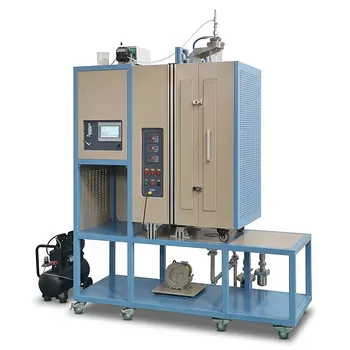
1500C Three Zone Vertical Pyrolysis Furnace for Nanoparticle Synthesis and Advanced Oxide Coating
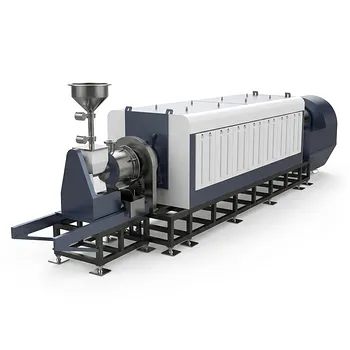
Electric Rotary Kiln Small Rotary Furnace Biomass Pyrolysis Plant
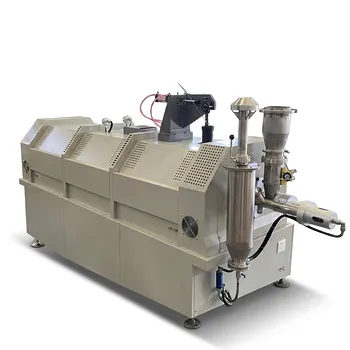
Electric Rotary Kiln Continuous Working Small Rotary Furnace Heating Pyrolysis Plant

High Temperature 1700C Vertical Tube Furnace for Powder Spherification and Material Sintering
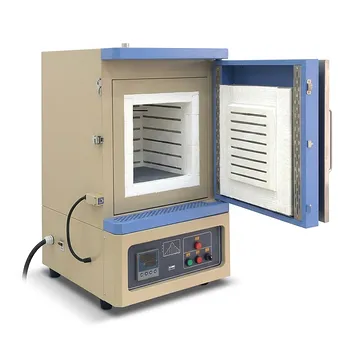
Five Side Heating Muffle Furnace High Purity Alumina Fiber 27L Chamber 1200C High Temperature Thermal Processing System for Sintering Annealing and Materials Research
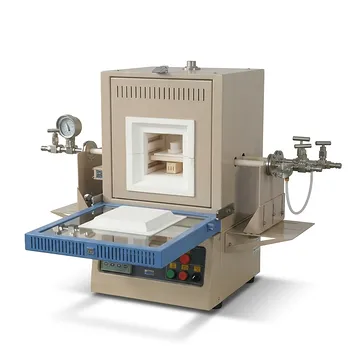
1700C Compact Hybrid Furnace with Dual Layer Box Sintering and Controlled Atmosphere Alumina Tubes
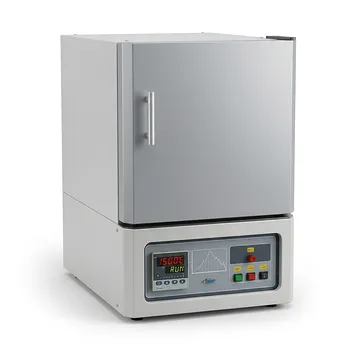
High Temperature 1500C Benchtop Muffle Furnace 3.6L Alumina Fiber Chamber Programmable Controller Sintering Annealing Carbonization Thermal Processing System
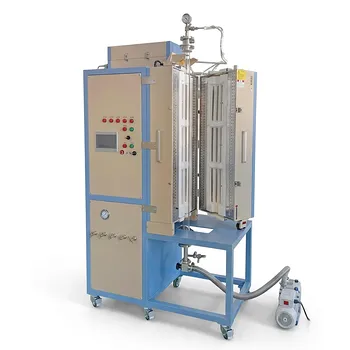
1200C Three Zone Vertical Fixed Fluidized Bed Furnace for Methane Reforming and Fischer Tropsch Reactions

Compact High Temperature 1600C Tube Furnace with 50mm Alumina Tube and Vacuum Flanges for Material Sintering
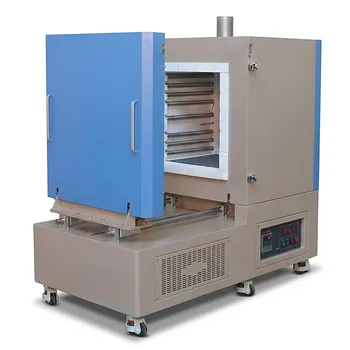
1200C Five Side Heating Muffle Furnace with Sliding Door 125L Volume High Temperature Heat Treatment System for Large Scale Sintering and Annealing
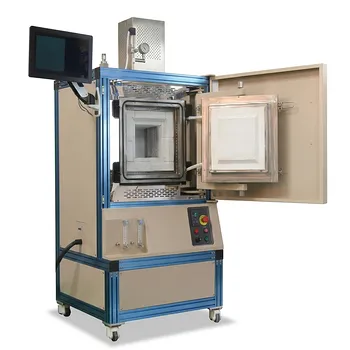
High Temperature Hydrogen Atmosphere Box Furnace 1650C Max Reducing Environment Material Synthesis System 8x8x8 Chamber
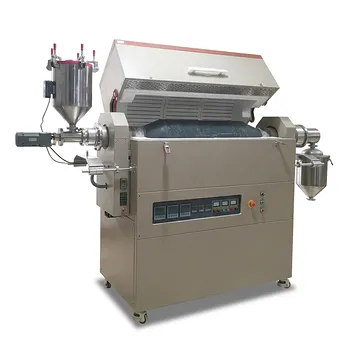
High Temperature Tilting Rotary Tubular Furnace for Continuous Powder Thermal Processing and Controlled Atmosphere Sintering
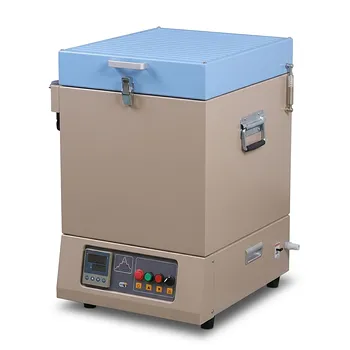
High Temperature Vertical Crucible Furnace with 22L Heating Chamber and 1200C Maximum Temperature
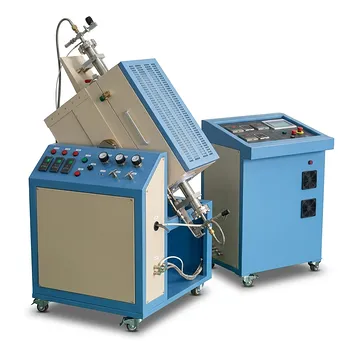
1100C High Pressure Rocking Tube Furnace with 2 Inch Super Alloy Processing Tube for Material Synthesis
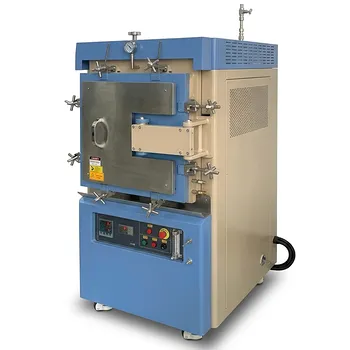
Atmosphere Controlled Muffle Furnace 1700C Maximum Temperature 80L High Capacity Vacuum Inert Gas Box Furnace

High Temperature 1700C Benchtop Tube Furnace with 5 Inch Heating Zone High Purity Alumina Tube and Vacuum Sealing Flanges
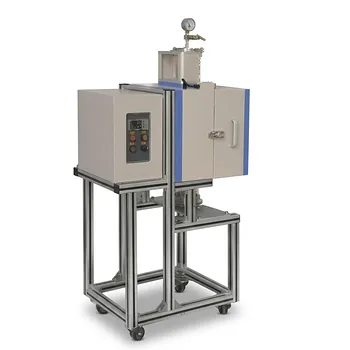
1200°C 5 Inch Vertical Quartz Tube Furnace with Stainless Steel Vacuum Flanges
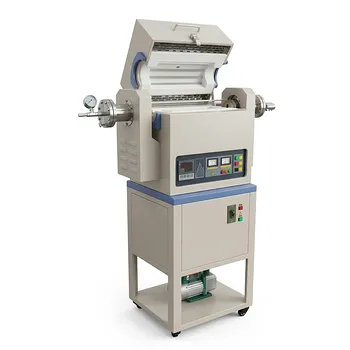
High Temperature Rotary Tilt Tubular Furnaces for Advanced Powder Sintering and Material Processing

1800C High Temperature Compact Vacuum Tube Furnace with 60mm OD Alumina Tube and Kanthal MoSi2 Heating Elements