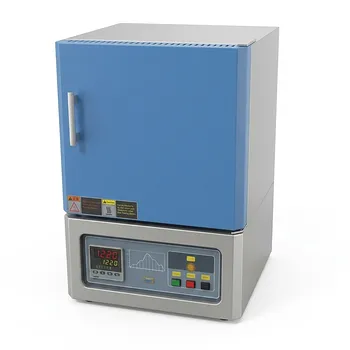
How is the ash content of polymers and plastics determined using a muffle furnace? Essential Guide for QC & R&D
Updated 5 months ago
Determining the ash content of polymers and plastics involves the controlled incineration of the material’s organic matrix within a high-temperature muffle furnace. This process removes all combustible carbon-based components through oxidation, leaving behind only the inorganic residues—such as fillers, pigments, or reinforcements—for precise quantification.
Core Takeaway: Ash content determination is a critical quality control method that uses thermal decomposition to isolate inorganic additives from the polymer base. By measuring the mass of the remaining residue, manufacturers can verify material formulations and ensure structural integrity.
The Mechanism of Thermal Decomposition
Isolating the Inorganic Matrix
A muffle furnace provides a stable, contamination-free environment where the organic portion of a plastic or polymer sample is completely burned off. This "calcination" process targets the carbon-containing polymers, converting them into gases that are vented away from the chamber.
What remains is the inorganic mineral mass, which typically consists of glass fibers, calcium carbonate, talc, or titanium dioxide. These residues are non-combustible and remain stable even at the extreme temperatures required for organic decomposition.
The Role of Gravimetric Analysis
The process is fundamentally gravimetric, meaning it relies on precise weight measurements before and after the heating cycle. The difference between the initial sample weight and the final residue weight allows for the calculation of the ash percentage.
This percentage is a definitive metric for identifying whether a material meets its specified formulation. It is particularly vital for verifying the concentration of reinforcements like fiberglass, which directly affect the mechanical strength of the plastic.
Technical Prerequisites for Accurate Measurement
Temperature Control and Uniformity
The muffle furnace must maintain high temperatures—often ranging from 600°C to 850°C—depending on the specific polymer type and industry standards. Maintaining temperature uniformity within the chamber is essential to ensure that every part of the sample reaches the necessary threshold for complete oxidation.
If the temperature is too low, the organic matrix may not fully decompose, leading to an artificially high ash reading. Conversely, if temperatures are poorly controlled, some inorganic fillers might undergo unwanted chemical changes or volatilization.
Air Supply and Oxidation
Complete combustion requires a sufficient air supply to provide the oxygen necessary for the oxidation of carbonaceous materials. Modern muffle furnaces are designed to allow enough air circulation to remove volatile matter and ensure the sample is thoroughly mineralized.
Without an adequate oxidizing atmosphere, the sample may "char" rather than turn to ash. This leaves behind fixed carbon, which contaminates the inorganic residue and invalidates the quality control test.
Understanding the Trade-offs and Pitfalls
Filler Decomposition Risks
While most inorganic fillers are stable, certain additives like calcium carbonate can begin to decompose into carbon dioxide and lime at temperatures exceeding 800°C. If the furnace temperature is set too high for the specific additive package, the measured ash content will be lower than the actual filler content.
Technical advisors must match the furnace temperature to the known properties of the fillers used. Using a standard temperature across all polymer types without adjustment can lead to systematic errors in formulation verification.
Sample Contamination and Handling
The precision of ash determination is highly sensitive to external contamination. Crucibles must be pre-fired and desiccated to ensure they do not introduce moisture or foreign particles into the measurement.
Even a microscopic amount of dust or residual moisture can skew the results of high-precision plastics testing. Professional labs utilize dessicators to cool samples post-incineration to prevent the ash from absorbing atmospheric moisture before the final weighing.
Applying Ash Analysis to Your Material Goals
Making the Right Choice for Your Goal
To achieve the most accurate results, you must align your furnace settings with the specific objectives of your material analysis.
- If your primary focus is verifying fiberglass reinforcement levels: Set the furnace to a stable 750°C to ensure the polymer matrix is fully removed without damaging the glass structure.
- If your primary focus is detecting trace metallic contaminants: Utilize a higher temperature (up to 850°C) and a longer hold time to ensure even the most stable organic compounds are completely mineralized.
- If your primary focus is analyzing polymers with volatile fillers: Use a lower, controlled temperature (approx. 600°C) to prevent the chemical breakdown of additives like calcium carbonate.
A rigorous muffle furnace protocol transforms the complex chemistry of plastics into a simple, quantifiable metric for production quality.
Summary Table:
| Parameter | Specification / Details | Purpose |
|---|---|---|
| Methodology | Thermal Oxidation & Gravimetric Analysis | Isolates inorganic residue from the organic matrix |
| Temperature Range | 600°C – 850°C | Ensures complete decomposition of the polymer base |
| Atmosphere | Oxidizing (Adequate Air Supply) | Prevents sample charring and ensures mineralization |
| Key Target Residues | Glass fiber, Talc, CaCO3, TiO2 | Verifies material formulation and structural integrity |
| Critical Equipment | High-Precision Muffle Furnace | Provides temperature uniformity and stability |
Elevate Your Material Analysis with THERMUNITS
Achieve uncompromising precision in your quality control processes with THERMUNITS, a leading manufacturer of high-temperature laboratory equipment for material science and industrial R&D. Our advanced Muffle Furnaces are engineered specifically for accurate ash content determination, offering the superior temperature uniformity and stable environment your research demands.
Beyond ash analysis, THERMUNITS provides a comprehensive suite of thermal processing solutions tailored for professional laboratories, including:
- Vacuum, Atmosphere, Tube, and Rotary Furnaces
- Hot Press Furnaces and CVD/PECVD Systems
- Dental Furnaces and Vacuum Induction Melting (VIM) Furnaces
- Electric Rotary Kilns and High-Quality Thermal Elements
Partner with experts who understand your heat treatment needs.
Contact THERMUNITS Today for a Professional Consultation
Mentioned Products
- 1200C Muffle Furnace 12x8x5 7.2L Heating Chamber with Quartz Observation Window and Vent Port
- High Temperature 1200C Muffle Furnace 27L Volume 12x12x12 Chamber with Programmable PID Controller for Laboratory Material Science
- 1200C High Temperature 125L Muffle Furnace 5 Side Heating for Large Batch Sintering with Optional Alloy Debinding Chamber
- 1750C Compact Muffle Furnace 1.7L Ultra High Temperature Laboratory Sintering System for Advanced Ceramics and Material Science Research
- 1200°C High Temperature Muffle Furnace 19L Chamber with 50 Segment Programmable Controller
People Also Ask
- What is the function of an experimental muffle furnace in the conversion of FeOOH to α-Fe2O3? Optimize Phase Transition
- Why is a muffle furnace required for MoO2@HCNF pre-oxidation? Crucial Steps for High-Performance Composites
- What is the function of a high-temperature Muffle furnace in removing residual solvents? Essential Bismuth Synthesis
- What is the function of Muffle furnace calcination? Essential steps for Pr-doped SrFeMoO6 Perovskite synthesis.
- What are the primary functions of a Muffle furnace in oxide calcination? Achieve high purity and phase control.

Tech Team · ThermUnits
Last updated on Apr 14, 2026
Related Products
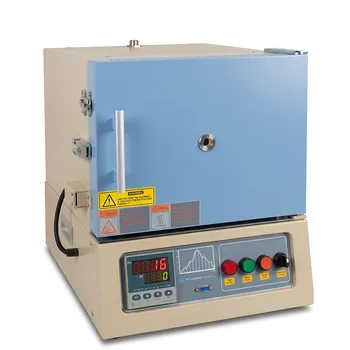
1200C Muffle Furnace 12x8x5 7.2L Heating Chamber with Quartz Observation Window and Vent Port
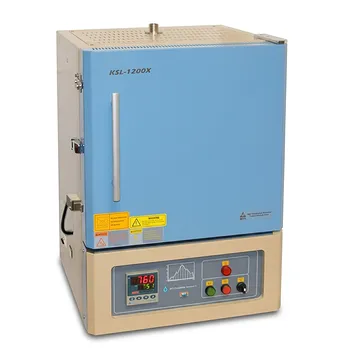
High Temperature 1200C Muffle Furnace 27L Volume 12x12x12 Chamber with Programmable PID Controller for Laboratory Material Science
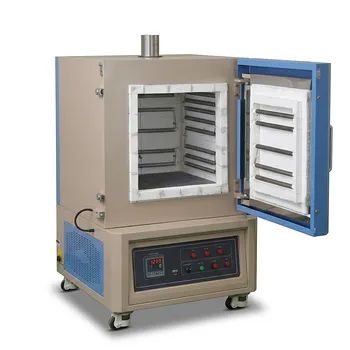
1200C High Temperature 125L Muffle Furnace 5 Side Heating for Large Batch Sintering with Optional Alloy Debinding Chamber
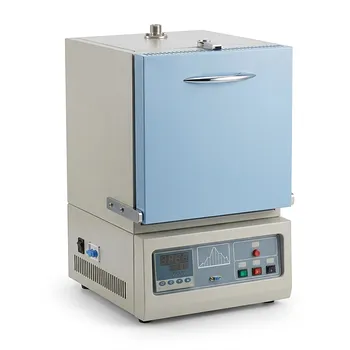
1750C Compact Muffle Furnace 1.7L Ultra High Temperature Laboratory Sintering System for Advanced Ceramics and Material Science Research
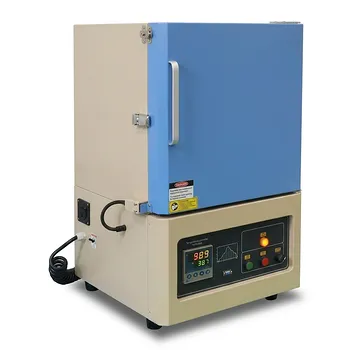
1200°C High Temperature Muffle Furnace 19L Chamber with 50 Segment Programmable Controller
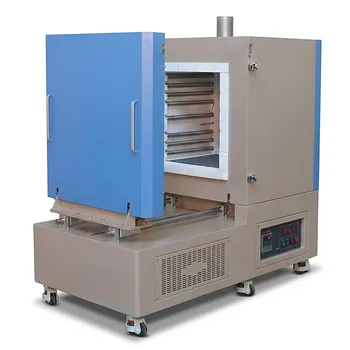
1200C Five Side Heating Muffle Furnace with Sliding Door 125L Volume High Temperature Heat Treatment System for Large Scale Sintering and Annealing
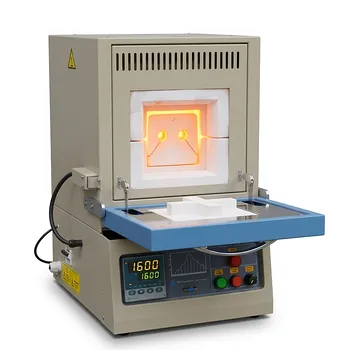
High Temperature Compact Muffle Furnace 1700 C with 30 Segment Programmable Controller and 1.7L Cubic Chamber
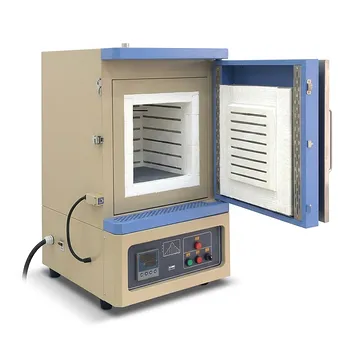
Five Side Heating Muffle Furnace High Purity Alumina Fiber 27L Chamber 1200C High Temperature Thermal Processing System for Sintering Annealing and Materials Research
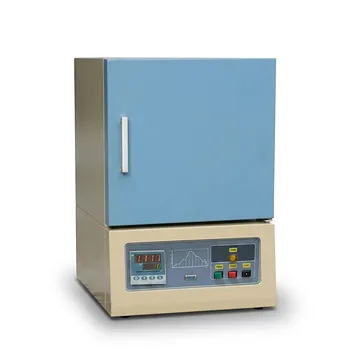
Ultra High Temperature Bench Top Muffle Furnace 1750C Sintering System with Kanthal Super Heating Elements and Precision Digital Control
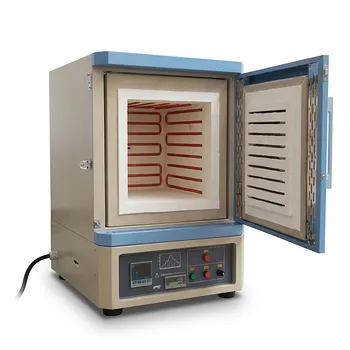
Five Side Heating Muffle Furnace 1200C High Uniformity 64L Chamber 16x16x16 Inch Industrial Heat Treatment
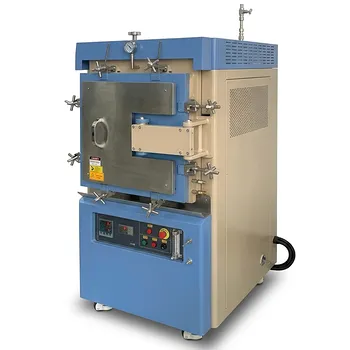
Atmosphere Controlled Muffle Furnace 1700C Maximum Temperature 80L High Capacity Vacuum Inert Gas Box Furnace
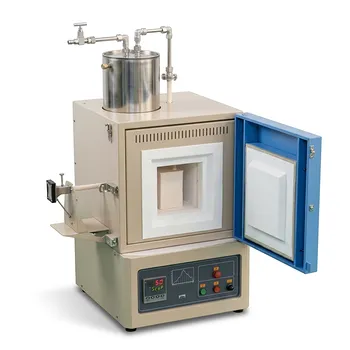
High Temperature Bench Top Muffle Furnace 1700C with Integrated Evaporating Particle Collection and 8x8x8 Alumina Fiber Chamber
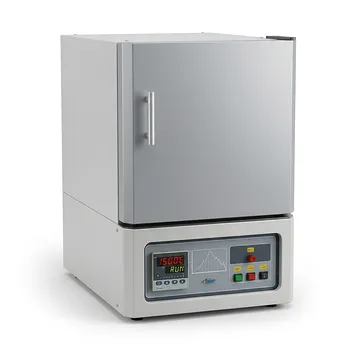
High Temperature 1500C Benchtop Muffle Furnace 3.6L Alumina Fiber Chamber Programmable Controller Sintering Annealing Carbonization Thermal Processing System
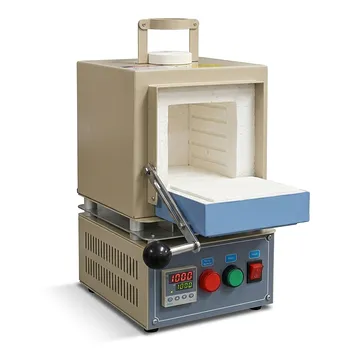
Compact 1000C Muffle Furnace with Programmable Controller and 2 Inch Top Port for Vacuum and Atmosphere Material Research
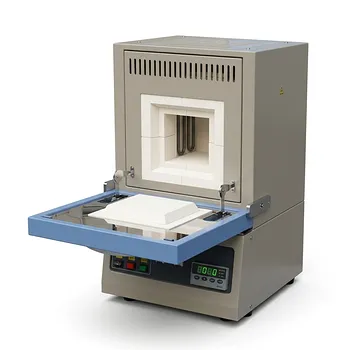
Five Sided Heating Muffle Furnace High Uniformity 1200C Lab Box Furnace 27L Alumina Fiber Chamber
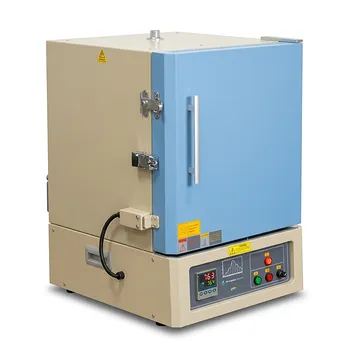
Large Capacity 1200C Muffle Furnace 64 Liter Chamber with Digital PID Controller and Built In Venting Port
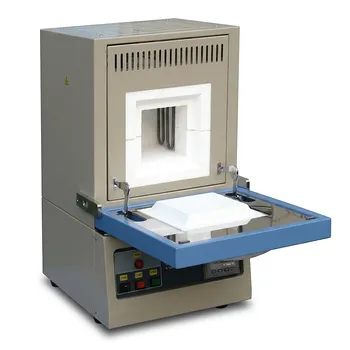
High Temperature 1800C Compact Muffle Furnace with Kanthal Super 1900 Heating Elements and 1.7L Alumina Chamber
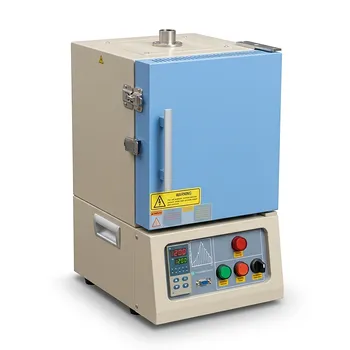
1200°C Small Box Furnace 4.2 Liter Programmable Muffle Furnace with High Purity Alumina Insulation and PID Control
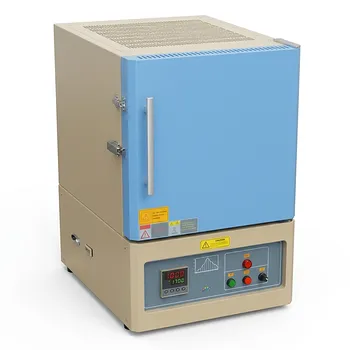
Large Bench Top 1700C High Temperature Muffle Furnace with 19L Chamber for Advanced Material Sintering and Annealing