What advantages does a ceramic boat offer for f-SWNTs-T catalysts? Ensure High Purity and Uniform Annealing Results
Updated 3 months ago
The primary advantages of using a ceramic boat for f-SWNTs-T catalysts are its extreme chemical inertness and its role in ensuring reaction uniformity. During annealing at 600-700°C, the ceramic material remains non-reactive with carbon nanotubes (CNTs) and nickel components, preventing unwanted chemical changes. Its design also facilitates full contact between the flowing argon gas and the powder sample, which is essential for uniform thermal atomization and carbonization across the material layer.
A ceramic boat provides a chemically neutral, high-stability environment that protects the structural integrity of f-SWNTs-T catalysts during high-temperature processing. By preventing contamination and ensuring consistent gas-solid interaction, it is essential for achieving high material purity and catalytic performance.
Maintaining Chemical Integrity and Purity
Superior Chemical Inertness
The ceramic material is chosen specifically because it does not react with the carbon nanotubes or the nickel components of the f-SWNTs-T precursor. This ensures that the chemical composition of the catalyst remains exactly as intended without the introduction of container-derived impurities.
High-Temperature Stability
Ceramic boats can withstand the intense heat of a tube furnace, often exceeding 800°C, without warping or degrading. This thermal stability provides a reliable platform for the catalyst within the constant temperature zone of the furnace.
Preservation of Physicochemical Properties
Because the boat is non-reactive even in the presence of corrosive gases or reactive metal compounds, it preserves the specific surface characteristics of the catalyst. This is vital for maintaining the intended active sites on the functionalized single-walled carbon nanotubes (f-SWNTs).
Facilitating Uniform Reaction Kinetics
Optimized Gas-Solid Interaction
The open-top design of the ceramic boat allows flowing argon or other carrier gases to maintain full contact with the powder samples. This accessibility ensures that the carbonization process proceeds at the same rate throughout the entire depth of the material.
Uniform Thermal Atomization
Consistent heat transfer through the ceramic material ensures that the thermal atomization reaction occurs uniformly. This prevents localized "hot spots" or "cold spots" that could lead to inconsistent catalyst quality or structural defects in the CNTs.
Controlled Vapor Generation
In processes involving precursors that release gases, the shape of the boat helps control the flow of vapor over the sample surface. This stability is critical for reactions like phosphidation or sulfurization that may occur alongside annealing.
Safety and Post-Process Preservation
Prevention of Spontaneous Ignition
Highly active catalysts produced through high-temperature annealing can be pyrophoric, meaning they might ignite when exposed to air. Using a covered ceramic boat provides a physical shield that prevents oxygen from reaching the active catalyst during the cooling phase.
Protection Against Accidental Oxidation
Even if a catalyst does not ignite, exposure to air while hot can cause unintended oxidation that ruins the catalytic properties. The ceramic boat and its lid act as a barrier, ensuring the material remains in its desired reduced or atomized state until it is safely collected.
Understanding the Trade-offs
Material Adhesion and Recovery
One common pitfall is the potential for fine catalyst powders to adhere to the slightly porous surface of the ceramic. This can make the precise weighing and 100% recovery of the synthesized f-SWNTs-T difficult after the annealing process.
Thermal Mass and Ramping Rates
Ceramic materials have a specific thermal mass that can influence how quickly the sample reaches the target temperature. While this provides stability, it may require longer "soak times" to ensure the center of the powder bed has reached the furnace's set temperature.
Strategic Implementation for Catalyst Synthesis
Selecting the right container configuration is critical to the success of the f-SWNTs-T annealing process.
- If your primary focus is material purity: Utilize high-purity alumina ceramic boats to ensure there is zero migration of silica or other impurities into the nickel-carbon matrix.
- If your primary focus is reaction uniformity: Use a shallow ceramic boat with a larger surface area to minimize the thickness of the powder layer and maximize gas contact.
- If your primary focus is catalyst stability and safety: Ensure the boat is equipped with a tight-fitting lid that is only removed once the material has reached room temperature in an inert atmosphere.
The ceramic boat is more than a simple container; it is a passive yet vital component that ensures the chemical and structural precision of high-performance catalysts.
Summary Table:
| Feature | Advantage for Catalysts | Key Impact |
|---|---|---|
| Chemical Inertness | No reaction with CNTs or Nickel | Preserves material purity and composition |
| Thermal Stability | Withstands >800°C without warping | Provides a reliable and consistent platform |
| Open-Top Design | Optimized gas-solid interaction | Ensures uniform thermal atomization |
| Physical Barrier | Prevents oxygen exposure during cooling | Protects against oxidation and ignition |
| Thermal Mass | Stable heat distribution | Prevents localized hot spots during reaction |
Elevate Your Material Research with THERMUNITS Precision
Achieving the perfect catalyst synthesis requires more than just the right container—it requires precision-engineered thermal environments. THERMUNITS is a leading manufacturer of high-temperature laboratory equipment dedicated to material science and industrial R&D. We empower your research with a comprehensive range of solutions, including:
- Advanced Furnaces: Muffle, Vacuum, Atmosphere, Tube, Rotary, and Hot Press furnaces.
- Specialized Systems: CVD/PECVD systems, Dental Furnaces, and Vacuum Induction Melting (VIM) furnaces.
- Industrial Solutions: Electric rotary kilns and high-quality Thermal Elements.
Whether you are annealing f-SWNTs-T catalysts or developing next-generation materials, our equipment ensures the chemical integrity and structural precision your work demands.
Ready to optimize your heat treatment process? Contact our technical experts today to find the ideal thermal solution for your laboratory.
References
- Fengwei Zhang, Sheng Zhu. Partial thermal atomization of residual Ni NPs in single-walled carbon nanotubes for efficient CO <sub>2</sub> electroreduction. DOI: 10.1039/d4sc07291j
Mentioned Products
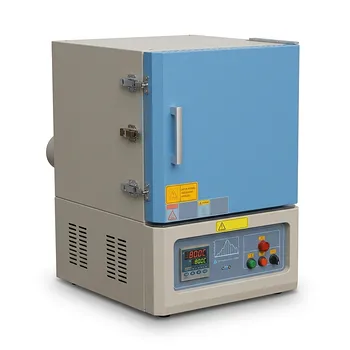
- 1800C Bench Top Muffle Furnace 18 Liters with Kanthal Super 1900 Heating Elements for High Purity Ceramic Sintering and Material Research
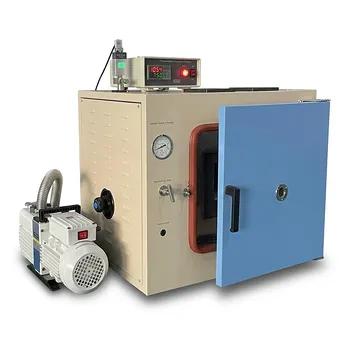
- Compact High Vacuum Box Furnace 1050C Max 6.2L Ceramic Chamber Stainless Steel Shell Programmable Temperature Controller for Material Science Research
People Also Ask
- Why is a benchtop muffle furnace essential for U3O8 micromaterials? Achieve precision stoichiometry and purity.
- What materials are typically used for heating elements in muffle furnaces? A Guide to Performance & Temperature Limits
- What role does a laboratory high-temperature muffle furnace play in the ash analysis phase of biomass co-firing research? [Guide]
- Why is a sintering furnace or Rapid Thermal Processing (RTP) equipment necessary for the formation of electrodes? Master Solar Ohmic Contacts.
- What function does argon serve in MOF melt-quenching? Prevent oxidation and ensure chemical integrity.

Tech Team · ThermUnits
Last updated on Jun 03, 2026