Why use alumina boats for WSe2 synthesis? Ensure high-purity CVD growth and superior crystal quality.
Updated 3 months ago
High-purity alumina ceramic boats are essential for the synthesis of monolayer tungsten diselenide ($WSe_2$) because they provide a chemically inert environment at the extreme temperatures required for Chemical Vapor Deposition (CVD). These containers prevent unwanted reactions between the boat material and precursors like tungsten trioxide ($WO_3$) and selenium (Se), ensuring no foreign elements contaminate the gas phase. This level of purity is fundamental to achieving the superior electronic characteristics and crystal quality required for advanced semiconductor applications.
Core Takeaway: High-purity alumina boats act as a critical thermal and chemical shield, preventing precursor contamination and ensuring uniform material growth at temperatures up to 950°C. By eliminating parasitic reactions, they enable the production of $WSe_2$ films with high single-photon purity and optimized electronic performance.
Maintaining Chemical Integrity
Neutralizing Precursor Interaction
In $WSe_2$ synthesis, precursors such as tungsten trioxide ($WO_3$) and selenium (Se) must remain pure to form a high-quality monolayer. High-purity alumina ($Al_2O_3$) is exceptionally stable, ensuring it does not react with these metal oxides or chalcogen vapors even at temperatures reaching 950°C.
Preventing Volatile Impurities
At high temperatures, lower-quality containers can release trace elements like silicon or iron into the gas phase. High-purity alumina eliminates this risk, preventing these "dopants" from entering the $WSe_2$ crystal lattice. This is vital for maintaining the intrinsic semiconductor properties and avoiding defects that could ruin the film's electronic performance.
Protection Against Corrosion
The synthesis environment often involves aggressive vapors that can degrade standard laboratory equipment. Alumina exhibits excellent chemical resistance to halides and acidic metal salt decomposition, ensuring the boat remains a stable physical carrier throughout the entire heating and cooling cycle.
Superior Thermal Performance
Resistance to Extreme Temperatures
Monolayer $WSe_2$ growth often requires sustained temperatures near 1000°C. High-purity alumina ceramic maintains its structural integrity and inertness at these levels, whereas other materials like quartz may begin to soften or become more reactive.
Thermal Shock and Stability
The CVD process involves rapid heating and cooling cycles that can cause inferior materials to crack. Alumina boats possess high thermal shock resistance, allowing them to survive repeated use without shedding particulate matter into the reaction zone.
Facilitating Uniform Volatilization
The structural design of alumina boats helps manage the gas flow over the precursor powders. This leads to uniform volatilization of the precursors, ensuring a stable concentration of reactants in the gas stream, which is critical for growing large-area, continuous monolayer films.
Understanding the Trade-offs
Alumina vs. Quartz
While quartz boats are common in lower-temperature applications, they lack the chemical inertness of alumina when dealing with certain metal oxides at high temperatures. Quartz can become a source of silicon contamination or undergo devitrification, making alumina the more reliable choice for high-purity TMD synthesis.
Porosity and Cleaning
Alumina boats can be slightly more porous than quartz, depending on their manufacturing method. This means they may retain trace amounts of precursors between runs, requiring rigorous high-temperature "bake-out" procedures or chemical cleaning to prevent cross-contamination in subsequent experiments.
Material Brittleness
Like all ceramics, alumina is highly brittle and sensitive to mechanical stress. While it handles thermal stress well, physical impacts or uneven heating can cause sudden failure, requiring careful handling and precise placement within the furnace tube.
Making the Right Choice for Your Goal
When selecting a carrier for $WSe_2$ synthesis, your choice depends on the specific performance metrics of your final film.
- If your primary focus is Maximum Electronic Mobility: Use high-purity (99.9%+) alumina boats to ensure zero metallic contamination in the $WSe_2$ lattice.
- If your primary focus is Optical Photoluminescence: Alumina is preferred because it prevents the introduction of impurity-related quenching centers that reduce light emission efficiency.
- If your primary focus is Large-Scale Growth Uniformity: Utilize the thermal mass and stability of alumina to provide a consistent evaporation rate of precursor powders.
By prioritizing the chemical and thermal stability of high-purity alumina, researchers can consistently produce monolayer $WSe_2$ with the high crystal quality necessary for next-generation optoelectronic devices.
Summary Table:
| Key Feature | Benefit for $WSe_2$ Synthesis | Research Impact |
|---|---|---|
| Chemical Inertness | Prevents reactions with $WO_3$ and Se | Ensures zero lattice contamination |
| High Thermal Limit | Stable at temperatures up to 1000°C | Reliable performance in high-temp CVD |
| Low Volatility | No release of trace elements (Si, Fe) | Optimizes electronic mobility |
| Thermal Shock Resistance | Resists cracking during rapid cycles | Prevents particulate shed into the film |
Elevate Your Material Research with THERMUNITS
Achieving superior electronic characteristics in monolayer $WSe_2$ requires a perfectly controlled, contaminant-free environment. THERMUNITS is a leading manufacturer of high-temperature laboratory equipment specifically designed for material science and industrial R&D.
We offer a comprehensive range of thermal processing solutions to support your advanced synthesis needs, including:
- CVD/PECVD Systems for precise 2D material growth.
- Tube and Vacuum Furnaces for controlled atmosphere processing.
- High-Purity Thermal Elements and laboratory heat treatment equipment.
- Specialized Muffle, Rotary, Hot Press, and Vacuum Induction Melting (VIM) furnaces.
Whether you are a researcher focused on optoelectronics or an industrial engineer scaling production, our expertise ensures your equipment delivers the precision your work demands.
Ready to optimize your lab's performance? Contact our experts today to find the ideal heat treatment solution!
References
- Xuemin Luo, Yong Liu. Impact of Carrier Gas Flow Rate on the Synthesis of Monolayer WSe2 via Hydrogen-Assisted Chemical Vapor Deposition. DOI: 10.3390/ma17102190
Mentioned Products
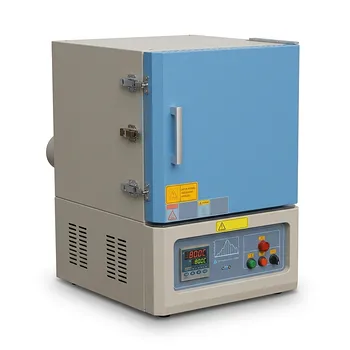
- 1800C Bench Top Muffle Furnace 18 Liters with Kanthal Super 1900 Heating Elements for High Purity Ceramic Sintering and Material Research
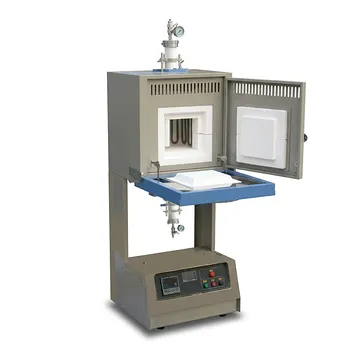
- Vertical Hybrid High Temperature Furnace 1500C Alumina Tube SOFC Fuel Cell Testing Laboratory Heat Treatment Research Equipment
People Also Ask
- Why is a benchtop muffle furnace essential for U3O8 micromaterials? Achieve precision stoichiometry and purity.
- What materials are typically used for heating elements in muffle furnaces? A Guide to Performance & Temperature Limits
- What role does a laboratory high-temperature muffle furnace play in the ash analysis phase of biomass co-firing research? [Guide]
- Why is a sintering furnace or Rapid Thermal Processing (RTP) equipment necessary for the formation of electrodes? Master Solar Ohmic Contacts.
- What function does argon serve in MOF melt-quenching? Prevent oxidation and ensure chemical integrity.

Tech Team · ThermUnits
Last updated on Jun 02, 2026