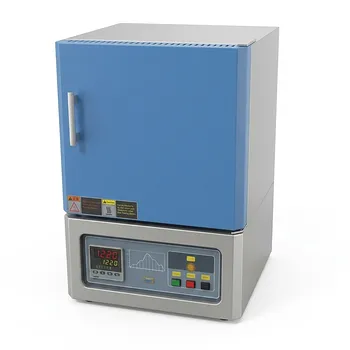
What are the common temperature ranges and applications for modern muffle furnaces? A Guide to 500°C - 1800°C Solutions
Updated 5 months ago
Modern muffle furnaces are precision instruments engineered to operate across a broad thermal spectrum, ranging from 500 °C to 1,800 °C. While standard laboratory models typically peak at 1,200 °C, advanced units utilize specialized heating elements to reach the higher end of the scale. These devices are essential for tasks requiring high-temperature consistency, such as ashing, sintering, and complex metallurgical heat treatments.
Core Takeaway: Choosing the right muffle furnace depends on the specific thermal threshold of your application—standard units handle routine analytical chemistry up to 1,200 °C, while advanced materials science requires specialized 1,800 °C models equipped with high-performance heating elements and insulation.
The Spectrum of Modern Temperature Ranges
Standard Laboratory Operating Limits
Most standard muffle furnaces are designed to operate at temperatures up to 1,200 °C. These units are the workhorses of general laboratories, providing stable environments for everyday heating tasks.
The performance of these units is primarily dictated by the quality of the internal insulation and the type of heating elements used. For most organic and chemical testing, this range provides a significant safety margin.
High-Temperature Specialized Performance
Advanced muffle furnaces can reach temperatures as high as 1,800 °C. To achieve these extremes, manufacturers utilize specialized molybdenum disilicide (MoSi2) heating elements, which can maintain precision even at peak levels.
These high-temp units often feature advanced temperature controllers that offer stability within ±1 °C. This level of precision is critical for industrial R&D where even minor fluctuations can compromise material integrity.
Diverse Applications in Chemistry and Industry
Proximate Analysis in Analytical Chemistry
Muffle furnaces are indispensable for determining the chemical energy potential of raw materials through proximate analysis. This process involves heating samples to specific benchmarks to measure their composition.
For example, ash content determination typically occurs at 500 °C, which burns off organic matter to leave behind mineral residue. Conversely, volatile matter determination requires a higher setting, often around 920 °C, to predict char yields.
Materials Engineering and Processing
In industrial settings, these furnaces are used for sintering and ceramic firing. These processes require high heat to fuse particles together without melting them into a liquid state.
Additionally, muffle furnaces facilitate heat treatment of metals, glass fusing, and general materials testing. These applications rely on the furnace's ability to isolate the sample from combustion contaminants through its "muffle" design.
Critical Safety and Operational Integrity
Integrated Protection Mechanisms
Modern units feature door safety switches that automatically cut power to the heating elements when the door is opened. This prevents accidental exposure to radiant heat and electrical hazards.
Furthermore, over-temperature protection alarms and circuit breakers are standard. These systems act as a fail-safe to prevent the unit from exceeding its thermal limits or damaging the internal electronic components.
Management of Gases and Exhaust
Internal ventilation ports are crucial for managing the exhaust generated during thermal processing. This is especially important during ashing, where organic vapors must be safely removed from the chamber.
Effective ventilation not only protects the laboratory environment but also prevents the buildup of corrosive gases. This extends the lifespan of the heating elements and the interior refractory lining.
Understanding the Trade-offs
Temperature Capability vs. Component Lifespan
While high-temperature furnaces offer greater versatility, operating consistently at the upper limit (near 1,800 °C) accelerates the wear on heating elements and insulation. Frequent thermal cycling to these extremes can lead to material fatigue and higher maintenance costs.
Heating Speed vs. Precision
Standard units often heat up faster but may lack the specialized stability of high-end models. If your work requires a margin of error within ±1 °C, the investment in a high-temperature unit with MoSi2 elements is necessary, even if your actual target temperature is lower.
How to Apply This to Your Project
Selecting the Right Equipment
Your choice of furnace should be dictated by the specific chemical or physical transitions required by your materials.
- If your primary focus is routine organic ashing: A standard 1,200 °C furnace is sufficient and provides a cost-effective solution for 500 °C benchmarks.
- If your primary focus is volatile matter determination: Ensure your unit is rated for at least 1,000 °C to safely and accurately maintain the 920 °C requirement.
- If your primary focus is advanced ceramic sintering or metallurgy: Invest in a high-temperature unit capable of 1,800 °C with MoSi2 elements to ensure thermal stability and long-term durability.
By matching the furnace's specific thermal range and safety features to your material's requirements, you ensure both experimental accuracy and operational longevity.
Summary Table:
| Application Type | Temperature Range | Key Processes & Use Cases |
|---|---|---|
| Analytical Chemistry | 500°C - 920°C | Ashing (organic removal) and volatile matter determination. |
| General Laboratory | Up to 1,200°C | Routine chemical testing, glass fusing, and organic analysis. |
| High-Temp Research | 1,200°C - 1,800°C | Ceramic firing, sintering, and advanced metallurgical treatments. |
| Industrial R&D | Precision ±1°C | Specialized material engineering requiring high thermal stability. |
Optimize Your Thermal Research with THERMUNITS
Precision is the backbone of material science. As a leading manufacturer of high-temperature laboratory equipment, THERMUNITS provides the reliable thermal processing solutions required for cutting-edge industrial R&D and material engineering.
Our extensive product range is designed to handle everything from routine analysis to extreme metallurgical processes, including:
- Laboratory Furnaces: Muffle, Vacuum, Atmosphere, Tube, and Rotary Furnaces.
- Advanced Systems: CVD/PECVD systems and Vacuum Induction Melting (VIM) furnaces.
- Specialized Units: Dental Furnaces, Electric Rotary Kilns, and Hot Press Furnaces.
- Support: High-quality Thermal Elements and custom heat treatment equipment.
Whether you are performing organic ashing at 500°C or advanced sintering at 1,800°C, our equipment delivers unmatched temperature uniformity and safety.
Ready to elevate your lab’s efficiency? Contact THERMUNITS Experts Now to find the perfect furnace for your specific application.
Mentioned Products
- 1200C Muffle Furnace 12x8x5 7.2L Heating Chamber with Quartz Observation Window and Vent Port
- High Temperature 1200C Muffle Furnace 27L Volume 12x12x12 Chamber with Programmable PID Controller for Laboratory Material Science
- 1750C Compact Muffle Furnace 1.7L Ultra High Temperature Laboratory Sintering System for Advanced Ceramics and Material Science Research
- 1200C High Temperature 125L Muffle Furnace 5 Side Heating for Large Batch Sintering with Optional Alloy Debinding Chamber
- Ultra High Temperature Bench Top Muffle Furnace 1750C Sintering System with Kanthal Super Heating Elements and Precision Digital Control
People Also Ask
- What is the function of an experimental muffle furnace in the conversion of FeOOH to α-Fe2O3? Optimize Phase Transition
- Why is a muffle furnace required for MoO2@HCNF pre-oxidation? Crucial Steps for High-Performance Composites
- What is the function of a high-temperature Muffle furnace in removing residual solvents? Essential Bismuth Synthesis
- What is the function of Muffle furnace calcination? Essential steps for Pr-doped SrFeMoO6 Perovskite synthesis.
- What are the primary functions of a Muffle furnace in oxide calcination? Achieve high purity and phase control.

Tech Team · ThermUnits
Last updated on Apr 14, 2026
Related Products
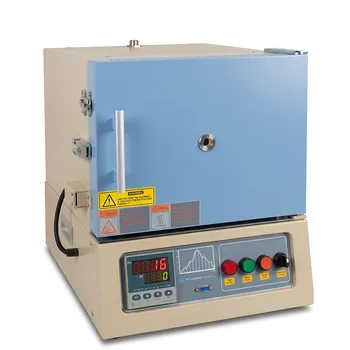
1200C Muffle Furnace 12x8x5 7.2L Heating Chamber with Quartz Observation Window and Vent Port
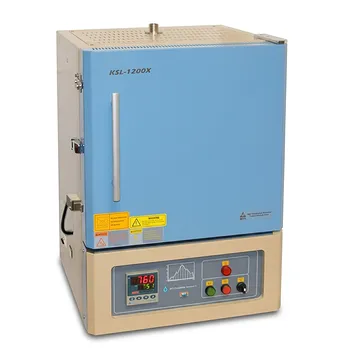
High Temperature 1200C Muffle Furnace 27L Volume 12x12x12 Chamber with Programmable PID Controller for Laboratory Material Science
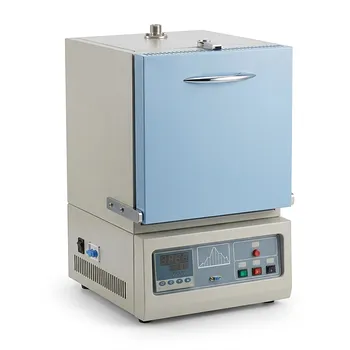
1750C Compact Muffle Furnace 1.7L Ultra High Temperature Laboratory Sintering System for Advanced Ceramics and Material Science Research
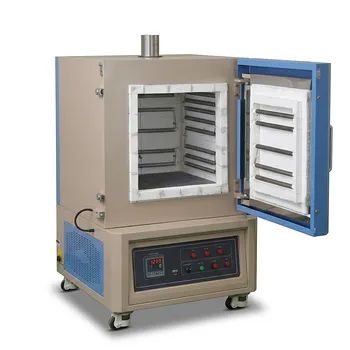
1200C High Temperature 125L Muffle Furnace 5 Side Heating for Large Batch Sintering with Optional Alloy Debinding Chamber
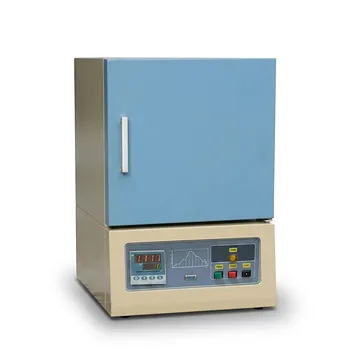
Ultra High Temperature Bench Top Muffle Furnace 1750C Sintering System with Kanthal Super Heating Elements and Precision Digital Control
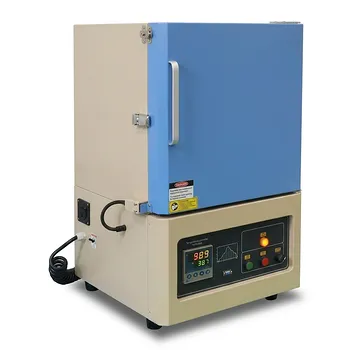
1200°C High Temperature Muffle Furnace 19L Chamber with 50 Segment Programmable Controller
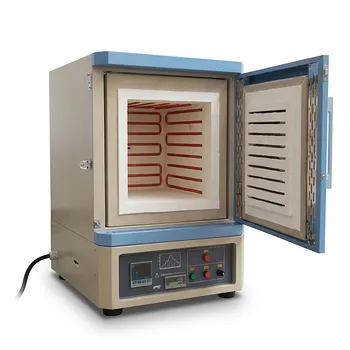
Five Side Heating Muffle Furnace 1200C High Uniformity 64L Chamber 16x16x16 Inch Industrial Heat Treatment
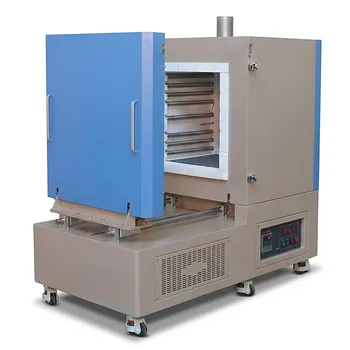
1200C Five Side Heating Muffle Furnace with Sliding Door 125L Volume High Temperature Heat Treatment System for Large Scale Sintering and Annealing
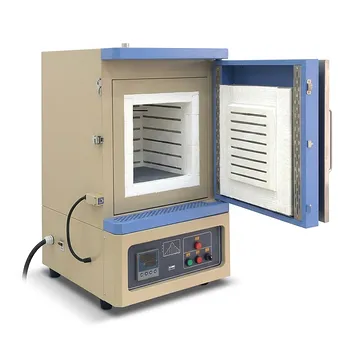
Five Side Heating Muffle Furnace High Purity Alumina Fiber 27L Chamber 1200C High Temperature Thermal Processing System for Sintering Annealing and Materials Research
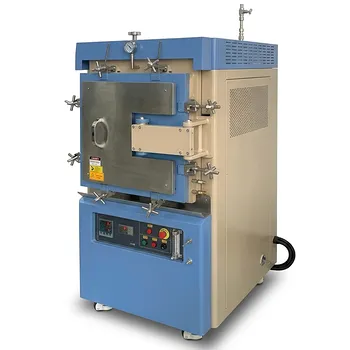
Atmosphere Controlled Muffle Furnace 1700C Maximum Temperature 80L High Capacity Vacuum Inert Gas Box Furnace
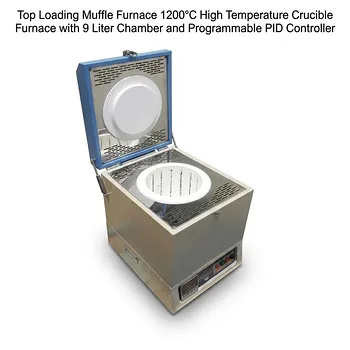
Top Loading Muffle Furnace 1200°C High Temperature Crucible Furnace with 9 Liter Chamber and Programmable PID Controller
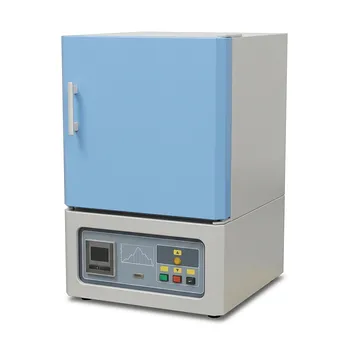
1800C Bench Top Muffle Furnace with Kanthal Super 1900 Heating Elements and 3.6L Alumina Fiber Chamber
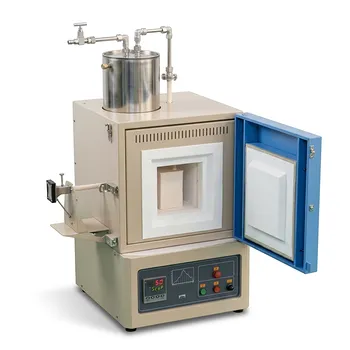
High Temperature Bench Top Muffle Furnace 1700C with Integrated Evaporating Particle Collection and 8x8x8 Alumina Fiber Chamber
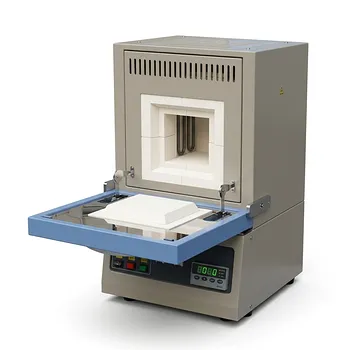
Five Sided Heating Muffle Furnace High Uniformity 1200C Lab Box Furnace 27L Alumina Fiber Chamber
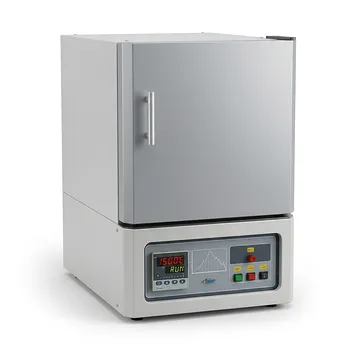
High Temperature 1500C Benchtop Muffle Furnace 3.6L Alumina Fiber Chamber Programmable Controller Sintering Annealing Carbonization Thermal Processing System
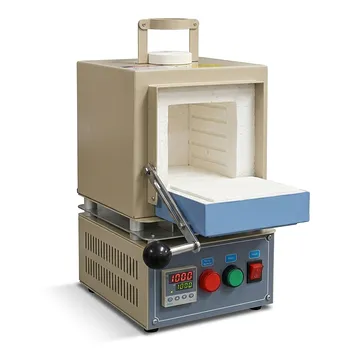
Compact 1000C Muffle Furnace with Programmable Controller and 2 Inch Top Port for Vacuum and Atmosphere Material Research
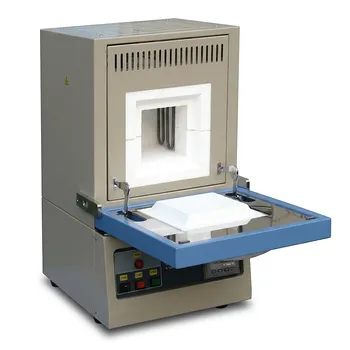
High Temperature 1800C Compact Muffle Furnace with Kanthal Super 1900 Heating Elements and 1.7L Alumina Chamber
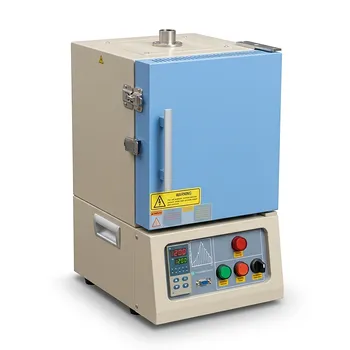
1200°C Small Box Furnace 4.2 Liter Programmable Muffle Furnace with High Purity Alumina Insulation and PID Control
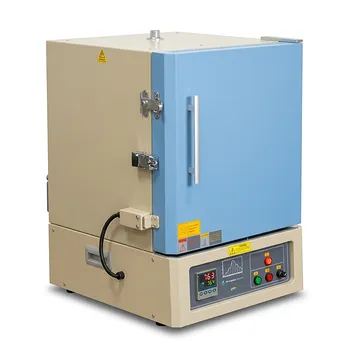
Large Capacity 1200C Muffle Furnace 64 Liter Chamber with Digital PID Controller and Built In Venting Port