Wireless Modules vs. Cable: Advantages for Industrial Furnace Monitoring & Maintenance
Updated 3 months ago
Wireless microprocessing modules transform industrial furnace monitoring by removing the physical and operational constraints of traditional wired infrastructure. These modules replace bulky, failure-prone cabling with agile, high-reliability data links designed to survive the extreme thermal and particulate conditions of smelting environments.
Wireless integration solves the "maintenance trap" of hard-wired systems by eliminating physical failure points and enabling rapid sensor deployment. This shift directly reduces production downtime and increases the overall operational flexibility of thermal monitoring systems.
Streamlining Maintenance in Harsh Environments
Eliminating High-Maintenance Cabling
Traditional systems rely on complex, long-distance cabling that is inherently vulnerable to physical damage and thermal degradation. Wireless modules remove the need for these physical runs, significantly reducing the initial installation labor and the ongoing cost of cable upkeep.
Simplifying Sensor Replacement
In high-temperature and dusty smelting areas, replacing a faulty sensor in a wired system is often a laborious task. Wireless deployment allows for rapid sensor hot-swapping, as technicians no longer need to navigate conduit or re-run shielded lines in hazardous zones.
Protecting Hardware from Environmental Stress
Industrial furnaces generate extreme heat and airborne dust that can corrode connectors and melt cable insulation. By using self-contained wireless modules, the system reduces the number of exposed connection points that are susceptible to environmental failure.
Maximizing Operational Uptime and Efficiency
Preventing Downtime from Fault Inspections
When a wired system fails, identifying the specific break or short in a long cable run can take hours or days. Wireless systems allow for instantaneous fault isolation, ensuring that production does not grind to a halt while teams hunt for physical wiring issues.
Enhancing System Flexibility
As production needs change, sensors often need to be moved or added to different parts of the furnace. Wireless modules offer unmatched scalability, allowing operators to reposition monitoring points without the need for expensive and time-consuming infrastructure redesigns.
Optimizing Operational Intelligence
By facilitating more data points through easier installation, these modules provide a higher resolution of thermal data. This increased visibility allows for more precise control over the furnace, leading to better fuel efficiency and product quality.
Understanding the Trade-offs
Signal Integrity and Interference
In heavy industrial settings, large metal structures and high-voltage equipment can create electromagnetic interference (EMI). It is critical to select modules that use robust protocols to ensure data packets are not lost in transit.
Power Management Requirements
Unlike wired sensors that draw power from the control line, wireless modules often require internal batteries or local power harvesting. This introduces a new maintenance cycle centered on battery replacement or energy management that must be planned for.
Initial Configuration Complexity
While wireless systems save time on physical labor, they require more sophisticated software configuration and network security setup. Ensuring that all modules are properly synced and encrypted is vital to maintaining system integrity.
Implementing the Right Monitoring Strategy
How to Apply This to Your Project
To successfully transition from cable-based monitoring to wireless microprocessing, you must align the technology with your specific operational goals.
- If your primary focus is reducing maintenance costs: Prioritize modules with high ingress protection (IP) ratings to further minimize the need for physical hardware interventions.
- If your primary focus is maximizing uptime: Implement a mesh networking topology where modules can reroute data automatically if one node loses its signal.
- If your primary focus is rapid scalability: Select a standardized communication protocol (such as WirelessHART) that allows you to add sensors from different manufacturers without rewiring.
The transition to wireless monitoring represents a fundamental shift from reactive cable repair to proactive, data-driven furnace management.
Summary Table:
| Feature | Wireless Microprocessing Modules | Traditional Cable Connections |
|---|---|---|
| Installation | Rapid, flexible, and scalable | Labor-intensive and infrastructure-heavy |
| Maintenance | Low; no physical wires to degrade | High; cables prone to thermal damage |
| Fault Isolation | Instantaneous via software | Time-consuming physical inspection |
| Scalability | Easy to add/move sensor nodes | Requires expensive rewiring |
| Durability | High; self-contained units | Low; vulnerable to heat and dust |
Revolutionize Your Thermal Research with THERMUNITS
At THERMUNITS, we are leading manufacturers of high-temperature laboratory equipment tailored for material science and industrial R&D. Our comprehensive range of thermal solutions—including Muffle, Vacuum, Atmosphere, Tube, Rotary, and Hot Press furnaces, as well as CVD/PECVD systems and electric rotary kilns—is designed to integrate the latest monitoring technologies for maximum precision.
Don't let outdated wiring limit your laboratory's potential. Enhance your operational intelligence and reduce downtime with our advanced heat treatment equipment.
Ready to upgrade your furnace monitoring? Contact our engineering team today to find the perfect thermal processing solution for your needs.
References
- Fahrul Fahrul, Miranty Miranty. Miniature Furnace Temperature Monitoring System Using Wireless-Based Resistance Temperature Detector Sensor. DOI: 10.52330/jtm.v22i2.317
Mentioned Products
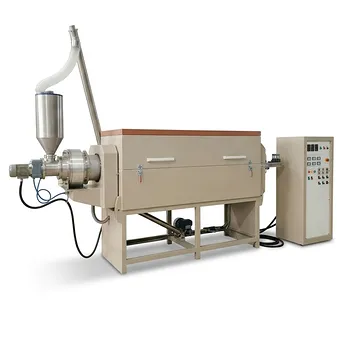
- Continuous Feeding Rotary Tube Furnace for Industrial Powder Heat Treatment and Material Research
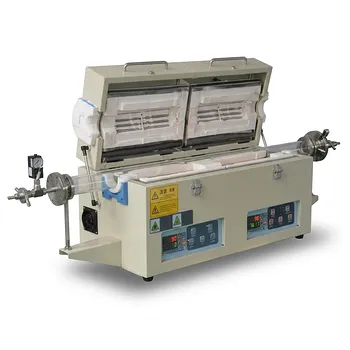
- Elongated Two Temperature Zone Pipe Furnace for Industrial Heat Treatment and Material Science Research
People Also Ask
- How does a rotary tube furnace improve the processing of granular materials? Enhance Uniformity and Reaction Kinetics
- Why use a rotary tube furnace for FACS carbonization? Ensure uniform morphology and prevent sphere agglomeration.
- In what ways do rotary tube furnaces enhance chemical and specialty mineral processing? Drive Precision and Uniformity.
- Why is the precise optimization of residence time essential in the catalyst calcination process? Maximize Your Yields.
- What are the primary types of industrial rotary furnaces and functions? Expert Guide to Rotary Kiln & Hearth Systems

Tech Team · ThermUnits
Last updated on Jun 02, 2026