What are the specific equipment requirements for high-temperature furnaces used in the chemical activation of lignin?
Updated 3 months ago
High-temperature furnaces for lignin chemical activation require specialized materials and subsystems to withstand extreme thermal and chemical stress. Specifically, the equipment must include a high-purity tube or muffle furnace capable of reaching 600°C to 1000°C, constructed with corrosion-resistant components like quartz or alumina, and integrated with an inert atmosphere control system and tail gas treatment units to handle corrosive vapors from agents like KOH, K2CO3, or ZnCl2.
To successfully activate lignin, a furnace must prioritize material compatibility with corrosive chemical agents and absolute atmospheric control. Failure to manage the volatile by-products of activation will lead to rapid equipment degradation and inconsistent material properties.
Essential Material Specifications
Corrosion-Resistant Reaction Vessels
The primary challenge in chemical activation is the decomposition of agents like ZnCl2 or KOH, which become highly aggressive at elevated temperatures. You must utilize quartz tubes or alumina crucibles because they possess the necessary chemical inertness to resist these vapors.
Using standard metal or low-grade ceramic components will result in surface pitting and structural failure. High-purity alumina is particularly favored when working with strong alkalis at the upper end of the temperature range.
High-Temperature Structural Stability
The furnace must maintain its mechanical integrity while operating consistently between 600°C and 1000°C. Thermal expansion must be managed to prevent the cracking of the reaction vessel or the failure of the vacuum seals.
Materials must be selected not just for their melting point, but for their ability to withstand repeated thermal cycling. This ensures that the isothermal zone remains stable throughout the activation process.
Atmospheric and Thermal Control Systems
Inert Atmosphere Regulation
Strict control of the internal environment is non-negotiable to prevent the uncontrolled combustion of lignin. The system must provide a continuous supply of high-purity nitrogen (N2) or argon (Ar) to displace all oxygen.
A high-purity atmosphere allows for the simultaneous carbonization and chemical activation of the precursor. This precision is what enables the regulation of the final product's pore size distribution and surface chemistry.
Precision Temperature and Heating Rate Control
The furnace must be equipped with a programmable logic controller (PLC) capable of maintaining specific heating rates, such as 10°C/min. This control is vital for managing the rate of volatile release and ensuring uniform pore formation.
A stable isothermal zone within the furnace ensures that the entire sample undergoes the same thermal history. This uniformity determines the final graphitization degree and electrical conductivity of the resulting biochar.
Downstream Protection and Safety
Tail Gas Condensation and Treatment
Chemical activation generates corrosive by-products that can damage vacuum pumps and exhaust systems. Integrated tail gas condensation units or precision exhaust treatment systems are required to capture these vapors before they exit the system.
Without these units, corrosive residues will accumulate in downstream components, leading to frequent maintenance and potential safety hazards. Effective filtration protects both the equipment and the laboratory environment.
Sealed Mechanical Integrity
The furnace structure must be hermetically sealed to prevent the ingress of oxygen and the leakage of hazardous gases. High-purity seals at the tube ends are critical for maintaining the vacuum or positive pressure required for catalytic graphitization.
These seals must be compatible with the furnace's cooling system to prevent heat-induced degradation. Proper sealing ensures that carbon atoms correctly dissolve into metal nanoparticles rather than reacting with stray oxygen.
Understanding the Trade-offs
Material Longevity vs. Initial Cost
While quartz is excellent for visibility and moderate temperatures, it can become brittle over time when exposed to certain alkaline vapors. Alumina offers superior chemical resistance at higher temperatures but is more susceptible to thermal shock if cooled too rapidly.
Atmosphere Purity vs. Operating Expense
Using high-purity argon provides the best protection against oxidation, especially for graphitization, but is significantly more expensive than nitrogen. For standard activation between 600°C and 800°C, high-purity nitrogen is often the more cost-effective choice without sacrificing product quality.
How to Apply This to Your Project
To ensure your equipment is fit for purpose, align your specifications with your specific material goals:
- If your primary focus is high specific surface area: Prioritize a furnace with a wide isothermal zone and precise temperature control to maximize the efficiency of pore-forming reactions.
- If your primary focus is catalytic graphitization: Invest in a high-purity tube furnace capable of 1000°C with advanced sealing for an argon-rich, oxygen-free environment.
- If your primary focus is equipment longevity: Ensure your system includes a robust tail gas treatment unit and utilizes high-purity alumina components to resist corrosive chemical agents.
The integrity of your activated carbon depends entirely on the stability and purity of the thermal environment provided by your furnace.
Summary Table:
| Requirement Category | Specification | Purpose |
|---|---|---|
| Operating Temp | 600°C to 1000°C | Carbonization and chemical activation |
| Vessel Material | High-purity Quartz or Alumina | Resistance to corrosive agents like KOH/ZnCl2 |
| Atmosphere Control | N2 or Ar (Inert Gas) | Prevention of combustion and pore regulation |
| Control System | Programmable PLC | Precise heating rates and isothermal stability |
| Protection | Tail Gas Treatment Unit | Protection of vacuum pumps from corrosive vapors |
Elevate Your Lignin Research with THERMUNITS
Processing corrosive agents like KOH or ZnCl2 requires equipment that doesn't just work—it lasts. THERMUNITS provides world-class thermal solutions, including specialized Tube, Vacuum, and Atmosphere Furnaces designed specifically for the extreme rigors of material science and industrial R&D.
From high-purity alumina reaction vessels to advanced CVD/PECVD systems, Rotary Kilns, and Hot Press furnaces, we offer the precision and durability needed for consistent lignin activation and catalytic graphitization.
Why choose THERMUNITS?
- Corrosion-Proof Designs: Specialized components to withstand aggressive chemical vapors.
- Precision Control: Advanced PLC systems for exact heating profiles and uniform pore formation.
- Comprehensive Range: Solutions from standard Muffle Furnaces to Vacuum Induction Melting (VIM) equipment.
Contact our engineering team today to customize a high-temperature furnace solution that ensures the longevity of your equipment and the superior quality of your biochar.
References
- Piotr Łątka, Piotr Kuśtrowski. Spherical Lignin-Derived Activated Carbons for the Adsorption of Phenol from Aqueous Media. DOI: 10.3390/molecules29050960
Mentioned Products
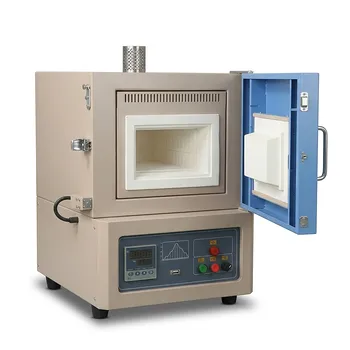
- Anti Corrosive Muffle Furnace with Sintered Corundum Chamber and 1050C Operating Range for Corrosive Material Calcination
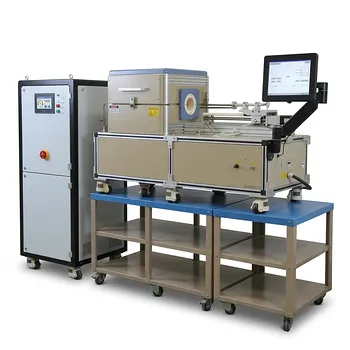
- 1650C Recirculating Steam Corrosion and Thermal Shock Testing Furnace with Integrated Water Vapor Generator and Automated Sample Delivery
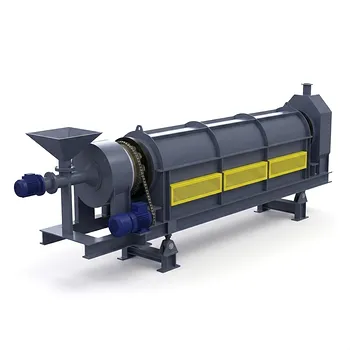
- Electric Rotary Kiln Small Rotary Furnace for Activated Carbon Regeneration
People Also Ask
- Why is a corrosion-resistant high-temperature muffle furnace required for the chemical activation of lignocellulose?
- What role does a muffle furnace play in NiMo/gamma-Al2O3 catalyst prep? Optimize Your Synthesis Process
- Why is a high-temperature muffle furnace used for the preliminary calcination of Titanium Dioxide (TiO2) precursors?
- Why must spinel samples be rapidly moved to open air for quenching? Lock in Phase Purity and Structural Integrity
- Why is a muffle furnace necessary for the post-treatment of silicalite-1 zeolite? Unlock Pore Activity & Stability

Tech Team · ThermUnits
Last updated on Jun 02, 2026
Related Products
Anti Corrosive Muffle Furnace with Sintered Corundum Chamber and 1050C Operating Range for Corrosive Material Calcination
1650C Recirculating Steam Corrosion and Thermal Shock Testing Furnace with Integrated Water Vapor Generator and Automated Sample Delivery