Why must spinel samples be rapidly moved to open air for quenching? Lock in Phase Purity and Structural Integrity
Updated 3 months ago
The rapid transfer of spinel samples to open air is a critical "kinetic freeze" step required to preserve structural integrity. By immediately quenching the material, you force it to bypass medium-to-low temperature zones where the high-temperature single-phase structure would otherwise decompose. This ensures that the phase purity and cation distribution achieved at 950 °C are "locked" into a stable state at room temperature.
Core Takeaway: Quenching is essential because it prevents phase separation and the segregation of impurity oxides (like CuO or NiO) that naturally occur as the entropy-stabilizing effects of high heat diminish during slow cooling.
The Thermodynamics of Phase Preservation
Bypassing the Instability Zone
At 950 °C, the material possesses enough thermal energy to maintain a single-phase spinel structure. As the temperature drops slowly inside a furnace, the material enters a "medium-to-low temperature zone" where this structure becomes thermodynamically unstable.
Rapidly moving the sample to open air utilizes natural convection to drop the temperature instantly. This prevents the atoms from having enough time to rearrange into unwanted secondary phases.
Freezing the High-Entropy State
For many advanced spinels and high-entropy oxides, stability is driven by entropy. This entropy-stabilization effect is strongest at high temperatures but weakens significantly as the material cools.
Quenching "freezes" the high-entropy configuration in place. Without this rapid cooling, the system would seek a lower-energy state, leading to phase separation and a loss of structural uniformity.
Ensuring Cation Lattice Occupancy
Eliminating Impurity Segregation
Spinels containing metals like Nickel (Ni) and Copper (Cu) have high formation enthalpies, requiring the intense 950 °C environment to force cations into the lattice. If cooled slowly, these cations may migrate back out of the lattice.
This migration results in the segregation of impurity phases such as copper oxide (CuO) or nickel oxide (NiO). Quenching ensures these metals remain fully integrated, resulting in a phase-pure catalyst support.
Terminating Thermal Reactions
Immediate removal from the heat source effectively terminates the thermal reaction. This is vital for preventing "over-processing," where extended exposure to declining heat might cause the decomposition of sensitive surface layers or films.
In specialized applications, this also prevents the degradation of active layers that are bonded to substrates. It ensures the final product retains the specific photoelectric activity or catalytic properties intended by the high-temperature calcination.
Understanding the Trade-offs
Thermal Stress and Fracturing
The primary risk of rapid quenching is thermal shock. Subjecting a ceramic or crystalline material to a sudden 900-degree temperature differential can induce internal stress, potentially leading to micro-cracking or structural failure.
Surface vs. Bulk Uniformity
In very large or dense samples, the exterior cools much faster than the interior. This can create a gradient where the surface is phase-pure, but the core has undergone some degree of slow-cooling phase separation.
Handling and Oxidation
Moving a sample at 950 °C into open air exposes it to atmospheric oxygen and humidity immediately. While this is the goal for "air quenching," certain oxygen-sensitive materials may undergo unwanted surface oxidation during the transfer.
How to Apply This to Your Project
Recommendations for Optimal Results
- If your primary focus is phase purity: Move the sample to open air within seconds of opening the furnace to ensure the "kinetic freeze" is successful.
- If your primary focus is structural integrity (avoiding cracks): Consider a staged quenching approach or smaller sample sizes to reduce the impact of thermal shock.
- If your primary focus is preventing secondary oxide formation: Ensure the calcination reached a full 950 °C to provide the necessary thermodynamic driving force before the quench.
Properly executed quenching transforms a high-temperature equilibrium state into a high-performance room-temperature material.
Summary Table:
| Factor | Impact of Rapid Quenching | Key Outcome |
|---|---|---|
| Phase Stability | Bypasses instability zones | Prevents structure decomposition |
| Cation Distribution | Freezes high-entropy states | Ensures single-phase purity |
| Impurity Control | Eliminates metal migration | Prevents CuO/NiO segregation |
| Reaction Timing | Immediate thermal termination | Prevents over-processing/degradation |
Optimize Your High-Temperature Research with THERMUNITS
Precision in thermal processing is the difference between a pure phase and a failed experiment. At THERMUNITS, we understand the critical kinetics of quenching and calcination. As a leading manufacturer of high-temperature laboratory equipment, we provide the tools needed for rigorous material science and industrial R&D.
Whether you require Muffle, Vacuum, Atmosphere, or Tube furnaces for precise spinel synthesis, or advanced CVD/PECVD systems and Hot Press furnaces for complex material engineering, our equipment ensures uniform heating and reliable performance. We also offer Rotary furnaces, Dental Furnaces, VIM systems, and high-quality Thermal Elements to meet every heat treatment challenge.
Ready to elevate your lab's efficiency and material quality?
Contact our technical experts today to find the perfect furnace solution for your specific research needs.
References
- Christopher Riley, Stanley S. Chou. Platinum on High-Entropy Aluminate Spinels as Thermally Stable CO Oxidation Catalysts. DOI: 10.3390/catal14030211
Mentioned Products
- Anti Corrosive Muffle Furnace with Sintered Corundum Chamber and 1050C Operating Range for Corrosive Material Calcination
- High Temperature Vertical Crucible Furnace with 22L Heating Chamber and 1200C Maximum Temperature
- Large Bench Top 1700C High Temperature Muffle Furnace with 19L Chamber for Advanced Material Sintering and Annealing
- 1100C High Temperature Vacuum Crucible Furnace with Quartz Chamber for Thermal Processing and Sintering
- High Temperature 1700C Bench Top Muffle Furnace with Alumina Fiber Insulation and 3.6L Chamber Capacity for Precision Sintering and Heat Treatment
People Also Ask
- Why is a corrosion-resistant high-temperature muffle furnace required for the chemical activation of lignocellulose?
- What role does a muffle furnace play in NiMo/gamma-Al2O3 catalyst prep? Optimize Your Synthesis Process
- Why is a high-temperature muffle furnace used for the preliminary calcination of Titanium Dioxide (TiO2) precursors?
- Why is a muffle furnace necessary for the post-treatment of silicalite-1 zeolite? Unlock Pore Activity & Stability
- Why is a laboratory muffle furnace used for the calcination of mixed metal oxide anodes? Optimize Crystal Structures

Tech Team · ThermUnits
Last updated on Jun 03, 2026
Related Products
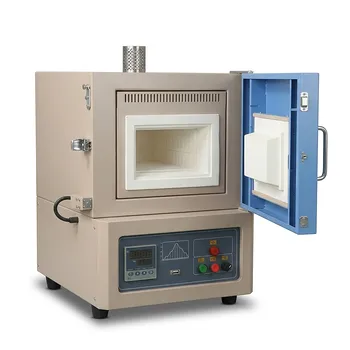
Anti Corrosive Muffle Furnace with Sintered Corundum Chamber and 1050C Operating Range for Corrosive Material Calcination
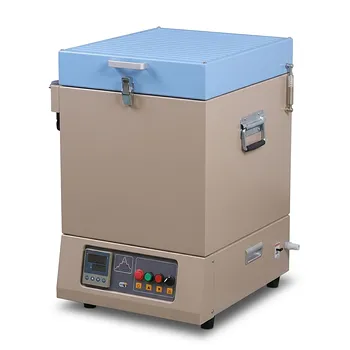
High Temperature Vertical Crucible Furnace with 22L Heating Chamber and 1200C Maximum Temperature
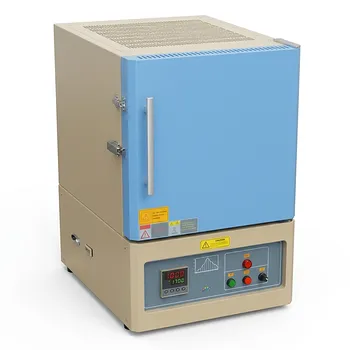
Large Bench Top 1700C High Temperature Muffle Furnace with 19L Chamber for Advanced Material Sintering and Annealing
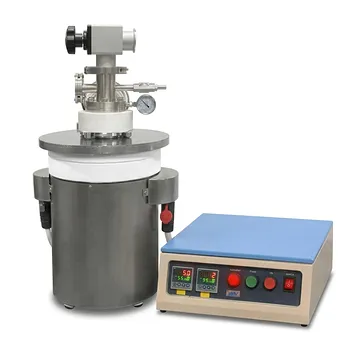
1100C High Temperature Vacuum Crucible Furnace with Quartz Chamber for Thermal Processing and Sintering
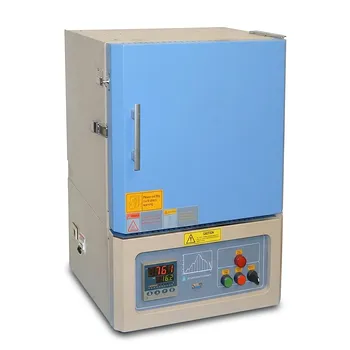
High Temperature 1700C Bench Top Muffle Furnace with Alumina Fiber Insulation and 3.6L Chamber Capacity for Precision Sintering and Heat Treatment
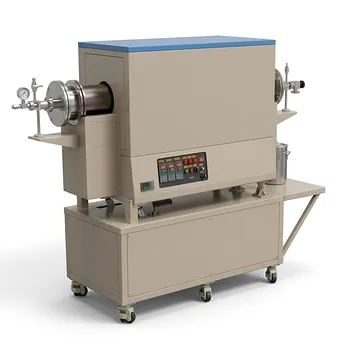
900°C Max Rotary Tube Furnace with 8 Inch 310S Alloy Tube and Optional Multi Zone Heating for Industrial Material Calcination
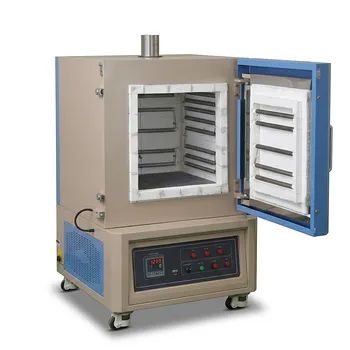
1200C High Temperature 125L Muffle Furnace 5 Side Heating for Large Batch Sintering with Optional Alloy Debinding Chamber
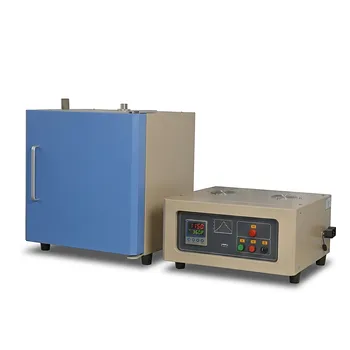
High Temperature Muffle Furnace with Alloy Chamber for Debinding and Sintering Applications

Compact High Temperature 1600C Tube Furnace with 50mm Alumina Tube and Vacuum Flanges for Material Sintering

High Temperature Tube Furnace 1500C with Sliding Flanges and 50mm OD for Rapid Thermal Processing Fast Heating and Cooling
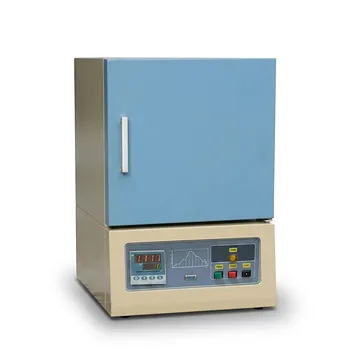
Ultra High Temperature Bench Top Muffle Furnace 1750C Sintering System with Kanthal Super Heating Elements and Precision Digital Control
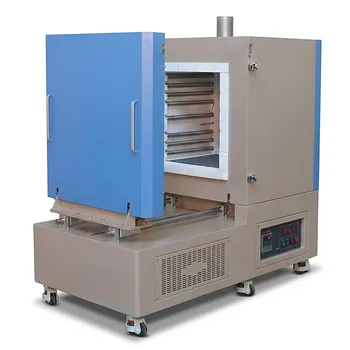
1200C Five Side Heating Muffle Furnace with Sliding Door 125L Volume High Temperature Heat Treatment System for Large Scale Sintering and Annealing
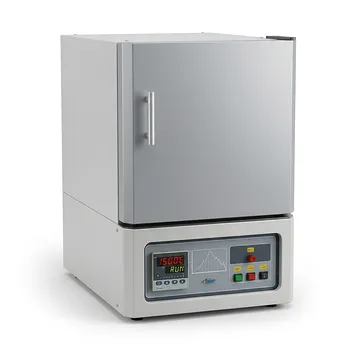
High Temperature 1500C Benchtop Muffle Furnace 3.6L Alumina Fiber Chamber Programmable Controller Sintering Annealing Carbonization Thermal Processing System
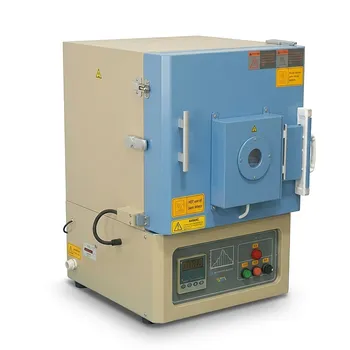
High Temperature Benchtop Muffle Furnace 1500C with 3.6L Chamber and Quartz Observation Window
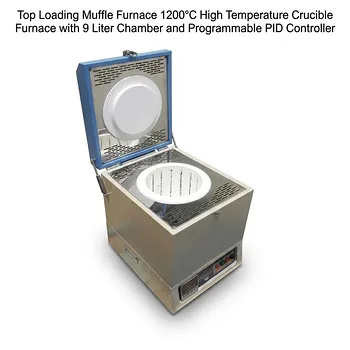
Top Loading Muffle Furnace 1200°C High Temperature Crucible Furnace with 9 Liter Chamber and Programmable PID Controller
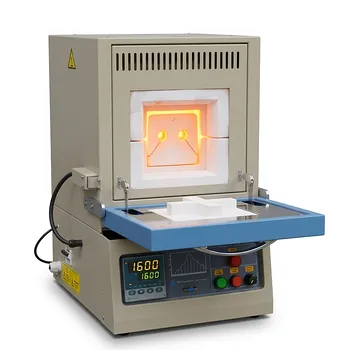
High Temperature Compact Muffle Furnace 1700 C with 30 Segment Programmable Controller and 1.7L Cubic Chamber
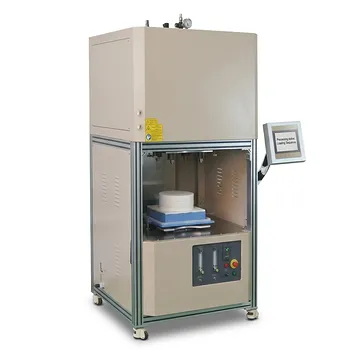
High Temperature Vertical Atmosphere Controlled Furnace with Automatic Bottom Loading and 1700°C Capacity for Advanced Material Research
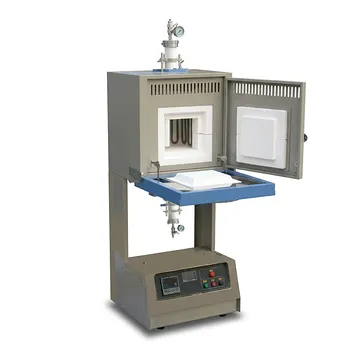
Vertical Hybrid High Temperature Furnace 1500C Alumina Tube SOFC Fuel Cell Testing Laboratory Heat Treatment Research Equipment
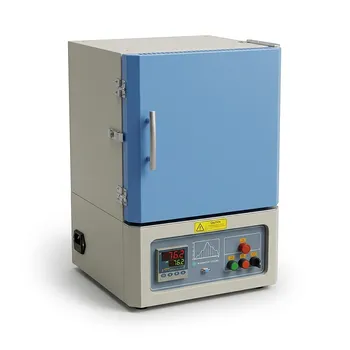
1750C Bench Top Muffle Furnace 3.6L High Grade Molybdenum Disilicide Heating Elements Laboratory Heat Treatment Equipment