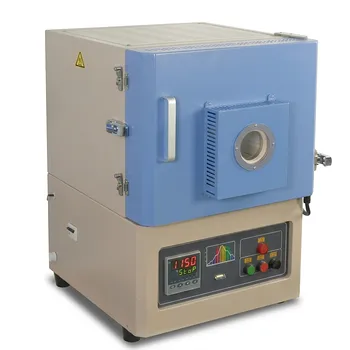
What role does a muffle furnace play in NiMo/gamma-Al2O3 catalyst prep? Optimize Your Synthesis Process
Updated 3 months ago
The high-temperature muffle furnace is the primary tool for driving the thermal transformations required to synthesize $\text{NiMo}/\gamma\text{-Al}_2\text{O}_3$ catalysts. It serves two critical functions: first, it pre-treats the alumina carrier to remove impurities and establish a stable pore structure; second, it calcines the metal-impregnated support to convert precursor salts into stable oxide phases like $\text{NiO}$ and $\text{MoO}_3$. This thermal processing creates the essential chemical foundation for the catalyst’s subsequent activation through sulfidation.
The muffle furnace provides the precise oxidizing environment and thermal energy needed to transform raw chemical precursors into a structured, stable, and highly active heterogeneous catalyst system.
Carrier Pre-treatment and Structural Formation
Transformation of the Alumina Support
The furnace is used to convert precursors like boehmite into the active $\gamma\text{-alumina}$ phase. By maintaining controlled temperatures (often around 500°C), the furnace ensures the support is fully dehydrated. This process is vital for creating a high specific surface area and a stable pore structure.
Removal of Volatile Impurities
Before metal loading, the alumina carrier is roasted to eliminate residual moisture and organic impurities. This "cleans" the surface sites, ensuring that the subsequent nickel and molybdenum impregnation is uniform. A clean surface is critical for preventing side reactions during the catalyst's operation.
Calcination of the Active Components
Decomposition of Metal Precursors
After the support is impregnated with metal salts (such as nitrates), the muffle furnace facilitates their thermal decomposition. High temperatures break down these salts, releasing volatile components like nitrogen oxides. This leaves behind highly dispersed metal species within the alumina pores.
Formation of Stable Oxide Phases
The oxidizing atmosphere of the furnace converts the loaded metals into $\text{NiO}$ and $\text{MoO}_3$. These oxide phases are the required precursors for the final activation step. Without this stage, the metals would not bond correctly to the support or reach the necessary oxidation state.
Regulating Metal-Support Interactions
The temperature and duration of the furnace treatment determine how strongly the metals interact with the $\gamma\text{-Al}_2\text{O}_3$ surface. Proper thermal control prevents the formation of inactive phases, such as bulk nickel aluminate spinels, unless they are specifically desired for thermal stability. By managing these interactions, the furnace dictates the ease of reduction and sulfidation in the final application.
Understanding the Trade-offs
The Risk of Sintering
Excessive temperatures or prolonged exposure in the muffle furnace can lead to sintering. This process causes small metal oxide particles to merge into larger ones, drastically reducing the active surface area. If the temperature exceeds the stability limit of $\gamma\text{-alumina}$, the support itself may collapse or transform into less active phases.
Surface Area vs. Structural Stability
Higher calcination temperatures generally improve the mechanical and thermal stability of the catalyst. However, this often comes at the cost of porosity and surface area. Finding the "sweet spot"—typically between 500°C and 650°C—is essential for balancing long-term durability with high catalytic activity.
Applying Thermal Treatment to Your Catalyst Goals
How to Apply This to Your Project
When configuring your muffle furnace parameters, align your temperature profile with your specific performance requirements:
- If your primary focus is Maximum Catalytic Activity: Use lower calcination temperatures (e.g., 450°C–500°C) and slower heating rates to maintain the highest possible surface area and dispersion.
- If your primary focus is Thermal Stability in Harsh Reactors: Increase the calcination temperature (e.g., 600°C+) to promote stronger chemical bonding between the metal and support, preventing metal leaching.
- If your primary focus is Uniform Active Sites: Utilize precise temperature-programmed calcination to ensure precursors decompose steadily, preventing the local "hot spots" that cause particle agglomeration.
Mastering the thermal environment of the muffle furnace is the most effective way to transition from a simple mixture of chemicals to a high-performance industrial catalyst.
Summary Table:
| Process Step | Primary Function | Key Outcome |
|---|---|---|
| Carrier Pre-treatment | Dehydration of boehmite | High surface area $\gamma$-alumina support |
| Calcination | Metal salt decomposition | Formation of active $NiO$ and $MoO_3$ phases |
| Thermal Tuning | Interaction regulation | Optimized balance of activity and stability |
| Sintering Control | Temperature management | Prevention of particle agglomeration |
Advance Your Material Science R&D with THERMUNITS
Precision is paramount in high-performance catalyst synthesis. THERMUNITS is a leading manufacturer of high-temperature laboratory equipment, providing the advanced thermal processing solutions required for industrial R&D. Our comprehensive range includes Muffle, Vacuum, Atmosphere, Tube, Rotary, and Hot Press furnaces, alongside CVD/PECVD systems, Vacuum Induction Melting (VIM), and specialized Dental Furnaces.
From precise calcination of NiMo catalysts to complex material heat treatments, our equipment delivers the uniform heating and temperature stability your project demands.
Contact our technical team today to find your ideal furnace solution!
References
- Kun Sun, Chenguang Liu. One–pot solvothermal preparation of the porous NiS2//MoS2 composite catalyst with enhanced low-temperature hydrodesulfurization activity. DOI: 10.1016/j.jcis.2024.01.037
Mentioned Products
- High Temperature 1500C Benchtop Muffle Furnace 3.6L Alumina Fiber Chamber Programmable Controller Sintering Annealing Carbonization Thermal Processing System
- Anti Corrosive Muffle Furnace with Sintered Corundum Chamber and 1050C Operating Range for Corrosive Material Calcination
- High Temperature 1800C Compact Muffle Furnace with Kanthal Super 1900 Heating Elements and 1.7L Alumina Chamber
- 1200°C High Temperature Muffle Furnace 19L Chamber with 50 Segment Programmable Controller
- Large Bench Top 1700C High Temperature Muffle Furnace with 19L Chamber for Advanced Material Sintering and Annealing
People Also Ask
- Why is annealing in a high-temperature muffle furnace necessary for SiO2/Si substrate pretreatment before monolayer WS2 synthesis?
- What is the purpose of using muffle or tube furnaces in glass synthesis? Achieve Precise Melt-Quenching & Homogeneity
- What is the role of a high-temperature muffle furnace in the synthesis of graphitic carbon nitride (g-C3N4)? - Guide
- What is the necessity of 950 °C muffle furnace for aluminate spinel supports? Achieve Phase Purity & Lattice Integration
- What is the function of a high-temp muffle furnace in Ni-V oxide synthesis? Optimize your material's performance.

Tech Team · ThermUnits
Last updated on Jun 03, 2026
Related Products
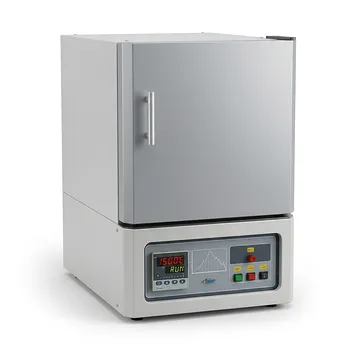
High Temperature 1500C Benchtop Muffle Furnace 3.6L Alumina Fiber Chamber Programmable Controller Sintering Annealing Carbonization Thermal Processing System
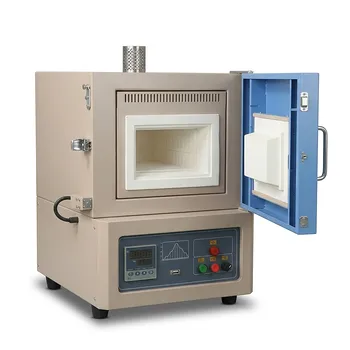
Anti Corrosive Muffle Furnace with Sintered Corundum Chamber and 1050C Operating Range for Corrosive Material Calcination
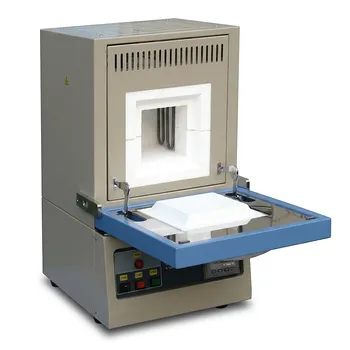
High Temperature 1800C Compact Muffle Furnace with Kanthal Super 1900 Heating Elements and 1.7L Alumina Chamber
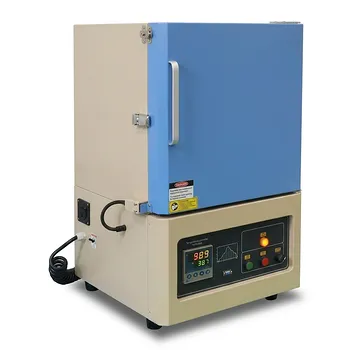
1200°C High Temperature Muffle Furnace 19L Chamber with 50 Segment Programmable Controller
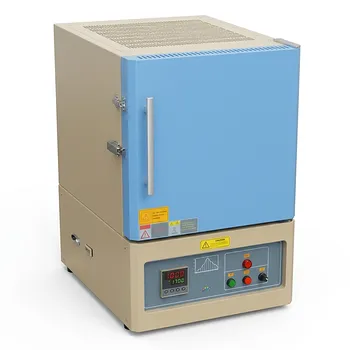
Large Bench Top 1700C High Temperature Muffle Furnace with 19L Chamber for Advanced Material Sintering and Annealing
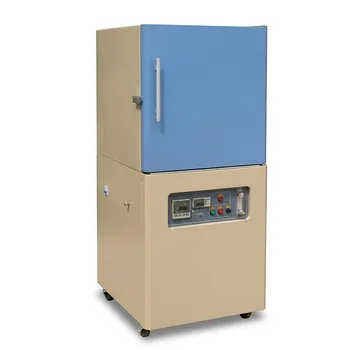
High Temperature Muffle Furnace with Dual Controllers and 36L Large Chamber 1700C Max
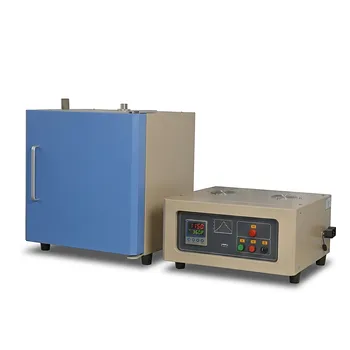
High Temperature Muffle Furnace with Alloy Chamber for Debinding and Sintering Applications
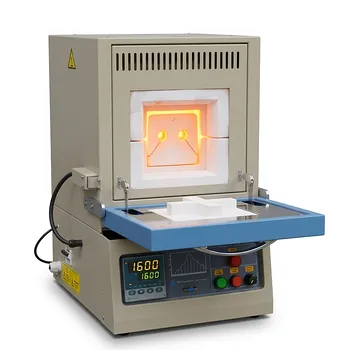
High Temperature Compact Muffle Furnace 1700 C with 30 Segment Programmable Controller and 1.7L Cubic Chamber
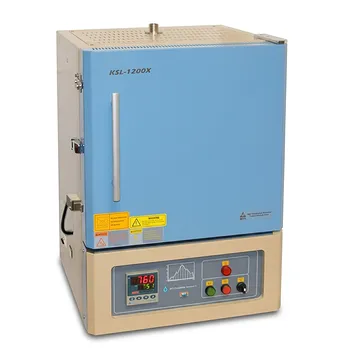
High Temperature 1200C Muffle Furnace 27L Volume 12x12x12 Chamber with Programmable PID Controller for Laboratory Material Science
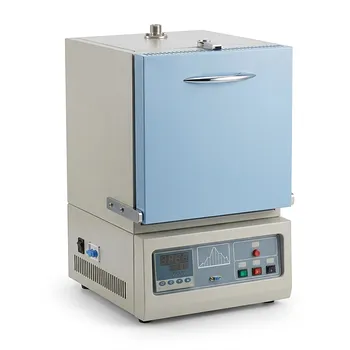
1750C Compact Muffle Furnace 1.7L Ultra High Temperature Laboratory Sintering System for Advanced Ceramics and Material Science Research
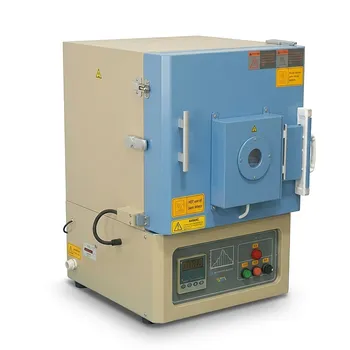
High Temperature Benchtop Muffle Furnace 1500C with 3.6L Chamber and Quartz Observation Window
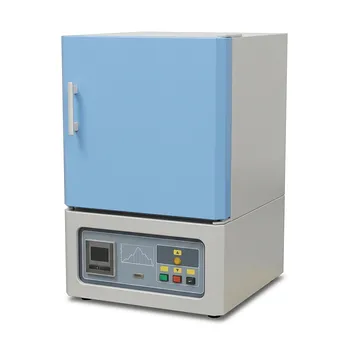
1800C Bench Top Muffle Furnace with Kanthal Super 1900 Heating Elements and 3.6L Alumina Fiber Chamber
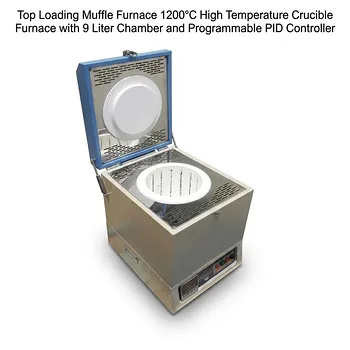
Top Loading Muffle Furnace 1200°C High Temperature Crucible Furnace with 9 Liter Chamber and Programmable PID Controller
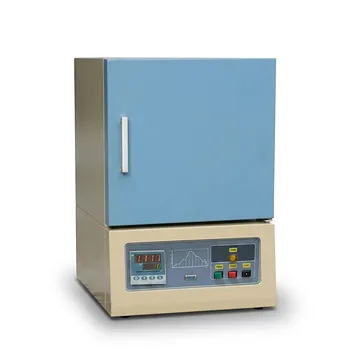
Ultra High Temperature Bench Top Muffle Furnace 1750C Sintering System with Kanthal Super Heating Elements and Precision Digital Control
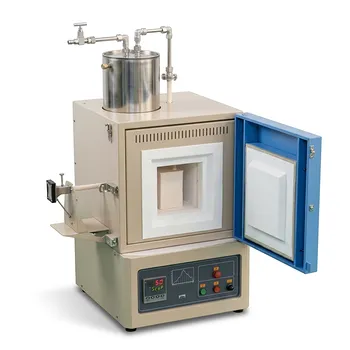
High Temperature Bench Top Muffle Furnace 1700C with Integrated Evaporating Particle Collection and 8x8x8 Alumina Fiber Chamber
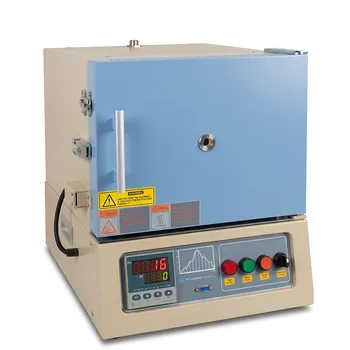
1200C Muffle Furnace 12x8x5 7.2L Heating Chamber with Quartz Observation Window and Vent Port
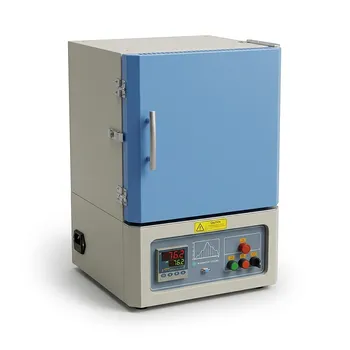
1750C Bench Top Muffle Furnace 3.6L High Grade Molybdenum Disilicide Heating Elements Laboratory Heat Treatment Equipment
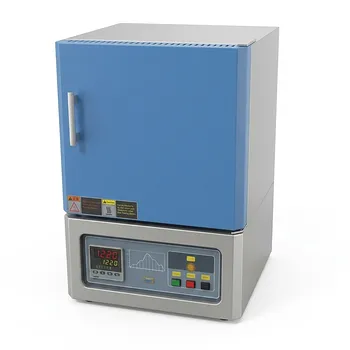
High Temperature Benchtop Muffle Furnace 1700C 10L Chamber Alumina Fiber Insulation MoSi2 Heating Elements
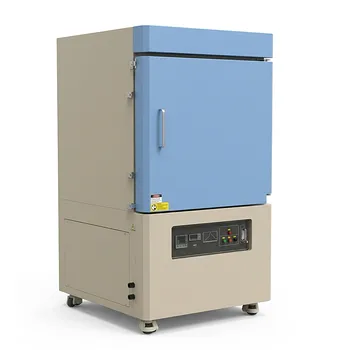
Industrial Large Box Furnace 1700C 216L High Temp Muffle Sintering System