Why is a high-temperature muffle furnace used for the preliminary calcination of Titanium Dioxide (TiO2) precursors?
Updated 3 months ago
The preliminary calcination of Titanium Dioxide ($TiO_2$) precursors is a critical thermal processing step. A high-temperature muffle furnace is utilized primarily to remove residual organic impurities and templates from the synthesis process while simultaneously driving the transformation of amorphous precursors into a stable, crystalline anatase phase. This controlled heating environment ensures the material achieves the necessary crystallinity and high specific surface area required for subsequent chemical modifications or industrial applications.
Core Takeaway: Preliminary calcination in a muffle furnace serves as the bridge between raw chemical precipitates and functional ceramic powders by removing organic "sacrificial" components and establishing the foundational crystal structure of the $TiO_2$ matrix.
The Chemical and Structural Evolution of the Precursor
Removal of Organic Impurities and Templates
During the synthesis of $TiO_2$, various organic surfactants, solvents, and sacrificial templates (such as Graphene Oxide) are often used to control morphology. The muffle furnace provides a stable oxygen-rich environment that facilitates the complete thermal decomposition and oxidation of these organic components. This process is essential to ensure the final oxide powder is pure and free of carbonaceous residues that could interfere with its performance.
Promotion of Phase Transformation
$TiO_2$ precursors often exist in an amorphous or unstable state immediately after washing and drying. The thermal energy provided by the furnace at temperatures typically around 400°C to 500°C drives the conversion of these amorphous structures into the stable anatase phase. This transition is vital for applications like photocatalysis, where the anatase structure is often more active than other phases.
Development of Porosity and Surface Area
As organic components decompose and escape as gases, they leave behind a network of micropores and mesopores. This "internal venting" creates a porous $TiO_2$ matrix with a significantly increased specific surface area. This high-quality reaction substrate is necessary for effective secondary modifications or for providing more active sites in catalytic reactions.
The Precision of the Thermal Environment
Uniformity of the Thermal Field
A muffle furnace is preferred over simpler heating methods because it offers a highly uniform thermal field. This consistency ensures that the entire batch of precursor undergoes the same degree of calcination, preventing "cold spots" that leave impurities or "hot spots" that cause uneven crystallization. Uniformity is the key to producing a precursor powder with consistent grain sizes and predictable chemical behavior.
Control of Heating Rates
The ability to program precise heating rates (e.g., 5°C per minute) is critical for maintaining structural integrity. Slow, controlled heating allows organic surfactants like hexadecylamine to be removed gradually. This prevents the rapid buildup of internal gas pressure, which could otherwise cause the shell collapse or cracking of delicate $TiO_2$ nanostructures.
Regulation of Grain Size and Stability
By accurately controlling the peak temperature and the duration of the "soak" time, researchers can regulate the grain growth of the $TiO_2$ crystals. Precise temperature control prevents uncontrolled sintering, where small particles merge into larger ones, thereby preserving the material’s thermal stability and desired nanoparticle dimensions.
Understanding the Trade-offs and Pitfalls
The Risk of Unwanted Phase Transitions
While calcination is necessary for crystallinity, excessive temperature can be detrimental. If the furnace exceeds the stability range for anatase (typically above 600°C–700°C), the material may begin an unwanted transition into the rutile phase. While rutile is stable, it often has a lower surface area and different catalytic properties, which may not align with the project's goals.
Sintering vs. Surface Area
There is a direct trade-off between crystallinity and surface area. Higher temperatures generally improve the crystallinity and mechanical stability of the powder but can lead to grain growth and the closing of pores. Over-calcination results in a "sintered" product with a significantly reduced specific surface area, diminishing its effectiveness in surface-sensitive applications.
How to Apply This to Your Project
When choosing your calcination parameters, your primary goal determines the ideal temperature and duration settings for the muffle furnace.
- If your primary focus is Photocatalytic Activity: Target the 400°C to 450°C range to maximize the anatase phase and maintain a high specific surface area.
- If your primary focus is Structural Integrity of Nanosheets: Utilize a very slow heating ramp (1-2°C/min) to remove templates without causing mechanical cracking or morphology collapse.
- If your primary focus is Phase Purity for Fillers (e.g., in PVDF): Use higher temperatures (above 700°C) if a complete transition to the rutile phase is required for specific electroactive properties.
- If your primary focus is Removing High-Volume Templates: Ensure the furnace has adequate ventilation or a consistent air supply to facilitate complete oxidation of the sacrificial materials.
By mastering the thermal environment of the muffle furnace, you can precisely tune the $TiO_2$ precursor to meet the exact structural and chemical demands of your final application.
Summary Table:
| Calcination Objective | Technical Effect | Critical Furnace Feature |
|---|---|---|
| Organic Removal | Eliminates templates and surfactants via oxidation | Stable oxygen-rich environment |
| Phase Transition | Converts amorphous precursors to stable Anatase phase | Precise temperature range (400°C–500°C) |
| Porosity Control | Creates micropores and increases specific surface area | Controlled heating rates to prevent cracking |
| Structural Stability | Regulates grain growth and prevents unwanted sintering | Highly uniform thermal field |
Elevate Your Material Research with THERMUNITS
Precision is the foundation of material science. As a leading manufacturer of high-temperature laboratory equipment, THERMUNITS empowers industrial R&D and academic researchers with advanced thermal processing solutions.
Whether you are performing preliminary calcination of TiO2, synthesizing nanomaterials via CVD/PECVD, or conducting complex metallurgy in a Vacuum Induction Melting (VIM) furnace, our equipment delivers the uniform thermal fields and programmable control you need. Our comprehensive range includes:
- High-Precision Furnaces: Muffle, Vacuum, Atmosphere, Tube, and Rotary furnaces.
- Advanced Systems: Hot Press furnaces, Dental furnaces, and Electric Rotary Kilns.
- Specialized Components: Thermal Elements and tailored heat treatment accessories.
Ready to optimize your lab’s performance? Contact our technical experts today to find the ideal furnace for your specific application and ensure consistent, high-quality results every time.
References
- Mingqing Zhang, Yong Li. Ti3+ Self-Doping of TiO2 Boosts Its Photocatalytic Performance: A Synergistic Mechanism. DOI: 10.3390/molecules29225385
Mentioned Products
- Anti Corrosive Muffle Furnace with Sintered Corundum Chamber and 1050C Operating Range for Corrosive Material Calcination
- High Temperature 1500C Benchtop Muffle Furnace 3.6L Alumina Fiber Chamber Programmable Controller Sintering Annealing Carbonization Thermal Processing System
- Large Bench Top 1700C High Temperature Muffle Furnace with 19L Chamber for Advanced Material Sintering and Annealing
- High Temperature Benchtop Muffle Furnace 1500C with 3.6L Chamber and Quartz Observation Window
- Top Loading Muffle Furnace 1200°C High Temperature Crucible Furnace with 9 Liter Chamber and Programmable PID Controller
People Also Ask
- Why is a corrosion-resistant high-temperature muffle furnace required for the chemical activation of lignocellulose?
- What role does a muffle furnace play in NiMo/gamma-Al2O3 catalyst prep? Optimize Your Synthesis Process
- Why must spinel samples be rapidly moved to open air for quenching? Lock in Phase Purity and Structural Integrity
- Why is a muffle furnace necessary for the post-treatment of silicalite-1 zeolite? Unlock Pore Activity & Stability
- Why is a laboratory muffle furnace used for the calcination of mixed metal oxide anodes? Optimize Crystal Structures

Tech Team · ThermUnits
Last updated on Jun 03, 2026
Related Products
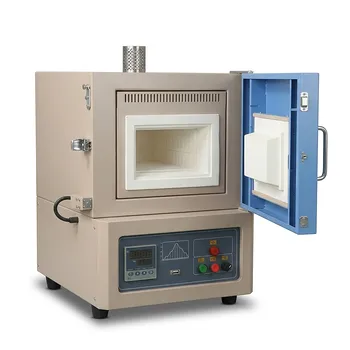
Anti Corrosive Muffle Furnace with Sintered Corundum Chamber and 1050C Operating Range for Corrosive Material Calcination
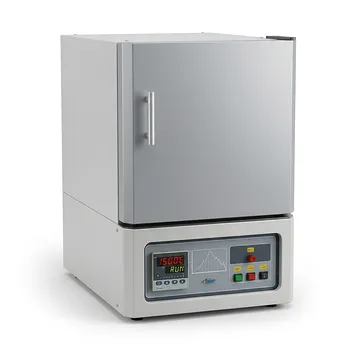
High Temperature 1500C Benchtop Muffle Furnace 3.6L Alumina Fiber Chamber Programmable Controller Sintering Annealing Carbonization Thermal Processing System
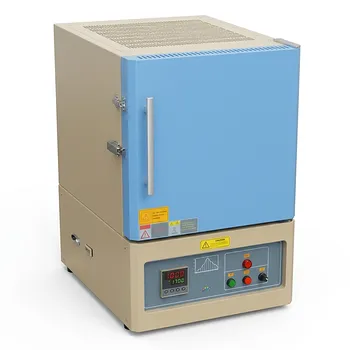
Large Bench Top 1700C High Temperature Muffle Furnace with 19L Chamber for Advanced Material Sintering and Annealing
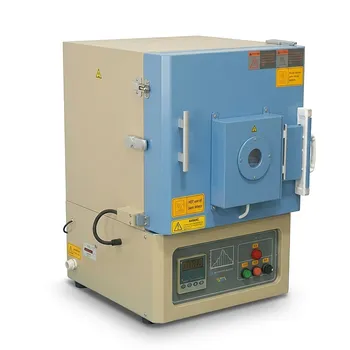
High Temperature Benchtop Muffle Furnace 1500C with 3.6L Chamber and Quartz Observation Window
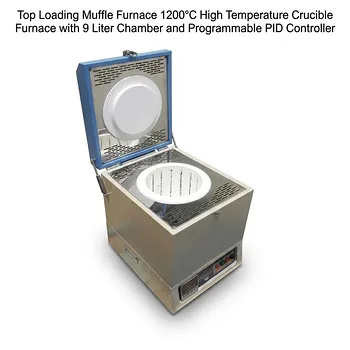
Top Loading Muffle Furnace 1200°C High Temperature Crucible Furnace with 9 Liter Chamber and Programmable PID Controller
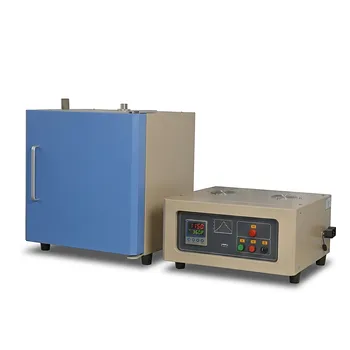
High Temperature Muffle Furnace with Alloy Chamber for Debinding and Sintering Applications
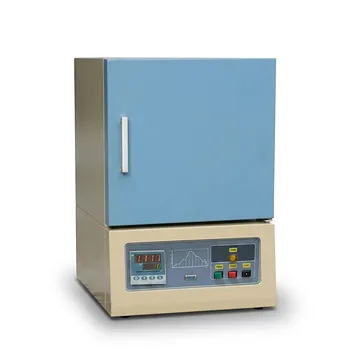
Ultra High Temperature Bench Top Muffle Furnace 1750C Sintering System with Kanthal Super Heating Elements and Precision Digital Control
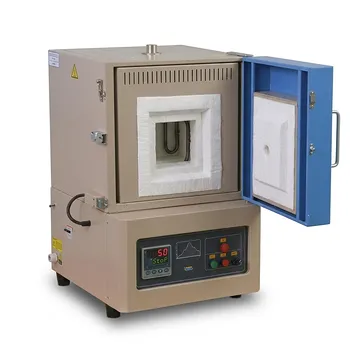
1800°C Bench Top Ultra High Temperature Muffle Furnace with Sapphire Observation Window and Top Feeding Port for Materials Research and Thermal Processing
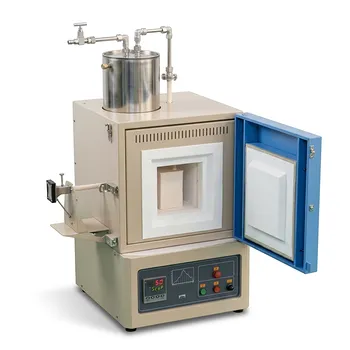
High Temperature Bench Top Muffle Furnace 1700C with Integrated Evaporating Particle Collection and 8x8x8 Alumina Fiber Chamber
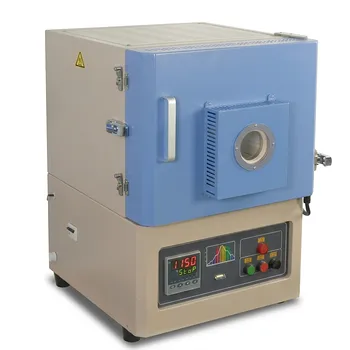
High Temperature Benchtop Muffle Furnace with Quartz Observation Window for Thermal Imaging and Material Analysis
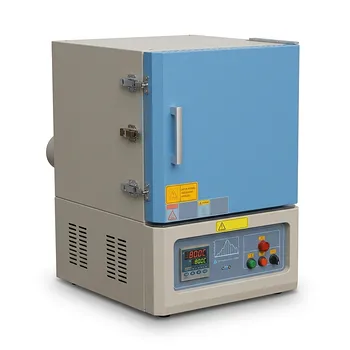
1800C Bench Top Muffle Furnace 18 Liters with Kanthal Super 1900 Heating Elements for High Purity Ceramic Sintering and Material Research
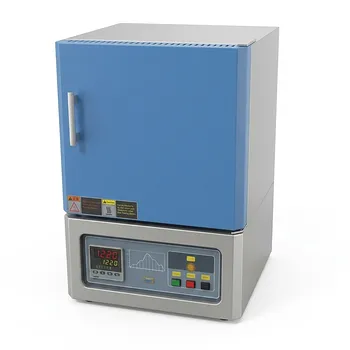
High Temperature Benchtop Muffle Furnace 1700C 10L Chamber Alumina Fiber Insulation MoSi2 Heating Elements
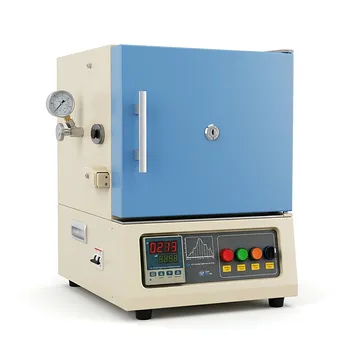
1200C Hybrid Muffle and Tube Furnace for Material Research with Dual Atmosphere Control Quartz Tubes

High Temperature 1700C Vertical Tube Furnace for Powder Spherification and Material Sintering
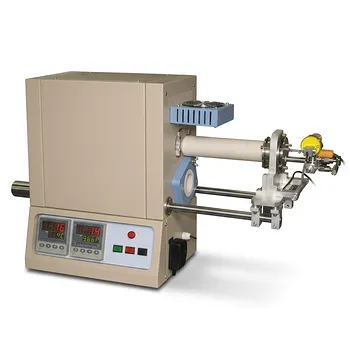
High Temperature Tube Furnace 1500C with Sliding Flanges and 50mm OD for Rapid Thermal Processing Fast Heating and Cooling
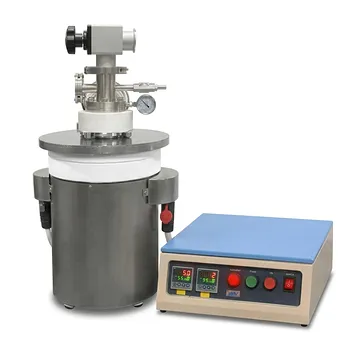
1100C High Temperature Vacuum Crucible Furnace with Quartz Chamber for Thermal Processing and Sintering

High Temperature 1700C Tube Furnace with High Vacuum Turbomolecular Pump System and Multi Channel Mass Flow Controller Gas Mixer
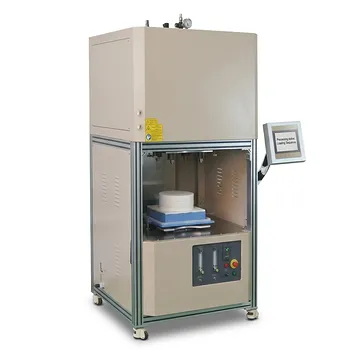
High Temperature Vertical Atmosphere Controlled Furnace with Automatic Bottom Loading and 1700°C Capacity for Advanced Material Research
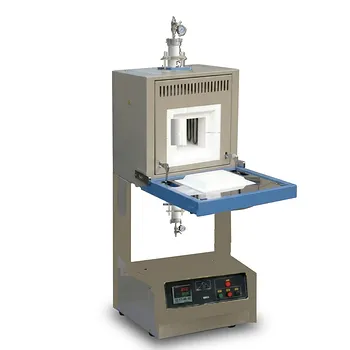
High Temperature Vertical Hybrid Furnace with Alumina Tube and SiC Heating for SOFC Coin Cell Testing and Atmosphere Processing
