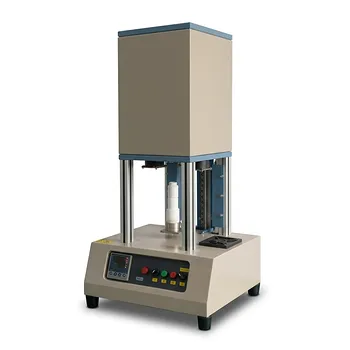
What are the technical advantages of microwave shock equipment for 2D NL-TMCs? Faster Sintering & Better Morphology
Updated 6 months ago
Microwave shock equipment transforms 2D Non-Layered Transition Metal Chalcogenide (NL-TMC) synthesis by replacing hour-long heating cycles with ultra-fast, second-scale thermal shocks. This rapid "on/off" capability prevents the natural tendency of non-layered materials to transition into bulk particles, effectively "trapping" them in a high-surface-area, 2D ultrathin state.
Core Takeaway: Unlike traditional furnaces that rely on slow, external heat transfer, microwave shock equipment utilizes volumetric heating and extreme thermal stress to preserve the 2D morphology of non-layered crystals while simultaneously introducing performance-enhancing defects.
The Superiority of Ultra-Fast Thermal Cycling
Inhibiting Nanosheet Agglomeration
Traditional tube furnaces heat materials slowly over several hours, which provides ample time for nanosheets to stack and agglomerate. Microwave shock equipment completes cycles in seconds, "freezing" the materials in their 2D state before they have the kinetic opportunity to clump together.
Preventing Bulk Phase Transformation
Non-layered crystals naturally prefer three-dimensional bulk structures over 2D forms. The rapid cooling characteristic of microwave shock equipment prevents the atomic rearrangement required for this bulk transformation, successfully preserving the desired topological structure.
Enhancing Specific Surface Area
By maintaining an ultrathin morphology, microwave-processed NL-TMCs retain a significantly higher specific surface area than their furnace-sintered counterparts. This maximize the number of active sites available for chemical or electronic interactions.
Volumetric Heating vs. External Transfer
Direct Molecular Interaction
Traditional furnaces heat the environment first, which then transfers energy to the material surface. In contrast, microwaves interact directly with the material’s dipoles, causing molecular vibration that generates heat from within.
Uniformity and Energy Efficiency
Because the heating is volumetric, the entire structure of the material reaches the target temperature simultaneously. This results in significantly higher energy conversion efficiency and eliminates the temperature gradients that cause uneven material properties in traditional sintering.
Controlling Grain Growth
Rapid temperature elevation allows the material to reach the necessary reaction point without spending prolonged time at intermediate temperatures. This minimizes the time available for grain growth, resulting in a more densified material with superior physical properties.
Strategic Defect Engineering
Introducing High-Performance Defects
The extreme thermal stress generated during a microwave "shock" introduces significant dislocations and defects into the material lattice. In applications like battery anodes, these defects are beneficial as they enhance the kinetic diffusion capability of ions.
Defect-Rich vs. Defect-Free
While traditional furnaces produce fewer defects, the "Defect-Rich" nature of microwave-processed materials often results in superior performance for electrochemical applications. This process can convert standard materials into high-performance variants that traditional heating cannot replicate.
Understanding the Trade-offs
Process Control vs. Speed
While microwave shock is faster, traditional tube furnaces offer an elongated reaction space that is better for establishing stable, long-term temperature gradients. If your process requires precise, minute-by-minute control of gas-flow residence time, the high-speed nature of microwave shock may be more difficult to manage.
Material Compatibility
Microwave heating relies on the material's ability to absorb microwave energy (dielectric loss). Not all materials interact with microwaves equally, whereas tube furnaces provide a more "universal" or material-agnostic heating environment through conduction and radiation.
Applying This Technology to Your Goals
How to Choose Your Sintering Method
- If your primary focus is preserving 2D morphology: Microwave shock is the definitive choice because its ultra-fast cooling prevents nanosheet stacking and bulk transformation.
- If your primary focus is electrochemical performance: Utilize microwave shock to introduce beneficial lattice defects and dislocations that improve ion diffusion kinetics.
- If your primary focus is large-scale stable gas-phase synthesis: A traditional tube furnace may be more suitable for managing complex, long-duration chemical vapor deposition (CVD) environments.
The transition from hours to seconds in thermal processing is not just about efficiency; it is a fundamental shift in our ability to stabilize and engineer non-layered materials at the 2D limit.
Summary Table:
| Feature | Microwave Shock Equipment | Traditional Tube Furnace |
|---|---|---|
| Heating Speed | Ultra-fast (Seconds) | Slow (Hours) |
| Heating Type | Volumetric (Direct Molecular) | External (Conduction/Radiation) |
| Morphology Control | Excellent (Prevents Agglomeration) | Poor (Prone to Bulk Transformation) |
| Defect Engineering | High Density (Improves Diffusion) | Low Density (Standard Quality) |
| Energy Efficiency | Extremely High | Low to Moderate |
| Primary Application | 2D Nanosheets & High-Defect Materials | Large-scale CVD & Stable Gradients |
Revolutionize Your Material Synthesis with THERMUNITS
Unlock the full potential of 2D material research with high-precision thermal solutions from THERMUNITS. Whether you are leveraging the ultra-fast kinetics of microwave technology or require the stable, long-duration control of our CVD/PECVD systems and Tube Furnaces, we have the expertise to elevate your R&D.
As a global leader in high-temperature laboratory equipment, THERMUNITS offers a complete range of thermal processing systems, including:
- Muffle, Vacuum, and Atmosphere Furnaces
- Tube, Rotary, and Hot Press Furnaces
- CVD/PECVD & Dental Furnaces
- Electric Rotary Kilns & Vacuum Induction Melting (VIM) Furnaces
- Superior Thermal Elements and customized heat treatment tools.
Don't let traditional heating cycles limit your innovation. Contact THERMUNITS today to consult with our experts and find the ideal high-temperature solution for your lab!
References
- Miao Fan, Jun Wan. Microwave Shock Synthesis of Porous 2D Non‐Layered Transition Metal Carbides for Efficient Hydrogen Evolution. DOI: 10.1002/sus2.252
Mentioned Products
- Cylindrical Resonator MPCVD Machine System for Microwave Plasma Chemical Vapor Deposition and Lab Diamond Growth
- 915MHz MPCVD Diamond Machine Microwave Plasma Chemical Vapor Deposition System Reactor
- Compact High Temperature Bottom Loading Furnace 1700C Rapid Heating Cooling System Small Sample Thermal Cycling Equipment
People Also Ask
- How does the high concentration of atomic hydrogen in MPCVD benefit diamond growth? The Key to Gem-Grade Quality.
- What are the typical operating pressure ranges and vacuum requirements for MPCVD systems? Optimize Your Material Growth
- How does the versatility of gas compatibility in MPCVD systems compare to filament-based CVD methods? Purity & Doping.
- What technical parameters are critical for optimizing the growth of single-crystal diamonds in MPCVD systems? Expert Guide
- What are the technical advantages of the electrodeless plasma design in MPCVD systems? Purity & Precision in Synthesis

Tech Team · ThermUnits
Last updated on Apr 14, 2026
Related Products
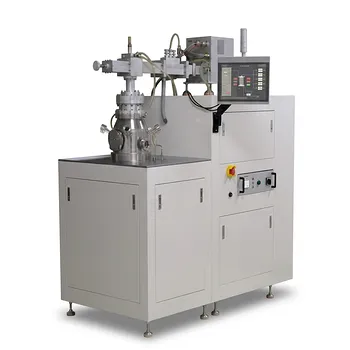
Cylindrical Resonator MPCVD Machine System for Microwave Plasma Chemical Vapor Deposition and Lab Diamond Growth
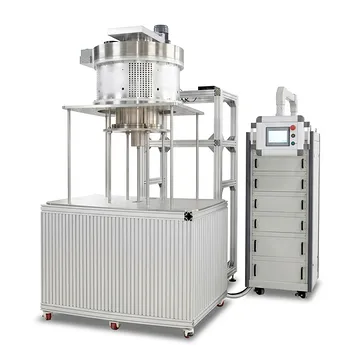
915MHz MPCVD Diamond Machine Microwave Plasma Chemical Vapor Deposition System Reactor