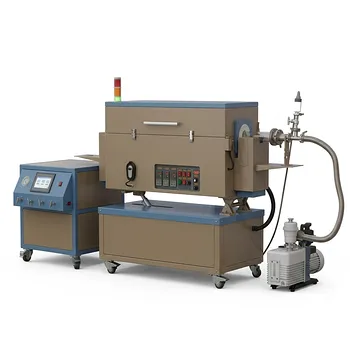
What are the typical operating pressure ranges and vacuum requirements for MPCVD systems? Optimize Your Material Growth
Updated 5 months ago
Operating MPCVD systems requires a dual-stage pressure strategy to transition from a clean chamber environment to a high-energy growth state. Before deposition begins, the system must reach a base vacuum of less than 10⁻³ Torr to eliminate atmospheric contaminants. During the actual deposition process, the chamber pressure is significantly increased, typically maintained between 50 and 400 Torr depending on the desired growth rate and film quality.
Core Takeaway: Successful MPCVD operation relies on achieving a high-purity base vacuum (< 10⁻³ Torr) followed by maintaining precise deposition pressures (up to 400 Torr) to concentrate plasma energy and accelerate material growth.
The Pre-Deposition Phase: Establishing Purity
The Critical Role of Base Vacuum
Before introducing process gases, the chamber must be evacuated to a base vacuum level of less than 10⁻³ Torr. This step is essential to remove residual nitrogen, oxygen, and water vapor that could interfere with the chemical reactions.
Ensuring Material Integrity
Starting with a deep vacuum ensures that the resulting deposit—most commonly synthetic diamond—maintains high purity and the desired crystalline structure. Even trace amounts of background gases can lead to undesirable defects or impurities in the final product.
The Deposition Phase: Optimizing Plasma Density
Standard Operating Pressure Ranges
Once the chamber is purged, the vacuum system regulates the pressure to a range between 50 and 400 Torr for active growth. This pressure environment allows the microwave energy to excite the gas mixture into a stable, high-temperature plasma.
The Advantage of High-Pressure Designs
Modern MPCVD systems frequently push the boundaries of this range, often operating at 160 Torr or higher. These elevated pressures are intentionally used to increase the plasma power density, which is a primary driver for efficiency.
Impact on Deposition Rates
Operating at the higher end of the pressure spectrum significantly improves deposition rates. By confining the plasma more tightly, the system delivers more reactive species to the substrate surface in a shorter amount of time.
Understanding the Trade-offs
Plasma Stability vs. Pressure
As the operating pressure increases, the plasma volume tends to shrink and become more intense. While this increases growth speed, it can make the plasma more difficult to stabilize and may lead to non-uniform deposition if not carefully managed.
Thermal Management Challenges
Higher pressures and power densities generate significant amounts of heat. This requires advanced cooling systems for both the chamber walls and the substrate holder to prevent damage and ensure consistent growth temperatures.
How to Apply This to Your Project
Optimizing Your MPCVD Process
When configuring your system, your pressure settings should align with your specific material requirements and throughput goals.
- If your primary focus is Maximum Growth Rates: Operate your system at high pressures (160 Torr to 400 Torr) to maximize plasma power density and speed up the synthesis process.
- If your primary focus is High Crystal Purity: Prioritize a deep base vacuum (well below 10⁻³ Torr) and a stable, moderate operating pressure to ensure a slow, defect-free crystalline build-up.
By mastering the balance between initial vacuum purity and deposition pressure intensity, you can achieve superior material quality and system efficiency.
Summary Table:
| Operational Phase | Pressure Range | Primary Objective |
|---|---|---|
| Pre-Deposition | < 10⁻³ Torr | Remove contaminants and ensure base purity |
| Standard Deposition | 50 - 400 Torr | Establish stable plasma for material growth |
| High-Efficiency Growth | 160 - 400 Torr | Maximize plasma power density and deposition rate |
Elevate Your Material Research with THERMUNITS
As a leading manufacturer of high-temperature laboratory equipment, THERMUNITS empowers material science and industrial R&D with precision-engineered thermal solutions. Our advanced CVD/PECVD systems and Vacuum furnaces are specifically designed to handle the stringent pressure and purity requirements of MPCVD processes.
From Muffle, Atmosphere, and Tube furnaces to specialized Vacuum Induction Melting (VIM) and Hot Press systems, we provide the tools you need for superior heat treatment results.
Ready to optimize your synthesis process? Contact our experts today to find the perfect thermal processing solution for your laboratory!
Mentioned Products
- Cylindrical Resonator MPCVD Machine System for Microwave Plasma Chemical Vapor Deposition and Lab Diamond Growth
- 915MHz MPCVD Diamond Machine Microwave Plasma Chemical Vapor Deposition System Reactor
- Multi Heating Zones CVD Tube Furnace System for Precision Chemical Vapor Deposition and Advanced Material Synthesis
- Radio Frequency Plasma Enhanced Chemical Vapor Deposition RF PECVD System for Laboratory and Industrial Thin Film Growth
- Chemical Vapor Deposition CVD System Slide PECVD Tube Furnace with Liquid Gasifier PECVD Machine
People Also Ask
- How does the high concentration of atomic hydrogen in MPCVD benefit diamond growth? The Key to Gem-Grade Quality.
- What technical parameters are critical for optimizing the growth of single-crystal diamonds in MPCVD systems? Expert Guide
- What are the technical advantages of the electrodeless plasma design in MPCVD systems? Purity & Precision in Synthesis
- How does the versatility of gas compatibility in MPCVD systems compare to filament-based CVD methods? Purity & Doping.
- What are the physical characteristics of the plasma generated in an MPCVD reactor? Expert Guide to CVD Plasma States

Tech Team · ThermUnits
Last updated on Apr 14, 2026
Related Products
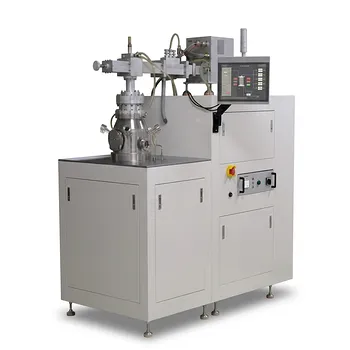
Cylindrical Resonator MPCVD Machine System for Microwave Plasma Chemical Vapor Deposition and Lab Diamond Growth
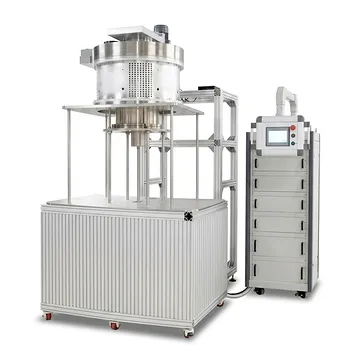
915MHz MPCVD Diamond Machine Microwave Plasma Chemical Vapor Deposition System Reactor
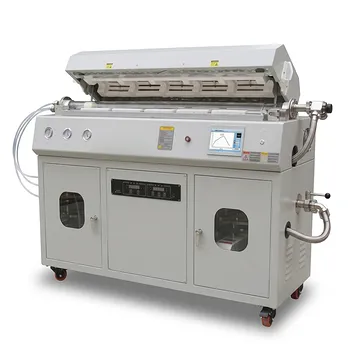
Multi Heating Zones CVD Tube Furnace System for Precision Chemical Vapor Deposition and Advanced Material Synthesis
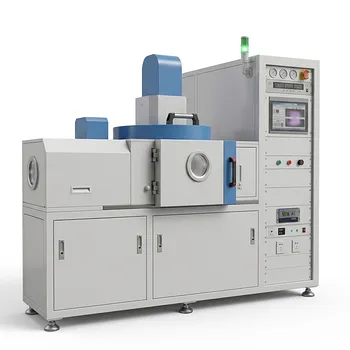
Radio Frequency Plasma Enhanced Chemical Vapor Deposition RF PECVD System for Laboratory and Industrial Thin Film Growth
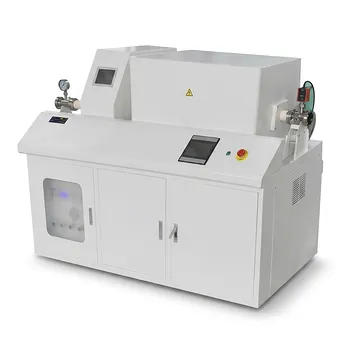
Chemical Vapor Deposition CVD System Slide PECVD Tube Furnace with Liquid Gasifier PECVD Machine
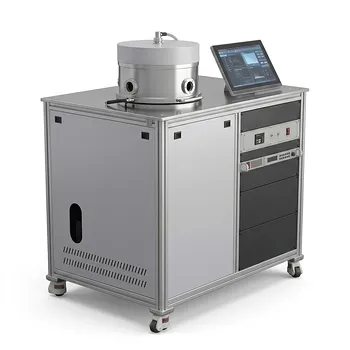
Inclined Rotary Plasma Enhanced Chemical Vapor Deposition PECVD System for Thin Film Deposition and Nanomaterial Synthesis
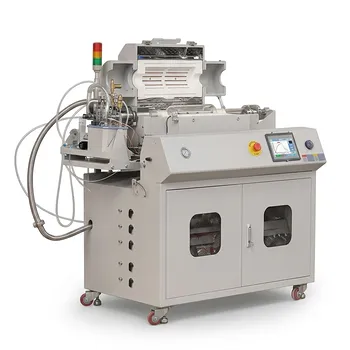
Versatile Chemical Vapor Deposition Tube Furnace System for Advanced Material Research and Industrial Coating Processes
1200C Max Compact Auto-Sliding PECVD Furnace with 2 Inch Tube and Vacuum Pump
Triple Tube Compact Hybrid Muffle Furnace 1000C High Vacuum Thermal Processing System
Vertical Openable Tube Furnace 0-1700c High Temperature Laboratory System for CVD and Vacuum Heat Treatment
Split Chamber CVD Tube Furnace with Vacuum Station Chemical Vapor Deposition System Machine

High Temperature 1700C Tube Furnace with High Vacuum Turbomolecular Pump System and Multi Channel Mass Flow Controller Gas Mixer
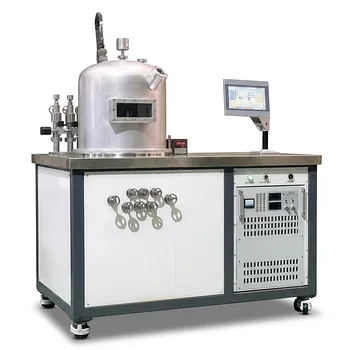
HFCVD Machine System for Nano Diamond Coating on Drawing Dies and Industrial Tools
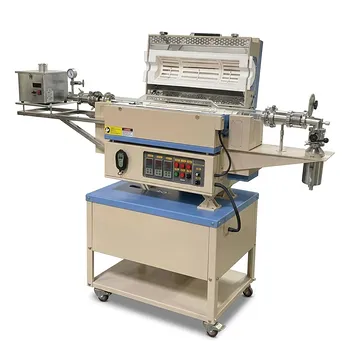
5 Inch Rotary Tube Furnace with Automatic Feeding and Receiving System 1200C Three Zone CVD Powder Processing
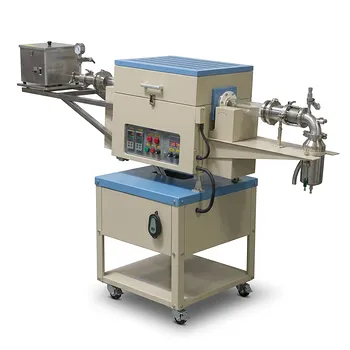
Two Zone Rotary CVD Furnace with Automatic Feeding and Receiving System for Powder Processing
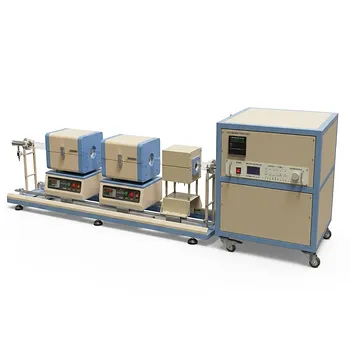
1200C Dual Sliding Tube Furnace with Dual Tubes and Flanges for PECVD Processes
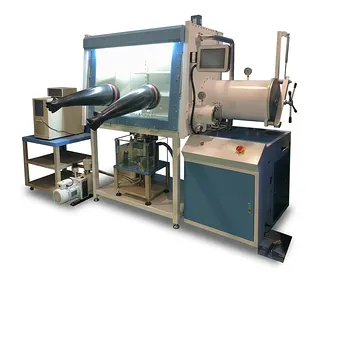
High Temperature Induction Melting System with Integrated Ultra High Purity Glove Box for Metallic Alloy Processing
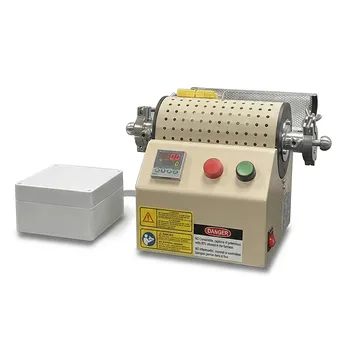
1000C Mini Tube Furnace with 20mm Quartz Tube and Vacuum Flanges for Material Science Research and Controlled Atmosphere Small Sample Processing
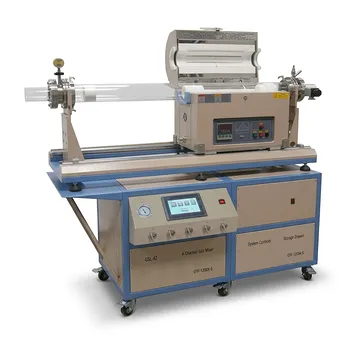
Dual Tube 100mm 80mm CVD Sliding Furnace with 4 Channel Gas Mixing and Vacuum System