How does the high concentration of atomic hydrogen in MPCVD benefit diamond growth? The Key to Gem-Grade Quality.
Updated 5 months ago
In Microwave Plasma Chemical Vapor Deposition (MPCVD), a high concentration of atomic hydrogen acts as a chemical "guard" and a structural architect. It ensures the purity of the diamond by selectively etching away undesirable graphitic carbon ($sp^2$) while simultaneously stabilizing the diamond bond ($sp^3$) structure. This dual action is why MPCVD can produce high-crystallinity, gem-grade diamonds at growth rates of several micrometers per hour.
Atomic hydrogen is the essential mechanism that forces carbon to crystallize as diamond rather than graphite, providing the chemical environment necessary for superior optical clarity and structural integrity.
The Dual-Action Mechanism of Atomic Hydrogen
Selective Etching of Graphitic Carbon
Graphite is the more thermodynamically stable form of carbon at the pressures used in MPCVD. Atomic hydrogen solves this by reacting with and "etching" away $sp^2$-bonded carbon (graphite) significantly faster than it reacts with $sp^3$-bonded diamond. This continuous cleaning process removes "mistakes" from the growing surface, leaving only the diamond lattice behind.
Stabilizing the $sp^3$ Diamond Lattice
At the growth surface, carbon atoms have "dangling bonds" that would naturally collapse into a graphitic structure if left alone. Atomic hydrogen saturates these dangling bonds, providing the necessary pressure and chemical environment to keep the surface in a diamond configuration. This stabilization allows the lattice to extend outward without losing its characteristic hardness and clarity.
Orchestrating the Growth Chemistry
Hydrogen Abstraction and Reactive Sites
The growth process begins when atomic hydrogen strikes a hydrogen-terminated diamond surface. This collision removes a surface hydrogen atom—a process called hydrogen abstraction—to create an open, reactive radical site. These sites are the "landing pads" where the next layer of carbon will eventually attach.
Facilitating Precursor Incorporation
Once a reactive site is created, methyl radicals ($CH_3$) produced in the plasma can bond to the diamond surface. Because the environment is rich in atomic hydrogen, the carbon atoms from these methyl radicals are forced to orient themselves according to the existing diamond pattern. This precise chemistry enables the scalable production of large single-crystal boules with properties equivalent to natural diamonds.
Understanding the Trade-offs
The Balance of Growth Rate vs. Quality
While high hydrogen concentrations ensure purity, there is a physical limit to the growth speed. If the etching rate of atomic hydrogen is too high relative to the carbon supply, the net diamond growth can slow down or even reverse. Most MPCVD systems must be finely tuned to maintain a "moderate" growth rate that prioritizes crystallinity over raw speed to avoid structural defects.
Energy Consumption and Heat Management
Generating high concentrations of atomic hydrogen requires intense microwave power to dissociate hydrogen gas ($H_2$) into its atomic form. This process generates extreme heat within the plasma, requiring sophisticated cooling systems for the diamond substrate. Failing to manage this thermal load can lead to uneven growth or cracking in the single-crystal material.
How to Apply This to Your Project
Optimizing the MPCVD Process for Your Goal
The specific concentration of hydrogen used in your reactor should be dictated by your final application for the material.
- If your primary focus is Optical Clarity or Gem Production: Maintain higher hydrogen ratios to ensure the total removal of $sp^2$ carbon, preventing the yellow or brown tinting often seen in other methods.
- If your primary focus is High Growth Rates for Industrial Tooling: Experiment with slightly lower hydrogen-to-methane ratios to increase deposition speed, provided the resulting crystallinity meets your structural requirements.
- If your primary focus is Large Single-Crystal Scaling: Focus on plasma stability and precise temperature control to ensure the high hydrogen concentration remains uniform across the entire surface of the boule.
By mastering the concentration of atomic hydrogen, you gain absolute control over the chemical purity and structural perfection of the synthetic diamond lattice.
Summary Table:
| Function | Mechanism | Key Benefit |
|---|---|---|
| Selective Etching | Rapidly removes $sp^2$ graphitic carbon | High chemical purity & optical clarity |
| Lattice Stabilization | Saturates surface dangling bonds | Maintains the $sp^3$ diamond structure |
| Hydrogen Abstraction | Creates reactive radical sites | Enables the attachment of new carbon layers |
| Quality Control | Balances etching vs. deposition rates | Produces high-crystallinity single crystals |
Elevate Your Material Research with THERMUNITS Precision
As a global leader in high-temperature laboratory equipment, THERMUNITS specializes in providing the advanced thermal processing solutions necessary for cutting-edge material science. Our high-performance CVD/PECVD systems, Vacuum furnaces, and Tube furnaces are designed to meet the rigorous demands of industrial R&D and single-crystal growth.
From Hot Press furnaces to Vacuum Induction Melting (VIM) systems, our comprehensive range supports researchers in achieving the perfect chemical environment for superior material integrity.
Ready to optimize your diamond growth or heat treatment process? Contact our technical experts today for a customized solution!
Mentioned Products
- Cylindrical Resonator MPCVD Machine System for Microwave Plasma Chemical Vapor Deposition and Lab Diamond Growth
- 915MHz MPCVD Diamond Machine Microwave Plasma Chemical Vapor Deposition System Reactor
- Radio Frequency Plasma Enhanced Chemical Vapor Deposition RF PECVD System for Laboratory and Industrial Thin Film Growth
- HFCVD Machine System for Nano Diamond Coating on Drawing Dies and Industrial Tools
- Multi Heating Zones CVD Tube Furnace System for Precision Chemical Vapor Deposition and Advanced Material Synthesis
People Also Ask
- What are the typical operating pressure ranges and vacuum requirements for MPCVD systems? Optimize Your Material Growth
- What technical parameters are critical for optimizing the growth of single-crystal diamonds in MPCVD systems? Expert Guide
- What are the technical advantages of the electrodeless plasma design in MPCVD systems? Purity & Precision in Synthesis
- How does the versatility of gas compatibility in MPCVD systems compare to filament-based CVD methods? Purity & Doping.
- What are the physical characteristics of the plasma generated in an MPCVD reactor? Expert Guide to CVD Plasma States

Tech Team · ThermUnits
Last updated on Apr 14, 2026
Related Products
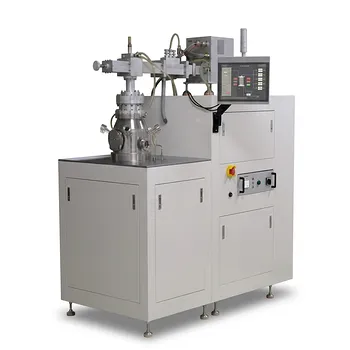
Cylindrical Resonator MPCVD Machine System for Microwave Plasma Chemical Vapor Deposition and Lab Diamond Growth
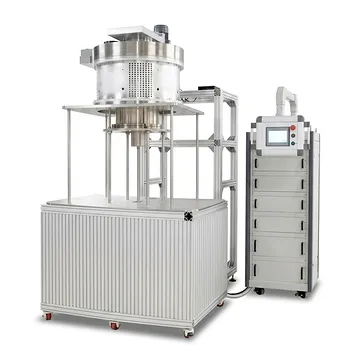
915MHz MPCVD Diamond Machine Microwave Plasma Chemical Vapor Deposition System Reactor
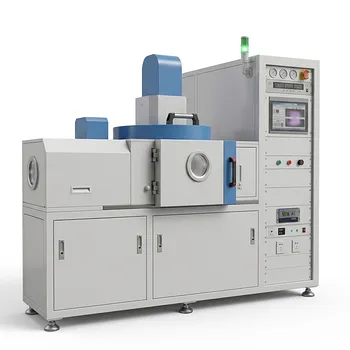
Radio Frequency Plasma Enhanced Chemical Vapor Deposition RF PECVD System for Laboratory and Industrial Thin Film Growth
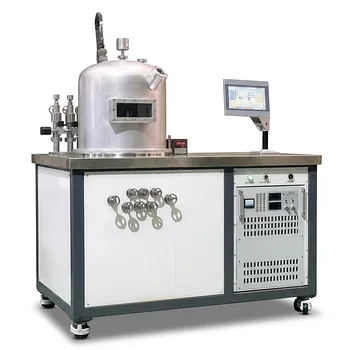
HFCVD Machine System for Nano Diamond Coating on Drawing Dies and Industrial Tools
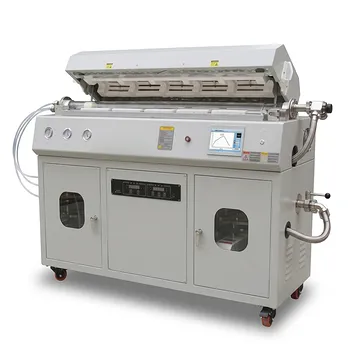
Multi Heating Zones CVD Tube Furnace System for Precision Chemical Vapor Deposition and Advanced Material Synthesis
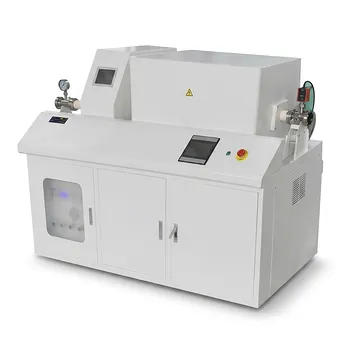
Chemical Vapor Deposition CVD System Slide PECVD Tube Furnace with Liquid Gasifier PECVD Machine
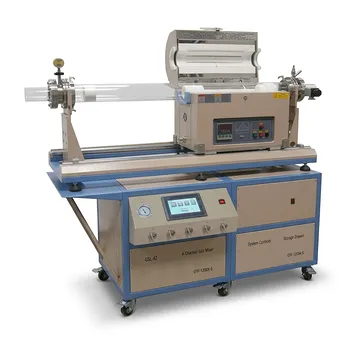
Dual Tube 100mm 80mm CVD Sliding Furnace with 4 Channel Gas Mixing and Vacuum System
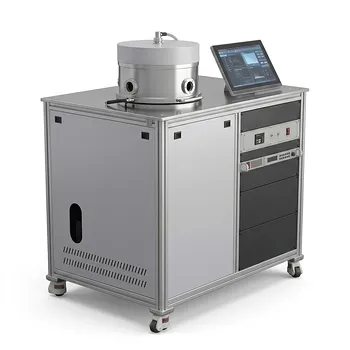
Inclined Rotary Plasma Enhanced Chemical Vapor Deposition PECVD System for Thin Film Deposition and Nanomaterial Synthesis
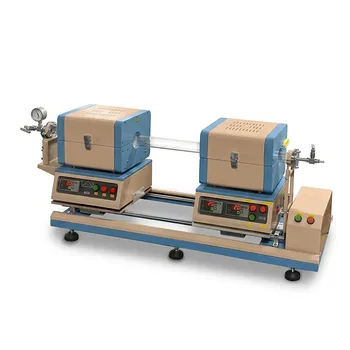
High Temperature 1200C Automatic Sliding Dual Zone Tube Furnace for 2D Transition Metal Dichalcogenides Growth and Material Sublimation Research
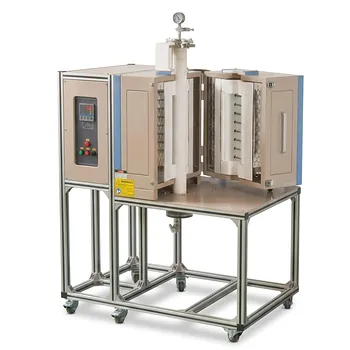
High Temperature 1700C Vertical Split Tube Furnace for Material Quenching and Single Crystal Growth
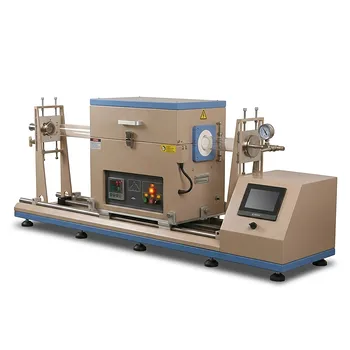
1200C Sliding Tube Furnace for Rapid Thermal Processing and CVD Graphene Growth with 100mm OD Capacity
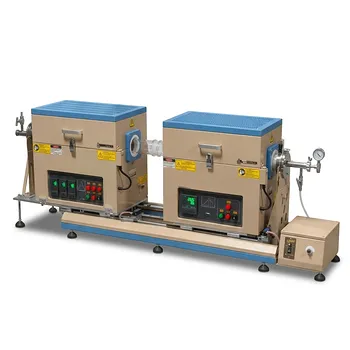
1200C Dual Temperature Zone Slidable Tube Furnace for 2D Material Growth and TCVD Synthesis
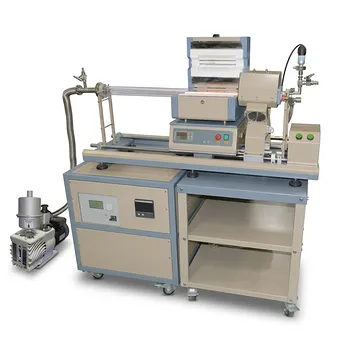
1200C Max Compact Auto-Sliding PECVD Furnace with 2 Inch Tube and Vacuum Pump