What are the technical advantages of using stacked open alumina crucibles for the vapor-phase reaction of Sr4Os3O12? Expert Tips
Updated 3 months ago
The use of stacked open alumina crucibles for synthesizing Sr₄Os₃O₁₂ streamlines the vapor-phase reaction by physically isolating reactants and enabling precise osmium transport. This configuration forces the reaction to occur exclusively through the migration of volatile OsO₄ gas, resulting in the precipitation of highly uniform, hexagonal black crystals.
This methodology leverages the chemical inertness of alumina and the mechanics of vapor-phase transport to produce high-purity Sr₄Os₃O₁₂. By separating precursors, researchers gain granular control over crystal growth that is impossible in traditional bulk solid-state reactions.
Mechanics of Controlled Vapor-Phase Growth
Physical Separation of Precursors
By placing osmium dioxide and strontium oxides in separate, stacked crucibles, direct solid-state reactions are prevented. This ensures that the synthesis of Sr₄Os₃O₁₂ relies entirely on the gas-to-solid interface, minimizing the risk of forming undesired intermediate phases.
Regulation of Osmium Transport Rate
The "open" nature of the stacked crucibles creates a defined path for OsO₄ gas to migrate from the osmium source to the strontium source. This spatial arrangement allows for a controlled transport rate, which is critical for the slow, steady precipitation of high-quality crystals.
Optimization of Crystal Morphology
The vapor-phase path specifically promotes the growth of uniform, black hexagonal crystals on solid surfaces. This method is superior for producing samples with high crystallinity and well-defined facets compared to standard co-mingled powder synthesis.
Material Advantages of High-Purity Alumina
Exceptional Chemical Inertness
High-purity alumina (Al₂O₃) does not react with corrosive gases or reactive precursors at temperatures reaching 800°C. This inertness ensures that no metallic impurities or alumina-based contaminants are introduced into the final Sr₄Os₃O₁₂ lattice.
High-Temperature Stability and Resistance
Alumina maintains its structural integrity across repeated thermal cycles and high-temperature environments. Its superior thermal shock resistance ensures that the crucibles remain safe and functional throughout the heating and cooling phases required for crystal growth.
Preservation of Precursor Purity
The stability of the crucible material ensures the purity of the precursors throughout the entire process. By preventing reactions between the vessel and the reactants, the chemical active sites of the resulting material remain uncontaminated.
Understanding the Technical Trade-offs
Sensitivity to Geometric Arrangement
The success of vapor-phase transport is highly dependent on the precise physical placement of the crucibles. Minor variations in the stacking height or the "openness" of the crucibles can significantly altter the gas flux, leading to inconsistent crystal yields.
Throughput and Rate Limitations
While vapor-phase synthesis in stacked crucibles produces higher-quality crystals, it is inherently slower than direct solid-state heating. This method prioritizes structural perfection and purity over high-volume production speed.
Applying This Methodology to Your Project
When deciding whether to utilize a stacked alumina crucible setup for Sr₄Os₃O₁₂ or similar oxides, consider your primary synthesis goals:
- If your primary focus is crystal uniformity and Faceting: Utilize the stacked vapor-phase method to ensure slow, controlled growth of hexagonal crystals.
- If your primary focus is maximum material purity: Use high-purity alumina crucibles to prevent the introduction of metallic impurities during high-temperature cycles.
- If your primary focus is high-volume batch production: Consider that this vapor-phase migration technique may require longer reaction times compared to traditional mixed-powder methods.
By mastering the spatial dynamics of vapor transport within inert alumina vessels, researchers can achieve a level of phase purity and structural definition that is unattainable through bulk reaction methods.
Summary Table:
| Feature | Technical Advantage | Resulting Outcome |
|---|---|---|
| Physical Separation | Prevents solid-state intermediate phases | High phase purity of $Sr_4Os_3O_{12}$ |
| Open Vapor Path | Controls $OsO_4$ gas migration rate | Uniform hexagonal crystal morphology |
| Alumina Inertness | No reaction with corrosive precursors | Contaminant-free material lattice |
| Thermal Stability | High resistance to thermal shock | Safe, reliable high-temperature cycles |
Elevate Your Material Research with THERMUNITS Precision
Achieving structural perfection in complex syntheses like vapor-phase reactions requires equipment that offers uncompromising stability and control. THERMUNITS is a leading manufacturer dedicated to supporting material science and industrial R&D with top-tier high-temperature solutions.
Whether your project requires Muffle, Vacuum, Atmosphere, or Tube furnaces, or advanced systems like CVD/PECVD and Vacuum Induction Melting (VIM) units, our technology ensures the thermal precision your innovation demands. We also provide high-quality Thermal Elements and specialized equipment like Rotary Kilns and Hot Press Furnaces to suit every laboratory heat treatment need.
Ready to optimize your synthesis process?
Contact our experts today to discover how THERMUNITS can provide the perfect thermal environment for your next breakthrough!
References
- Gohil S. Thakur, Michael Ruck. Sr<sub>4</sub>Os<sub>3</sub>O<sub>12</sub> – A Layered Osmate(V,VI) that is Magnetic Close to Room Temperature. DOI: 10.1002/zaac.202400109
Mentioned Products
- 600°C Vertical Crucible Furnace with SS316 Alloy Reactor and 6 Port Vacuum Flange
- Vertical Crucible Furnace 1000C High Temperature Laboratory Equipment 4.7 Inch Diameter Chamber SS316 Anti Corrosive Enclosure
- High Temperature Vertical Crucible Furnace with 22L Heating Chamber and 1200C Maximum Temperature
- High Temperature Bench Top Muffle Furnace 1700C with Integrated Evaporating Particle Collection and 8x8x8 Alumina Fiber Chamber
- Three Zone Alumina Tube Furnace with Vacuum Flanges High Temperature 1700C Thermal Gradient CVD System
People Also Ask
- How does a high vacuum sintering furnace at 600 Celsius affect the microstructure of Al-TiC composites? Expert Analysis
- How should the choice between a Quartz crucible and an Alumina crucible be made for La2O2S? Optimize Material Purity
- Why use ceramic crucibles for coal nano-hybrid heat treatment? Ensure Purity and Thermal Stability.
- What role does a vacuum tube furnace play in palladium membrane treatment? Achieve 600°C Stability & Prevent Brittle Phases
- Why is a high-temperature furnace with precise temperature control necessary for Ag8SiS6 alloy synthesis? Ensure Safety.

Tech Team · ThermUnits
Last updated on Jun 02, 2026
Related Products
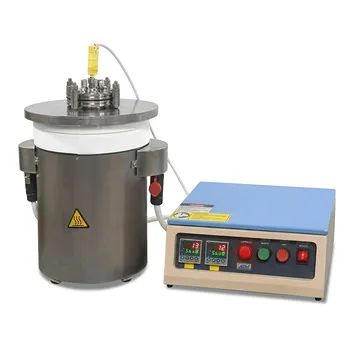
600°C Vertical Crucible Furnace with SS316 Alloy Reactor and 6 Port Vacuum Flange
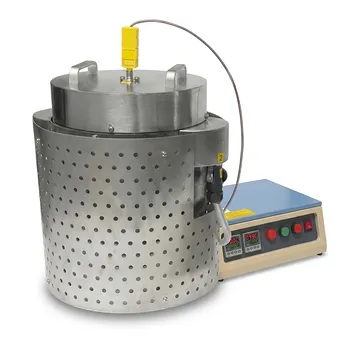
Vertical Crucible Furnace 1000C High Temperature Laboratory Equipment 4.7 Inch Diameter Chamber SS316 Anti Corrosive Enclosure
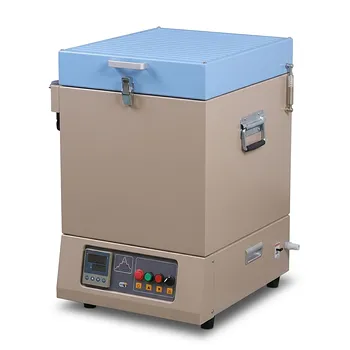
High Temperature Vertical Crucible Furnace with 22L Heating Chamber and 1200C Maximum Temperature
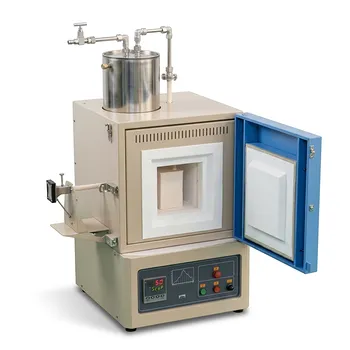
High Temperature Bench Top Muffle Furnace 1700C with Integrated Evaporating Particle Collection and 8x8x8 Alumina Fiber Chamber
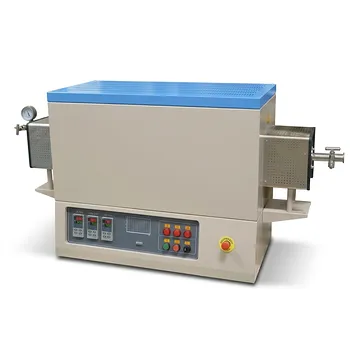
Three Zone Alumina Tube Furnace with Vacuum Flanges High Temperature 1700C Thermal Gradient CVD System
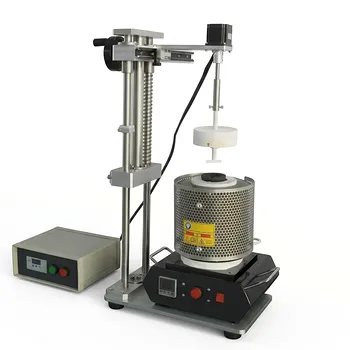
1100C Crucible Melting Furnace with Stirring Function for Glovebox and Air Sensitive Alloy Research