Why is a high-temperature furnace with precise temperature control necessary for Ag8SiS6 alloy synthesis? Ensure Safety.
Updated 3 months ago
Synthesizing Ag8SiS6 requires a high-temperature furnace with precise control to safely manage the volatile exothermic reactions between silver, silicon, and sulfur while ensuring a chemically homogenous final product. Without a strictly programmed heating profile—specifically a slow ramp of 50 °C/h and a secondary melting stage at 1015 °C—the internal sulfur vapor pressure can rise uncontrollably, leading to catastrophic quartz tube explosions.
Core Takeaway: Precision temperature management is the only way to balance the aggressive reaction kinetics of sulfur with the high thermal energy required for melting, ensuring both laboratory safety and the structural integrity of the alloy.
Managing Volatile Reaction Kinetics
Preventing Pressure-Induced Explosions
Sulfur possesses a high vapor pressure that increases rapidly when heated.
A high-precision furnace allows for a controlled heating rate, such as the recommended 50 °C/h, which prevents the internal pressure from exceeding the mechanical limits of the reaction vessel.
By maintaining a steady, slow increase, the system avoids "runaway" exothermic reactions that occur when the elemental components begin to bond.
The Critical 450 °C Pre-Reaction Stage
The synthesis protocol requires an initial isothermal hold at 450 °C.
This specific temperature allows for a full, gradual reaction between the sulfur, silver, and silicon before the system reaches the melting point of the components.
Precise control during this stage ensures that the sulfur is chemically consumed into the alloy matrix, significantly lowering the risk of explosion during the subsequent ramp to higher temperatures.
Achieving Chemical Homogeneity
Reaching the 1015 °C Melting Threshold
Ag8SiS6 synthesis requires reaching a peak temperature of 1015 °C to ensure the mixture enters a complete liquid phase.
A high-temperature furnace provides the thermal energy necessary to overcome the atomic bonding energies of the precursor materials.
This high-heat stage is essential for chemical homogenization, allowing the elements to distribute evenly throughout the melt and preventing localized concentrations of unreacted material.
Maintaining a Uniform Thermal Field
Precision furnaces are designed to provide a uniform thermal field across the entire sample area.
Uniformity prevents the formation of structural gradients, which can occur if one side of the sample cools or heats faster than the other.
As seen in similar alloy processes, a stable field ensures that the final crystal structure is consistent from the core to the surface of the ingot.
Regulating Microscopic Structure
Controlling Phase Transitions and Grain Size
Beyond simple melting, precise temperature control regulates the microstructural evolution of the alloy.
By strictly executing set holding times, the furnace facilitates the formation of stable metallic bonds and optimizes the resulting grain size.
This control is vital for achieving the specific physical and chemical performance requirements of the Ag8SiS6 phase, including its unique electronic or ionic properties.
Eliminating Impurities and By-products
Precise management of heating rates allows researchers to differentiate between various reaction stages and avoid undesirable by-products.
Localized overheating can trigger the formation of secondary binary phases (like Ni-Sn or Ti-Ni in other systems) that degrade the purity of the target alloy.
A programmed environment ensures the energy input is exactly sufficient to drive the desired phase transition without overshooting into decomposition ranges.
Understanding the Trade-offs
The Cost of Precision vs. Safety
While high-precision furnaces represent a higher capital investment, the alternative—manual or low-precision heating—carries a high risk of equipment loss and safety hazards.
Inaccurate sensors or "overshooting" the temperature can lead to localized boiling of sulfur, resulting in the immediate failure of the sealed quartz ampoules.
Balancing Time and Structural Integrity
Fast heating rates may seem efficient but often lead to internal porosity and shrinkage.
Conversely, excessively long holding times at high temperatures can lead to grain coarsening, which may negatively impact the mechanical or thermoelectric properties of the Ag8SiS6 alloy.
Applying These Principles to Your Synthesis
Recommendations for Targeted Outcomes
- If your primary focus is Laboratory Safety: Prioritize a furnace with programmable logic controllers (PLC) that can strictly enforce a 50 °C/h heating ramp and include automatic shut-off safety triggers.
- If your primary focus is Material Purity: Ensure the furnace provides a multi-stage profile with a dedicated 450 °C dwell time to ensure complete reaction of volatile elements before reaching the melting point.
- If your primary focus is Microstructural Uniformity: Utilize a furnace with a large "constant temperature zone" to prevent thermal gradients from creating unintended phase variations across your sample.
By mastering the thermal profile, you transform a potentially hazardous chemical reaction into a controlled process for creating high-quality, homogenous Ag8SiS6 alloys.
Summary Table:
| Synthesis Stage | Temperature | Purpose | Critical Control Element |
|---|---|---|---|
| Heating Ramp | Up to 1015 °C | Prevent pressure build-up | Strict 50 °C/h slow ramp rate |
| Pre-Reaction | 450 °C Hold | Chemical consumption of sulfur | Precise isothermal dwell time |
| Melting Stage | 1015 °C Peak | Achieving chemical homogeneity | Stable high-thermal energy input |
| Cooling/Phasing | Programmed | Microstructure & grain control | Uniform thermal field distribution |
Elevate Your Material Research with THERMUNITS
Precise thermal management is the difference between a successful synthesis and a hazardous laboratory failure. THERMUNITS is a leading manufacturer of high-temperature laboratory equipment, providing the advanced control systems required for sensitive material science and industrial R&D projects.
Our comprehensive range of thermal processing solutions—including Tube, Vacuum, Atmosphere, and Muffle furnaces, as well as CVD/PECVD systems and Vacuum Induction Melting (VIM) furnaces—is engineered to provide the exact heating profiles and safety triggers necessary for complex alloy synthesis like Ag8SiS6.
Why choose THERMUNITS?
- Advanced Safety: PLC-controlled heating ramps to prevent volatile pressure explosions.
- Thermal Uniformity: Large constant temperature zones for consistent crystal structures.
- Versatile Solutions: Equipment ranging from dental and rotary kilns to high-pressure hot press furnaces.
Don't compromise on your lab's safety or material purity. Contact our technical experts today to find the ideal thermal solution for your high-temperature heat treatment requirements!
References
- A.I. Pogodin, Ruslan Mariychuk. Particularities of optical behavior of Ag8SiS6 single crystal. DOI: 10.15407/spqeo27.03.280
Mentioned Products
- High Temperature Muffle Furnace with Alloy Chamber for Debinding and Sintering Applications
- 1100C High Pressure Rocking Tube Furnace with 2 Inch Super Alloy Processing Tube for Material Synthesis
- High Temperature 1700C Vertical Tube Furnace for Powder Spherification and Material Sintering
- 600°C Vertical Crucible Furnace with SS316 Alloy Reactor and 6 Port Vacuum Flange
- 1650C High Temperature Atmosphere Controlled Box Furnace with 65L Chamber for Advanced Material Sintering and Industrial Heat Treatment
People Also Ask
- What role does a high-temperature muffle furnace play in evaluating the mineral composition of rock samples? LOI & XRF Guide
- What role does a high-temperature muffle furnace play in the synthesis of Melem precursors? Precision Polymerization.
- What is the purpose of using muffle or tube furnaces in glass synthesis? Achieve Precise Melt-Quenching & Homogeneity
- Why is annealing in a high-temperature muffle furnace necessary for SiO2/Si substrate pretreatment before monolayer WS2 synthesis?
- What is the role of a high-temperature muffle furnace in the synthesis of graphitic carbon nitride (g-C3N4)? - Guide

Tech Team · ThermUnits
Last updated on Jun 02, 2026
Related Products
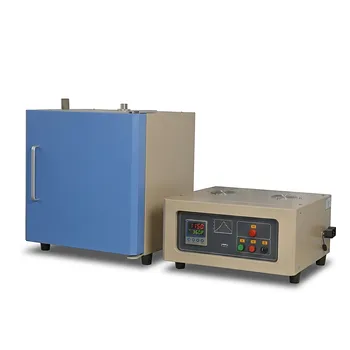
High Temperature Muffle Furnace with Alloy Chamber for Debinding and Sintering Applications
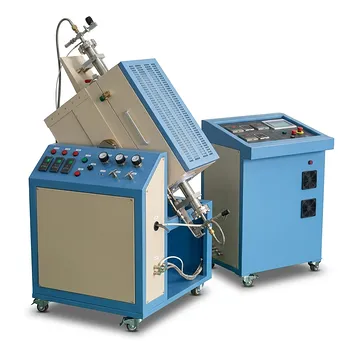
1100C High Pressure Rocking Tube Furnace with 2 Inch Super Alloy Processing Tube for Material Synthesis

High Temperature 1700C Vertical Tube Furnace for Powder Spherification and Material Sintering
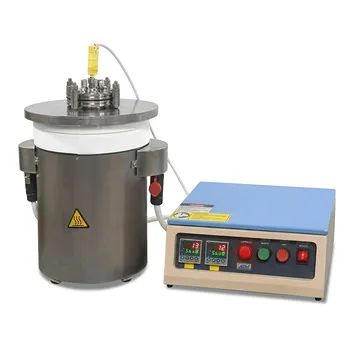
600°C Vertical Crucible Furnace with SS316 Alloy Reactor and 6 Port Vacuum Flange
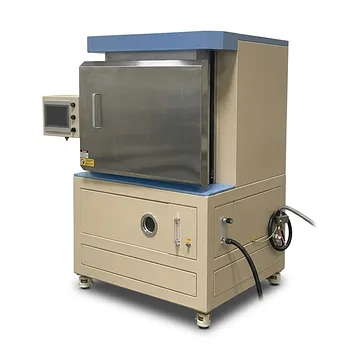
1650C High Temperature Atmosphere Controlled Box Furnace with 65L Chamber for Advanced Material Sintering and Industrial Heat Treatment
Large Bench Top 1700C High Temperature Muffle Furnace with 19L Chamber for Advanced Material Sintering and Annealing
Five Side Heating Muffle Furnace High Purity Alumina Fiber 27L Chamber 1200C High Temperature Thermal Processing System for Sintering Annealing and Materials Research
1700C Compact Hybrid Furnace with Dual Layer Box Sintering and Controlled Atmosphere Alumina Tubes
High Temperature Compact Muffle Furnace 1700 C with 30 Segment Programmable Controller and 1.7L Cubic Chamber
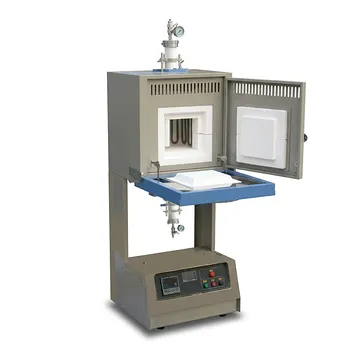
Vertical Hybrid High Temperature Furnace 1500C Alumina Tube SOFC Fuel Cell Testing Laboratory Heat Treatment Research Equipment
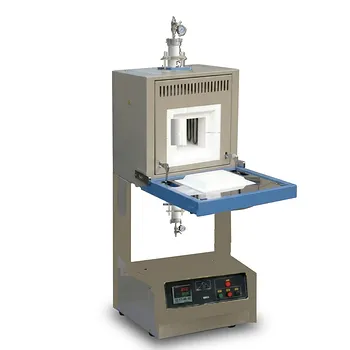
High Temperature Vertical Hybrid Furnace with Alumina Tube and SiC Heating for SOFC Coin Cell Testing and Atmosphere Processing
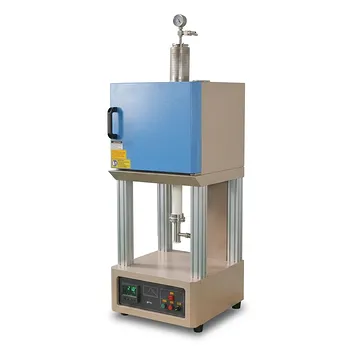
Hybrid High Temperature Tube and Box Furnace 1700C with 2 Inch Alumina Tube for Material Research

High Temperature 1700C Benchtop Tube Furnace with 5 Inch Heating Zone High Purity Alumina Tube and Vacuum Sealing Flanges
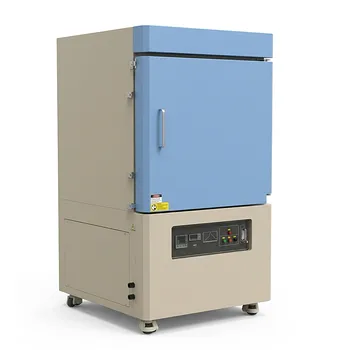
Industrial Large Box Furnace 1700C 216L High Temp Muffle Sintering System
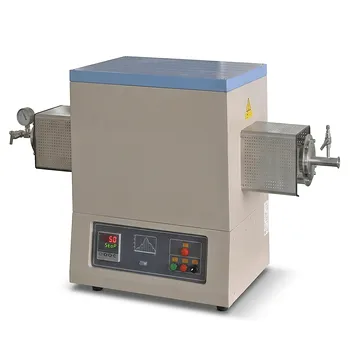
High Temperature 1700C Tube Furnace with 4 Inch OD Alumina Tube and Vacuum Sealing Flanges
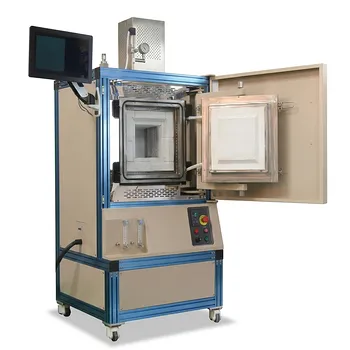
High Temperature Hydrogen Atmosphere Box Furnace 1650C Max Reducing Environment Material Synthesis System 8x8x8 Chamber
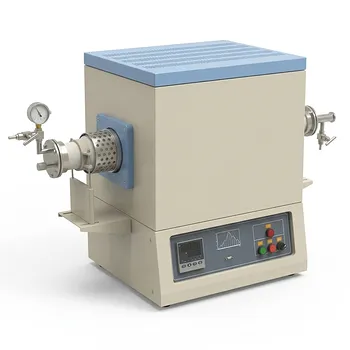
1750°C High Temperature Benchtop Vacuum Atmosphere Tube Furnace with Kanthal Super 1800 Heating Elements and 60mm Alumina Processing Tube
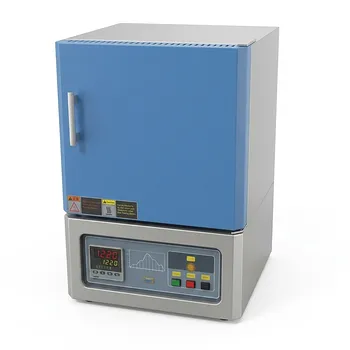
High Temperature Benchtop Muffle Furnace 1700C 10L Chamber Alumina Fiber Insulation MoSi2 Heating Elements
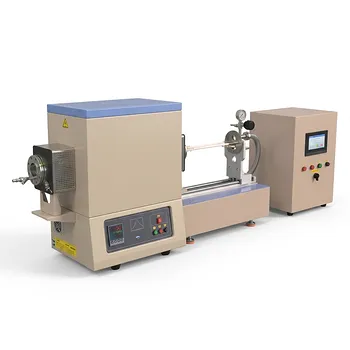
High Temperature Horizontal Electrical Assisted Sintering Furnace with 3KW Programmable Power Source for Advanced Ceramic Materials
