How should the choice between a Quartz crucible and an Alumina crucible be made for La2O2S? Optimize Material Purity
Updated 5 months ago
The choice between Quartz and Alumina crucibles for Lanthanum oxysulfide ($La_2O_2S$) synthesis is determined by your peak processing temperature. For initial processing steps occurring below 1000 °C, a Quartz crucible is the optimal choice due to its chemical stability and thermal shock resistance. When synthesis temperatures reach 1200 °C or higher, an Alumina crucible is required to maintain sample purity and provide necessary structural integrity.
Selecting the correct crucible is a balance between thermal shock resistance and high-temperature chemical inertness. Matching the material to the specific thermal phase of $La_2O_2S$ synthesis is critical to prevent contamination and crucible failure.
Thermal Boundaries in $La_2O_2S$ Synthesis
Quartz for Low-Temperature Stability
Quartz crucibles are highly effective for the initial stages of synthesis where temperatures remain under 1000 °C. At these levels, Quartz offers excellent chemical stability, ensuring that it does not leach impurities into the lanthanum compounds.
Its superior thermal shock resistance is a significant advantage during rapid heating or cooling cycles. This makes it a reliable and cost-effective choice for low-temperature calcination or precursor preparation.
Alumina for High-Temperature Refractory Needs
As the synthesis progresses to the final sintering or reaction phases at 1200 °C, the mechanical properties of Quartz become insufficient. Alumina ($Al_2O_3$) is utilized here because of its superior refractory properties, which allow it to remain rigid and stable under intense heat.
Beyond mere strength, Alumina acts as a vital barrier against chemical interactions. At 1200 °C, it prevents the $La_2O_2S$ sample from reacting with the crucible walls, which is essential for ensuring the purity and stoichiometric accuracy of the final material.
Understanding the Trade-offs
The Risk of Thermal Softening
The primary limitation of Quartz is its relatively low softening point compared to technical ceramics. Using Quartz at 1200 °C can lead to structural deformation or devitrefication, potentially ruining the sample and the furnace hardware.
Chemical Contamination at Extremes
While Alumina is the standard for high temperatures, it is less resistant to thermal shock than Quartz. If cooled too rapidly, Alumina crucibles are prone to cracking.
Additionally, using the wrong material at the wrong temperature gradient can lead to interfacial reactions. At 1200 °C, the high reactivity of lanthanum compounds requires the specific inertness provided by high-purity Alumina to avoid silicon contamination from a Quartz source.
How to Apply This to Your Project
When preparing your experimental setup for $La_2O_2S$ synthesis, align your hardware with your planned thermal profile to ensure the highest material quality.
- If your primary focus is low-temperature calcination (below 1000 °C): Utilize a Quartz crucible to take advantage of its thermal shock resistance and cost-efficiency.
- If your primary focus is high-temperature synthesis (at or above 1200 °C): Use an Alumina crucible to ensure high-temperature mechanical strength and to prevent chemical reactions between the sample and the vessel.
Choosing the appropriate crucible material based on these temperature thresholds is the most effective way to guarantee a successful and pure synthesis of Lanthanum oxysulfide.
Summary Table:
| Feature | Quartz Crucible | Alumina Crucible ($Al_2O_3$) |
|---|---|---|
| Optimal Temperature | Below 1000 °C | 1200 °C and above |
| Key Advantage | Superior thermal shock resistance | High-temperature structural integrity |
| Chemical Properties | Stable at low temperatures | Inert to La compounds at high heat |
| Best Use Case | Initial calcination & precursor prep | Final sintering & phase reaction |
| Main Risk | Softening & devitrefication > 1000°C | Prone to cracking if cooled too fast |
Elevate Your Thermal Research with THERMUNITS
Choosing the right crucible is critical, but the precision of your heat treatment depends on the quality of your furnace. THERMUNITS is a leading manufacturer of high-performance laboratory equipment tailored for material science and industrial R&D. We provide the control and reliability needed for complex syntheses like Lanthanum oxysulfide.
Whether you are performing low-temperature calcination or high-temperature sintering, our comprehensive range of solutions includes:
- Laboratory Furnaces: Muffle, Tube, Vacuum, Atmosphere, and Rotary Furnaces.
- Advanced Systems: CVD/PECVD systems, Hot Press furnaces, and Vacuum Induction Melting (VIM) units.
- Specialized Equipment: Dental Furnaces, electric rotary kilns, and premium Thermal Elements.
Ready to optimize your lab's efficiency? Our experts are here to help you select the perfect thermal processing equipment for your specific application.
References
- Yuqi Chen, Kun Yeun Han. Rapid Synthesis and Sintering of La2O2S and Its Physical, Optical, and Mechanical Properties. DOI: 10.3390/coatings14091120
Mentioned Products
- 1100C Crucible Melting Furnace with Stirring Function for Glovebox and Air Sensitive Alloy Research
- High Temperature Vertical Crucible Furnace with 22L Heating Chamber and 1200C Maximum Temperature
- Compact Crucible Melting Furnace 1100C Programmable Temperature Controller Metal Sintering Equipment
- Vertical Crucible Furnace 1000C High Temperature Laboratory Equipment 4.7 Inch Diameter Chamber SS316 Anti Corrosive Enclosure
- 600°C Vertical Crucible Furnace with SS316 Alloy Reactor and 6 Port Vacuum Flange
People Also Ask
- Why are internal getters such as Titanium used during the synthesis of oxygen-sensitive materials in a melting furnace?
- What technical capabilities must a high-temperature furnace possess for 1100°C HEA annealing? Precision & Stability.
- Why use ceramic crucibles for coal nano-hybrid heat treatment? Ensure Purity and Thermal Stability.
- Alumina Plates in Polymer Carbonization: Ensure Flatness and Suppress Shrinkage
- What role does a sacrificial graphite liner play in furnaces? Protect Components and Stabilize Slag Experiments

Tech Team · ThermUnits
Last updated on Apr 14, 2026
Related Products
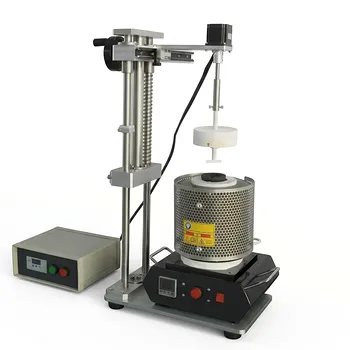
1100C Crucible Melting Furnace with Stirring Function for Glovebox and Air Sensitive Alloy Research
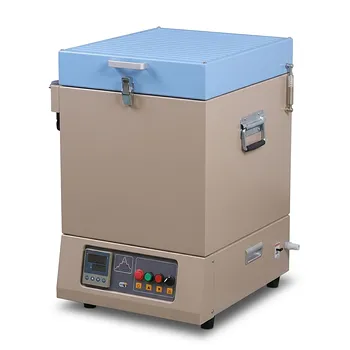
High Temperature Vertical Crucible Furnace with 22L Heating Chamber and 1200C Maximum Temperature
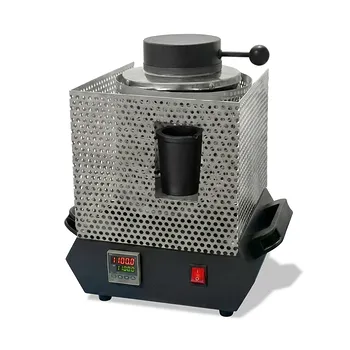
Compact Crucible Melting Furnace 1100C Programmable Temperature Controller Metal Sintering Equipment
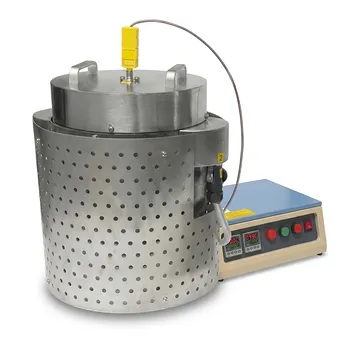
Vertical Crucible Furnace 1000C High Temperature Laboratory Equipment 4.7 Inch Diameter Chamber SS316 Anti Corrosive Enclosure
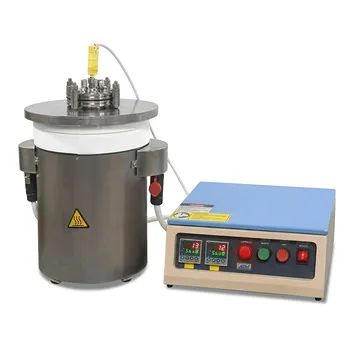
600°C Vertical Crucible Furnace with SS316 Alloy Reactor and 6 Port Vacuum Flange
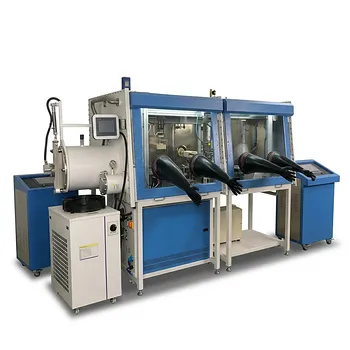
Automatic 10 Crucible Induction Melting and Casting System with Stirring Function and Glovebox Integration 2000C
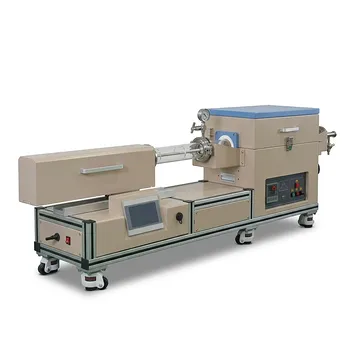
1200C Sliding Internal Crucible Tube Furnace for Controlled Atmosphere Thin Film Deposition and Material Sublimation Research
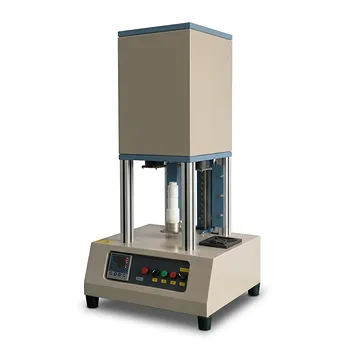
Compact High Temperature Bottom Loading Furnace 1700C Rapid Heating Cooling System Small Sample Thermal Cycling Equipment