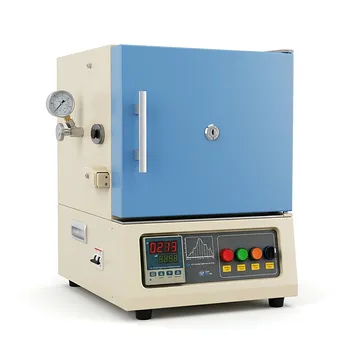
What role does a vacuum tube furnace play in palladium membrane treatment? Achieve 600°C Stability & Prevent Brittle Phases
Updated 3 months ago
The vacuum tube furnace serves as a controlled thermal laboratory for validating material stability. At 600°C, it provides a high-vacuum environment (4 x 10⁻⁴ Pa) that replicates the extreme working conditions of hydrogen separation membranes. This precise thermal field is essential for observing how amorphous barrier layers prevent the interdiffusion of palladium and tantalum, which would otherwise form brittle intermetallic compounds.
Core Takeaway: A vacuum tube furnace is the primary tool for simulating operational stress, allowing researchers to inhibit destructive metallurgical reactions and ensure the long-term structural integrity of composite membranes.
Simulating Real-World Operational Environments
Replicating Hydrogen Separation Conditions
The furnace maintains a constant temperature of 600°C, which directly mimics the high-heat environment these membranes encounter during industrial hydrogen purification. By providing this thermal stability, the furnace allows engineers to study material behavior under realistic stress levels without the interference of fluctuating temperatures.
Establishing High-Vacuum Integrity
Operating at a vacuum level of 4 x 10⁻⁴ Pa, the system ensures that the results are driven solely by the material’s internal diffusion kinetics. This low-pressure environment removes atmospheric gases that could cause unintended chemical reactions or surface contamination on the palladium layer.
Controlling Solid-State Diffusion Kinetics
Inhibiting Brittle Intermetallic Formation
Without precise thermal control, palladium and tantalum can migrate into one another, creating TaPd₃ intermetallic compounds. These compounds are notoriously brittle and can cause the membrane to fail prematurely under pressure.
Validating the TaTiNbZr Barrier Layer
The furnace provides the necessary environment to test the efficacy of TaTiNbZr amorphous barrier layers. By holding the membrane at 600°C for extended periods, researchers can confirm if the barrier successfully blocks the movement of atoms between the palladium surface and the tantalum substrate.
Preventing Surface Oxidation
In high-temperature environments, oxygen is the primary enemy of metal composites. The vacuum furnace eliminates oxygen, preventing the formation of oxide layers that would impede hydrogen permeability or lead to chromium depletion in supporting alloys.
Understanding the Trade-offs
Equipment Limitations and Vacuum Maintenance
Maintaining a consistent 10⁻⁴ Pa vacuum at high temperatures requires sophisticated pumping systems and high-quality seals. Any minor leak can introduce oxygen, which compromises the experiment and produces inaccurate data regarding the membrane's lifespan.
Thermal Inertia and Processing Time
Tube furnaces often have significant thermal inertia, meaning they take a long time to heat up and cool down. While this contributes to temperature stability, it can slow down the research cycle when testing multiple membrane compositions or varied barrier thicknesses.
How to Apply This to Your Project
Making the Right Choice for Your Goal
To achieve the best results with your vacuum tube furnace, align your process parameters with your specific research or production objectives.
- If your primary focus is membrane longevity: Use the furnace to conduct long-term "aging treatments" at 600°C to verify that the barrier layer prevents intermetallic growth over hundreds of hours.
- If your primary focus is surface purity: Prioritize reaching the 4 x 10⁻⁴ Pa vacuum threshold before increasing the temperature to ensure no oxidation occurs during the ramp-up phase.
- If your primary focus is material phase transition: Monitor the heating and cooling rates closely to ensure that the crystallization of any amorphous layers is controlled and documented.
The vacuum tube furnace is the definitive tool for ensuring that palladium-based membranes remain ductile and functional in the face of extreme thermal demands.
Summary Table:
| Function | Technical Role at 600°C | Key Material Benefit |
|---|---|---|
| Environmental Control | High Vacuum ($4 \times 10^{-4}$ Pa) | Prevents oxidation and surface contamination |
| Diffusion Management | Solid-state kinetics control | Inhibits brittle $TaPd_3$ intermetallic formation |
| Barrier Validation | Long-term thermal aging | Verifies efficacy of TaTiNbZr amorphous barrier layers |
| Stress Simulation | Constant high-heat replication | Ensures structural integrity for hydrogen separation |
Maximize Your Material Research Precision with THERMUNITS
As a leading manufacturer of high-temperature laboratory equipment for material science and industrial R&D, THERMUNITS provides the advanced thermal processing solutions required for high-stakes research like palladium membrane heat treatment.
Whether you need precise Vacuum Tube Furnaces for diffusion studies or specialized Atmosphere, CVD/PECVD, and Vacuum Induction Melting (VIM) systems, our equipment is engineered to deliver the stability and vacuum integrity your project demands. We empower researchers to inhibit destructive metallurgical reactions and ensure long-term structural integrity.
Ready to elevate your thermal processing? Contact us today to discuss our range of Muffle, Tube, Rotary, and Hot Press furnaces tailored to your specific research goals!
References
- Haoxin Sun, Guo Pu. Improved High-Temperature Stability and Hydrogen Penetration through a Pd/Ta Composite Membrane with a TaTiNbZr Intermediate Layer. DOI: 10.3390/coatings14030370
Mentioned Products
- 600°C Vertical Crucible Furnace with SS316 Alloy Reactor and 6 Port Vacuum Flange
- High Temperature Dual Zone Vacuum Tube Furnace for Material Research and CVD Processing
- Compact High Temperature 1600C Tube Furnace with 50mm Alumina Tube and Vacuum Flanges for Material Sintering
- Compact Split Tube Furnace with Integrated Vacuum System and Precision Temperature Calibrator
- Vertical Openable Tube Furnace 0-1700c High Temperature Laboratory System for CVD and Vacuum Heat Treatment
People Also Ask
- How does a high vacuum sintering furnace at 600 Celsius affect the microstructure of Al-TiC composites? Expert Analysis
- How should the choice between a Quartz crucible and an Alumina crucible be made for La2O2S? Optimize Material Purity
- Why use ceramic crucibles for coal nano-hybrid heat treatment? Ensure Purity and Thermal Stability.
- Why is a high-temperature furnace with precise temperature control necessary for Ag8SiS6 alloy synthesis? Ensure Safety.
- What is the role of an industrial-grade horizontal tube furnace in fluorination salt corrosion? Expert Research Guide

Tech Team · ThermUnits
Last updated on Jun 03, 2026
Related Products
600°C Vertical Crucible Furnace with SS316 Alloy Reactor and 6 Port Vacuum Flange
High Temperature Dual Zone Vacuum Tube Furnace for Material Research and CVD Processing

Compact High Temperature 1600C Tube Furnace with 50mm Alumina Tube and Vacuum Flanges for Material Sintering
Compact Split Tube Furnace with Integrated Vacuum System and Precision Temperature Calibrator
Vertical Openable Tube Furnace 0-1700c High Temperature Laboratory System for CVD and Vacuum Heat Treatment
High Temperature Hybrid Muffle and Tube Furnace with Vacuum Capability and PID Control
High Temperature Compact Vacuum Tube Furnace 1750C Max 60mm OD Alumina Tube
1250C Split Tube Furnace with 3 Inch Mullite Tube and Vacuum Sealing Flanges for Precision Thermal Processing
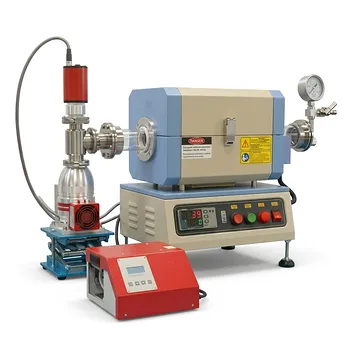
High Vacuum Compact Tube Furnace 1200C with Integrated Turbo Pump System and 8 Inch Heating Zone

1800C High Temperature Compact Vacuum Tube Furnace with 60mm OD Alumina Tube and Kanthal MoSi2 Heating Elements

High Temperature 1700C Vertical Tube Furnace for Powder Spherification and Material Sintering
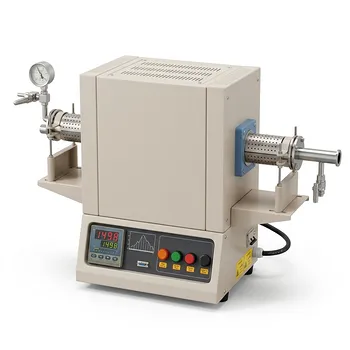
1500C High Temperature Compact Tube Furnace 2 Inch OD with Vacuum Flanges and Complete Accessories

Vertical 1700C Vacuum and Atmosphere Tube Furnace with 80mm Alumina Tube

1750°C High Temperature Benchtop Vacuum Atmosphere Tube Furnace with Kanthal Super 1800 Heating Elements and 60mm Alumina Processing Tube

High Temperature 1700C Six Zone Split Tube Furnace with Alumina Tube and Water Cooled Flanges
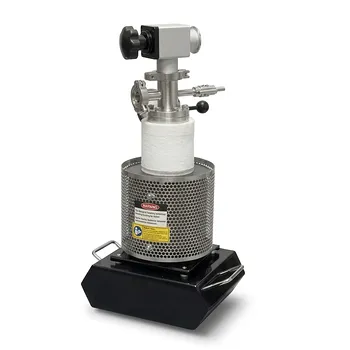
High Temperature 1100C Compact Top Loading Vertical Vacuum Tube Furnace for High Vacuum Noble Metal Melting and Material Research
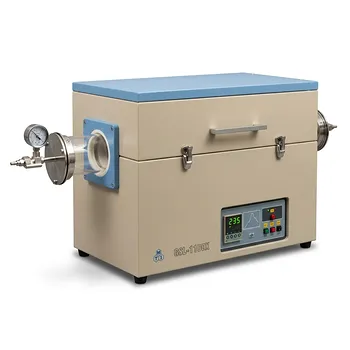
Single Zone Tube Furnace 5 Inch Quartz Tube 36 Inch Heating Zone Vacuum Flanges

1100C Tube Furnace with Vacuum Flange and Programmable Temperature Controller for Material Science and Industrial Heat Treatment

High Temperature 1700C Tube Furnace with High Vacuum Turbomolecular Pump System and Multi Channel Mass Flow Controller Gas Mixer