Why use ceramic crucibles for coal nano-hybrid heat treatment? Ensure Purity and Thermal Stability.
Updated 3 months ago
Ceramic crucibles and porcelain boats are essential carriers for coal-based nano-hybrid heat treatments because they provide extreme thermal stability and chemical inertness. These containers withstand temperatures exceeding 700°C and resist aggressive chemical reactions with coal powders, molten salts, or corrosive gases. Their primary role is to ensure sample purity and uniform reaction conditions in demanding furnace environments.
These high-temperature carriers act as chemically "invisible" platforms that preserve the integrity of the synthesis process. By preventing container-sample reactions and ensuring uniform heat distribution, they allow for the precise creation of complex nano-hybrid structures.
The Critical Role of Chemical Inertness
Resistance to Corrosive Agents
Coal-based synthesis often involves aggressive environments, including molten salts like KCl/LiCl or acidified coal powders. Ceramic and porcelain materials remain stable in these conditions, ensuring that the container does not degrade or react with the reactants.
Preservation of Material Purity
Maintaining the high purity of nano-hybrids, such as Si@Fe3O4 or N-C@Bi composites, is paramount. These carriers prevent the introduction of metal impurities or container-derived contaminants that could interfere with nucleation and crystal growth.
Stability in Reducing and Oxidative Atmospheres
Whether the process requires a hydrogen reduction environment or an oxidative environment up to 800°C, these materials do not react with the surrounding gases. This stability is vital for maintaining the specific chemical pathways required for coal-based carbon transformations.
Thermal Integrity and Reaction Control
Superior Thermal Shock Stability
Heat treatment often involves rapid temperature changes or repeated thermal cycling. High-quality ceramics are designed to withstand these shifts without cracking or deforming, ensuring the safety and continuity of the experiment.
Precise Mass and Dimensional Stability
For quantitative analyses, such as calculating ash weight ratios, the container's mass must remain constant. Ceramic crucibles offer superior mass stability, ensuring that weight measurements before and after treatment are accurate and reflect only the changes in the sample.
Optimization of Gas-Solid Interactions
The shallow trough design of a porcelain boat allows researchers to spread coal powders in a thin, even layer. This configuration ensures that carrier gases or reducing agents can penetrate the sample uniformly, leading to a consistent final product.
Understanding the Trade-offs
Brittleness and Mechanical Sensitivity
While thermally robust, these materials are inherently brittle and susceptible to mechanical impact. Dropping a carrier or applying uneven physical pressure can cause immediate failure, regardless of its thermal rating.
Temperature Thresholds and Material Choice
Not all "ceramics" are equal; porcelain typically has a lower maximum service temperature than alumina (Al2O3). Exceeding the specific material's thermal limit can lead to softening or subtle chemical leaching, which may compromise sensitive nano-hybrid synthesis.
Cleaning and Cross-Contamination
Because these carriers are porous to varying degrees, they can retain trace amounts of previous samples if not cleaned rigorously. In high-precision synthesis, even microscopic residues from a previous run can act as unintended catalysts or dopants.
Selecting the Right Carrier for Your Application
How to Apply This to Your Project
Choosing between a crucible and a boat depends on your specific reaction dynamics and the nature of your coal-based precursors.
- If your primary focus is gas-solid interaction: Use a shallow porcelain boat to maximize the surface area exposed to the furnace atmosphere.
- If your primary focus is liquid-phase reaction (molten salts): Opt for a deep ceramic crucible to contain the liquid phase securely and prevent splashing or creeping.
- If your primary focus is quantitative ash analysis: Select a high-purity ceramic crucible with documented mass stability to ensure the accuracy of your gravimetric data.
- If your primary focus is extreme alkalinity (KOH/Na2CO3): Ensure the carrier is rated for alkali resistance to prevent the container from being etched and introducing silica or alumina into your sample.
The strategic selection of these carriers is a foundational requirement for achieving reproducible, high-purity results in coal-based nanotechnology.
Summary Table:
| Feature | Porcelain Boat | Ceramic Crucible (Alumina) |
|---|---|---|
| Primary Application | Gas-solid interactions (thin layers) | Liquid-phase reactions (molten salts) |
| Key Advantage | Maximum surface area exposure | Secure containment of liquid phases |
| Thermal Limit | Lower (typically up to 1100°C) | Higher (up to 1750°C depending on purity) |
| Best For | Uniform gas penetration | Quantitative ash analysis & leaching resistance |
Elevate Your Material Research with THERMUNITS
Precise heat treatment requires more than just high temperatures—it demands the right environment. THERMUNITS is a leading manufacturer of high-performance laboratory equipment tailored for material science and industrial R&D.
Whether you are synthesizing coal-based nano-hybrids or conducting complex thermal analysis, our comprehensive range of equipment provides the reliability you need:
- Advanced Furnaces: Muffle, Vacuum, Atmosphere, Tube, Rotary, and Hot Press Furnaces.
- Specialized Systems: CVD/PECVD systems, Dental Furnaces, and Vacuum Induction Melting (VIM) furnaces.
- Precision Components: High-purity Thermal Elements and custom heat treatment accessories.
Ready to optimize your lab's performance? Contact our experts today to find the perfect thermal processing solution for your specific application.
References
- Min Zhang, Hongguang Jia. A Highly Selective Acetone Sensor Based on Coal-Based Carbon/MoO2 Nanohybrid Material. DOI: 10.3390/s24134320
Mentioned Products
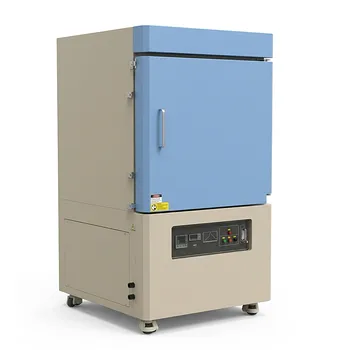
- High Temperature Vertical Crucible Furnace with 22L Heating Chamber and 1200C Maximum Temperature
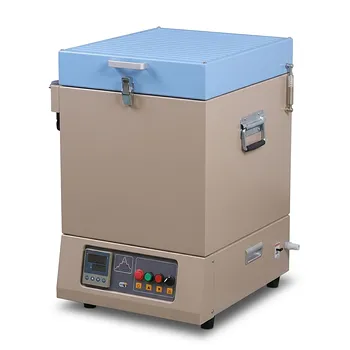
- 1100C High Temperature Vacuum Crucible Furnace with Quartz Chamber for Thermal Processing and Sintering
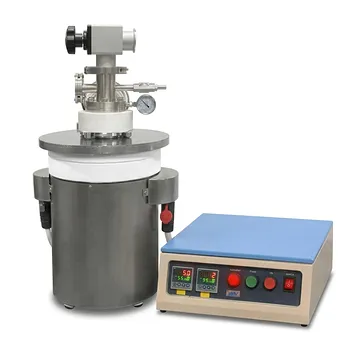
- 1100C Crucible Melting Furnace with Stirring Function for Glovebox and Air Sensitive Alloy Research
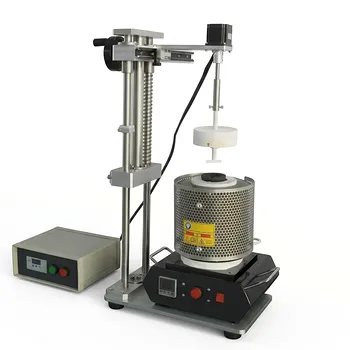
- Vertical Crucible Furnace 1000C High Temperature Laboratory Equipment 4.7 Inch Diameter Chamber SS316 Anti Corrosive Enclosure
- 600°C Vertical Crucible Furnace with SS316 Alloy Reactor and 6 Port Vacuum Flange
People Also Ask
- What role does a high-temperature vertical tube furnace play in simulating high-carbon ferromanganese slag formation?
- How should the choice between a Quartz crucible and an Alumina crucible be made for La2O2S? Optimize Material Purity
- How does a high-temperature solution furnace affect the evolution of strengthening phases in Fe-Co-Mo alloys? Expert Guide
- What critical conditions does a high-temperature electric heating furnace provide for rice husk ash melting research?
- What is the purpose of the 1200°C pre-firing treatment in high-entropy pyrochlore ceramics? Optimize Phase & Density

Tech Team · ThermUnits
Last updated on Jun 02, 2026
Related Products
High Temperature Vertical Crucible Furnace with 22L Heating Chamber and 1200C Maximum Temperature
1100C High Temperature Vacuum Crucible Furnace with Quartz Chamber for Thermal Processing and Sintering
1100C Crucible Melting Furnace with Stirring Function for Glovebox and Air Sensitive Alloy Research
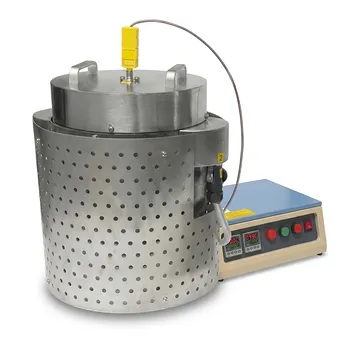
Vertical Crucible Furnace 1000C High Temperature Laboratory Equipment 4.7 Inch Diameter Chamber SS316 Anti Corrosive Enclosure
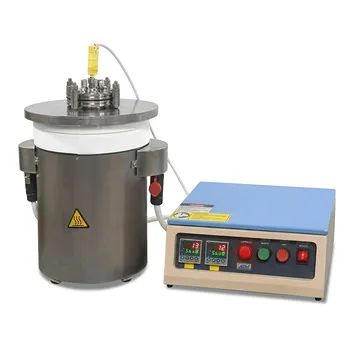
600°C Vertical Crucible Furnace with SS316 Alloy Reactor and 6 Port Vacuum Flange
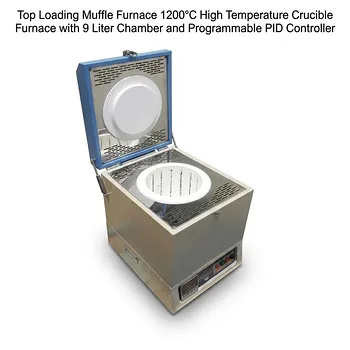
Top Loading Muffle Furnace 1200°C High Temperature Crucible Furnace with 9 Liter Chamber and Programmable PID Controller
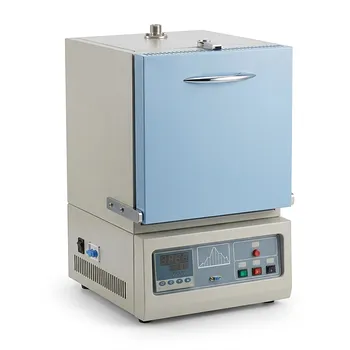
1750C Compact Muffle Furnace 1.7L Ultra High Temperature Laboratory Sintering System for Advanced Ceramics and Material Science Research
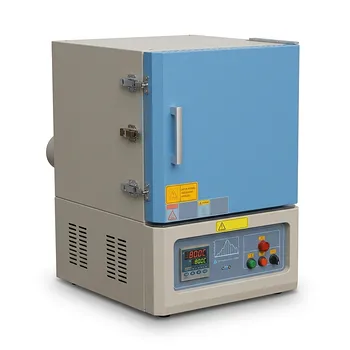
1800C Bench Top Muffle Furnace 18 Liters with Kanthal Super 1900 Heating Elements for High Purity Ceramic Sintering and Material Research
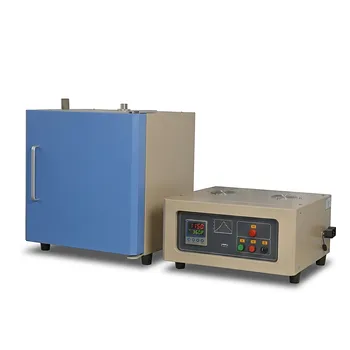
High Temperature Muffle Furnace with Alloy Chamber for Debinding and Sintering Applications
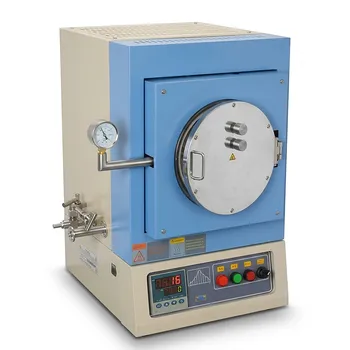
1100°C High Temperature Quartz Chamber Furnace 8 Inch OD with 7.6 Liter Capacity and Vacuum Atmosphere Capability

High Temperature Tube Furnace 1500C with Sliding Flanges and 50mm OD for Rapid Thermal Processing Fast Heating and Cooling
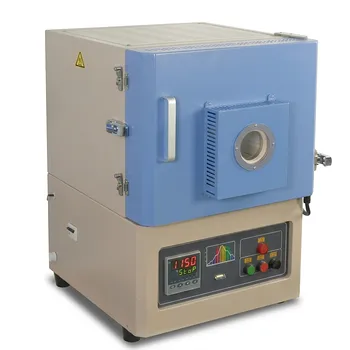
High Temperature Benchtop Muffle Furnace with Quartz Observation Window for Thermal Imaging and Material Analysis
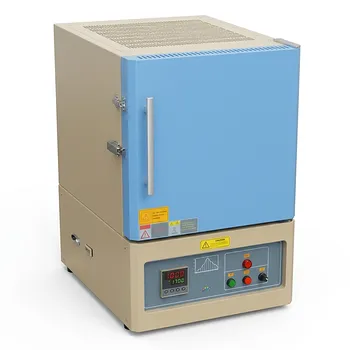
Large Bench Top 1700C High Temperature Muffle Furnace with 19L Chamber for Advanced Material Sintering and Annealing
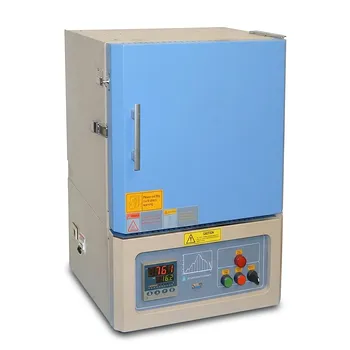
High Temperature 1700C Bench Top Muffle Furnace with Alumina Fiber Insulation and 3.6L Chamber Capacity for Precision Sintering and Heat Treatment
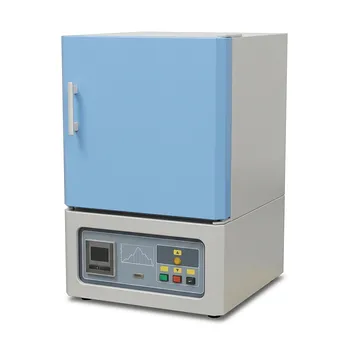
1800C Bench Top Muffle Furnace with Kanthal Super 1900 Heating Elements and 3.6L Alumina Fiber Chamber
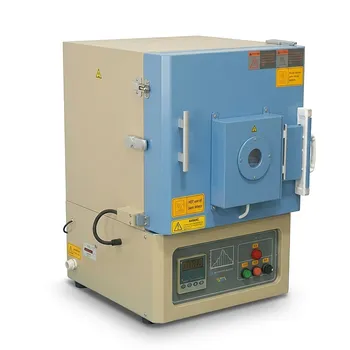
High Temperature Benchtop Muffle Furnace 1500C with 3.6L Chamber and Quartz Observation Window
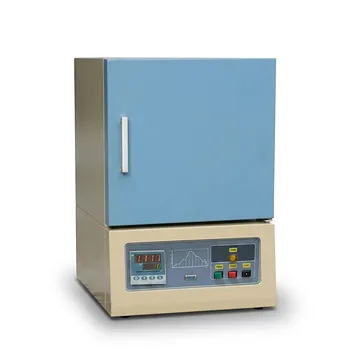
Ultra High Temperature Bench Top Muffle Furnace 1750C Sintering System with Kanthal Super Heating Elements and Precision Digital Control
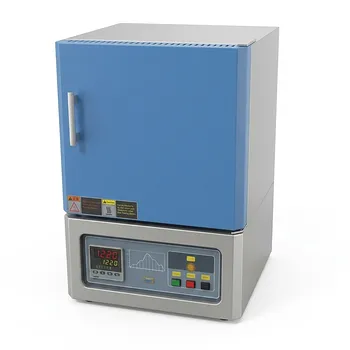
High Temperature Benchtop Muffle Furnace 1700C 10L Chamber Alumina Fiber Insulation MoSi2 Heating Elements

Compact High Temperature 1600C Tube Furnace with 50mm Alumina Tube and Vacuum Flanges for Material Sintering