What functions do a high-purity nitrogen source and a mass flow controller serve in a pyrolysis setup? Ensure Accuracy
Updated 3 months ago
In a pyrolysis setup, a high-purity nitrogen source provides an inert atmosphere that prevents combustion, while a mass flow controller (MFC) ensures the gas moves at a precise rate. Together, they transform the reaction from simple burning into a controlled thermal decomposition, allowing researchers to capture accurate data on how materials break down without oxygen interference.
Pyrolysis is fundamentally the thermal degradation of organic material in the absence of oxygen. The nitrogen supply acts as a protective shield and transport vehicle, while the MFC serves as the precision regulator that ensures experimental consistency and prevents unwanted secondary chemical reactions.
The Functions of a High-Purity Nitrogen Source
Eliminating Oxidation and Combustion
The primary role of high-purity nitrogen (typically 99.999% purity) is to displace oxygen and moisture from the reaction chamber. By creating a strictly anoxic or anaerobic environment, it prevents the raw materials—such as resins, biomass, or polymers—from undergoing aerobic combustion or "ashing" at high temperatures. This ensures the process remains a "destructive distillation" that preserves the carbon skeleton and maximizes the yield of fixed carbon and biochar.
Maintaining Chemical Integrity
High-purity nitrogen ensures that the chemical transformations observed are driven solely by temperature and heating rate. Without this inert shield, oxygen would trigger oxidative side reactions that contaminate the experimental data and alter the final product distribution. In applications like activated carbon production, this "clean" environment allows for the precise development of pore structures without the interference of volatile organic compounds being re-absorbed.
Acting as a Carrier Gas
Beyond protection, nitrogen serves as a mechanical vehicle to transport generated pyrolysis gases out of the hot zone. It carries volatile vapors into condensation systems or analysis tools, ensuring that the chemical "fingerprint" of the material is accurately captured. This continuous purging prevents the buildup of pressure and keeps the reaction moving forward toward the collection system.
The Functions of a Mass Flow Controller (MFC)
Regulating Residence Time
The MFC precisely regulates the nitrogen flow, often within a range of 1 to 2.7 L/min, to control how long gas-phase products stay in the reaction zone. This "residence time" is critical because if vapors stay in the heat too long, they undergo secondary cracking reactions, which break down complex oils into simpler gases and change the results. By maintaining a steady flow, the MFC ensures that the products are recovered in their primary state for accurate mass balance calculations.
Ensuring Data Reproducibility
The MFC eliminates the fluctuations common with manual valves or simple rotameters, providing stable flow control throughout the heating cycle. This stability is vital when comparing different experiments, such as testing various catalyst ratios or feedstocks. Controlled flow ensures that every trial is conducted under identical conditions, making the resulting data accurate and reproducible.
Understanding the Trade-offs
Flow Rate and Yield Balance
Choosing the correct flow rate via the MFC involves a significant trade-off between sampling speed and condensation efficiency. A flow rate that is too high may carry vapors through the condensation system too quickly to be captured, while a rate that is too low increases the risk of secondary reactions that degrade the quality of the bio-oil.
Purity vs. Cost
While 99.999% nitrogen is the gold standard for high-accuracy research, it represents a higher operational cost. Using lower-purity nitrogen can introduce trace amounts of oxygen, which causes partial oxidation and can lead to "hot spots" in the reactor, potentially damaging specialized glass fibers or sensitive organic resins.
Equipment Sensitivity
Mass flow controllers are precision instruments that are sensitive to gas impurities/particulates. If the nitrogen source is not sufficiently clean or if there is back-pressure from the reactor, the MFC can lose calibration, leading to "drift" that ruins the consistency of a long-duration pyrolysis run.
How to Apply This to Your Project
Recommendations for Success
- If your primary focus is Bio-oil Quality: Use the MFC to maintain a higher flow rate to minimize residence time and prevent the secondary cracking of heavy vapors.
- If your primary focus is Biochar Yield: Focus on the nitrogen purge quality to ensure a strictly anaerobic environment, which maximizes the preservation of the carbon structure.
- If your primary focus is Mass Balance Accuracy: Ensure your MFC is calibrated specifically for nitrogen and monitor it closely to ensure every milliliter of carrier gas is accounted for in your final calculations.
By mastering the balance between nitrogen purity and flow precision, you ensure your pyrolysis data reflects the true thermal nature of the material rather than the limitations of the environment.
Summary Table:
| Component | Primary Function | Key Benefit |
|---|---|---|
| High-Purity Nitrogen | Inert Atmosphere & Carrier Gas | Prevents oxidation/combustion and transports volatile vapors. |
| Mass Flow Controller | Precise Flow Regulation | Controls residence time and ensures experimental reproducibility. |
Optimize Your Pyrolysis Research with THERMUNITS
As a leading manufacturer of high-temperature laboratory equipment for material science and industrial R&D, THERMUNITS provides the precision tools you need for advanced thermal decomposition. Our comprehensive range of solutions—including Tube, Vacuum, Atmosphere, and Rotary furnaces, as well as CVD/PECVD systems—is designed to deliver the stable environments required for accurate data collection.
Why Choose THERMUNITS for Your Lab?
- Superior Precision: Achieve exact atmospheric control to prevent unwanted side reactions.
- Versatile Solutions: Equipment tailored for biomass, polymers, and advanced material heat treatments.
- R&D Excellence: Trusted by researchers worldwide for muffle, dental, and vacuum induction melting furnaces (VIM).
Elevate your laboratory's efficiency and ensure the chemical integrity of your results. Contact our experts today to find your custom thermal solution.
References
- Dongwang Zhang, Man Zhang. Experimental Study and Process Simulation on Pyrolysis Characteristics of Decommissioned Wind Turbine Blades. DOI: 10.3390/en17133229
Mentioned Products
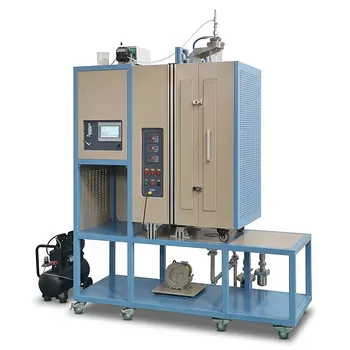
- 1500C Three Zone Vertical Pyrolysis Furnace for Nanoparticle Synthesis and Advanced Oxide Coating
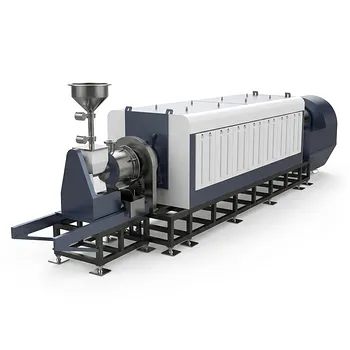
- Electric Rotary Kiln Small Rotary Furnace Biomass Pyrolysis Plant
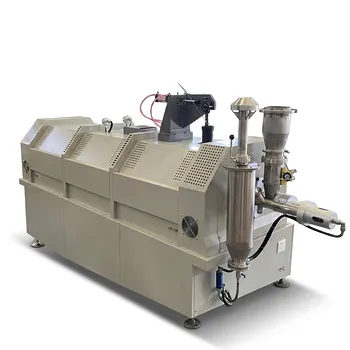
- Electric Rotary Kiln Continuous Working Small Rotary Furnace Heating Pyrolysis Plant
- Gas Pre-Heating Tube Furnace for High Temperature Pyrolysis Reactors and Material Science Research
People Also Ask
- Why is high-precision temperature control essential in a pyrolysis furnace? Master Pd NPs/NO-C Catalyst Synthesis
- What is the technical necessity of multiple high-temperature thermocouples in a pyrolysis furnace? Precision Control
- Why is it necessary to maintain a strict nitrogen (N2) atmosphere during the operation of a pyrolysis furnace? (Pro Tips)
- Why is Nitrogen (N2) required for 3D carbon electrodes? Ensure material purity and structural integrity.
- Why are precise nitrogen supply systems and flow meters necessary in the pyrolysis process? Optimize Purity & Yield.

Tech Team · ThermUnits
Last updated on Jun 02, 2026
Related Products
1500C Three Zone Vertical Pyrolysis Furnace for Nanoparticle Synthesis and Advanced Oxide Coating
Electric Rotary Kiln Small Rotary Furnace Biomass Pyrolysis Plant
Electric Rotary Kiln Continuous Working Small Rotary Furnace Heating Pyrolysis Plant