What is the design logic for using high-purity alumina ceramic boats in CVD annealing repair? Optimizing Material Purity
Updated 3 months ago
The design logic of high-purity alumina ceramic boats in CVD annealing repair relies on their chemical inertness and precise spatial positioning. These boats function as stable, high-temperature reservoirs that hold precursor powders—such as sulfur, selenium, or barium oxide—upstream from the target sample. By controlling the evaporation of these precursors and managing their transport via airflow, the system ensures a uniform delivery of volatile components that chemically react to heal material defects like sulfur vacancies or color centers.
Core Takeaway: Alumina boats are designed to provide a "clean" thermal environment that prevents contamination while enabling the precise spatial delivery of reactive vapors to restore the intrinsic properties of heterostructures and nanosheets.
Achieving Chemical and Thermal Purity
Resistance to Chemical Volatilization
High-purity alumina is selected because it remains chemically inert at the extreme temperatures required for CVD (often exceeding 800°C). This prevents the boat itself from reacting with active vapors, such as bismuth or selenium, which ensures that no foreign metallic impurities are introduced into the reaction environment.
Mitigation of Corrosive Gas Erosion
In annealing processes involving corrosive agents like hydrogen sulfide (H2S), alumina provides essential corrosion resistance. It effectively resists erosion from high-temperature gases during long annealing cycles, maintaining the purity of sensitive ceramics like Barium Lanthanum Sulfide.
Superior Thermal Shock Resistance
The material logic includes high thermal stability, allowing the boat to withstand rapid temperature shifts within a tube furnace without cracking. This durability is critical for maintaining a "clean growth environment" and ensuring that experimental results are highly reproducible across multiple cycles.
Engineering the Reaction Atmosphere
Upstream Placement for Concentration Control
By placing the alumina boat in a specific temperature zone upstream, operators can precisely regulate the evaporation rate of solid precursors. The furnace heat sublimates powders into vapor, which is then carried by controlled airflow toward the sample to maintain a consistent reactant concentration.
Creating Localized Vapor Buffers
Design logic often involves placing a substrate upside down over the alumina boat with a small gap. This configuration creates a localized vapor accumulation environment, which promotes the uniform deposition of precursor vapors onto the substrate surface rather than allowing them to dissipate too quickly.
Uniform Healing of Heterostructures
The spatial layout ensures that volatile components reach the sample surface in a controlled manner. This is the fundamental mechanism for annealing repair, where the vapors react with the existing heterostructure to fill atomic gaps and restore the material's original electronic and structural properties.
Understanding the Trade-offs
Brittleness and Handling
Despite their thermal stability, high-purity alumina boats are inherently brittle and susceptible to mechanical shock. Over-tightening or improper handling during the loading of precursor powders (like MoO3 or NaCl) can lead to micro-fractures that eventually fail under heat.
Porosity and Precursor Retention
Lower grades of alumina can be porous, potentially trapping trace amounts of precursors like sulfur or selenium between runs. This requires the use of ultra-high purity (99.9%+) alumina to ensure that "memory effects" from previous experiments do not contaminate new annealing processes.
Temperature Limitations
While alumina is robust, it has a lower melting point than some alternative refractories. If a process requires temperatures approaching 1800°C, the boat may suffer from thermal deformation, making quartz or other specialized ceramics a better, albeit more expensive, choice for those specific niches.
How to Apply This to Your Project
Recommendations for Goal-Specific Design
- If your primary focus is defect restoration (e.g., color centers): Use an upstream alumina boat configuration to deliver a steady flux of volatile components like H2S to ensure deep penetration during the annealing cycle.
- If your primary focus is material purity in nanosheets: Prioritize high-purity (>99.7%) alumina to prevent the introduction of impurity elements that could disrupt the electronic properties of topological insulators.
- If your primary focus is uniform deposition on large substrates: Implement the "upside-down" substrate layout over the boat to trap precursor vapors in a localized micro-environment.
- If your primary focus is protecting against corrosive precursors: Choose alumina over quartz, as alumina offers superior resistance to erosion from specific reactive gases like hydrogen sulfide.
By strategically leveraging the thermal and chemical properties of alumina, you can transform a simple carrier boat into a precise tool for atmospheric control and material repair.
Summary Table:
| Key Feature | Role in CVD Annealing Repair Logic |
|---|---|
| Chemical Inertness | Prevents metallic impurity contamination at temperatures >800°C |
| Thermal Stability | Resists cracking during rapid temperature shifts in tube furnaces |
| Corrosion Resistance | Withstands erosion from reactive agents like H2S during long cycles |
| Spatial Positioning | Controls precursor evaporation rates and localized vapor concentration |
Elevate Your Material Research with THERMUNITS
As a global leader in high-temperature laboratory equipment, THERMUNITS offers precision-engineered thermal processing solutions tailored for material science and industrial R&D. Our extensive range includes CVD/PECVD systems, Tube furnaces, Vacuum furnaces, and high-purity Thermal Elements specifically designed to meet demanding annealing and repair requirements.
Ready to optimize your high-purity heat treatment process? Contact our experts today to explore how our specialized equipment can enhance your laboratory's efficiency and research outcomes.
References
- Yizhe Jiang, Lane W. Martin. Effect of fabrication processes on BaTiO3 capacitor properties. DOI: 10.1063/5.0203014
Mentioned Products
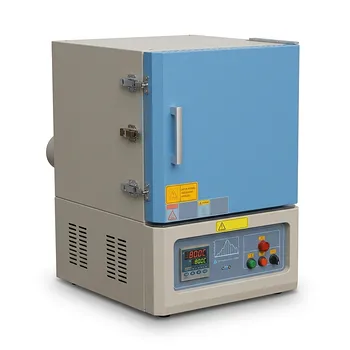
- 1800C Bench Top Muffle Furnace 18 Liters with Kanthal Super 1900 Heating Elements for High Purity Ceramic Sintering and Material Research
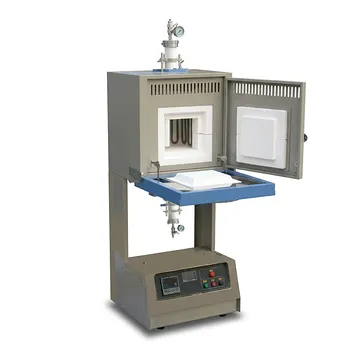
- Vertical Hybrid High Temperature Furnace 1500C Alumina Tube SOFC Fuel Cell Testing Laboratory Heat Treatment Research Equipment
People Also Ask
- Why is a benchtop muffle furnace essential for U3O8 micromaterials? Achieve precision stoichiometry and purity.
- What materials are typically used for heating elements in muffle furnaces? A Guide to Performance & Temperature Limits
- What role does a laboratory high-temperature muffle furnace play in the ash analysis phase of biomass co-firing research? [Guide]
- Why is a sintering furnace or Rapid Thermal Processing (RTP) equipment necessary for the formation of electrodes? Master Solar Ohmic Contacts.
- What function does argon serve in MOF melt-quenching? Prevent oxidation and ensure chemical integrity.

Tech Team · ThermUnits
Last updated on Jun 02, 2026