What is the function of K-type thermocouples in glass wool waste heat treatment? Precision Thermal Control
Updated 3 months ago
K-type thermocouples are the primary sensing components used to provide real-time, high-precision temperature feedback within the furnace chamber. They allow the control system to maintain strict thermal parameters necessary for organic removal while preventing localized overheating that leads to fiber sintering.
The core function of K-type thermocouples in glass wool waste treatment is to bridge the gap between the furnace's heating output and the material's specific thermal limitations. By providing continuous data to a closed-loop system, they ensure complete chemical processing without compromising the physical integrity of the glass fibers.
The Role of Precision Monitoring in Glass Wool Processing
Preventing Fiber Sintering and Thermal Damage
Glass wool is characterized by extremely low thermal conductivity, which creates a high risk of uneven heat distribution. K-type thermocouples monitor for localized hot spots that could cause the fibers to fuse or "sinter" before the entire batch is processed.
Facilitating Complete Organic Removal
To properly treat glass wool waste, the material must stay within a specific processing window to ensure all organic binders are removed. Thermocouples provide the data necessary to keep the furnace within these critical temperature bounds throughout the entire treatment cycle.
Real-Time Feedback for Closed-Loop Systems
When integrated into a control system, these sensors convert thermal data into electrical signals that dictate power adjustments to the heating elements. This constant "conversation" between the sensor and the controller maintains stable temperatures, often ranging between 1173 K and 1373 K in industrial applications.
Enhancing Process Stability and Accuracy
Managing Precise Heating Rates
Many heat treatment protocols require a specific ramp-up speed, such as 10 °C per minute, to ensure material stability. K-type thermocouples allow the system to follow these preset temperature programs strictly, ensuring that experimental or industrial results are reproducible.
Identifying Thermal Inflection Points
In complex waste treatment, technicians use thermocouples to identify the "light-off" temperature or the point where internal reactions begin. By comparing ambient chamber temperature to the material's core temperature, the system can detect exothermic reactions and adjust external heating to maintain isothermal conditions.
Multi-Point and Redundant Sensing
Advanced furnace designs often utilize multi-point or dual-channel K-type configurations to validate temperature uniformity. This redundancy ensures that the "Three-Zone" heating common in high-temperature furnaces is balanced and that no single zone is under-performing.
Understanding Technical Constraints and Trade-offs
Susceptibility to Electromagnetic Interference
In heavy industrial environments, K-type thermocouples can be affected by electromagnetic interference (EMI) and measurement noise. This requires the use of high-quality, armored sensors and precise signal transmitters to ensure the feedback loop remains stable and accurate.
Accuracy vs. Durability
While K-type thermocouples offer an excellent linear response and fast sensitivity, they are subject to wear in harsh furnace environments. Relying on a single sensor without periodic calibration can lead to "drift," where the reported temperature gradually deviates from the actual temperature.
Placement Sensitivity
The effectiveness of the thermocouple is highly dependent on its positioning, such as being embedded in the heating zone walls or placed in direct contact with the material. Poor placement can result in "thermal lag," where the sensor reacts slower than the material, potentially allowing for brief but damaging temperature spikes.
Optimizing Your Furnace Control Strategy
To achieve the best results in glass wool waste heat treatment, your sensing strategy should align with your specific operational priorities.
- If your primary focus is material integrity: Prioritize armored, high-sensitivity K-type sensors placed in close proximity to the material to prevent sintering.
- If your primary focus is process reproducibility: Implement a control system that uses thermocouple feedback to strictly enforce linear heating rates and dwell times.
- If your primary focus is system reliability: Utilize a multi-point or dual-channel thermocouple setup to provide redundancy and identify zone-specific heating failures.
Precise thermal monitoring transforms a standard furnace into a surgical tool capable of reclaiming glass wool waste with total consistency.
Summary Table:
| Core Function | Technical Benefit | Impact on Material |
|---|---|---|
| Real-Time Feedback | Prevents localized hot spots | Avoids fiber sintering and fusing |
| Closed-Loop Control | Stable isothermal conditions | Ensures complete organic binder removal |
| Ramp-Up Management | Strict heating rate (e.g., 10°C/min) | Maintains physical integrity & stability |
| Multi-Point Sensing | Validates temperature uniformity | Ensures consistent processing across all zones |
Elevate Your R&D with THERMUNITS Thermal Solutions
Maximize your process precision with THERMUNITS, a global leader in high-temperature laboratory equipment for material science and industrial R&D. Whether you are conducting glass wool waste treatment or complex chemical vapor deposition, our comprehensive range of equipment—including Muffle, Vacuum, Atmosphere, Tube, and Rotary furnaces, as well as CVD/PECVD systems and Electric Rotary Kilns—is engineered to provide the accuracy and reliability your research demands.
Our advanced thermal processing solutions ensure complete chemical transformation while protecting your material's physical properties. Contact our technical experts today to discuss how our state-of-the-art furnace technology and high-precision sensing systems can optimize your laboratory heat treatment workflows.
References
- M. Rywotycki, Wojciech Jerzak. Thermal removal of binder from waste glass wool intended for recycling. DOI: 10.1007/s10973-024-13661-z
Mentioned Products
- 1200C Five Side Heating Muffle Furnace with Sliding Door 125L Volume High Temperature Heat Treatment System for Large Scale Sintering and Annealing
- High Temperature Dual Zone Tube Furnace for Material Science Research and Professional Thermal Processing
- Dual Zone Tube Furnace 1100C with 11 Inch Quartz Tube and Vacuum Flanges for 8 Inch Wafer Processing
- High Temperature Bottom Loading Vertical Furnace 1700C Dual Stage Sample Processing System 18L Large Capacity Thermal Treatment Equipment
- 950C Rapid Thermal Processing Furnace for 12 Inch Wafer CSS Coating with Rotating Substrate Holder
People Also Ask
- What is the role of the muffle furnace in h-BN precursor preparation? Optimize Morphology and Chemical Purity.
- How does the heating mechanism of a muffle furnace differ from that of an open-flame furnace? Indirect vs Direct Heat
- Why is the muffle design advantageous for the production of ceramics and glass? Ensure Purity and Structural Integrity
- What are the benefits of using muffle furnaces in pharmaceutical and biomedical applications? Maximize Purity & Compliance
- What are the typical operating temperature ranges for standard and advanced muffle furnaces? Expert Temperature Guide.

Tech Team · ThermUnits
Last updated on Jun 02, 2026
Related Products
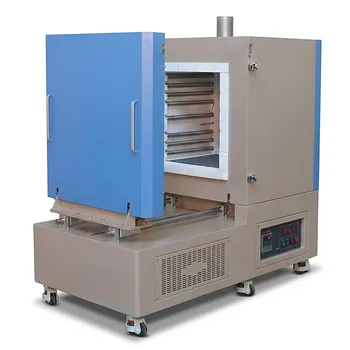
1200C Five Side Heating Muffle Furnace with Sliding Door 125L Volume High Temperature Heat Treatment System for Large Scale Sintering and Annealing
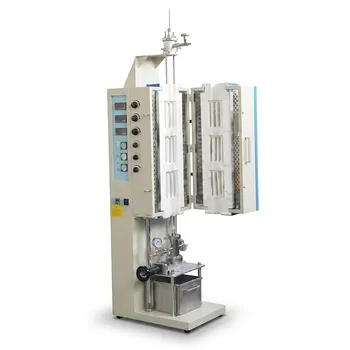
High Temperature Dual Zone Tube Furnace for Material Science Research and Professional Thermal Processing
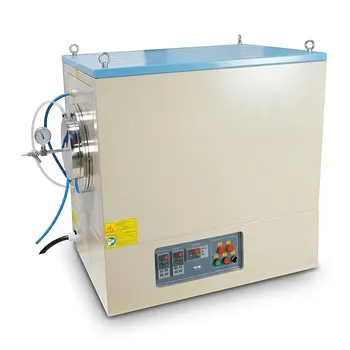
Dual Zone Tube Furnace 1100C with 11 Inch Quartz Tube and Vacuum Flanges for 8 Inch Wafer Processing
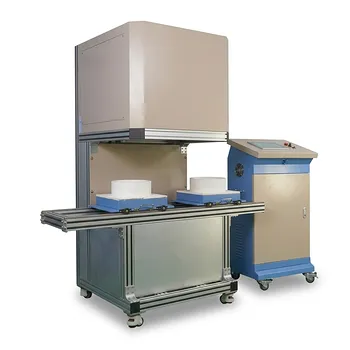
High Temperature Bottom Loading Vertical Furnace 1700C Dual Stage Sample Processing System 18L Large Capacity Thermal Treatment Equipment