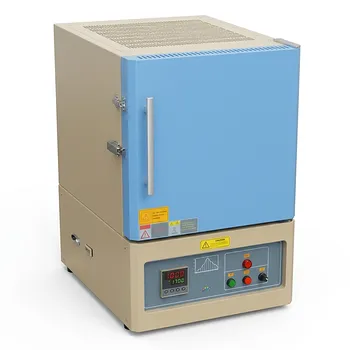
What is the role of the muffle furnace in h-BN precursor preparation? Optimize Morphology and Chemical Purity.
Updated 3 months ago
In the synthesis of hexagonal boron nitride (h-BN) nanoparticles, the muffle furnace serves as the primary instrument for low-temperature thermal pre-treatment. It provides a stable aerobic environment to dehydrate and decompose mixed precursors, specifically boric acid and urea, at temperatures between 85 °C and 250 °C. This process is essential for forming the intermediate complexes that dictate the final particle morphology and structural integrity.
The muffle furnace acts as a controlled reactor to transform raw chemical mixtures into structured intermediate complexes. By precisely managing dehydration and initial decomposition, it establishes the fundamental microstructure and spherical shape required for high-quality h-BN nanoparticles.
The Role of Thermal Stability in Precursor Formation
Facilitating Dehydration and Decomposition
The muffle furnace provides the precise thermal energy required to drive off moisture from the raw materials. In the specific case of h-BN, it initiates the preliminary decomposition of urea and boric acid. This stage is vital for converting a simple physical mixture into a chemically active intermediate complex.
Establishing the Structural Foundation
The stable thermal field generated within the furnace ensures that the chemical reactions occur uniformly throughout the sample. This uniformity is critical for controlling the microstructure of the resulting powder. Without a consistent heat distribution, the final boron nitride particles may lack structural homogeneity.
Morphological Control and Intermediate Chemistry
Defining Spherical Morphology
The transition from raw powders to intermediate complexes in the muffle furnace is where the spherical morphology of h-BN nanoparticles is determined. By maintaining temperatures within the 85–250 °C range, the furnace allows the materials to react slowly enough to form organized shapes. This "template" is preserved during subsequent high-temperature processing.
The Aerobic Heating Environment
Unlike some synthesis steps that require inert gases, this preparation stage utilizes an aerobic (air) atmosphere. The muffle furnace allows for controlled exposure to oxygen, which can influence the chemical pathways during the formation of intermediate complexes. This environment is instrumental in achieving the desired chemical foundation for later crystallization.
Understanding the Trade-offs and Pitfalls
Temperature Precision vs. Chemical Integrity
If the temperature is too low, incomplete dehydration occurs, leading to impurities in the final product. Conversely, exceeding the 250 °C threshold prematurely can cause uncontrolled decomposition, ruining the spherical template and leading to irregular particle shapes.
Heating Rates and Uniformity
Rapid heating or "thermal shock" within the furnace can lead to non-uniform intermediate phases. If one part of the precursor mixture reacts faster than another, the final batch of h-BN will exhibit a wide range of particle sizes (polydispersity), which is generally undesirable for nanoparticle applications.
Atmospheric Limitations
While an aerobic environment is beneficial for this specific precursor stage, it can become a liability at higher temperatures. In later stages of h-BN processing, exposure to air in a muffle furnace at temperatures above 900 °C can cause partial oxidation and the formation of B-OH groups, which may or may not be desired depending on the end-use.
How to Apply This to Your Project
When utilizing a muffle furnace for h-BN precursor preparation, your approach should vary based on your specific material requirements:
- If your primary focus is Morphology Control: Prioritize a slow ramp rate between 85 °C and 250 °C to ensure the intermediate complexes form uniform spherical structures.
- If your primary focus is High Purity: Ensure the muffle furnace is properly calibrated to maintain the aerobic environment, allowing for the complete removal of volatile components and water.
- If your primary focus is Surface Functionalization: Use the muffle furnace at much higher temperatures (900–1000 °C) after the initial synthesis to induce oxidation and increase interlayer spacing for functional loading.
By mastering the low-temperature environment of the muffle furnace, you secure the structural and chemical foundation necessary for advanced hexagonal boron nitride synthesis.
Summary Table:
| Processing Factor | Role in Preparation Stage | Impact on h-BN Nanoparticles |
|---|---|---|
| Temperature (85-250°C) | Dehydration and urea/boric acid decomposition | Forms essential intermediate complexes |
| Aerobic Atmosphere | Provides oxygen-rich environment | Determines initial chemical pathways |
| Thermal Uniformity | Ensures consistent reaction throughout sample | Structural homogeneity and purity |
| Ramp Rate Control | Manages slow transition of raw materials | Defines spherical morphology |
| Low-Temp Precision | Prevents premature decomposition | Maintains structural integrity and shape |
Elevate Your Material Research with THERMUNITS Precision Solutions
Achieving the perfect spherical morphology and structural integrity in h-BN nanoparticles requires uncompromising thermal control. THERMUNITS is a leading manufacturer of high-temperature laboratory equipment for material science and industrial R&D. We offer a comprehensive range of thermal processing solutions designed to meet the rigorous demands of advanced synthesis.
Our product portfolio includes high-precision Muffle, Vacuum, Atmosphere, Tube, Rotary, and Hot Press furnaces, as well as CVD/PECVD systems, Dental Furnaces, electric rotary kilns, and vacuum induction melting furnaces (VIM). Whether you are focused on precursor preparation or high-temperature crystallization, our equipment ensures the uniformity and stability your project requires.
Ready to enhance your laboratory's efficiency and output? Contact us today to explore how THERMUNITS can provide the ideal heat treatment solution for your specific application.
References
- Qun Li, Guolong Ni. Preparation of BN Nanoparticle with High Sintering Activity and Its Formation Mechanism. DOI: 10.3390/molecules29153458
Mentioned Products
- 1200C Muffle Furnace 12x8x5 7.2L Heating Chamber with Quartz Observation Window and Vent Port
- High Temperature 1200C Muffle Furnace 27L Volume 12x12x12 Chamber with Programmable PID Controller for Laboratory Material Science
- 1200C High Temperature 125L Muffle Furnace 5 Side Heating for Large Batch Sintering with Optional Alloy Debinding Chamber
- 1750C Compact Muffle Furnace 1.7L Ultra High Temperature Laboratory Sintering System for Advanced Ceramics and Material Science Research
- 1200C Five Side Heating Muffle Furnace with Sliding Door 125L Volume High Temperature Heat Treatment System for Large Scale Sintering and Annealing
People Also Ask
- What is the function of an experimental muffle furnace in the conversion of FeOOH to α-Fe2O3? Optimize Phase Transition
- Why is a muffle furnace required for MoO2@HCNF pre-oxidation? Crucial Steps for High-Performance Composites
- What is the function of a high-temperature Muffle furnace in removing residual solvents? Essential Bismuth Synthesis
- What is the function of Muffle furnace calcination? Essential steps for Pr-doped SrFeMoO6 Perovskite synthesis.
- What are the primary functions of a Muffle furnace in oxide calcination? Achieve high purity and phase control.

Tech Team · ThermUnits
Last updated on Jun 03, 2026
Related Products
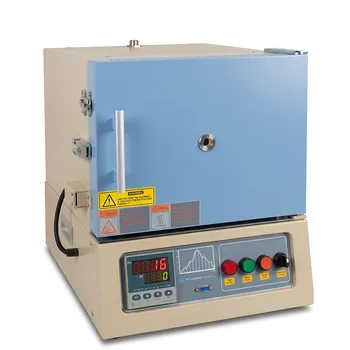
1200C Muffle Furnace 12x8x5 7.2L Heating Chamber with Quartz Observation Window and Vent Port
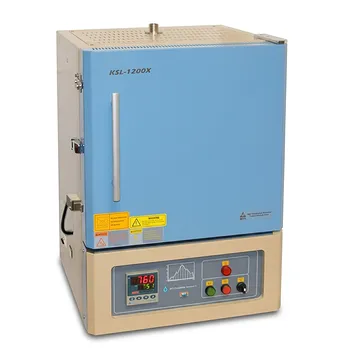
High Temperature 1200C Muffle Furnace 27L Volume 12x12x12 Chamber with Programmable PID Controller for Laboratory Material Science
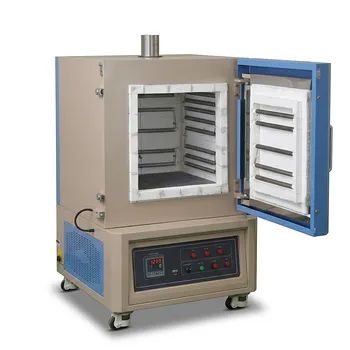
1200C High Temperature 125L Muffle Furnace 5 Side Heating for Large Batch Sintering with Optional Alloy Debinding Chamber
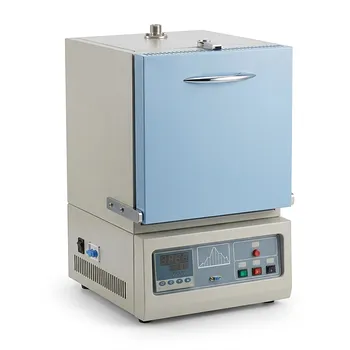
1750C Compact Muffle Furnace 1.7L Ultra High Temperature Laboratory Sintering System for Advanced Ceramics and Material Science Research
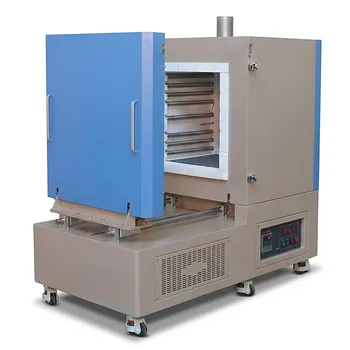
1200C Five Side Heating Muffle Furnace with Sliding Door 125L Volume High Temperature Heat Treatment System for Large Scale Sintering and Annealing
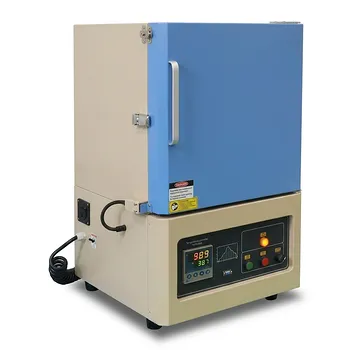
1200°C High Temperature Muffle Furnace 19L Chamber with 50 Segment Programmable Controller
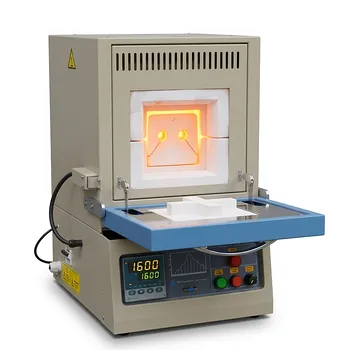
High Temperature Compact Muffle Furnace 1700 C with 30 Segment Programmable Controller and 1.7L Cubic Chamber
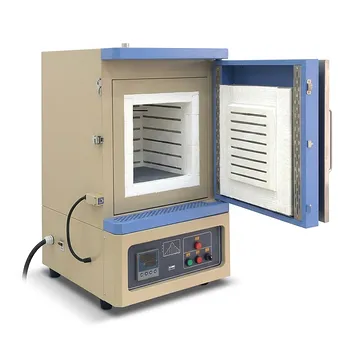
Five Side Heating Muffle Furnace High Purity Alumina Fiber 27L Chamber 1200C High Temperature Thermal Processing System for Sintering Annealing and Materials Research
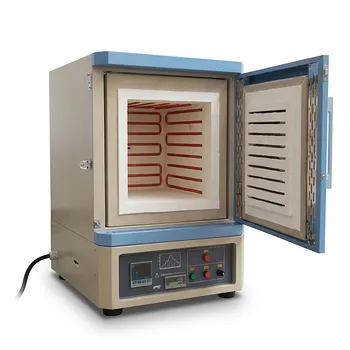
Five Side Heating Muffle Furnace 1200C High Uniformity 64L Chamber 16x16x16 Inch Industrial Heat Treatment
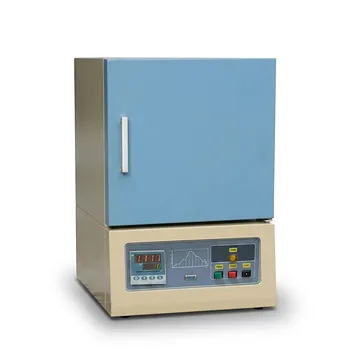
Ultra High Temperature Bench Top Muffle Furnace 1750C Sintering System with Kanthal Super Heating Elements and Precision Digital Control
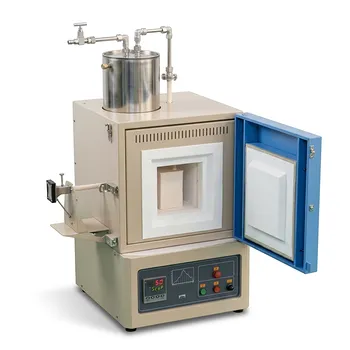
High Temperature Bench Top Muffle Furnace 1700C with Integrated Evaporating Particle Collection and 8x8x8 Alumina Fiber Chamber
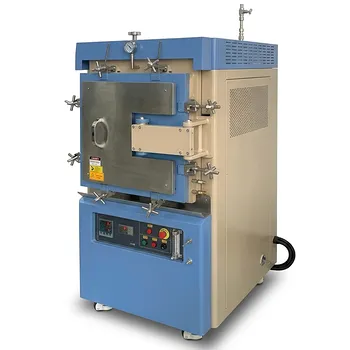
Atmosphere Controlled Muffle Furnace 1700C Maximum Temperature 80L High Capacity Vacuum Inert Gas Box Furnace

High Temperature 1500C Benchtop Muffle Furnace 3.6L Alumina Fiber Chamber Programmable Controller Sintering Annealing Carbonization Thermal Processing System
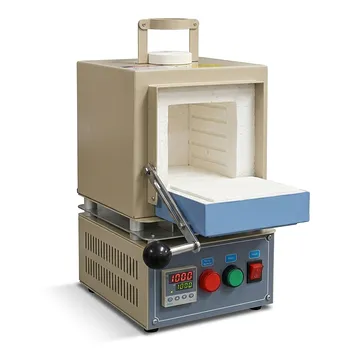
Compact 1000C Muffle Furnace with Programmable Controller and 2 Inch Top Port for Vacuum and Atmosphere Material Research
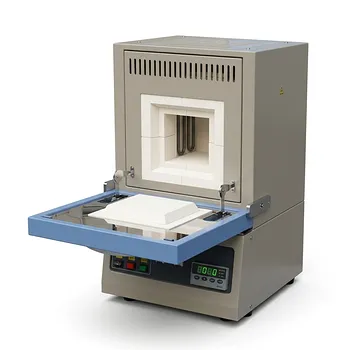
Five Sided Heating Muffle Furnace High Uniformity 1200C Lab Box Furnace 27L Alumina Fiber Chamber
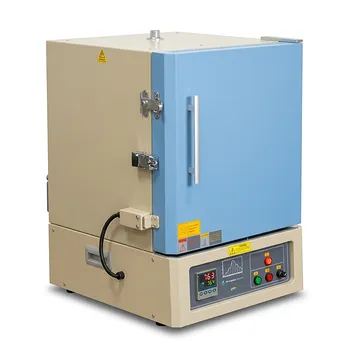
Large Capacity 1200C Muffle Furnace 64 Liter Chamber with Digital PID Controller and Built In Venting Port
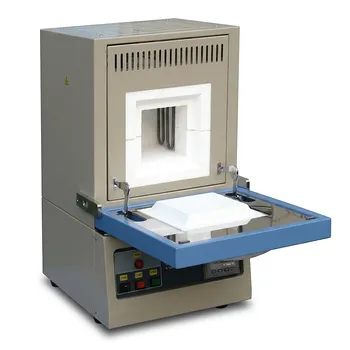
High Temperature 1800C Compact Muffle Furnace with Kanthal Super 1900 Heating Elements and 1.7L Alumina Chamber
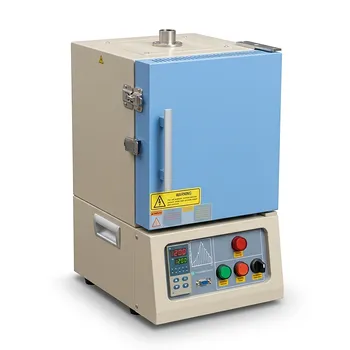
1200°C Small Box Furnace 4.2 Liter Programmable Muffle Furnace with High Purity Alumina Insulation and PID Control
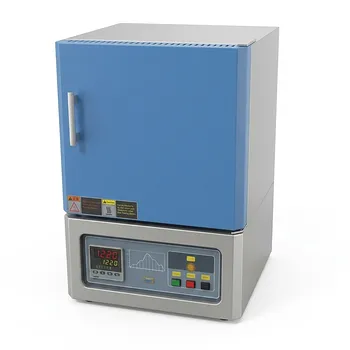
High Temperature Benchtop Muffle Furnace 1700C 10L Chamber Alumina Fiber Insulation MoSi2 Heating Elements