What is the function of the vacuum pump and ball valve system in alloy preparation? Achieve High-Purity Reduction & Control
Updated 3 months ago
The vacuum pump and ball valve system is the gatekeeper of atmospheric purity and kinetic control. This dual-purpose setup first evacuates ambient air through multiple vacuum-inert gas refill cycles to minimize oxygen partial pressure, preventing metal oxidation during the heating phase. It then regulates chamber pressure to specific levels—such as 530 Pa—to simulate vacuum refining conditions and facilitate the controlled volatilization of elements like manganese.
The system ensures a high-purity reducing environment by eliminating oxygen contamination and provides the necessary pressure gradients to study or drive element loss during the alloy preparation process.
Achieving Atmospheric Purity
The Role of Vacuum-Inert Gas Cycles
The vacuum pump and ball valve work in tandem to perform repeated evacuation and refill cycles. This process is essential for flushing out residual oxygen and moisture that occupy the furnace volume.
By cycling between a vacuum and an inert gas, the system reduces the concentration of impurities far more effectively than simple gas purging. This ensures the environment is chemically "clean" before the high-temperature reduction begins.
Preventing Unwanted Metal Oxidation
Heating metallic components in the presence of even trace amounts of oxygen can lead to the formation of surface oxides. These oxides can interfere with the reduction process or degrade the final alloy's mechanical properties.
The vacuum system ensures that the hydrogen reduction phase occurs in an extremely high-purity atmosphere. This allows the hydrogen to react specifically with the intended precursors rather than battling atmospheric contaminants.
Controlling Kinetic Driving Forces
Simulating Vacuum Refining Conditions
The system allows the operator to lower the furnace chamber pressure to precise levels, such as 530 Pa. This capability is used to simulate actual industrial vacuum refining environments within a laboratory setting.
Controlling the pressure directly influences the thermodynamics of the reaction. This allows researchers to observe how the alloy behaves under specific industrial manufacturing constraints.
Facilitating Manganese Volatilization
A critical function of the vacuum system is lowering the ambient pressure below the saturated vapor pressure of specific elements. In alloy preparation, this is frequently used to study or facilitate the loss of manganese.
By reducing the pressure, the system significantly increases the kinetic driving force for elements to transition from a solid or liquid state to a vapor. This is essential for understanding element loss patterns and achieving the desired final composition of the alloy.
Understanding the Trade-offs
Seal Integrity and Thermal Stress
High-vacuum operations place significant physical stress on ball valve seals and furnace gaskets, especially at elevated temperatures. Any minor leak during the vacuum phase can reintroduce oxygen, potentially compromising the entire batch.
Balancing Volatilization and Stoichiometry
While the vacuum pump is necessary for removing contaminants, excessive vacuum can lead to the unintended loss of volatile alloying elements. If the pressure is not carefully managed, the final alloy may deviate from its intended chemical proportions.
Gas Consumption and Cycle Time
Achieving an ultra-pure atmosphere through multiple vacuum-refill cycles increases the consumption of high-purity inert gases. It also extends the preparation time, requiring a balance between the required purity levels and the throughput of the furnace.
How to Apply This to Your Project
Making the Right Choice for Your Goal
- If your primary focus is preventing contamination: Prioritize at least three vacuum-inert gas refill cycles to drive oxygen partial pressure to the absolute minimum before increasing the temperature.
- If your primary focus is studying element loss: Use the vacuum pump to maintain a stable, low-pressure environment that sits precisely below the saturated vapor pressure of your target volatile element.
- If your primary focus is industrial simulation: Calibrate your pump and valve system to maintain 530 Pa, as this pressure effectively mimics the kinetic environment of large-scale vacuum refining.
Mastering the vacuum and valve system transforms a standard tube furnace into a precision metallurgical instrument capable of producing high-performance, high-purity alloys.
Summary Table:
| System Component | Core Function | Key Benefit in Alloy Preparation |
|---|---|---|
| Vacuum Pump | Chamber evacuation & pressure regulation | Prevents oxidation and enables manganese volatilization |
| Ball Valve | Precision sealing & gas flow control | Maintains vacuum integrity and stable refining conditions |
| Refill Cycles | Inert gas flushing | Minimizes oxygen partial pressure for ultra-pure atmospheres |
| Kinetic Control | Pressure management (e.g., 530 Pa) | Simulates industrial refining and drives element loss studies |
Elevate Your Metallurgical Research with THERMUNITS
Precision in hydrogen reduction and alloy preparation requires equipment that masters atmospheric purity. THERMUNITS is a leading manufacturer of high-temperature laboratory equipment, providing the advanced thermal processing solutions your R&D demands.
Whether your project requires Vacuum, Atmosphere, or Tube furnaces, or specialized CVD/PECVD systems, our equipment is engineered to deliver the exact kinetic control and vacuum integrity needed for material science excellence. Our range also includes Rotary, Hot Press, and Dental furnaces, as well as vacuum induction melting (VIM) systems.
Ready to optimize your heat treatment process? Contact us today to find the perfect solution for your lab!
References
- Arun Kamalasekaran, Christopher Hulme. Synthesis of Copper–Nickel and Iron–Nickel Alloys by Hydrogen Reduction of Mixtures of Metal Oxide Powders. DOI: 10.1007/s40831-024-00886-3
Mentioned Products
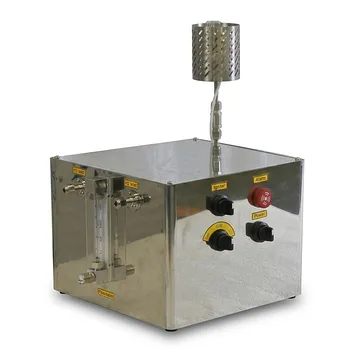
- Flammable Gas Control and Disposal Device with H2 Gas Leaking Detector and Safety Interlock System
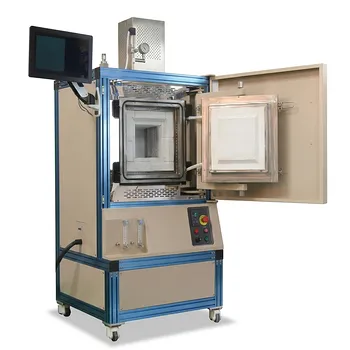
- High Temperature Hydrogen Atmosphere Box Furnace 1650C Max Reducing Environment Material Synthesis System 8x8x8 Chamber
People Also Ask
- How does a precision gas control system for H2/Ar mixtures contribute to Mo2C catalysts? Optimize Phase Purity.
- How does a high-precision gas flow meter contribute to the study of biomass pyrolysis kinetics? Enhance Data Accuracy
- How do Mass Flow Controllers (MFC) and gas mixing systems work together during nanobelt yarn tests? Precision Gas Sensing
- How do precise gas flow meters and cylinder systems contribute to controlled zinc volatilization? Enhance Your Results
- Why is a high-precision mass flow meter required to control 5% H2/Ar mixed gas during the thermal treatment of FeCoNiMnCr catalysts? Essential for HEA-HEO Synthesis

Tech Team · ThermUnits
Last updated on Jun 02, 2026