Why use precise thermocouples in ceramic heat treatment? Mapping phase shifts and thermal conductivity.
Updated 3 months ago
Precise thermocouples are the fundamental tools for achieving high-accuracy temperature feedback during the firing and melting point analysis of ceramic materials. These sensors provide real-time, reliable monitoring—often within a range of ±10°C—which is essential for establishing the thermal characteristic curves of minerals like kaolin. By ensuring a rigorous correspondence between material phase transformations and recorded temperatures, these instruments allow engineers to transition from trial-and-error heating to scientifically controlled thermal processing.
The core significance of precise thermocouples lies in their ability to synchronize physical phase changes with exact temperature data, preventing structural failure while enabling the quantitative analysis of thermal conductivity and interface diffusion.
Mapping Phase Transformations and Thermal Curves
Establishing Thermal Characteristic Curves
Precise thermocouples allow researchers to create highly accurate thermal characteristic curves for ceramic minerals. This data is critical for understanding how a material responds to heat at every stage of the firing process.
Correlation with Material Phase Shifts
High-accuracy feedback ensures that the observed phase transformations—the moments a material changes its internal structure—are mapped to the correct temperature. Without this precision, the timing of chemical reactions within the ceramic could be misinterpreted, leading to flawed material science.
Managing Thermal Conductivity and Insulation
Quantitative Heat Flow Analysis
Using armored thermocouples on both the front and back surfaces of a sample allows for the recording of temperature differences (delta T) in real-time. This data is vital for quantifying a material’s ability to inhibit phonon heat exchange, which determines its effectiveness as a thermal insulator.
Performance at Extreme Temperatures
In high-performance ceramic testing, thermocouples must remain accurate at temperatures reaching 1500°C. Maintaining precision at these extremes is necessary to confirm if multi-component ceramics are suitable for demanding roles like aerospace coatings or industrial insulation.
Controlling Structural Integrity and Bonding
Optimizing Interface Diffusion
During processes like brazing, temperatures must be held strictly—often just 20°C above the solder liquidus. Precise monitoring ensures the fluidity of the solder is maintained, which promotes the necessary diffusion reactions at the interface of the ceramic and the metal.
Mitigating Thermal Stress and Damage
Overheating, even by a small margin, can cause significant thermal stress to a ceramic substrate. Accurate temperature management prevents the micro-cracking and structural degradation that often occurs when thermal limits are unexpectedly exceeded.
Understanding the Trade-offs
Sensitivity and Sensor Placement
While high-precision thermocouples offer superior data, they are highly sensitive to placement and contact. If a sensor is not perfectly seated on the heated surface, the resulting "delta T" will be inaccurate, leading to false conclusions about the ceramic's thermal conductivity.
Durability vs. Precision
Standard high-precision sensors can be fragile in the harsh environments of a ceramic kiln. While armored thermocouples provide necessary protection against corrosive gases and extreme heat, they may have a slightly slower response time compared to exposed-wire sensors, requiring a balance between ruggedness and data speed.
How to Apply This to Your Project
- If your primary focus is material characterization: Prioritize thermocouples that offer a tight tolerance (±10°C or better) to accurately map the phase transformation points of new mineral blends.
- If your primary focus is thermal insulation development: Use a dual-sensor setup (front and back surface) to measure the temperature gradient and quantify the inhibition of phonon heat exchange.
- If your primary focus is precision bonding or brazing: Implement real-time monitoring to stay within a narrow 20°C window above the liquidus point to ensure solder fluidity without damaging the substrate.
By integrating high-precision thermal monitoring into your workflow, you transform temperature from a volatile variable into a controlled, actionable metric for ceramic excellence.
Summary Table:
| Key Feature | Significance in Ceramics | Performance Metric |
|---|---|---|
| Phase Mapping | Synchronizes structural shifts with exact data | Real-time feedback (±10°C) |
| Heat Flow Analysis | Quantifies thermal insulation effectiveness | Delta T recording (Armored sensors) |
| Diffusion Bonding | Optimizes interface brazing & solder fluidity | Control (20°C above liquidus) |
| Stress Prevention | Prevents micro-cracks and structural failure | Accurate monitoring up to 1500°C |
Elevate Your Ceramic R&D with THERMUNITS High-Precision Solutions
As a leading manufacturer of high-temperature laboratory equipment, THERMUNITS empowers material science and industrial R&D with unmatched thermal accuracy. Whether you are conducting rigorous mineral phase analysis or high-performance brazing, our comprehensive range of Muffle, Vacuum, Atmosphere, Tube, Rotary, and Hot Press furnaces ensures your heat treatments are scientifically controlled.
Our Value to Your Laboratory:
- Scientific Accuracy: Integrated high-precision thermal elements designed to map phase transformations without error.
- Versatile Thermal Solutions: From CVD/PECVD systems and Dental Furnaces to Vacuum Induction Melting (VIM) furnaces, we cover all heat treatment needs.
- Optimized Integrity: Equipment engineered to minimize thermal stress and maximize material performance.
Ready to transform temperature into a controlled, actionable metric for excellence?
Contact Our Thermal Experts Today to find the perfect solution for your research.
References
- B. A. Kalbaev, Мuratbay Toreniyazov. Study of Shomishkul kaolin for producing ceramic materials. DOI: 10.1051/e3sconf/202449402005
Mentioned Products
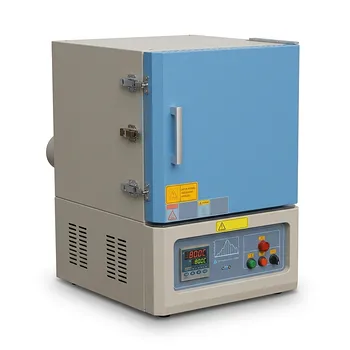
- 1800C Bench Top Muffle Furnace 18 Liters with Kanthal Super 1900 Heating Elements for High Purity Ceramic Sintering and Material Research
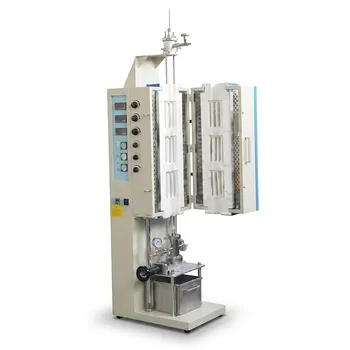
- High Temperature Dual Zone Tube Furnace for Material Science Research and Professional Thermal Processing
People Also Ask
- Why is a benchtop muffle furnace essential for U3O8 micromaterials? Achieve precision stoichiometry and purity.
- What materials are typically used for heating elements in muffle furnaces? A Guide to Performance & Temperature Limits
- What role does a laboratory high-temperature muffle furnace play in the ash analysis phase of biomass co-firing research? [Guide]
- Why is a sintering furnace or Rapid Thermal Processing (RTP) equipment necessary for the formation of electrodes? Master Solar Ohmic Contacts.
- What function does argon serve in MOF melt-quenching? Prevent oxidation and ensure chemical integrity.

Tech Team · ThermUnits
Last updated on Jun 02, 2026