What role do alumina plates play in rGO@HCF carbonization? Ensuring Structural Stability and Flatness
Updated 3 months ago
High-purity alumina ceramic plates serve as a structural stabilizer. During the carbonization of rGO@HCF composite membranes at 900 °C, these plates act as a physical clamping mechanism in a sandwich-like arrangement. This configuration compensates for thermal shrinkage differences between material layers, preventing severe warping or deformation while ensuring a flat macroscopic shape and stable microscopic structure.
Core Takeaway: Alumina plates provide the necessary physical constraint to manage non-uniform thermal shrinkage during high-temperature processing. This ensures the resulting rGO@HCF evaporator maintains both its geometric flatness and its internal structural integrity.
Structural Stabilization at High Temperatures
The Sandwich Configuration as a Physical Constraint
The primary role of these plates is to fix the membrane layers in a "sandwich-like" configuration within the tube furnace. By physically clamping the rGO@HCF layers, the plates exert a uniform pressure that restricts the membrane’s movement during the volatile carbonization phase.
Managing Differential Thermal Shrinkage
Composite materials often experience non-uniform contraction as they transition into carbonized structures at 900 °C. The alumina plates counteract these internal stresses, forcing the composite to maintain its dimensions rather than curling or delaminating due to internal tension.
Prevention of Macroscopic Warping
Without the weight and rigidity of the alumina plates, the thin composite membranes would likely deform into irregular shapes. The plates ensure that the finished rGO@HCF evaporator remains perfectly flat, which is essential for uniform heat distribution and efficient water evaporation in its final application.
Precision and Environmental Protection
Maintaining a Flat Reference Plane
The ceramic plates provide a consistent, flat reference plane that guides the densification of the membrane. This geometric accuracy is vital for ensuring that the evaporator can be easily integrated into larger thermal systems without gaps or structural weaknesses.
Chemical Inertness and Thermal Stability
Alumina is chosen specifically for its chemical inertness, which prevents unwanted reactions between the membrane and the furnace environment. Even at extreme temperatures, the plates do not bond with the composite or introduce impurities, preserving the high purity of the rGO@HCF structure.
Influence of Surface Friction
The surface friction of the alumina plates plays a subtle but critical role in how the membrane shrinks. This friction provides a degree of lateral resistance that helps control the rate of contraction, leading to a more uniform and predictable microscopic grain structure within the carbonized layers.
Understanding the Trade-offs
Mechanical Stress and Friction
While the physical constraint is necessary to prevent warping, excessive friction between the plate and the membrane can sometimes lead to micro-tears if the material is too fragile. If the shrinkage is completely restricted by high friction, the internal stress may resolve through small cracks rather than uniform contraction.
Thermal Mass Considerations
High-purity alumina plates add significant thermal mass to the furnace setup. This can lead to slower heating and cooling cycles, which must be carefully managed to ensure the membrane reaches the target 900 °C temperature at the desired rate without creating a lag that affects the carbonization quality.
How to Apply This to Your Process
Making the Right Choice for Your Goal
To achieve the best results when carbonizing composite membranes, consider your primary structural requirements:
- If your primary focus is macroscopic flatness: Use polished alumina plates in a weighted sandwich configuration to maximize surface contact and minimize curling.
- If your primary focus is microscopic pore integrity: Ensure the plates are cleaned of any residues to maintain chemical inertness and prevent the closing of pores due to surface contamination.
- If your primary focus is preventing surface cracks: Monitor the heating rate to ensure that the thermal expansion of the alumina plates aligns with the transition phases of your rGO@HCF composite.
By utilizing high-purity alumina plates as a physical framework, you transform a delicate carbonization process into a controlled engineering procedure that yields a structurally superior evaporator.
Summary Table:
| Role | Mechanism | Key Benefit |
|---|---|---|
| Structural Stabilizer | Sandwich-like clamping | Prevents warping and severe deformation |
| Shrinkage Management | Uniform physical pressure | Counteracts non-uniform thermal contraction |
| Material Integrity | Chemical inertness | Prevents contamination or bonding at 900°C |
| Geometric Guide | Flat reference plane | Ensures macroscopic flatness for integration |
Optimize Your Material Research with THERMUNITS
As a leading manufacturer of high-temperature laboratory equipment, THERMUNITS empowers material science and industrial R&D with precision thermal processing solutions. Whether you are carbonizing delicate rGO@HCF membranes or performing complex CVD/PECVD synthesis, our high-performance Tube Furnaces, Muffle Furnaces, and Atmosphere Furnaces provide the stability and control your research demands.
From Vacuum Induction Melting (VIM) to Dental and Rotary Kilns, we offer a comprehensive range of equipment, including high-purity Thermal Elements, to ensure your heat treatment is efficient and predictable.
Ready to enhance your lab's capabilities? Contact THERMUNITS today to find the perfect solution for your application!
References
- Jie Yang, Xidong Suo. Hollow carbon fiber wrapped by regular rGO wave-like folds for efficient solar driven interfacial water steam generation. DOI: 10.1038/s41598-024-64144-y
Mentioned Products
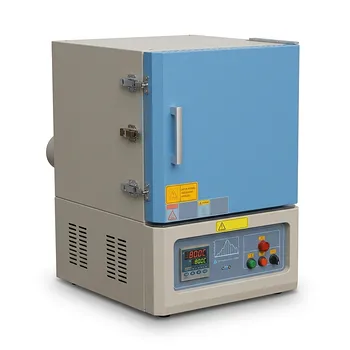
- 1800C Bench Top Muffle Furnace 18 Liters with Kanthal Super 1900 Heating Elements for High Purity Ceramic Sintering and Material Research
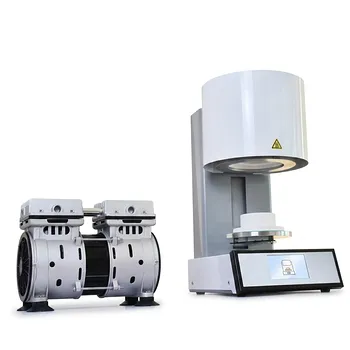
- Vacuum Dental Porcelain Sintering Furnace for High Precision Ceramic Restorations
People Also Ask
- Why is a benchtop muffle furnace essential for U3O8 micromaterials? Achieve precision stoichiometry and purity.
- What materials are typically used for heating elements in muffle furnaces? A Guide to Performance & Temperature Limits
- What role does a laboratory high-temperature muffle furnace play in the ash analysis phase of biomass co-firing research? [Guide]
- Why is a sintering furnace or Rapid Thermal Processing (RTP) equipment necessary for the formation of electrodes? Master Solar Ohmic Contacts.
- What function does argon serve in MOF melt-quenching? Prevent oxidation and ensure chemical integrity.

Tech Team · ThermUnits
Last updated on Jun 03, 2026