What role do oxidation-resistant alloy layers play in the durability of thermal elements? Key to Long-Lasting Heaters
Updated 5 months ago
The primary role of oxidation-resistant alloy layers is to form a self-healing chemical barrier that shields the heating element from environmental degradation. When materials like Nickel-Chromium or Iron-Chromium-Aluminum are heated, they react with oxygen to create a dense, stable oxide scale (such as $Cr_2O_3$ or $Al_2O_3$). This layer effectively "seals" the underlying metal, preventing further atmospheric oxygen from penetrating and destroying the resistive core.
By converting the surface into a protective oxide, these alloys prevent the rapid decay of the element’s structural and electrical properties. This mechanism is the fundamental reason high-temperature heating elements can operate for thousands of hours without failing.
The Mechanism of Self-Protection
Spontaneous Oxide Formation
When a thermal element first reaches high temperatures, its surface reacts with the surrounding atmosphere. For Nickel-Chromium (Ni-Cr) alloys, this creates a Chromium Oxide ($Cr_2O_3$) layer; for Iron-Chromium-Aluminum (Fe-Cr-Al), it creates an Aluminum Oxide ($Al_2O_3$) layer.
Creating a Diffusion Barrier
Once formed, these oxide layers are incredibly dense and act as a physical wall against further oxygen diffusion. Because oxygen cannot easily pass through this scale, the internal oxidation of the wire or ribbon is drastically slowed, preserving the core material.
The Self-Healing Property
If the surface of the element is scratched or the oxide layer cracks due to thermal expansion, the exposed alloy immediately reacts with oxygen to reform the layer. This regenerative capability is critical for maintaining durability throughout the element's entire service life.
How Oxide Layers Ensure Longevity
Maintaining Electrical Resistance Stability
As an element oxidizes, its effective cross-sectional area decreases, which normally causes electrical resistance to rise. The protective layer slows this process to a crawl, ensuring the heater provides consistent power output over time.
Preventing Structural Weakening
Without these layers, the metal would eventually turn entirely to brittle oxide "scale" and snap. The oxidation-resistant layer ensures the mechanical integrity of the element remains intact, even when supporting its own weight at glowing-hot temperatures.
Protection in Aggressive Environments
Thermal elements often operate in environments containing moisture or corrosive gasses. These oxide layers serve as the first line of defense, preventing chemical corrosion from eating away at the resistive alloy.
Understanding the Trade-offs and Failure Points
Thermal Cycling and Spalling
Repeatedly heating and cooling an element causes the metal to expand and contract. If the expansion rate of the oxide layer doesn't match the alloy, the layer may flake off (a process called spalling), forcing the element to use up more of its internal material to grow a new layer.
Temperature Thresholds
Each oxide layer has a specific temperature limit. While Aluminum Oxide is stable at higher temperatures, it can be more brittle than Chromium Oxide, which is generally tougher but fails at lower maximum temperatures.
Atmospheric Interference
In environments with very low oxygen (reducing atmospheres), the protective layer may not form or maintain itself correctly. This can lead to "Green Rot" or rapid internal oxidation, which significantly shortens the lifespan of the element.
How to Optimize for Element Durability
Choosing the Right Alloy for Your Goal
To maximize the lifespan of your thermal elements, you must match the alloy type to your specific operating conditions.
- If your primary focus is Maximum Operating Temperature: Choose Iron-Chromium-Aluminum alloys, as the Aluminum Oxide layer remains stable at higher heat levels than Chromium Oxide.
- If your primary focus is Frequent Thermal Cycling: Choose Nickel-Chromium alloys, as the Chromium Oxide layer typically adheres better during repeated heating and cooling cycles.
- If your primary focus is Electrical Precision: Ensure the operating environment allows for a stable oxide layer to form, preventing resistance drift that could impact temperature control.
Selecting the correct alloy ensures that the protective oxide layer remains a shield rather than a source of premature failure.
Summary Table:
| Alloy Type | Primary Oxide Layer | Key Benefit | Best Use Case |
|---|---|---|---|
| Nickel-Chromium (Ni-Cr) | Chromium Oxide ($Cr_2O_3$) | Superior Adhesion | Frequent Thermal Cycling |
| Iron-Chromium-Aluminum (Fe-Cr-Al) | Aluminum Oxide ($Al_2O_3$) | Higher Temp Stability | Maximum Heat Requirements |
Maximize Your Lab’s Efficiency with THERMUNITS
As a leading manufacturer of high-temperature laboratory equipment for material science and industrial R&D, THERMUNITS delivers precision-engineered thermal processing solutions. Our equipment is built with high-quality thermal elements designed to withstand the most demanding environments.
Our comprehensive range includes:
- Muffle, Vacuum, Atmosphere, Tube, and Rotary Furnaces
- Advanced CVD/PECVD and Hot Press systems
- Specialized Dental Furnaces and Electric Rotary Kilns
- Vacuum Induction Melting (VIM) and high-performance Thermal Elements
Ready to upgrade your heat treatment capabilities? Contact us today to consult with our experts and find the perfect solution for your research needs!
Mentioned Products
- Molybdenum Disilicide MoSi2 Thermal Elements Electric Furnace Heating Element High Temperature Resistance
- Silicon Carbide SiC Thermal Heating Elements for Industrial Electric Furnaces
- High Temperature Benchtop Muffle Furnace 1700C 10L Chamber Alumina Fiber Insulation MoSi2 Heating Elements
- 600°C Vertical Crucible Furnace with SS316 Alloy Reactor and 6 Port Vacuum Flange
- 1750C Bench Top Muffle Furnace 3.6L High Grade Molybdenum Disilicide Heating Elements Laboratory Heat Treatment Equipment
People Also Ask
- What role do MoSi2 heating elements play in high-temperature smelting? Precision for Ferronickel & Slag Research
- Why is the selection of high-performance thermal elements critical for high-temperature testing? Ensure Data Integrity.
- How do electric thermal elements compare to combustion-based heating systems? Maximize Your Lab's Energy Efficiency
- What are the primary functions of an electric resistance furnace? Enhancing Precision in Industrial Thermal Processing
- How do optimized control schemes for electric resistance furnaces ensure accuracy? Enhance Heat Treatment Stability.

Tech Team · ThermUnits
Last updated on Apr 14, 2026
Related Products
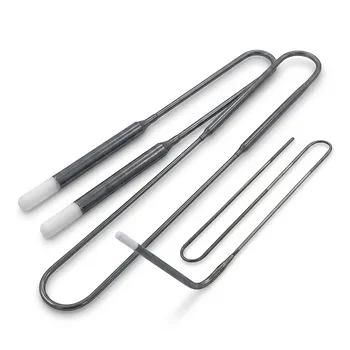
Molybdenum Disilicide MoSi2 Thermal Elements Electric Furnace Heating Element High Temperature Resistance
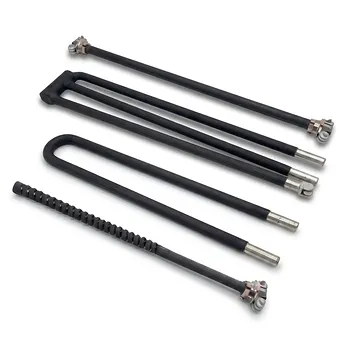
Silicon Carbide SiC Thermal Heating Elements for Industrial Electric Furnaces
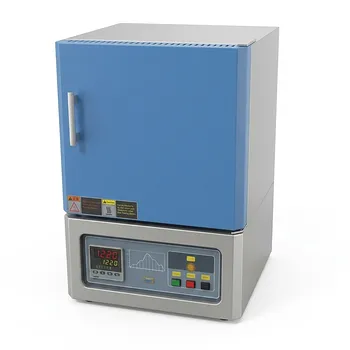
High Temperature Benchtop Muffle Furnace 1700C 10L Chamber Alumina Fiber Insulation MoSi2 Heating Elements
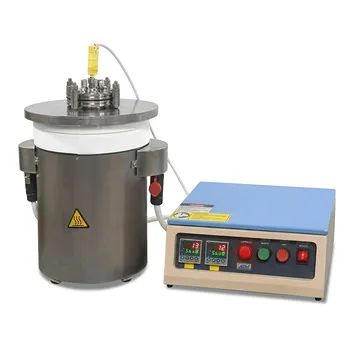
600°C Vertical Crucible Furnace with SS316 Alloy Reactor and 6 Port Vacuum Flange