What role does a high-purity argon gas system play in biomass pyrolysis research? Enhancing Biochar Yield and Quality
Updated 3 months ago
The fundamental role of a high-purity argon gas system in biomass pyrolysis is to provide a strictly inert environment that decouples thermal decomposition from oxidation. By displacing oxygen, argon ensures that biomass undergoes true carbonization rather than combustion, preserving the chemical integrity of the resulting biochar and bio-oil. Furthermore, it acts as a kinetic "conveyor belt," rapidly transporting volatile vapors away from the heat source to prevent secondary reactions that would otherwise skew research data.
Core Takeaway: High-purity argon is the primary safeguard against oxidative loss, ensuring that biomass components are thermally cracked into high-value products while maintaining the precise chemical conditions required to study reaction kinetics and product yields.
Establishing a Controlled Chemical Environment
Prevention of Spontaneous Combustion and Oxidation
At the high temperatures required for pyrolysis (often exceeding 500°C), carbonaceous materials react instantly with even trace amounts of oxygen. Argon, being chemically inert, creates an anaerobic atmosphere that prevents the biomass from catching fire or oxidizing into carbon dioxide and ash. This protection is vital for maintaining the structural framework of the biomass, such as its pore network and mechanical properties.
Preservation of Nitrogen and Sensitive Elements
In specialized research, such as the study of nitrogen-doped carbons or specific amino acids like proline, argon prevents the oxidation of these delicate chemical structures. It ensures that nitrogen atoms remain stably fixed within the carbon lattice rather than being lost as nitrogen oxides. For research involving oxophilic materials or metal catalysts, argon further prevents the formation of unwanted oxides that would deactivate active sites.
Maximizing Fixed Carbon Retention
One of the primary goals of pyrolysis research is to maximize the yield of "fixed carbon" in the resulting biochar. By excluding oxygen, the argon system ensures that the process is limited to dehydration and deoxygenation. This prevents the "oxidative ablation" of the material, allowing researchers to recover the maximum amount of solid carbon possible from the raw precursor.
Facilitating Mass Transfer and Product Integrity
Mitigation of Secondary Cracking Reactions
When biomass is heated, it releases volatile organic compounds (VOCs) as vapors. If these vapors linger in the high-temperature zone of the reactor, they undergo "secondary cracking," breaking down into smaller, less useful non-condensable gases or depositing as soot. A constant flow of argon promptly moves these volatiles out of the hot zone, allowing for the accurate observation of the initial stages of pyrolysis.
Efficient Transport for Vapor Collection
Argon serves as the driving force that carries volatile vapors into downstream condensation and collection systems. This steady flow is critical for researchers who need to analyze the chemical composition of bio-oils. Without a consistent carrier gas, vapors would stagnate or leak, leading to inconsistent yields and making it impossible to perform an accurate mass balance of the reaction.
Maintaining Surface Cleanliness and Exposure
The continuous sweep of argon gas prevents volatiles from re-depositing onto the surface of the biochar or catalyst. This "cleaning" effect ensures that the active sites of the material remain exposed and the pore structures remain unblocked. For research focused on surface chemistry or material porosity, this gas flow is essential for obtaining high-quality, reproducible samples.
Understanding the Trade-offs and Pitfalls
The Risk of Trace Impurities
While argon is inert, the "high-purity" designation (typically 99.98% or higher) is non-negotiable because trace moisture or oxygen can still cause significant errors. In sensitive experiments, such as those involving uranium sulfides or highly reactive metal catalysts, even ppm-level impurities can lead to the formation of oxysulfides or oxides. Researchers must often use gas purification traps to ensure the argon is truly "dry" and oxygen-free.
Balancing Flow Rates and Residence Time
Selecting the correct flow rate is a delicate balancing act in pyrolysis research. If the argon flow is too slow, secondary cracking increases, and the sample may over-react. However, if the flow is too fast, it may over-cool the reactor or reduce the "residence time" of vapors so much that necessary gas-phase interactions are missed. Researchers must optimize these rates to match the specific kinetics of the biomass they are studying.
How to Apply This to Your Research
Making the Right Choice for Your Goal
To ensure your argon system supports your research objectives, consider the following strategic applications:
- If your primary focus is bio-oil characterization: Maintain a higher argon flow rate to ensure volatiles are quickly moved to the condenser, minimizing secondary reactions and preserving liquid quality.
- If your primary focus is nitrogen-doped carbon or catalysts: Prioritize gas purity (99.999% if possible) to prevent trace oxidation of sensitive nitrogen sites or metal centers during the cooling phase.
- If your primary focus is biochar porosity and surface area: Ensure a steady, continuous flow throughout the entire heating and cooling cycle to prevent the re-deposition of tars that can clog the pore network.
By masterfully controlling the inert environment and gas kinetics, you transform a simple thermal reaction into a precise, repeatable scientific instrument.
Summary Table:
| Function | Research Benefit | Key Outcome |
|---|---|---|
| Inert Atmosphere | Prevents combustion and oxidation | High-purity biochar & fixed carbon |
| Volatile Transport | Reduces secondary cracking reactions | Accurate bio-oil chemical analysis |
| Kinetic Control | Consistent vapor residence time | Repeatable and reliable reaction data |
| Surface Cleaning | Prevents tar re-deposition | Unblocked pores and high surface area |
Elevate Your Material Research with THERMUNITS
As a leading manufacturer of high-temperature laboratory equipment, THERMUNITS empowers material science and industrial R&D with precision-engineered thermal processing solutions. Whether you are conducting biomass pyrolysis or advanced carbon synthesis, our comprehensive range—including Atmosphere, Vacuum, and Tube Furnaces, CVD/PECVD systems, and Electric Rotary Kilns—provides the rigorous control your research demands.
Maximize your product yields and ensure chemical integrity with our advanced heat treatment systems. Contact our experts today to find the perfect solution for your laboratory!
References
- Shan Cheng, Lianghui Chen. Synergistic Catalytic Effects on Nitrogen Transformation during Biomass Pyrolysis: A Focus on Proline as a Model Compound. DOI: 10.3390/molecules29133118
Mentioned Products
- Electric Rotary Kiln Small Rotary Furnace Biomass Pyrolysis Plant
- 1500C Three Zone Vertical Pyrolysis Furnace for Nanoparticle Synthesis and Advanced Oxide Coating
- Electric Rotary Kiln Continuous Working Small Rotary Furnace Heating Pyrolysis Plant
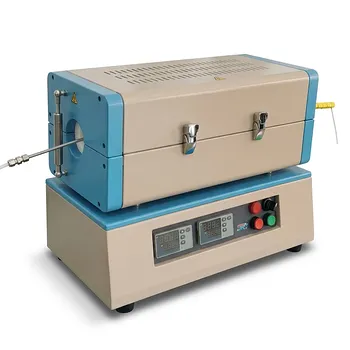
- Gas Pre-Heating Tube Furnace for High Temperature Pyrolysis Reactors and Material Science Research
People Also Ask
- How does the electric rotary kiln support environmental compliance and sustainability? Achieve Zero-Emission Production
- What are the maintenance and service life advantages of an electric rotary kiln? 25+ Year Longevity & Low Maintenance
- What thermal efficiency can be expected from an electric rotary kiln compared to fuel-fired alternatives? Gain 95% efficiency.
- How does the use of an electric rotary kiln facilitate CO2 capture in cement and lime production? Achieve High-Purity CCUS
- Which minerals and specialty chemicals are commonly processed using electric rotary kilns? Precision Thermal Processing Guide

Tech Team · ThermUnits
Last updated on Jun 02, 2026
Related Products
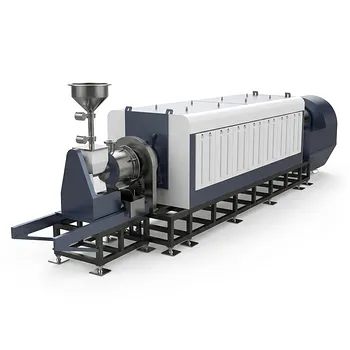
Electric Rotary Kiln Small Rotary Furnace Biomass Pyrolysis Plant
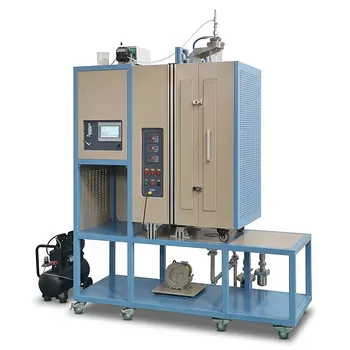
1500C Three Zone Vertical Pyrolysis Furnace for Nanoparticle Synthesis and Advanced Oxide Coating
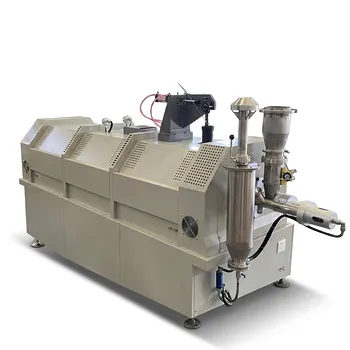
Electric Rotary Kiln Continuous Working Small Rotary Furnace Heating Pyrolysis Plant