What role does a laboratory oven play in the pre-treatment of biomass? Essential Steps for Quality Activated Carbon
Updated 3 months ago
The laboratory oven is the primary tool for moisture elimination and thermal stabilization during the pre-treatment of biomass. By maintaining a constant temperature—typically around 110°C for 24 hours—it removes water and volatile impurities from raw materials like tamarind shells. This process ensures the precursor is chemically stable and physically prepared for the intensive high-temperature carbonization stages that follow.
Core Takeaway: Laboratory ovens transform raw biomass from a moist, inconsistent material into a stable, dry precursor. This step is critical for ensuring accurate yield calculations, optimizing heat transfer during pyrolysis, and protecting the integrity of the final pore structure.
Facilitating Physical and Mechanical Preparation
Improving Grinding and Particle Size Control
Pre-treating biomass in an oven removes "bound water," which significantly alters the material's mechanical properties. As the biomass loses moisture, it becomes more brittle, allowing it to be ground into a fine, consistent powder (often less than 1 mm). This uniformity is essential for achieving a consistent surface area in the final activated carbon product.
Enhancing Chemical Impregnation
For biomass that requires chemical activation, the drying process creates an ideal physical state for the absorption of precursor solutions. By removing water from the cellular structure of the tamarind shells, the oven "clears space" within the pores. This allows chemical agents to penetrate more deeply and evenly, leading to more effective activation.
Ensuring Analytical and Chemical Accuracy
Establishing a Dry Weight Basis
Accurate science requires a stable baseline, which raw biomass lacks due to fluctuating environmental moisture. The laboratory oven dries the material until it reaches a "constant weight," providing a reliable dry-basis standard. This is the only way to accurately calculate the yield, volatile matter, and ash content of the resulting biochar or activated carbon.
Removing Volatile Impurities
While the primary goal is dehydration, the oven also begins the process of discharging low-level volatile organic compounds (VOCs). Removing these early prevents them from interfering with the chemical reactions during carbonization. This early-stage purification helps in establishing the foundation of the carbon matrix.
Optimizing the Carbonization Environment
Protecting Pore Structure and Pressure Levels
Excessive moisture in the precursor can be catastrophic during high-temperature carbonization. When water trapped inside biomass is suddenly exposed to extreme heat, it turns to steam rapidly, creating internal pressure that can rupture the developing pore structure. Using an oven to ensure thorough dehydration prevents this uncontrolled degradation and leads to better pore size distribution.
Increasing Heat Transfer Efficiency
Water has a high specific heat capacity, meaning it absorbs a significant amount of energy before the biomass itself can heat up. By removing this "thermal sink" in the pre-treatment phase, the laboratory oven ensures that heat transfer during pyrolysis is rapid and efficient. This leads to a more uniform carbonization process across the entire sample.
Understanding the Trade-offs and Pitfalls
Temperature Sensitivity and Material Degradation
Choosing the correct temperature is a delicate balance; while 110°C is standard for drying, "pre-roasting" at 200°C or pre-carbonization at 300°C changes the material's chemistry. If the temperature is too high during simple drying, you may inadvertently trigger the loss of essential carbon-rich compounds. Conversely, under-drying leaves residual moisture that can skew analytical results and damage the furnace equipment during carbonization.
The Risk of Case Hardening
In some dense biomass materials, drying too rapidly at high temperatures can cause "case hardening," where the outer layer dries and shrinks while the interior remains moist. This creates a barrier that traps water inside, potentially leading to material "popping" or uneven activation later in the process. Gradual, thermostatic heating is required to ensure moisture escapes from the core of the tamarind shell.
Making the Right Choice for Your Goal
To achieve the best results in your activated carbon production, align your oven settings with your specific processing objectives:
- If your primary focus is accurate yield and ash analysis: Dry the precursor at 105°C–110°C until a constant weight is achieved over two consecutive weighings.
- If your primary focus is fine grinding and powder consistency: Utilize a higher pre-treatment temperature (up to 200°C) to break down lignocellulosic structures and maximize brittleness.
- If your primary focus is chemical activation efficiency: Ensure the material is bone-dry immediately before impregnation to maximize the capillary suction of the activating agent.
- If your primary focus is protecting expensive furnace equipment: Never skip the oven-drying step, as steam and volatile discharge from wet biomass can corrode furnace interiors and clog exhaust systems.
By viewing the laboratory oven as a precision instrument rather than a simple heater, you ensure the structural and chemical integrity of your final activated carbon.
Summary Table:
| Pre-treatment Stage | Function in Laboratory Oven | Key Benefit for Activated Carbon |
|---|---|---|
| Moisture Removal | Dehydration at ~110°C | Prevents steam damage and ensures accurate yield calculation. |
| Physical Stabilization | Increasing material brittleness | Facilitates fine grinding and uniform particle size control. |
| Chemical Preparation | Clearing cellular pore space | Enhances the penetration and efficiency of activation agents. |
| Thermal Conditioning | Discharging low-level VOCs | Establishes a stable carbon matrix for high-temp carbonization. |
| Equipment Protection | Pre-drying raw precursors | Prevents furnace corrosion and exhaust clogging from volatiles. |
Elevate Your Material Research with THERMUNITS
Precision in pre-treatment is the foundation of high-performance materials. As a leading manufacturer of high-temperature laboratory equipment, THERMUNITS provides the advanced thermal solutions necessary for cutting-edge material science and industrial R&D.
Our comprehensive range of equipment is designed to meet the rigorous demands of biomass carbonization and beyond:
- Thermal Processing: Muffle, Vacuum, Atmosphere, and Tube Furnaces for precise heat treatment.
- Advanced Synthesis: CVD/PECVD systems and Hot Press furnaces for complex material engineering.
- Industrial Scaling: Electric rotary kilns and Vacuum Induction Melting (VIM) furnaces.
- Specialized Labs: Dental furnaces and high-quality thermal elements.
Whether you are refining tamarind shells into activated carbon or developing the next generation of composites, our expert team is ready to help you find the perfect thermal solution.
Ready to optimize your lab's efficiency? Contact us today to discuss your project requirements!
References
- Yuttapong Dumpan, Kittinan Maliwan. Synthesis and Characterization of Activated Carbon from Giant Sour Tamarind Fruit Shell by KOH Activation. DOI: 10.37934/armne.20.1.5158
Mentioned Products
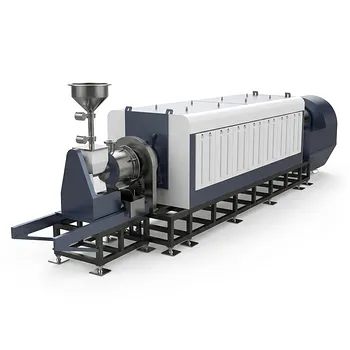
- Electric Rotary Kiln Small Rotary Furnace Biomass Pyrolysis Plant
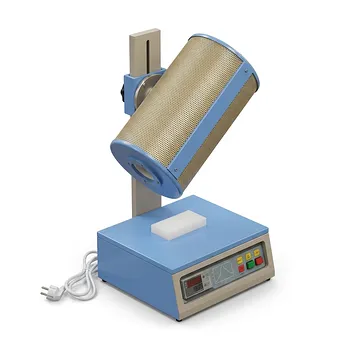
- 1100°C Vertical Laboratory Furnace for DIY Tubular Reactors with PID Temperature Controller
People Also Ask
- How does the electric rotary kiln support environmental compliance and sustainability? Achieve Zero-Emission Production
- What are the maintenance and service life advantages of an electric rotary kiln? 25+ Year Longevity & Low Maintenance
- What thermal efficiency can be expected from an electric rotary kiln compared to fuel-fired alternatives? Gain 95% efficiency.
- How does the use of an electric rotary kiln facilitate CO2 capture in cement and lime production? Achieve High-Purity CCUS
- Which minerals and specialty chemicals are commonly processed using electric rotary kilns? Precision Thermal Processing Guide

Tech Team · ThermUnits
Last updated on Jun 03, 2026