Why are ceramic boats used as sample containers during carbonization & pyrolysis? High-Temp Stability & Purity
Updated 3 months ago
Ceramic boats are the industry standard for carbonization and pyrolysis because they provide a chemically inert environment that can withstand extreme temperatures without deforming. These vessels ensure the catalytic precursor remains uncontaminated while allowing for uniform heat distribution and efficient gas exchange during the thermal treatment process.
Core Takeaway: Ceramic boats act as a high-temperature "safe haven" for catalysts, ensuring that the final material's purity and chemical structure are dictated solely by the reaction parameters rather than contamination from the container.
Maintaining Integrity Under Thermal Stress
Exceptional High-Temperature Resistance
Ceramic boats, particularly those made of alumina, possess high refractoriness that allows them to remain stable at temperatures ranging from 700 °C to 1000 °C. Unlike metallic containers, they do not soften, melt, or lose their structural shape when exposed to the intense heat required for carbonization.
Resistance to Thermal Shock
Pyrolysis often involves rapid heating or cooling cycles within a tube furnace. Ceramic materials are engineered to resist thermal shock, meaning they are less likely to crack or shatter when moving between the furnace's hot zone and ambient temperatures.
Uniform Heat Distribution
High-quality ceramics feature excellent thermal conductivity. This ensures that the heat from the furnace elements is transferred evenly throughout the sample, preventing localized "hot spots" that could lead to inconsistent catalyst properties.
Ensuring Chemical Purity and Precision
Absolute Chemical Inertness
The primary role of the ceramic boat is to serve as a non-reactive vessel. They do not react with common catalyst components such as nickel, platinum, or sulfur-containing compounds, nor do they interact with activation gases like CO2 or Argon.
Prevention of Impurity Migration
At high temperatures, many materials can leach ions or particles into the sample. Ceramic boats act as a barrier, ensuring that no foreign elements are introduced into the catalyst, which is critical for maintaining precise experimental results and catalytic activity.
Accuracy in Post-Reaction Analysis
Because ceramic boats do not react with the sample or the atmosphere, they do not gain or lose mass during the process. This allows researchers to perform precise weighing and collection of the resulting biochar or carbon nanotubes immediately after the heat treatment.
Optimized Design for Gas-Solid Interactions
Facilitating Carrier Gas Flow
Most ceramic boats utilize an open-top design. This geometry allows carrier gases to maintain full contact with the powder samples, ensuring that the atmosphere is consistent throughout the entire material layer.
Efficient Removal of Reaction Byproducts
During pyrolysis, small gas molecules are generated as the precursor decomposes. The open structure of the boat allows these molecules to be efficiently swept away by the carrier gas, which helps maintain reaction equilibrium and prevents secondary reactions.
Stability within the Constant Temperature Zone
The low profile and flat bottom of the boat provide a stable platform for material placement. This ensures the sample remains stationary within the furnace's "sweet spot"—the constant temperature zone—where thermal conditions are most predictable.
Understanding the Trade-offs
Fragility and Handling
While ceramics are thermally robust, they are mechanically brittle. Dropping a boat or applying uneven mechanical pressure can cause immediate fracture, requiring careful handling with specialized tongs.
Cleaning Challenges
Over time, residual carbon or mineral deposits can bake into the microscopic pores of the ceramic. If not cleaned rigorously, these residues can cause cross-contamination between different experimental batches.
Potential for "Memory Effects"
In some high-sensitivity applications, trace elements from previous runs can remain embedded in the ceramic matrix. For ultra-pure catalyst synthesis, boats are often dedicated to a single material type or replaced frequently to avoid trace metal interference.
How to Choose the Right Container for Your Process
Successful pyrolysis depends on matching your container to your thermal and chemical requirements.
- If your primary focus is Maximum Purity: Utilize high-purity alumina (99%+) ceramic boats to eliminate the risk of trace element leaching during high-temperature activation.
- If your primary focus is Gas-Phase Interaction: Select a boat with a shallower profile and wider surface area to maximize the contact between the flowing carrier gas and the catalyst precursor.
- If your primary focus is High-Throughput Weighing: Ensure the boat is pre-fired (annealed) to a temperature higher than your experimental limit to ensure no mass change occurs during the actual run.
By providing a stable, inert, and thermally conductive environment, ceramic boats ensure that the transformation of the catalyst is driven by science, not by the limitations of the container.
Summary Table:
| Feature | Benefit for Catalysis | Key Detail |
|---|---|---|
| High Refractoriness | Withstands extreme heat without deforming | Stable from 700°C to 1000°C+ |
| Chemical Inertness | Prevents sample contamination | Non-reactive with Ni, Pt, and Ar/CO2 gases |
| Thermal Conductivity | Ensures uniform heat distribution | Eliminates localized hot spots in samples |
| Open-Top Design | Maximizes gas-solid interaction | Facilitates efficient carrier gas flow |
| Mass Stability | Accurate post-reaction weighing | No mass gain/loss during thermal cycles |
Elevate Your Material Research with THERMUNITS
Precise carbonization and pyrolysis require more than just the right container—they require a world-class thermal environment. THERMUNITS is a leading manufacturer of high-temperature laboratory equipment, providing the precision and reliability needed for advanced material science and industrial R&D.
Whether you are synthesizing catalysts or performing complex heat treatments, our comprehensive range of solutions is designed to meet your strictest requirements:
- Advanced Furnaces: Muffle, Vacuum, Atmosphere, Tube, Rotary, and Hot Press furnaces.
- Specialized Systems: CVD/PECVD systems, Dental Furnaces, and Vacuum Induction Melting (VIM) furnaces.
- Industrial Scale: Electric rotary kilns and high-purity thermal elements.
Ready to optimize your lab’s efficiency? Contact our expert team today to discuss your specific thermal processing needs and discover how our high-performance equipment can drive your innovation forward.
References
- Zhenlu Zhao, Xin Wang. Prussian blue-derived FeN<sub><i>x</i></sub>/Fe-based N-doped carbon nanotube catalysts with high ORR electrochemical performance. DOI: 10.1039/d3ya00615h
Mentioned Products
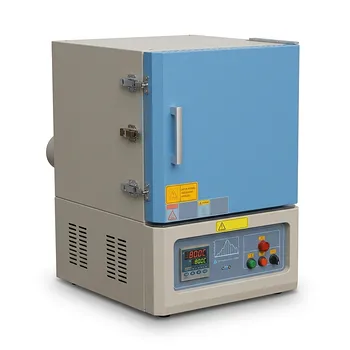
- 1800C Bench Top Muffle Furnace 18 Liters with Kanthal Super 1900 Heating Elements for High Purity Ceramic Sintering and Material Research
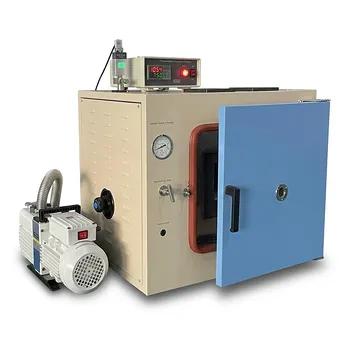
- Compact High Vacuum Box Furnace 1050C Max 6.2L Ceramic Chamber Stainless Steel Shell Programmable Temperature Controller for Material Science Research
People Also Ask
- Why is a benchtop muffle furnace essential for U3O8 micromaterials? Achieve precision stoichiometry and purity.
- What materials are typically used for heating elements in muffle furnaces? A Guide to Performance & Temperature Limits
- What role does a laboratory high-temperature muffle furnace play in the ash analysis phase of biomass co-firing research? [Guide]
- Why is a sintering furnace or Rapid Thermal Processing (RTP) equipment necessary for the formation of electrodes? Master Solar Ohmic Contacts.
- What function does argon serve in MOF melt-quenching? Prevent oxidation and ensure chemical integrity.

Tech Team · ThermUnits
Last updated on Jun 03, 2026