Why are precise heating systems critical in MoS2 PEALD? Ensure Atomic Precision and Thin Film Uniformity
Updated 3 months ago
Precise thermal management is the foundational requirement for successful MoS2 Plasma Enhanced Atomic Layer Deposition (PEALD). Heating systems for precursor source bubblers and transport pipelines ensure that molybdenum chemicals maintain a stable vapor pressure and remain in a gaseous state during delivery. Without this exact control, the process cannot achieve the self-limiting growth necessary for high-quality, uniform thin films.
Maintaining consistent temperatures across the delivery system prevents precursor condensation and ensures a steady chemical flow. This stability is critical for preserving the atomic-level precision and thickness control that defines the ALD process.
Optimizing Precursor Delivery
Stabilizing Vapor Pressure in the Bubbler
Liquid molybdenum precursors require specific, constant temperatures—often around 50°C—to generate sufficient vapor pressure for the process. If the temperature in the bubbler fluctuates, the amount of precursor carried into the reactor will vary, leading to inconsistent deposition rates.
Preventing Condensation in Transport Pipelines
Transport lines must be maintained at temperatures equal to or higher than the bubbler to prevent the precursor from returning to a liquid or solid state. This prevents "cold spots," which can cause physical blockages in the gas lines or "slugs" of liquid to enter the reaction chamber, ruining the film quality.
Ensuring Chemical Dosage Consistency
Atomic Layer Deposition relies on delivering a precise, repeatable "dose" of chemical vapor in every cycle. Precise heating ensures that each pulse contains the exact number of precursor molecules needed to saturate the substrate surface.
Maintaining the Integrity of the ALD Process
Preserving Self-Limiting Growth
The hallmark of ALD is its self-limiting nature, where only one atomic layer is deposited per cycle. If heating is imprecise and precursor delivery is unstable, the reaction may drift into a Chemical Vapor Deposition (CVD) regime, causing uncontrolled and non-uniform growth.
Achieving Atomic-Level Thickness Control
MoS2 is often utilized for its unique properties in mono- or few-layer forms, making thickness control paramount. Reliable thermal systems allow engineers to predict film thickness based solely on the number of cycles performed, ensuring high repeatability across different batches.
Improving Film Uniformity and Quality
Consistent precursor flow across the entire surface of the wafer is only possible if the vapor remains stable. Precise heating eliminates localized concentration gradients, resulting in a MoS2 film with uniform electronic and structural properties.
Common Pitfalls to Avoid
Precursor Thermal Degradation
While heat is necessary for vapor transport, excessive temperatures can cause the molybdenum precursor to decompose prematurely within the delivery lines. This "pre-reaction" introduces impurities into the MoS2 film and creates particle contamination within the system.
Inadequate Thermal Insulation
Even with high-quality heaters, "cold spots" can occur at valves, joints, or segments with poor insulation. These localized temperature drops act as traps for the precursor, leading to gradual clogging and frequent system maintenance.
How to Apply This to Your Project
Ensuring success in MoS2 PEALD requires a holistic approach to the thermal environment of your delivery system.
- If your primary focus is film uniformity: Implement high-precision PID controllers for both the bubbler and every segment of the transport lines to eliminate temperature gradients.
- If your primary focus is system reliability: Utilize integrated trace heating and thermal jackets that specifically cover valves and connection points to prevent precursor condensation and line blockages.
Mastering thermal precision transforms MoS2 deposition from a volatile experiment into a repeatable, high-yield manufacturing process.
Summary Table:
| Component | Primary Thermal Function | Impact of Precision Control |
|---|---|---|
| Precursor Bubbler | Maintains stable vapor pressure | Ensures consistent chemical dosage per pulse |
| Transport Pipelines | Prevents precursor condensation | Eliminates "cold spots" and gas line blockages |
| Gas Valves & Joints | Avoids localized cooling | Maintains steady chemical flow and process reliability |
| Thermal Insulation | Temperature uniformity | Prevents premature thermal degradation and impurities |
Elevate Your Thin Film Research with THERMUNITS Precision Solutions
Achieving atomic-level precision in MoS2 PEALD requires more than just high-quality chemicals—it demands a masterfully controlled thermal environment. THERMUNITS is a leading manufacturer of high-temperature laboratory equipment, providing the expertise and hardware necessary for advanced material science and industrial R&D.
From advanced CVD/PECVD systems and Tube Furnaces to specialized Atmosphere and Vacuum Furnaces, our equipment is engineered to eliminate temperature gradients and ensure repeatable, high-yield results. Whether you are optimizing 2D material growth or scaling industrial heat treatment, we offer the comprehensive solutions your laboratory needs.
Ready to optimize your thermal processing? Contact our technical experts today to discuss your specific requirements and discover how THERMUNITS can enhance your lab's efficiency and film quality.
References
- Julia Jagosz, Claudia Bock. Wafer‐Scale Demonstration of Polycrystalline MoS<sub>2</sub> Growth on 200 mm Glass and SiO<sub>2</sub>/Si Substrates by Plasma‐Enhanced Atomic Layer Deposition. DOI: 10.1002/admt.202400492
Mentioned Products
- Induction Heating System with Temperature Control for High Temperature Vacuum Sintering and Melting
- Gas Pre-Heating Tube Furnace for High Temperature Pyrolysis Reactors and Material Science Research
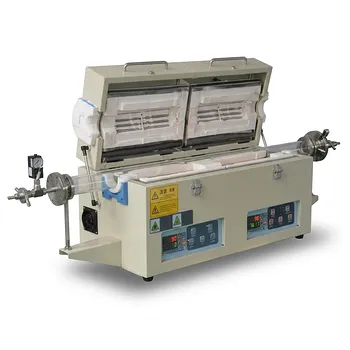
- Elongated Two Temperature Zone Pipe Furnace for Industrial Heat Treatment and Material Science Research
People Also Ask
- What is the role of a vacuum induction melting furnace combined with a water-cooled copper mold? Mastering RHEA Purity
- Explain the physical principle behind heat generation in a Vacuum Induction Melting (VIM) furnace: A Technical Guide
- Why is a VIM furnace essential for high-purity alloys? Achieve unmatched metal purity and structural integrity.
- Why is Vacuum Induction Melting preferred for manufacturing corrosion-resistant alloys? Ensure Ultra-High Purity
- How does Vacuum Induction Melting mitigate hydrogen embrittlement? Ensure Structural Integrity for Critical Alloys

Tech Team · ThermUnits
Last updated on Jun 02, 2026
Related Products
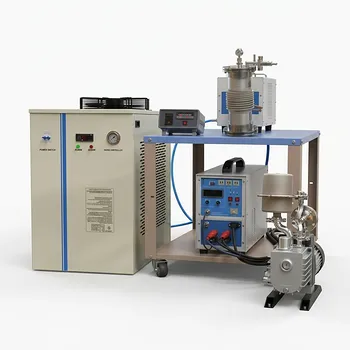
Induction Heating System with Temperature Control for High Temperature Vacuum Sintering and Melting
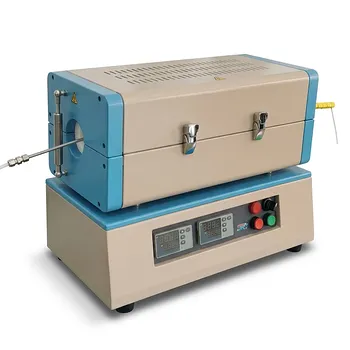
Gas Pre-Heating Tube Furnace for High Temperature Pyrolysis Reactors and Material Science Research