Why is a constant temperature heating stage used for BP-C? Optimize Material Purity and Exfoliation Performance
Updated 3 months ago
The constant temperature heating stage in BP-C post-treatment serves as a critical purification step designed to activate the cleaning properties of the solvent. Specifically, heating toluene to approximately 60°C allows it to dissolve and remove residual chemical transport agents and surface impurities that accumulate during the synthesis of Carbon-doped Black Phosphorus. This cleaning process is essential for preparing the material for advanced applications.
This controlled heating process is a technical prerequisite for downstream processing, as it ensures the material's chemical purity and surface integrity. Without this stage, residual contaminants can compromise the success of exfoliation and the long-term stability of the resulting electronic devices.
The Mechanics of Thermal Purification
Enhancing Solvent Solubility
Toluene at room temperature often lacks the kinetic energy required to strip away stubborn residues from the BP-C lattice. Heating the solvent to 60°C significantly increases its solubility, allowing it to more effectively dissolve and lift impurities from the crystal facets.
Targeted Removal of Transport Agents
The synthesis of bulk BP-C involves chemical transport agents that are necessary for crystal growth but detrimental to final material performance. The constant temperature stage ensures these agents are thoroughly purged, leaving behind a pristine surface for further processing.
Impact on Material Quality and Device Performance
Facilitating Successful Exfoliation
High-purity crystals are a requirement for efficient electrochemical exfoliation into few-layer flakes. If surface contaminants remain, they act as insulating or reactive barriers, leading to uneven exfoliation and poor flake quality.
Securing Long-term Electrical Stability
In high-performance electronics, surface impurities act as "traps" for charge carriers, leading to unpredictable behavior. Utilizing a heated cleaning stage ensures the final device maintains consistent electrical characteristics and improved operational longevity.
Understanding the Trade-offs
The Risk of Temperature Volatility
While 60°C is the optimal window for cleaning, maintaining a constant temperature is the primary challenge. Significant fluctuations can lead to uneven cleaning or, if the temperature rises too high, excessive solvent evaporation and potential surface degradation.
Balancing Efficacy and Solvent Safety
Increasing the temperature of toluene increases its cleaning power but also raises its volatility and flammability. Engineers must balance the technical need for a heated solvent with the safety requirements of the laboratory environment and the integrity of the BP-C crystals.
How to Apply This to Your Process
When managing the post-treatment of Carbon-doped Black Phosphorus, your strategy should align with your specific material requirements:
- If your primary focus is material purity: Ensure the toluene is held at a precise 60°C to maximize the removal of transport agents from the crystal surface.
- If your primary focus is electrochemical exfoliation: Prioritize the duration of the heating stage to ensure the surface is completely free of residues that could hinder the exfoliation process.
- If your primary focus is device reliability: Use this heating stage as a non-negotiable quality control step to eliminate surface "traps" and ensure stable electrical performance.
By meticulously controlling the thermal environment during solvent cleaning, you establish the chemical foundation necessary for high-performance BP-C electronic applications.
Summary Table:
| Process Parameter | Recommended Setting | Objective & Benefit |
|---|---|---|
| Cleaning Solvent | Toluene | Dissolves chemical transport agents and surface residues |
| Optimal Temperature | 60°C (Constant) | Maximizes solubility while maintaining material integrity |
| Primary Goal | Thermal Purification | Ensures pristine crystal facets for downstream processing |
| Downstream Impact | High-Yield Exfoliation | Removes insulating barriers for better flake quality |
| Device Outcome | Electrical Stability | Eliminates charge carrier traps for consistent performance |
Elevate Your Material Research with THERMUNITS Precision Heating
Achieving the precise thermal stability required for BP-C purification and advanced material synthesis demands professional-grade equipment. THERMUNITS is a leading manufacturer of high-temperature laboratory equipment for material science and industrial R&D. We offer a comprehensive range of thermal processing solutions, including Muffle, Vacuum, Atmosphere, Tube, Rotary, and Hot Press furnaces, CVD/PECVD systems, and specialized Vacuum Induction Melting (VIM) units.
Our equipment is designed to provide the rigorous temperature control necessary to eliminate impurities and ensure long-term material stability. Whether you are conducting fundamental research or scaling up industrial production, our expert team can provide tailored heat treatment solutions to meet your exact specifications.
Ready to optimize your thermal processes? Contact us today to consult with our engineers!
References
- Liyan Dong, Pan Wang. Highly Promising 2D/1D BP‐C/CNT Bionic Opto‐Olfactory Co‐Sensory Artificial Synapses for Multisensory Integration. DOI: 10.1002/advs.202403665
Mentioned Products
- Five Side Heating Muffle Furnace High Purity Alumina Fiber 27L Chamber 1200C High Temperature Thermal Processing System for Sintering Annealing and Materials Research
- High Temperature 1700C Benchtop Tube Furnace with 5 Inch Heating Zone High Purity Alumina Tube and Vacuum Sealing Flanges
- Three Temperature Zone Fast Heating Furnace 1500C Laboratory High Precision Thermal Processing System
People Also Ask
- What are the typical operating temperature ranges for standard and advanced muffle furnaces? Expert Temperature Guide.
- In what ways do muffle furnaces support aerospace and advanced materials testing? Essential High-Temp Validation Tools
- How does the heating mechanism of a muffle furnace differ from that of an open-flame furnace? Indirect vs Direct Heat
- What is the role of the muffle furnace in h-BN precursor preparation? Optimize Morphology and Chemical Purity.
- Why is the muffle design advantageous for the production of ceramics and glass? Ensure Purity and Structural Integrity

Tech Team · ThermUnits
Last updated on Jun 02, 2026
Related Products
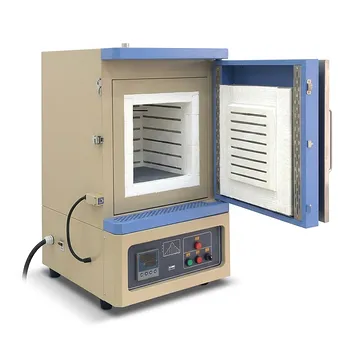
Five Side Heating Muffle Furnace High Purity Alumina Fiber 27L Chamber 1200C High Temperature Thermal Processing System for Sintering Annealing and Materials Research

High Temperature 1700C Benchtop Tube Furnace with 5 Inch Heating Zone High Purity Alumina Tube and Vacuum Sealing Flanges