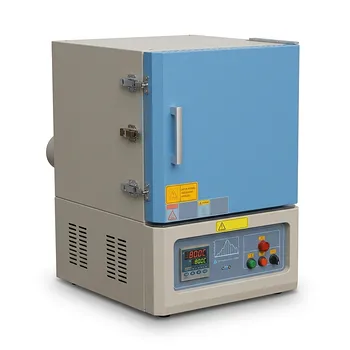
Why is a high-purity alumina ceramic boat preferred for copper oxide reduction? Superior Inertness & Thermal Stability.
Updated 5 months ago
High-purity alumina ceramic boats are the industry standard for copper oxide reduction because they provide a chemically inert environment that prevents sample contamination while withstanding the thermal stresses of the process. In the specific temperature range of 400°C to 600°C, alumina does not react with copper oxide or the resulting metallic copper, ensuring the chemical integrity of the produced copper powder. Its superior thermal shock resistance also prevents the container from cracking during necessary temperature fluctuations.
The central takeaway is that high-purity alumina (corundum) serves as a stable, non-reactive vessel that preserves the stoichiometric purity of the sample. By eliminating solid-phase reactions and resisting the corrosive effects of a reducing atmosphere, it ensures the final metallic product remains free from container-sourced impurities.
Ensuring Chemical Inertness in Reducing Atmospheres
Resistance to Solid-Phase Reactions
At the reduction temperatures of 400°C to 600°C, many materials might undergo unwanted solid-state reactions with copper oxide. High-purity alumina is exceptionally stable, meaning it will not bond with or leach elements into the copper oxide ($CuO$) or the metallic copper ($Cu$) product.
This inertness is critical because any interaction between the boat and the sample would alter the purity and phase composition of the resulting copper powder. By maintaining a clear boundary, the alumina boat ensures that the experimental data or industrial output reflects only the intended chemical transformation.
Stability Under Hydrogen Exposure
The hydrogen reduction process involves a highly reactive reducing atmosphere. Alumina (corundum) maintains its structural and chemical integrity even in strong reducing environments at temperatures far exceeding the 600°C required for copper.
Unlike lower-quality ceramics, high-purity alumina does not suffer from high-temperature volatilization. This prevents the introduction of vapor-phase impurities that could otherwise settle on the catalyst surface or the copper particles, compromising their crystal structure.
Superior Thermal and Physical Resilience
Management of Thermal Shock
The reduction process often involves moving samples between different temperature zones or cooling them rapidly. High-purity alumina exhibits excellent thermal shock resistance, allowing it to withstand these fluctuations without developing micro-cracks or catastrophic fractures.
This durability is essential for the longevity of the container and the safety of the furnace. A boat that cracks mid-process could spill the sample, leading to furnace contamination and the loss of the experimental batch.
Prevention of Sample Adhesion
During the transformation of copper oxide to metallic copper, some containers may cause the sample to "stick" to the surface. Alumina’s surface properties prevent adhesion, which is vital for the complete recovery of the material after the process is finished.
This non-stick characteristic ensures that the biochar or metallic powder produced can be easily removed. This is particularly important for quantitative analysis where every milligram of recovered material counts toward calculating reaction yields.
Understanding the Trade-offs
Cost vs. Purity
High-purity alumina (99%+) is significantly more expensive than standard ceramic or quartz alternatives. While it offers superior protection against contamination, the initial investment is higher, making it a choice primarily for high-precision laboratory work or high-end industrial production.
Mechanical Brittleness
Despite its high thermal stability, alumina is a ceramic and remains inherently brittle. It cannot withstand mechanical impacts or drops, meaning it must be handled with extreme care to avoid breakage, despite its ability to handle heat.
Porosity and Cleaning
Over multiple uses, even high-purity alumina can accumulate trace residues in its microscopic surface pores. If not cleaned using rigorous acid washing or high-temperature "baking out" procedures, cross-contamination between different batches can occur.
How to Apply This to Your Project
Making the Right Choice for Your Goal
- If your primary focus is maximum product purity: Utilize 99.7% high-purity alumina (corundum) to ensure zero leaching of silica or other impurity ions into the copper lattice.
- If your primary focus is high-throughput processing: Select alumina boats with specialized geometries that maximize the surface-area-to-volume ratio, allowing hydrogen gas to interact more efficiently with the copper oxide.
- If your primary focus is cost-sensitive prototyping: Consider high-quality quartz for lower temperature ranges (below 1000°C), though be aware that quartz may eventually devitrify or react more readily than alumina.
By selecting high-purity alumina, you are prioritizing the chemical "sanctity" of your sample, ensuring that the final copper powder is defined by your process rather than its container.
Summary Table:
| Feature | Performance Detail | User Benefit |
|---|---|---|
| Chemical Inertness | Zero reaction with CuO or Cu at 400°C-600°C | Ensures 100% stoichiometric purity of copper powder |
| Atmosphere Stability | Resists high-temperature hydrogen reduction | Prevents vapor-phase contamination of the sample |
| Thermal Resilience | High thermal shock resistance | Prevents boat cracking during rapid temperature cycles |
| Surface Properties | Low adhesion/Non-stick | Facilitates easy recovery of metallic powder and biochar |
| Purity Grade | Typically 99.7% Al2O3 (Corundum) | Eliminates leaching of silica or other impurity ions |
Maximize Your Material Purity with THERMUNITS
Precise chemical reduction requires more than just the right container; it demands a perfectly controlled thermal environment. THERMUNITS is a leading manufacturer of high-temperature laboratory equipment specifically designed for material science and industrial R&D.
Whether you are performing hydrogen reduction, sintering, or advanced CVD/PECVD processes, our comprehensive range of thermal solutions—including Muffle, Vacuum, Atmosphere, Tube, and Rotary Furnaces—ensures the thermal uniformity and atmospheric control your project needs.
Ready to upgrade your laboratory’s heat treatment capabilities? Contact our expert engineering team today to discuss how our custom furnace solutions and high-purity thermal elements can optimize your production yields and experimental accuracy.
References
- Shiwen Li, Jue Liu. The Preparation of an Ultrafine Copper Powder by the Hydrogen Reduction of an Ultrafine Copper Oxide Powder and Reduction Kinetics. DOI: 10.3390/ma17071613
Mentioned Products
People Also Ask
- Why is a benchtop muffle furnace essential for U3O8 micromaterials? Achieve precision stoichiometry and purity.
- What materials are typically used for heating elements in muffle furnaces? A Guide to Performance & Temperature Limits
- What role does a laboratory high-temperature muffle furnace play in the ash analysis phase of biomass co-firing research? [Guide]
- Why is a sintering furnace or Rapid Thermal Processing (RTP) equipment necessary for the formation of electrodes? Master Solar Ohmic Contacts.
- What function does argon serve in MOF melt-quenching? Prevent oxidation and ensure chemical integrity.

Tech Team · ThermUnits
Last updated on Apr 14, 2026