Why is a Pt/Au 5% crucible required instead of ceramic for lead glass melts? Key to High-Purity Glass Processing.
Updated 3 months ago
A platinum-gold (Pt/Au 5%) alloy crucible is essential because lead oxide (PbO) is chemically aggressive at high temperatures. Standard ceramic crucibles react with lead melts, leading to crucible erosion and the introduction of impurities that ruin the glass's optical transparency. The Pt/Au alloy provides the necessary chemical inertness and non-wetting properties to ensure the glass maintains its precise chemical composition.
Core Takeaway: To produce high-purity lead glass, you must use a Pt/Au 5% crucible because it resists the corrosive "fluxing" action of lead oxide. This prevents container material from dissolving into the melt, preserving the glass's intended stoichiometry and optical clarity.
The Corrosive Nature of Lead Oxide Melts
Chemical Attack on Ceramic Materials
Lead oxide acts as a powerful flux that lowers the melting point of other oxides. In a standard ceramic crucible (such as alumina or silica), the lead melt will chemically attack the crucible walls, literally "eating" into the material.
Introduction of Impurities
As the ceramic crucible erodes, elements like aluminum, silicon, or iron from the crucible dissolve into the glass melt. This contamination alters the refractive index and compromises the high optical transparency required for research-grade lead glasses.
Loss of Stoichiometric Precision
The primary goal in glass synthesis is to maintain a specific ratio of ingredients (stoichiometry). If the crucible material reacts with the melt, the final composition will deviate from the intended formula, rendering the experimental results inaccurate.
Why Pt/Au 5% is the Technical Standard
Superior Chemical Inertness
Platinum is noble and does not react with most oxides, even at temperatures exceeding 1000°C. By alloying it with 5% gold, the crucible gains even higher resistance to chemical attack from aggressive molten salts and lead-containing compositions.
The Advantage of Non-Wetting Characteristics
The 5% gold content is critical because it provides "non-wetting" properties. This means the molten glass does not "stick" to the crucible walls, allowing for a cleaner pour and ensuring that virtually the entire melt can be recovered without leaving residues behind.
Prevention of Crucible Peeling
Standard platinum can sometimes experience surface degradation or "peeling" when exposed to highly corrosive environments. The Pt/Au 5% alloy is more stable, ensuring that no metallic flakes or oxide particles contaminate the glass sample during the melting process.
Understanding the Trade-offs
Temperature Limitations Compared to Pt/Rh
While Pt/Au 5% is excellent for chemical resistance, it has a lower melting point than Platinum-Rhodium (Pt/Rh) alloys. For processes exceeding 1500°C, Pt/Rh may be necessary for structural integrity, though it lacks the superior non-wetting properties of gold alloys.
Cost and Handling Sensitivity
Platinum-gold crucibles are a significant capital investment and are softer than ceramic or Rhodium-alloyed versions. They require careful handling and specific cleaning protocols (such as acid leaching) to prevent cross-contamination between different glass batches.
Risk of Alloying with Reduced Metals
A critical pitfall occurs if the glass melt contains metallic lead or is processed in a reducing atmosphere. In these conditions, metallic lead can alloy with the platinum itself, causing the crucible to "melt through" or become permanently damaged.
Making the Right Choice for Your Goal
To ensure the success of your glass synthesis, select your crucible material based on the specific requirements of your melt chemistry:
- If your primary focus is high-purity lead-borate or optical glass: Use a Pt/Au 5% crucible to prevent contamination and ensure easy pouring due to its non-wetting surface.
- If your primary focus is extreme high-temperature stability (above 1500°C): Consider a Platinum-Rhodium (Pt/Rh 10%) crucible, as it offers higher thermal resistance than Pt/Au.
- If your primary focus is budget-constrained bulk melting of non-reactive glasses: Standard ceramic crucibles may suffice, provided the glass composition does not contain aggressive fluxes like lead or high concentrations of alkali.
Selecting the correct platinum alloy is the single most important factor in ensuring the chemical purity and optical performance of advanced lead-containing glass.
Summary Table:
| Feature | Pt/Au 5% Alloy Crucible | Standard Ceramic Crucible |
|---|---|---|
| Lead Oxide Resistance | High (Chemically Inert) | Low (Suffers Chemical Attack) |
| Melt Purity | Maintains Stoichiometry | Risk of Si/Al/Fe Contamination |
| Surface Interaction | Non-wetting (Clean Pour) | Wetting (Glass sticks to walls) |
| Optical Integrity | Preserves Clarity | Distorts Refractive Index |
| Temperature Limit | Up to 1400°C - 1500°C | Varies (Up to 1800°C) |
| Best Use Case | Optical & Research Lead Glass | Non-reactive bulk melting |
Precision Thermal Solutions for Advanced Material Science
Are you looking to eliminate contamination and achieve perfect stoichiometry in your research? THERMUNITS is a leading manufacturer of high-temperature laboratory equipment tailored for industrial R&D and material science.
We offer a comprehensive range of thermal processing solutions, including:
- Furnaces: Muffle, Vacuum, Atmosphere, Tube, Rotary, and Hot Press furnaces.
- Systems: CVD/PECVD systems and Vacuum Induction Melting (VIM) furnaces.
- Specialty Equipment: Dental Furnaces, electric rotary kilns, and premium Thermal Elements.
Whether you are melting aggressive lead glasses or developing new alloys, our equipment provides the stability and control your lab demands. Contact THERMUNITS today to discuss your heat treatment requirements and see how our expertise can drive your results.
References
- Arun Krishnamurthy, Scott Kroeker. Composition‐dependent structural role of lead in aluminoborate and galloborate glasses: A solid‐state NMR study. DOI: 10.1111/jace.19694
Mentioned Products
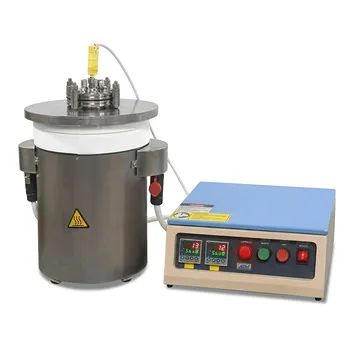
- 600°C Vertical Crucible Furnace with SS316 Alloy Reactor and 6 Port Vacuum Flange
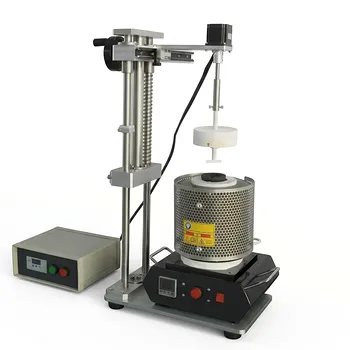
- 1100C Crucible Melting Furnace with Stirring Function for Glovebox and Air Sensitive Alloy Research
People Also Ask
- How does a high vacuum sintering furnace at 600 Celsius affect the microstructure of Al-TiC composites? Expert Analysis
- How should the choice between a Quartz crucible and an Alumina crucible be made for La2O2S? Optimize Material Purity
- Why use ceramic crucibles for coal nano-hybrid heat treatment? Ensure Purity and Thermal Stability.
- What role does a vacuum tube furnace play in palladium membrane treatment? Achieve 600°C Stability & Prevent Brittle Phases
- Why is a high-temperature furnace with precise temperature control necessary for Ag8SiS6 alloy synthesis? Ensure Safety.

Tech Team · ThermUnits
Last updated on Jun 02, 2026