Why is high-purity argon used in ammonia-coal co-firing? Achieve Precision in Thermal Research
Updated 3 months ago
High-purity argon serves as a critical stabilization agent in ammonia-coal co-firing. It acts as a non-reactive carrier to ensure uniform ammonia distribution while simultaneously functioning as a dilution gas to regulate flame kinetics and heat transfer. This dual role is essential for accurately measuring how ammonia influences the reduction of unburned carbon without the interference of localized overheating or fuel deposition.
Argon is utilized because its chemically inert nature and physical properties allow for precise control over the combustion environment. By decoupling the chemical reactions of the fuel from the physical transport and heat distribution, researchers can isolate and quantify the specific impact of ammonia on coal combustion efficiency.
The Functional Role of Argon as a Carrier Medium
Ensuring Uniform Ammonia Distribution
High-purity argon acts as the primary vehicle for ammonia, ensuring the fuel reaches the furnace chamber in a consistent and predictable concentration. Without an effective carrier, ammonia may not permeate the coal dust evenly, leading to stratified combustion zones that skew experimental results.
Maintaining Fluid Dynamic Stability
As a "driving force," argon flow rates can be precisely adjusted to maintain a stable fluid dynamic environment. This stability is vital for ensuring that the movement of gases within the furnace remains laminar or predictably turbulent, preventing chaotic fluctuations during the thermal treatment.
Argon as a Dilution Agent for Kinetic Control
Regulating Flame Behavior and Heat Transfer
As a dilution gas, argon modifies the concentration of reactants to control flame kinetic behavior. This slows down the reaction rate to a measurable level, allowing for a detailed observation of how ammonia interacts with coal particles during the ignition and burnout phases.
Controlling Mass Transfer and Preventing Deposition
Argon regulates the efficiency of mass transfer, which prevents the unwanted deposition of fuel on the furnace walls. By managing the thermal gradients, it ensures that heat is distributed uniformly, thereby preventing local overheating that could damage equipment or cause premature fuel decomposition.
The Necessity of High-Purity Inertness
Preventing Unwanted Chemical Interference
The use of high-purity (99.999%) argon ensures that no trace oxygen or moisture enters the reaction zone. This is critical because even minor impurities can cause oxidation or unintended side reactions that would obscure the true impact of ammonia on the reduction of unburned carbon.
Protecting the Experimental Environment
Beyond the fuel chemistry, argon provides an inert protective atmosphere that prevents the oxidation of furnace components or sampling probes at high temperatures. This preservation of the internal microstructure of the testing environment ensures that all data collected is a result of the fuel interaction, not hardware degradation.
Understanding the Trade-offs
Cost versus Precision
High-purity argon is significantly more expensive than alternative gases like nitrogen. However, its absolute inertness is often preferred in research settings where the chemical reactivity of nitrogen (potential NOx formation) could interfere with the nitrogen-based chemistry of ammonia.
Specific Heat and Cooling Rates
Argon has a different specific heat capacity compared to other gases, which affects how quickly the system responds to temperature changes. While excellent for stability, it requires precise calibration of heating elements to ensure the furnace reaches the target temperature without significant lag or overshoot.
How to Apply This to Your Research Goal
Selecting the Right Approach
When designing thermal treatments for co-firing or high-temperature material studies, your choice of gas flow should align with your specific analytical requirements.
- If your primary focus is precise kinetic modeling: Use high-purity argon at strictly controlled flow rates to isolate chemical reaction rates from transport phenomena.
- If your primary focus is preventing material oxidation: Ensure the argon flow is sufficient to maintain a positive internal pressure, effectively excluding atmospheric oxygen and moisture.
- If your primary focus is evaluating fuel deposition: Focus on the dilution ratio of argon to fuel to manage the "stay time" and impingement of particles on the furnace surfaces.
By leveraging argon’s unique properties as both a transport and a buffering medium, you can achieve the high-fidelity data required to optimize ammonia-coal co-firing systems.
Summary Table:
| Role of Argon | Key Function | Benefit to Thermal Treatment |
|---|---|---|
| Carrier Medium | Ensures uniform ammonia distribution | Prevents fuel stratification and skews in data |
| Dilution Agent | Regulates flame kinetics and heat transfer | Controls reaction rates for detailed burnout observation |
| Inert Buffer | Prevents oxidation and chemical interference | Protects furnace components and ensures data purity |
| Stability Agent | Maintains laminar/stable fluid dynamics | Eliminates chaotic fluctuations during combustion |
Optimize Your Thermal Research with THERMUNITS
At THERMUNITS, we understand that high-fidelity data in material science requires absolute control over the thermal environment. As a leading manufacturer of high-temperature laboratory equipment, we provide specialized solutions tailored for industrial R&D and advanced research.
Our comprehensive range of thermal processing equipment includes:
- Atmosphere and Vacuum Furnaces for precise inert gas control.
- Tube and Rotary Furnaces for uniform material processing.
- CVD/PECVD Systems for advanced chemical vapor deposition.
- Muffle, Hot Press, and Vacuum Induction Melting (VIM) Furnaces.
- Dental Furnaces, Electric Rotary Kilns, and Thermal Elements.
Whether you are investigating ammonia-coal co-firing or developing next-generation materials, THERMUNITS offers the stability and precision your lab demands.
Ready to elevate your lab’s capabilities? Contact us today for a custom thermal solution!
References
- Machodi Mathaba. Effect of combustion temperature on the unburnt carbon during ammonia co-firing with coal combustion. DOI: 10.1038/s41598-024-73553-y
Mentioned Products
- High Temperature Bottom Loading Vertical Furnace 1700C Dual Stage Sample Processing System 18L Large Capacity Thermal Treatment Equipment
- 1200C Five Side Heating Muffle Furnace with Sliding Door 125L Volume High Temperature Heat Treatment System for Large Scale Sintering and Annealing
- Five Side Heating Muffle Furnace High Purity Alumina Fiber 27L Chamber 1200C High Temperature Thermal Processing System for Sintering Annealing and Materials Research
- High Temperature 1500C Benchtop Muffle Furnace 3.6L Alumina Fiber Chamber Programmable Controller Sintering Annealing Carbonization Thermal Processing System
- Triple Tube Compact Hybrid Muffle Furnace 1000C High Vacuum Thermal Processing System
People Also Ask
- What are the advantages of using a Bottom-Loading High-Temperature Furnace in Barium Titanate Fast Firing? Superior Microstructure
- What role does a high-temperature vertical tube furnace play in simulating high-carbon ferromanganese slag formation?
- What functions does a vertical high-temperature tube furnace perform? Master Industrial Sintering & R&D Simulation
- How does the continuous flow of high-purity argon gas protect materials? Enhance Your Furnace Process Integrity
- Why 1700°C Furnace is Vital for VSCG vs. CVD? Achieve SiC Covalent Bonding & High Thermal Conduction

Tech Team · ThermUnits
Last updated on Jun 03, 2026
Related Products
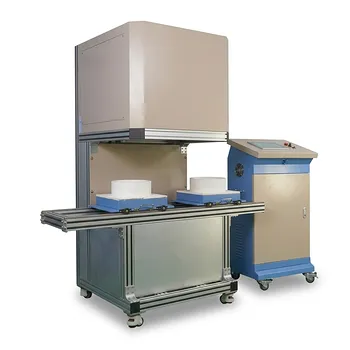
High Temperature Bottom Loading Vertical Furnace 1700C Dual Stage Sample Processing System 18L Large Capacity Thermal Treatment Equipment
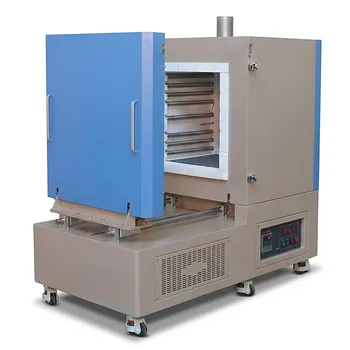
1200C Five Side Heating Muffle Furnace with Sliding Door 125L Volume High Temperature Heat Treatment System for Large Scale Sintering and Annealing
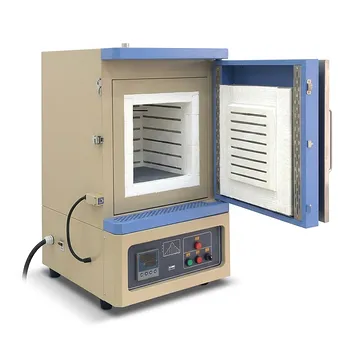
Five Side Heating Muffle Furnace High Purity Alumina Fiber 27L Chamber 1200C High Temperature Thermal Processing System for Sintering Annealing and Materials Research
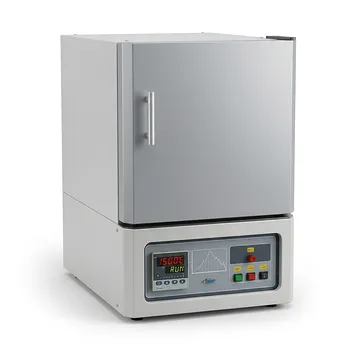
High Temperature 1500C Benchtop Muffle Furnace 3.6L Alumina Fiber Chamber Programmable Controller Sintering Annealing Carbonization Thermal Processing System
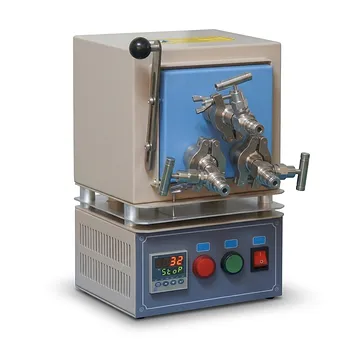
Triple Tube Compact Hybrid Muffle Furnace 1000C High Vacuum Thermal Processing System
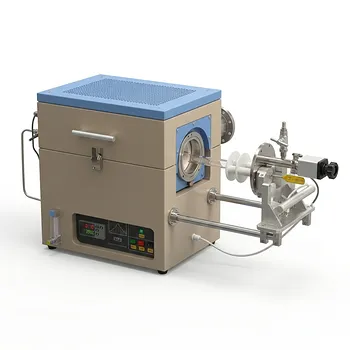
Compact Atmosphere Controlled Rapid Thermal Processing RTP Furnace with 4 Inch ID Quartz Tube 1100C