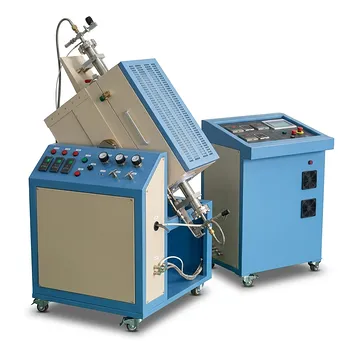
Why 1700°C Furnace is Vital for VSCG vs. CVD? Achieve SiC Covalent Bonding & High Thermal Conduction
Updated 3 months ago
Extreme thermal energy is the catalyst required to transform interfacial contact into permanent chemical bonding. In the preparation of Orthogonal 3D Hybrid Carbon Networks (VSCG), a 1700 °C ultra-high temperature tube furnace is necessary because it provides the activation energy to convert silica at the material interfaces into silicon carbide (SiC) nano-nodes. This chemical transition creates covalent bonds that replace simple physical stacking, which is a structural limitation common in standard Chemical Vapor Deposition (CVD) processes.
The core necessity of 1700 °C annealing lies in bridging the gap between discrete carbon components. By engineering SiC nano-nodes at the junctions, the system minimizes phonon scattering and drastically improves longitudinal thermal conduction.
The Limitation of Standard CVD Processes
Physical Stacking vs. Chemical Integration
Standard CVD processes typically operate at significantly lower temperatures, often between 600 °C and 1000 °C. At these temperatures, vertical carbon nanotubes and horizontal graphene films merely "sit" on one another, held together by weak van der Waals forces or simple physical contact.
The Problem of Interfacial Resistance
Because the components are only physically stacked, the interfaces act as significant barriers to heat and electron flow. This results in high interfacial thermal resistance, which prevents the composite material from achieving its theoretical performance potential.
The Role of 1700 °C in Phase Transformation
Inducing the Silica-to-SiC Conversion
The 1700 °C threshold is specifically required to trigger the chemical reaction involving silica at the interfaces. This extreme heat facilitates the in-situ generation of silicon carbide (SiC), a robust ceramic material that acts as a bridge between the carbon structures.
Formation of Covalent Nano-nodes
Unlike the results of standard annealing (which might only repair minor defects or remove impurities), 1700 °C energy levels forge covalent bonds. These SiC nano-nodes act as structural "welds," welding the vertical and horizontal carbon elements into a singular, unified network.
Impact on Thermal Conduction Efficiency
Reducing Phonon Scattering
Heat in carbon materials is primarily carried by phonons (lattice vibrations). In physically stacked networks, phonons scatter at every interface, losing energy and reducing conductivity; the SiC nano-nodes provide a continuous medium that allows phonons to pass through more efficiently.
Optimizing Longitudinal Performance
The primary goal of the VSCG structure is longitudinal thermal conduction. By replacing weak interfaces with covalent SiC junctions, the 1700 °C process ensures that heat moves vertically through the 3D network with minimal resistance, a feat unattainable via lower-temperature treatments.
Understanding the Trade-offs
Energy Intensity and Equipment Requirements
Operating at 1700 °C requires specialized ultra-high temperature tube furnaces with reinforced heating elements and insulation. The energy consumption is significantly higher than standard 550 °C or 900 °C processes used for simple crystallization or impurity removal.
Material Stability and Atmosphere Control
At such extreme temperatures, the risk of oxidative degradation is high. Precise control of an inert atmosphere (such as Argon or Nitrogen) is mandatory to prevent the carbon network from reacting with oxygen and burning away before the SiC nodes can form.
How to Apply These Insights to Your Material Goals
The necessity of ultra-high temperature annealing depends entirely on the desired mechanical and thermal properties of your final composite.
- If your primary focus is maximizng thermal conductivity: You must utilize 1700 °C annealing to create SiC nano-nodes and bridge the interfacial gaps that cause phonon scattering.
- If your primary focus is surface cleaning or sizing removal: Lower temperatures (approx. 550 °C) in a standard tube furnace are sufficient to remove impurities without the need for extreme thermal energy.
- If your primary focus is crystalline phase transformation (e.g., CuGaO2): Moderate high temperatures between 850 °C and 900 °C are usually adequate to provide the thermal energy for solid-state reactions.
True structural integration in 3D carbon networks is a product of chemical bonding that only extreme thermal environments can initiate.
Summary Table:
| Feature | Standard CVD Process | 1700°C In-situ Annealing (VSCG) |
|---|---|---|
| Temperature Range | 600°C - 1000°C | 1700°C+ |
| Bonding Type | Physical (Van der Waals) | Chemical (Covalent SiC Nodes) |
| Structural State | Discrete Physical Stacking | Unified 3D Network (Welded) |
| Thermal Interface | High Interfacial Resistance | Minimized Phonon Scattering |
| Resulting Property | Limited Thermal Conductivity | Superior Longitudinal Conduction |
Elevate Your Advanced Material Research with THERMUNITS
To achieve the extreme 1700°C thermal energy required for SiC nano-node synthesis and structural integration in VSCG, you need precision-engineered equipment. THERMUNITS is a leading manufacturer of high-temperature laboratory equipment dedicated to material science and industrial R&D.
We offer a comprehensive range of thermal solutions, including:
- Ultra-High Temp Tube Furnaces for precise 1700°C annealing
- CVD/PECVD Systems & Dental Furnaces
- Vacuum, Atmosphere, and Muffle Furnaces
- Rotary Kilns, Hot Press, & Vacuum Induction Melting (VIM) Furnaces
Don't let interfacial resistance limit your material's potential. Contact us today to find the perfect furnace for your lab and leverage our expertise in high-temperature heat treatment!
References
- Huitao Yu, Wei Feng. Regulatable Orthotropic 3D Hybrid Continuous Carbon Networks for Efficient Bi-Directional Thermal Conduction. DOI: 10.1007/s40820-024-01426-0
Mentioned Products
- High Temperature 1700C Tube Furnace with High Vacuum Turbomolecular Pump System and Multi Channel Mass Flow Controller Gas Mixer
- 1700C High Temperature Alumina Tube Furnace with 18 Inch Heated Zone and Vacuum Sealing Flanges
- High Temperature 1700C Vertical Tube Furnace for Powder Spherification and Material Sintering
- High Temperature 1700C Benchtop Tube Furnace with 5 Inch Heating Zone High Purity Alumina Tube and Vacuum Sealing Flanges
- High Temperature Three Zone Tube Furnace 1700C with Alumina Tube and Water Cooled Flanges
People Also Ask
- What is the role of a high-temperature tube furnace in the calcination process of ZnO/In2O3 nanocomposites?
- What impact does the heating rate of a tube furnace have on biochar microstructure? Optimize Your Material R&D.
- What is the function of a high-temperature tube furnace in the synthesis of g-C3N4? Optimize Thermal Polycondensation
- What is the critical function of a high-temperature tube furnace in Si/Al2O3/RGO synthesis? Key to Battery Innovation
- What are the primary functions of a high-temperature tube furnace for Inconel 718? Master Debinding & Pre-sintering.

Tech Team · ThermUnits
Last updated on Jun 02, 2026
Related Products

High Temperature 1700C Tube Furnace with High Vacuum Turbomolecular Pump System and Multi Channel Mass Flow Controller Gas Mixer
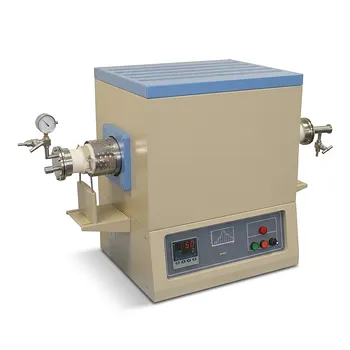
1700C High Temperature Alumina Tube Furnace with 18 Inch Heated Zone and Vacuum Sealing Flanges

High Temperature 1700C Vertical Tube Furnace for Powder Spherification and Material Sintering

High Temperature 1700C Benchtop Tube Furnace with 5 Inch Heating Zone High Purity Alumina Tube and Vacuum Sealing Flanges
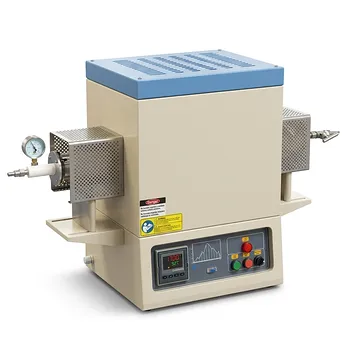
High Temperature Three Zone Tube Furnace 1700C with Alumina Tube and Water Cooled Flanges
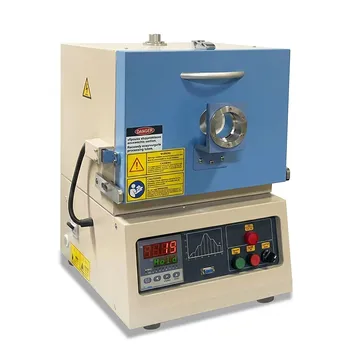
High Temperature Hybrid Muffle and Tube Furnace 1700C Programmable PID Controlled Box System with Vacuum Flange and Alumina Processing Tube
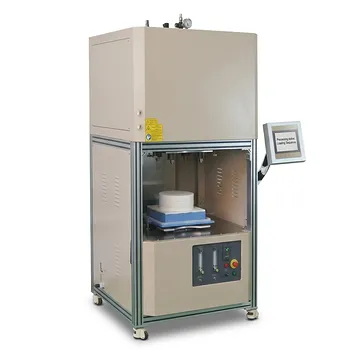
High Temperature Vertical Atmosphere Controlled Furnace with Automatic Bottom Loading and 1700°C Capacity for Advanced Material Research
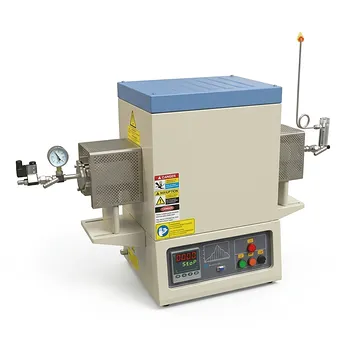
1700C Hydrogen Gas Tube Furnace with 60mm Alumina Process Tube and Integrated Hydrogen Safety Detector

Vertical 1700C Vacuum and Atmosphere Tube Furnace with 80mm Alumina Tube
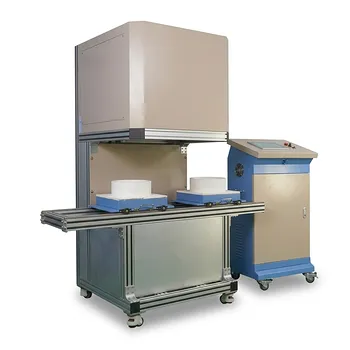
High Temperature Bottom Loading Vertical Furnace 1700C Dual Stage Sample Processing System 18L Large Capacity Thermal Treatment Equipment
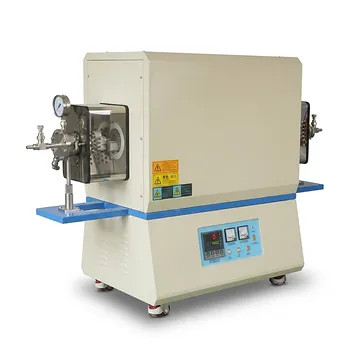
High Temperature 1800C Atmosphere Tube Furnace for CVD Research and Vacuum Sintering Precision Heat Treatment

1800C High Temperature Compact Vacuum Tube Furnace with 60mm OD Alumina Tube and Kanthal MoSi2 Heating Elements
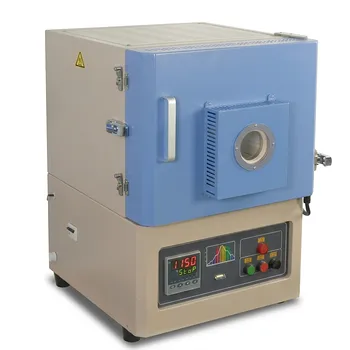
High Temperature Benchtop Muffle Furnace with Quartz Observation Window for Thermal Imaging and Material Analysis
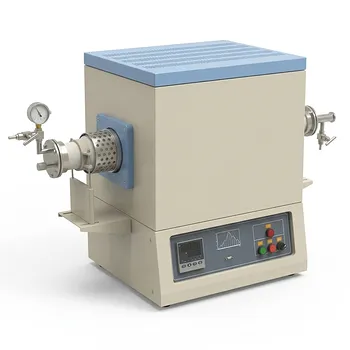
1750°C High Temperature Benchtop Vacuum Atmosphere Tube Furnace with Kanthal Super 1800 Heating Elements and 60mm Alumina Processing Tube

High Temperature Tube Furnace 1500C with Sliding Flanges and 50mm OD for Rapid Thermal Processing Fast Heating and Cooling
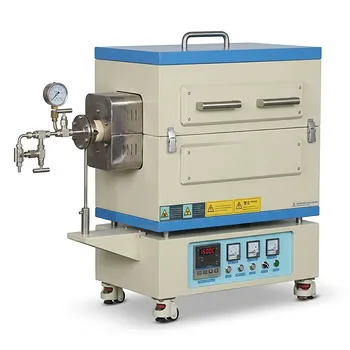
High Temperature Split Tube Furnace 1500C for Material Research Vacuum and Atmosphere Thermal Processing
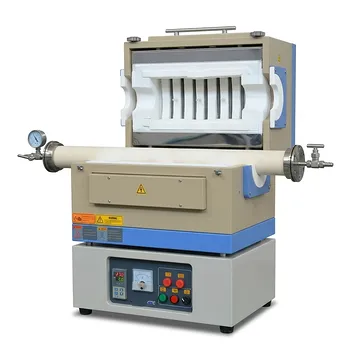
High Temperature 1600C Split Tube Furnace Vacuum Flanges Valves Optional 60mm 80mm Alumina Tube

High Temperature Automated 5 Inch Tube Furnace for Autonomous Material Research and Advanced Laboratory R&D
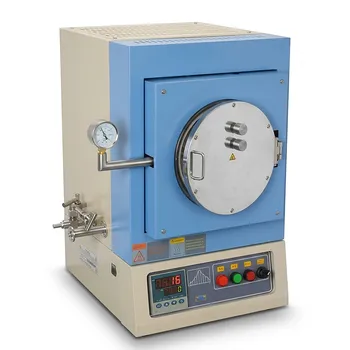
1100°C High Temperature Quartz Chamber Furnace 8 Inch OD with 7.6 Liter Capacity and Vacuum Atmosphere Capability