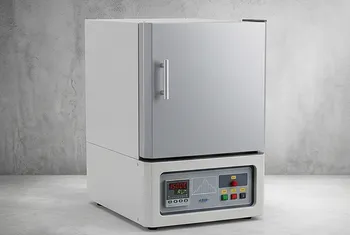
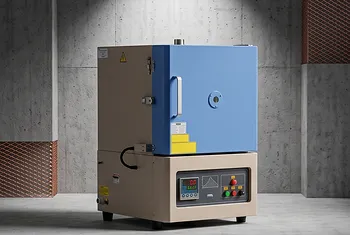
The 600-Degree Threshold: The Delicate Physics of Retaining Chemical Truth
May 10, 2026
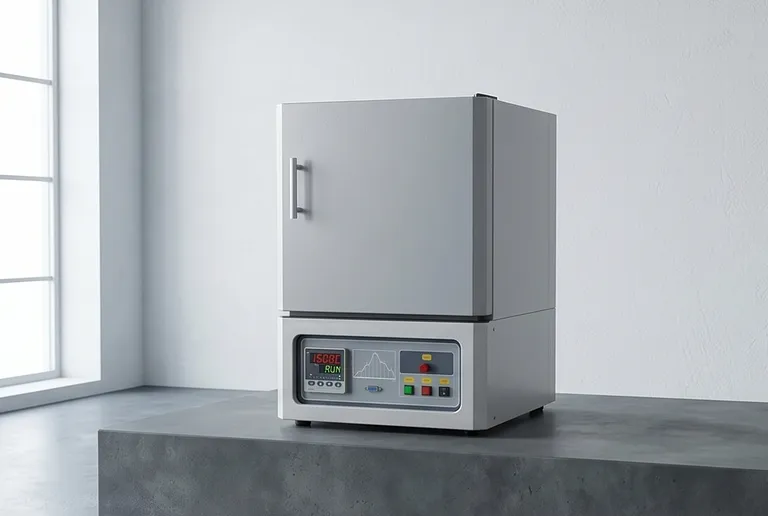
The Invisible Loss
In material science, ash is often treated as the end of a story. But for researchers studying biomass like fungus chaff, ash is the map. It holds the chemical signature of how a material will behave in a high-temperature boiler or a gasifier.
The problem is that the map is fragile.
If you heat the sample too fast or too high, you aren't just cleaning away the organic matter; you are erasing the data. Volatile minerals—alkali metals and halogens—simply vanish into the atmosphere. You are left with a white powder that looks correct but is chemically hollow.
Precision as a System
Preparation of "original ash" is a battle against entropy. It requires a specific, systematic approach to thermal processing that prioritizes chemical integrity over laboratory throughput.
Success depends on three non-negotiable variables:
- The Thermal Ceiling: Exactly 600 °C.
- The Kinetic Pace: A steady 6 °C/min ramp.
- The Atmospheric Exchange: Controlled, stage-wise oxygenation.
Why 600 °C is the Magic Number
In most industrial processes, heat is a hammer. We use a lot of it to get the job done quickly. However, in fungus chaff analysis, 600 °C is the surgical limit.
Going to 750 °C or 950 °C will certainly remove carbon faster. But it also risks "sintering"—the fusing of ash particles—and the vaporization of potassium and sodium. These elements are the primary drivers of slagging and fouling. Once they are gone, your study of boiler behavior becomes a work of fiction.
The goal is complete oxidation without mineral migration. 600 °C provides enough energy to break organic bonds while leaving the inorganic crystal structure intact.
The Rhythm of the Ramp
Speed is the enemy of uniformity. If the temperature rises too quickly between 200 °C and 550 °C, a phenomenon called "shielding" occurs.
The surface of the biomass combusts rapidly, creating a charred shell. This shell traps unburnt carbon inside. You end up with a "speckled" ash that is chemically inconsistent. By maintaining a strict 6 °C/min ramp, you allow the heat to permeate the material evenly, ensuring the oxidation front moves through the sample at a manageable pace.
Breathing: The Manual Intervention
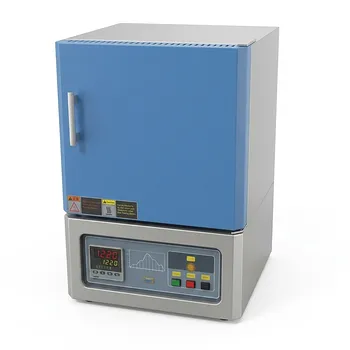
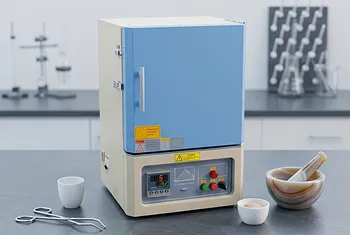
A muffle furnace is often seen as a "set it and forget it" tool. For original ash preparation, it must be treated as a living system.
| Parameter | Setting | The "Why" |
|---|---|---|
| Peak Temperature | 600 °C | Preserves alkali metals and prevent sintering. |
| Heating Rate | 6 °C/min | Prevents carbon shielding; ensures uniform decomposition. |
| Ventilation | Stage-wise | Discharges VOCs and ensures a fresh oxygen supply. |
| Atmosphere | Aerobic | Necessary for total mineral transformation. |
| Residence Time | Up to 6 Hours | Ensures the highest possible crystallinity for research. |
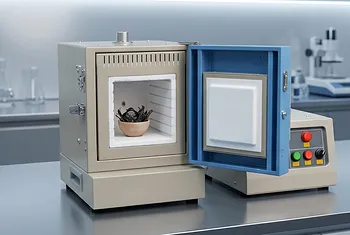
During the heating process, the furnace door must be opened in defined stages. This serves two purposes:
- Discharge: It clears out Volatile Organic Compounds (VOCs) that could trigger secondary reactions.
- Oxygenation: It ensures the environment remains strictly aerobic. Without a steady supply of oxygen, the biomass won't transform into the fine, inorganic powder required for analysis.
The Engineer’s Trade-off
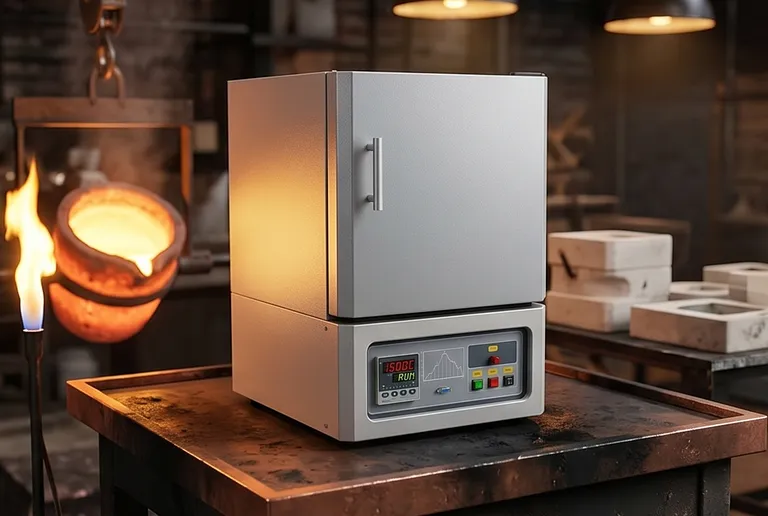
There is a psychological tension in the lab between throughput and truth.
The protocol for fungus chaff ashing can take up to six hours. It is tempting to shorten the window or raise the heat. But in high-temperature R&D, the cost of a "fast" result is often the cost of an "incorrect" result.
Reliable research requires equipment that can hold these precise margins without deviation. Whether you are studying slagging behaviors or mineral extraction, the stability of your furnace is the only thing standing between meaningful data and wasted samples.
Engineering the Standard of Heat
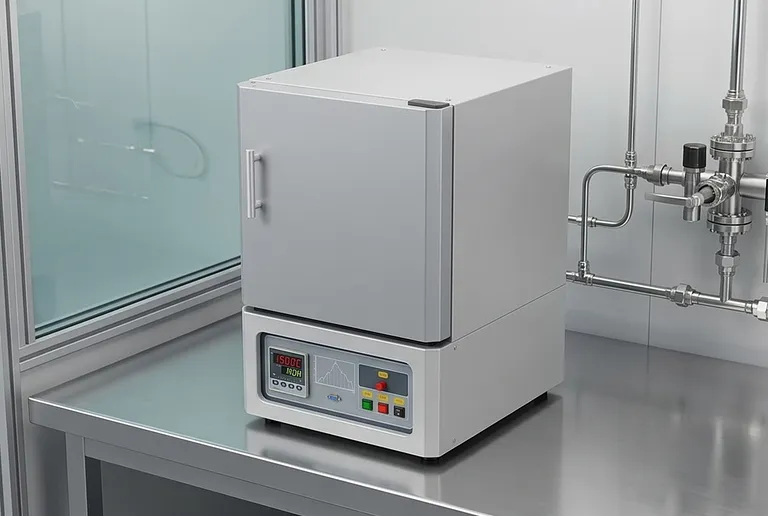
At THERMUNITS, we build tools for the scientists who refuse to compromise on these margins. We understand that a muffle furnace isn't just a heating box—it is a vessel for chemical precision.
Our thermal solutions are designed for the rigors of material science R&D:
- High-Precision Muffle & Atmosphere Furnaces for delicate ashing.
- Rotary & Tube Furnaces for continuous processing.
- Vacuum Induction Melting (VIM) & CVD Systems for advanced materials.
When your research depends on the integrity of the trace element, you need a system that respects the physics of the process.
To find the right thermal configuration for your laboratory, Contact Our Experts.
Quick Links
Suggested Products
1200C Muffle Furnace 12x8x5 7.2L Heating Chamber with Quartz Observation Window and Vent Port High Temperature 1200C Muffle Furnace 27L Volume 12x12x12 Chamber with Programmable PID Controller for Laboratory Material Science 1750C Compact Muffle Furnace 1.7L Ultra High Temperature Laboratory Sintering System for Advanced Ceramics and Material Science Research 1200C High Temperature 125L Muffle Furnace 5 Side Heating for Large Batch Sintering with Optional Alloy Debinding Chamber Ultra High Temperature Bench Top Muffle Furnace 1750C Sintering System with Kanthal Super Heating Elements and Precision Digital ControlFurther Reading
The Architecture of Ash: Thermal Precision and the Ghost of Biomass The Pre-Sintering Threshold: Why Muffle Furnaces Are the Architects of Phosphor Purity The Alchemy of Ash: How Thermal Precision Defines the Soul of Seaweed Carbon The Architecture of Molecular Patience: Why Precision Thermal Reduction Defines Catalyst Success The Physics of Perseverance: Navigating the 1,800°C Thermal Frontier
ThermUnits
Last updated on Apr 15, 2026
Related Products
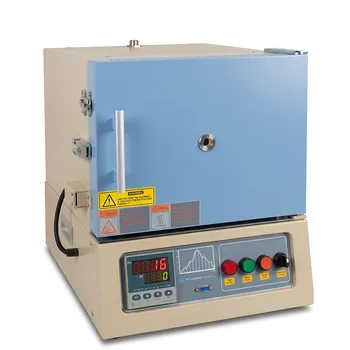
1200C Muffle Furnace 12x8x5 7.2L Heating Chamber with Quartz Observation Window and Vent Port
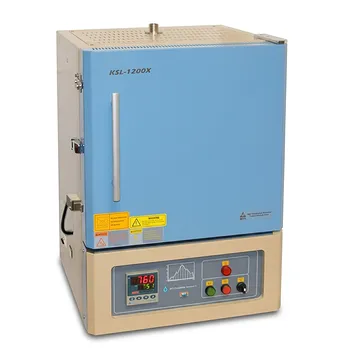
High Temperature 1200C Muffle Furnace 27L Volume 12x12x12 Chamber with Programmable PID Controller for Laboratory Material Science
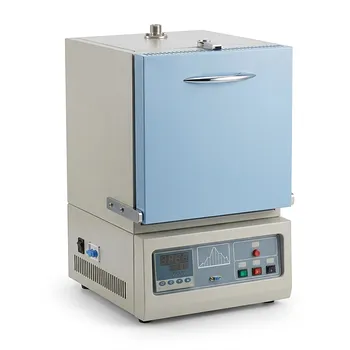
1750C Compact Muffle Furnace 1.7L Ultra High Temperature Laboratory Sintering System for Advanced Ceramics and Material Science Research
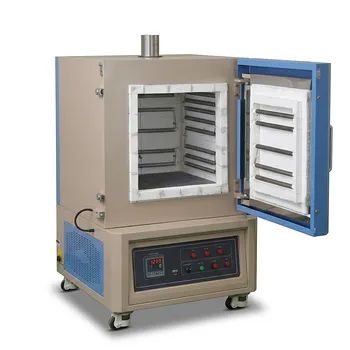
1200C High Temperature 125L Muffle Furnace 5 Side Heating for Large Batch Sintering with Optional Alloy Debinding Chamber
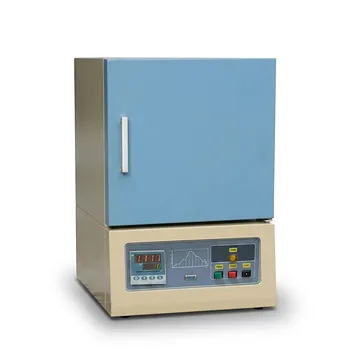
Ultra High Temperature Bench Top Muffle Furnace 1750C Sintering System with Kanthal Super Heating Elements and Precision Digital Control
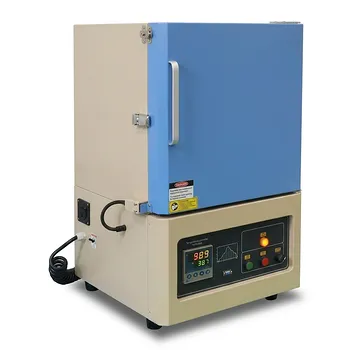
1200°C High Temperature Muffle Furnace 19L Chamber with 50 Segment Programmable Controller
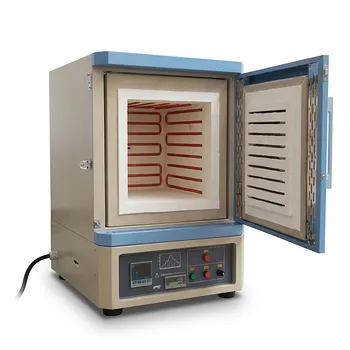
Five Side Heating Muffle Furnace 1200C High Uniformity 64L Chamber 16x16x16 Inch Industrial Heat Treatment
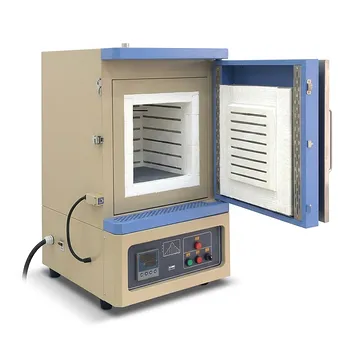
Five Side Heating Muffle Furnace High Purity Alumina Fiber 27L Chamber 1200C High Temperature Thermal Processing System for Sintering Annealing and Materials Research
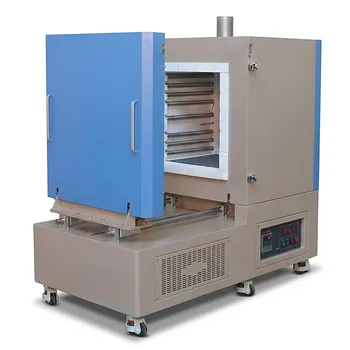
1200C Five Side Heating Muffle Furnace with Sliding Door 125L Volume High Temperature Heat Treatment System for Large Scale Sintering and Annealing
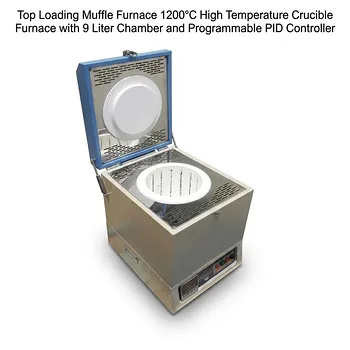
Top Loading Muffle Furnace 1200°C High Temperature Crucible Furnace with 9 Liter Chamber and Programmable PID Controller
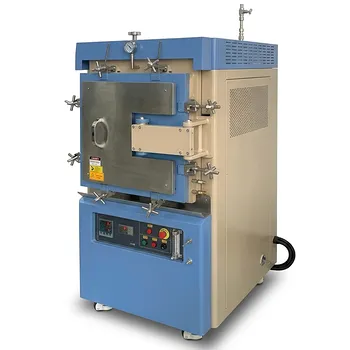
Atmosphere Controlled Muffle Furnace 1700C Maximum Temperature 80L High Capacity Vacuum Inert Gas Box Furnace
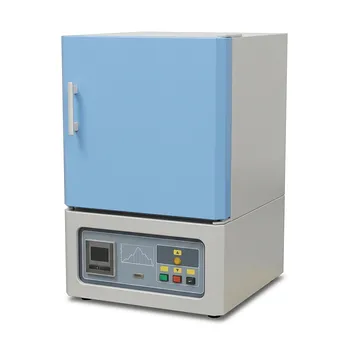
1800C Bench Top Muffle Furnace with Kanthal Super 1900 Heating Elements and 3.6L Alumina Fiber Chamber
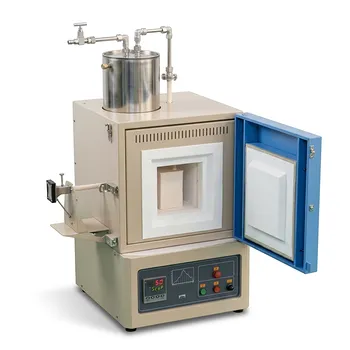
High Temperature Bench Top Muffle Furnace 1700C with Integrated Evaporating Particle Collection and 8x8x8 Alumina Fiber Chamber
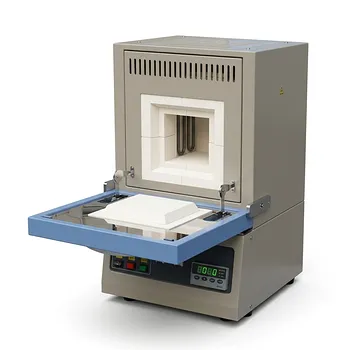
Five Sided Heating Muffle Furnace High Uniformity 1200C Lab Box Furnace 27L Alumina Fiber Chamber
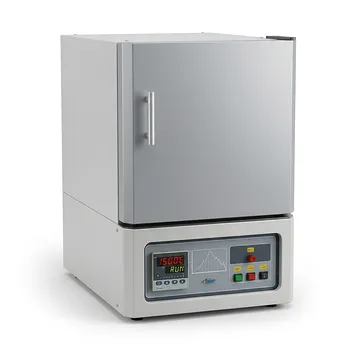
High Temperature 1500C Benchtop Muffle Furnace 3.6L Alumina Fiber Chamber Programmable Controller Sintering Annealing Carbonization Thermal Processing System
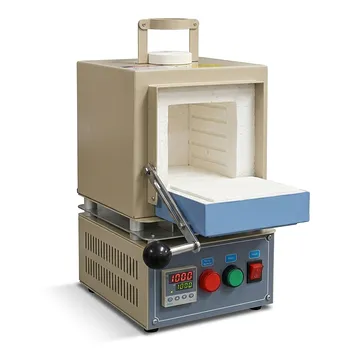
Compact 1000C Muffle Furnace with Programmable Controller and 2 Inch Top Port for Vacuum and Atmosphere Material Research
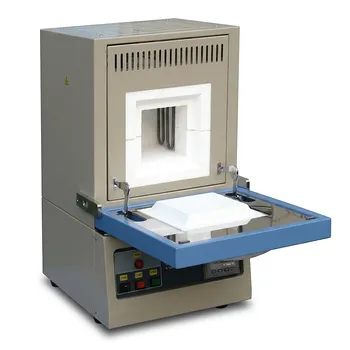
High Temperature 1800C Compact Muffle Furnace with Kanthal Super 1900 Heating Elements and 1.7L Alumina Chamber
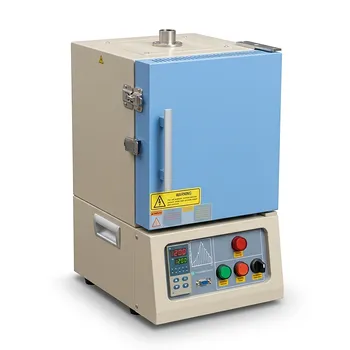
1200°C Small Box Furnace 4.2 Liter Programmable Muffle Furnace with High Purity Alumina Insulation and PID Control
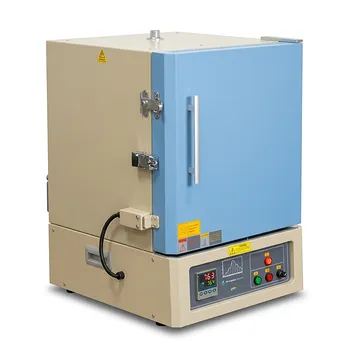
Large Capacity 1200C Muffle Furnace 64 Liter Chamber with Digital PID Controller and Built In Venting Port