The Pre-Sintering Threshold: Why Muffle Furnaces Are the Architects of Phosphor Purity
Jun 30, 2026
The Invisible Foundation of Luminescence
In the synthesis of advanced materials like $CaLa_4(SiO_4)_3O$ phosphors, the final glow is often the focus. We chase the high-temperature sintering at 1500°C as if it were the only event that mattered.
But in materials science, as in psychology, the "final performance" is dictated by the quality of the "rehearsal."
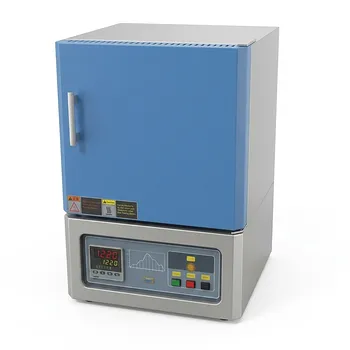
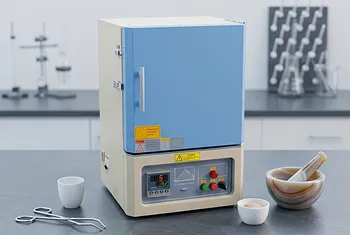
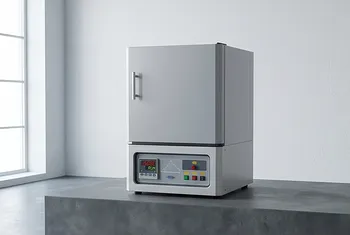
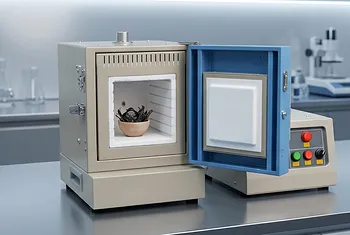
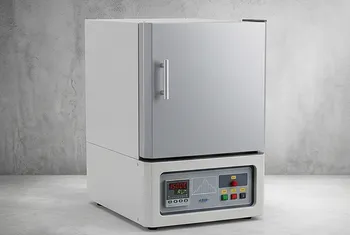
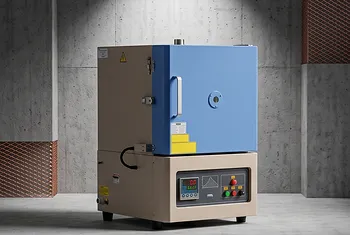
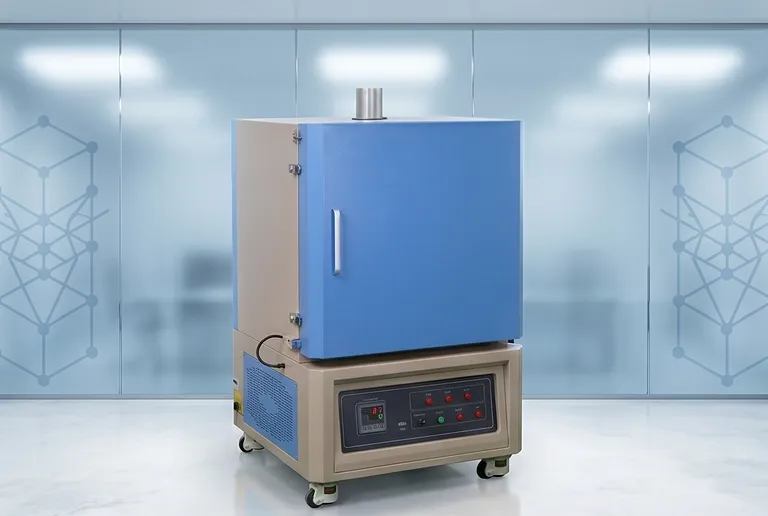
The pre-heating phase, typically conducted in a muffle furnace at 1000°C, is that rehearsal. It is the gatekeeper of phase purity. Without it, the final crystal structure does not just fail—it collapses under the weight of its own impurities and internal stresses.
1. The Chemistry of Departure: Managing Volatiles
Synthesis begins with chaos. Precursors like carbonates and ammonium salts are inherently unstable. They hold onto carbon dioxide, moisture, and organic residues that have no place in a perfect crystal lattice.
Eliminating the "Gaseous Ghosts"
At approximately 1000°C, the muffle furnace initiates a thermal decomposition that is both violent at the molecular level and necessary.
- Carbonate Decomposition: Releasing $CO_2$ before the lattice densifies prevents the formation of internal "bubbles" or pores.
- Volatile Removal: Ammonia and chemically bound water are driven out, ensuring the mass you weigh is the chemistry you get.
If these gases are not purged during pre-calcining, they become trapped during final sintering. The result is a ceramic body riddled with micro-voids—the enemies of transparency and structural integrity.
2. The Geometry of Stress: Controlling Physical Shrinkage
High-temperature processing is a battle against volume change. When a material transforms from a loose powder to a dense ceramic, it shrinks.
Why Gradualism Wins
The muffle furnace provides a stable thermal environment that allows for "partial densification."
| Challenge | Pre-heating Effect (1000°C) | Final Sintering Effect (1500°C) |
|---|---|---|
| Volume Change | Controlled, localized shrinkage | Rapid, high-risk densification |
| Internal Stress | Dissipated through early reaction | Potential for catastrophic cracking |
| Phase Purity | Intermediate phase formation | Final single-phase crystallization |
By initiating the solid-state reaction early, we reduce the "kinetic shock" of the final 1500°C ramp. Think of it as a thermal buffer that prevents the sample from warping or developing micro-cracks.
3. Lattice Diplomacy: The Early Migration of Ions
Phosphors are defined by their dopants, such as $Dy^{3+}$ or $Eu^{3+}$. For these ions to produce light efficiently, they must find their exact place within the $CaLa_4(SiO_4)_3O$ host lattice.
This is not a sudden event. It is a process of thermal diffusion.
- Initial Reactive Centers: Pre-heating lowers the energy barrier for the final reaction by creating molecular-level mixing.
- Dopant Integration: The 1000°C environment activates ion migration, ensuring that by the time we reach peak temperature, the "guest" ions are already knocking at the door of the "host" lattice.
4. Engineering Trade-offs: Atmosphere and Grain Growth
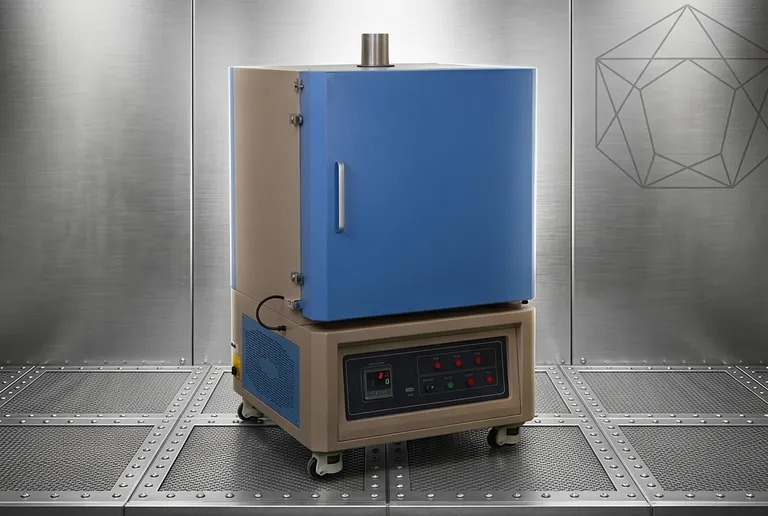
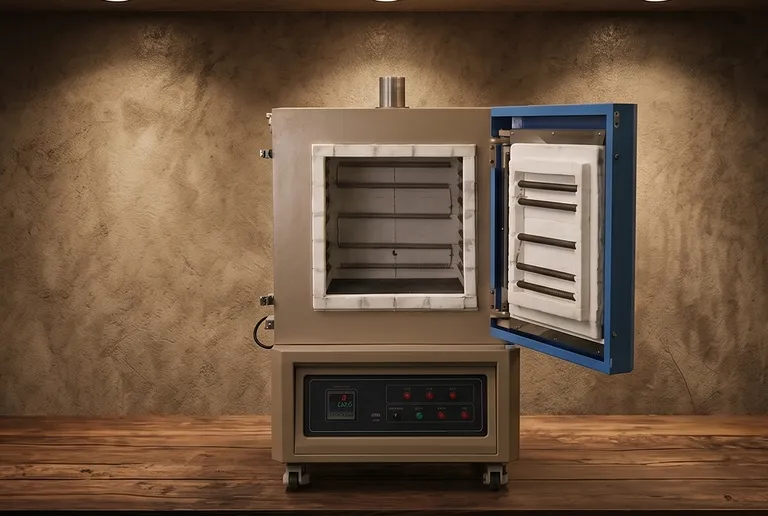
Precision requires awareness of limits. A standard muffle furnace operates in an oxidizing (air) atmosphere. This is perfect for removing organics and carbonates, but it is a "prelude" to more specialized steps.
The Problem of Coarsening
Experience tells us that more heat is not always better. If the pre-calcination lasts too long or runs too hot, the powder particles grow too large. This reduces the surface area and makes the final sintering at 1500°C significantly less efficient.
Similarly, if your final phosphor requires a reducing atmosphere (like $N_2/H_2$) to maintain a specific oxidation state, your muffle furnace is the tool for the preparation, while a tube furnace becomes the tool for the completion.
Engineering the Future of Light
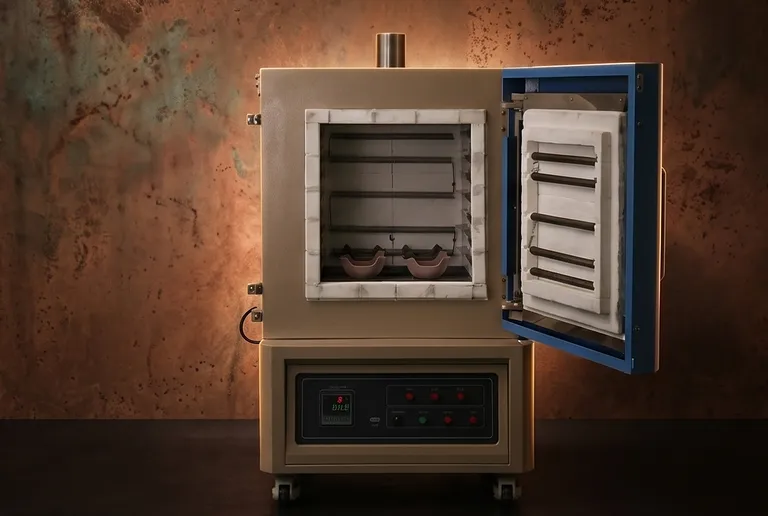
At THERMUNITS, we believe that high-performance research is built on the back of reliable thermal systems. Our Muffle Furnaces are designed with the stability and uniformity required to transform unstable precursors into reactive, pure intermediates.
Whether you are synthesizing $CaLa_4(SiO_4)_3O$ or pushing the boundaries of CVD and VIM technologies, the "pre-heating" stage is where your success is actually decided.
Our comprehensive suite of thermal tools includes:
- Precision Muffle & Tube Furnaces for dual-stage processing.
- Vacuum & Atmosphere Furnaces for sensitive phase control.
- Hot Press & VIM Systems for advanced material densification.
The path to a perfect crystal isn't just about reaching the peak; it's about how you manage the climb.
Quick Links
Suggested Products
1200C Muffle Furnace 12x8x5 7.2L Heating Chamber with Quartz Observation Window and Vent Port High Temperature 1200C Muffle Furnace 27L Volume 12x12x12 Chamber with Programmable PID Controller for Laboratory Material Science 1750C Compact Muffle Furnace 1.7L Ultra High Temperature Laboratory Sintering System for Advanced Ceramics and Material Science Research 1200C High Temperature 125L Muffle Furnace 5 Side Heating for Large Batch Sintering with Optional Alloy Debinding Chamber Ultra High Temperature Bench Top Muffle Furnace 1750C Sintering System with Kanthal Super Heating Elements and Precision Digital ControlFurther Reading
The Architecture of Ash: Thermal Precision and the Ghost of Biomass The 600-Degree Threshold: The Delicate Physics of Retaining Chemical Truth The Alchemy of Ash: How Thermal Precision Defines the Soul of Seaweed Carbon The Architecture of Molecular Patience: Why Precision Thermal Reduction Defines Catalyst Success The Physics of Perseverance: Navigating the 1,800°C Thermal Frontier
ThermUnits
Last updated on Apr 14, 2026
Related Products
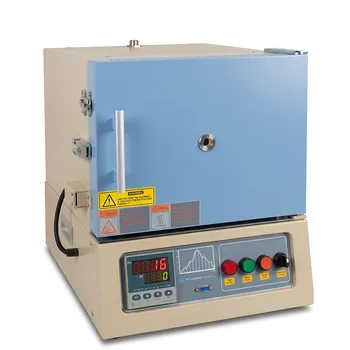
1200C Muffle Furnace 12x8x5 7.2L Heating Chamber with Quartz Observation Window and Vent Port
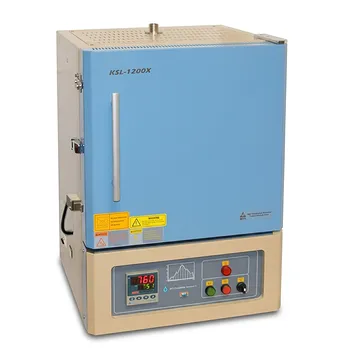
High Temperature 1200C Muffle Furnace 27L Volume 12x12x12 Chamber with Programmable PID Controller for Laboratory Material Science
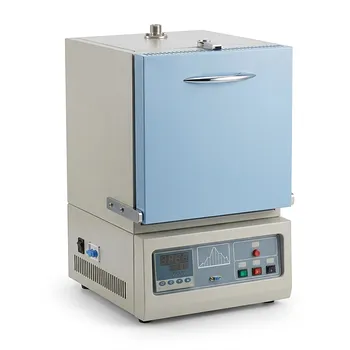
1750C Compact Muffle Furnace 1.7L Ultra High Temperature Laboratory Sintering System for Advanced Ceramics and Material Science Research
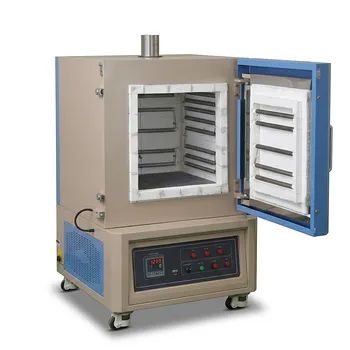
1200C High Temperature 125L Muffle Furnace 5 Side Heating for Large Batch Sintering with Optional Alloy Debinding Chamber
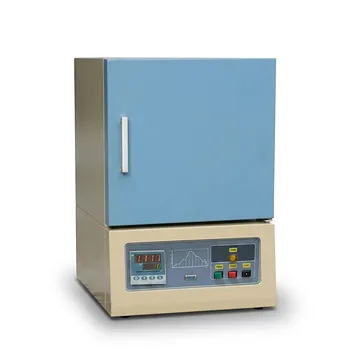
Ultra High Temperature Bench Top Muffle Furnace 1750C Sintering System with Kanthal Super Heating Elements and Precision Digital Control
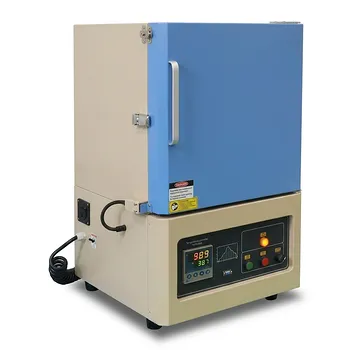
1200°C High Temperature Muffle Furnace 19L Chamber with 50 Segment Programmable Controller
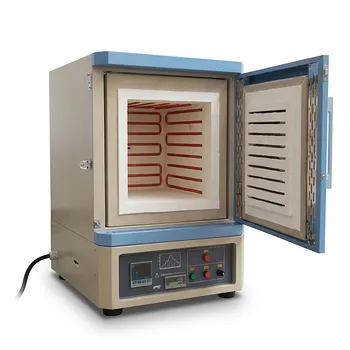
Five Side Heating Muffle Furnace 1200C High Uniformity 64L Chamber 16x16x16 Inch Industrial Heat Treatment
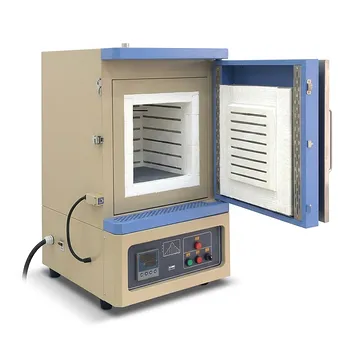
Five Side Heating Muffle Furnace High Purity Alumina Fiber 27L Chamber 1200C High Temperature Thermal Processing System for Sintering Annealing and Materials Research
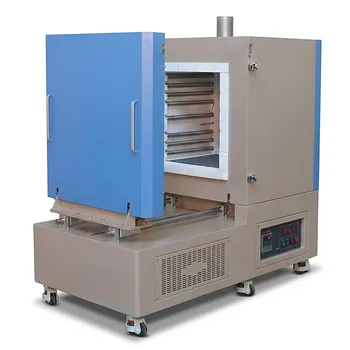
1200C Five Side Heating Muffle Furnace with Sliding Door 125L Volume High Temperature Heat Treatment System for Large Scale Sintering and Annealing
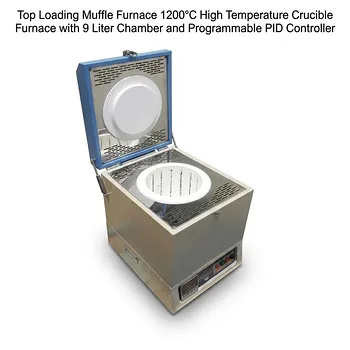
Top Loading Muffle Furnace 1200°C High Temperature Crucible Furnace with 9 Liter Chamber and Programmable PID Controller
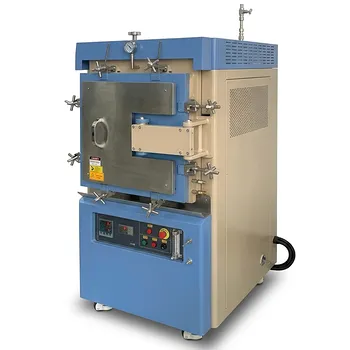
Atmosphere Controlled Muffle Furnace 1700C Maximum Temperature 80L High Capacity Vacuum Inert Gas Box Furnace
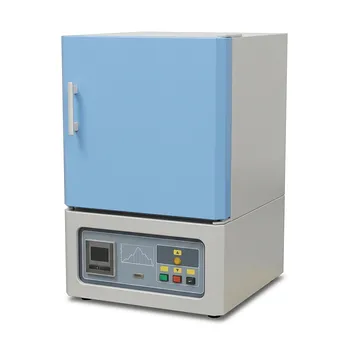
1800C Bench Top Muffle Furnace with Kanthal Super 1900 Heating Elements and 3.6L Alumina Fiber Chamber
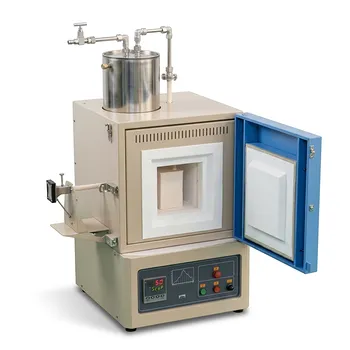
High Temperature Bench Top Muffle Furnace 1700C with Integrated Evaporating Particle Collection and 8x8x8 Alumina Fiber Chamber
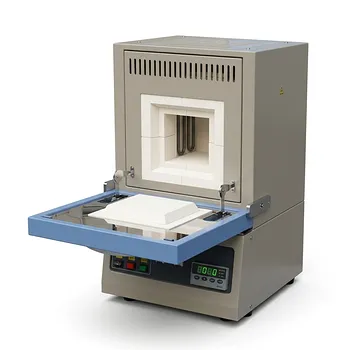
Five Sided Heating Muffle Furnace High Uniformity 1200C Lab Box Furnace 27L Alumina Fiber Chamber
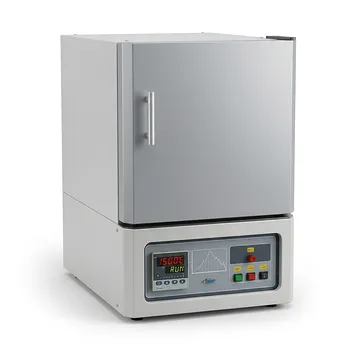
High Temperature 1500C Benchtop Muffle Furnace 3.6L Alumina Fiber Chamber Programmable Controller Sintering Annealing Carbonization Thermal Processing System
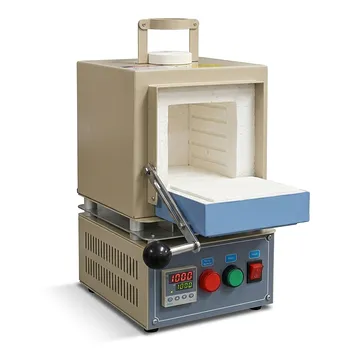
Compact 1000C Muffle Furnace with Programmable Controller and 2 Inch Top Port for Vacuum and Atmosphere Material Research
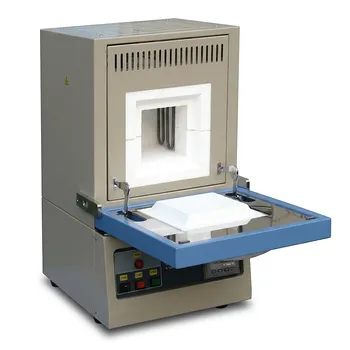
High Temperature 1800C Compact Muffle Furnace with Kanthal Super 1900 Heating Elements and 1.7L Alumina Chamber
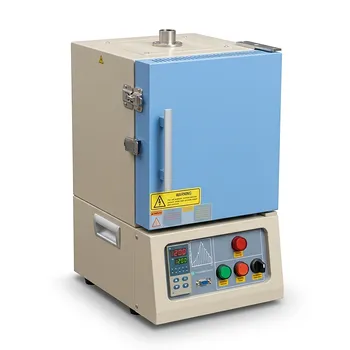
1200°C Small Box Furnace 4.2 Liter Programmable Muffle Furnace with High Purity Alumina Insulation and PID Control
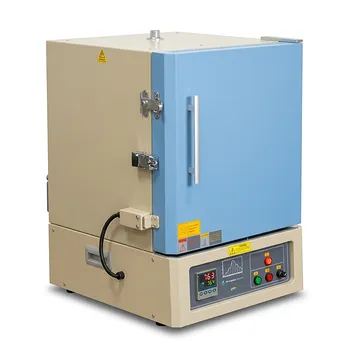
Large Capacity 1200C Muffle Furnace 64 Liter Chamber with Digital PID Controller and Built In Venting Port