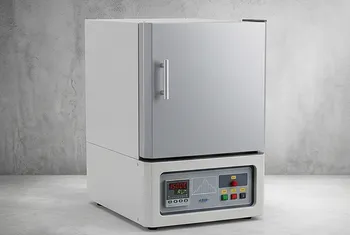
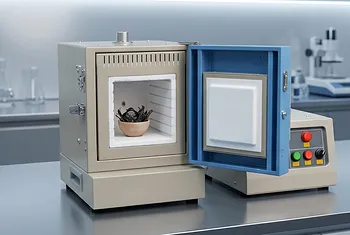
The Oxygen Breath: How Muffle Furnaces Architect the Superconducting Soul of YBCO
Jun 21, 2026
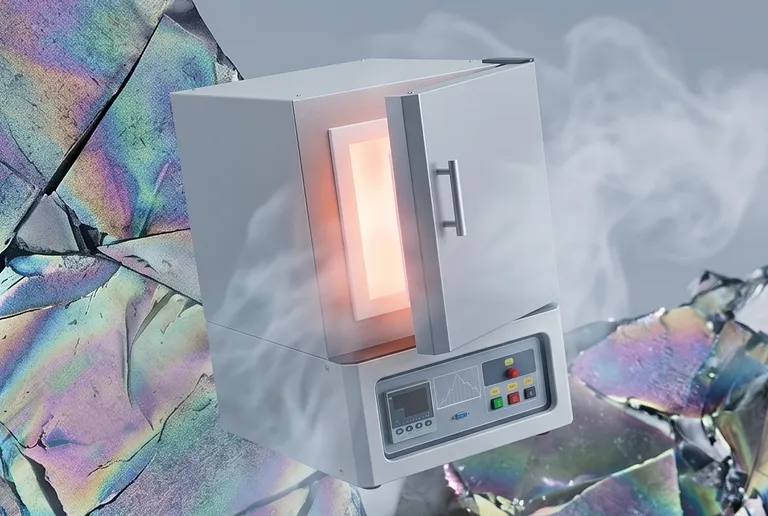
The Invisible Architecture
In material science, what you see is rarely what you get.
When a YBCO (Yttrium Barium Copper Oxide) thin film emerges from a deposition chamber, it is technically "complete" in terms of its elemental makeup, yet it is electronically inert. It is a semiconductor, not a superconductor. It possesses the right ingredients but the wrong arrangement.
To breathe life into this ceramic precursor, it must undergo a second birth: Oxygen Loading. This is not merely a heating step; it is a structural metamorphosis that happens at the atomic level, mediated entirely by the precision of an electric muffle furnace.
The Tetragonal Trap
During the initial sputtering or deposition, YBCO typically adopts a tetragonal crystal structure. In this state, the oxygen sites within the lattice are vacant or disordered.
The physics are simple but unforgiving: without a specific concentration of oxygen, the "electron highways" within the material remain blocked. To clear these paths, the material must transition to an orthorhombic phase.
This transition requires three variables to be in perfect alignment:
- Energy: Enough heat to allow atoms to move (400°C–500°C).
- Atmosphere: A high partial pressure of pure oxygen.
- Time: Sufficient duration for the "oxygen breath" to diffuse into the deepest layers of the film.
Why the Muffle Furnace is the Primary Architect
While the deposition system creates the film's body, the muffle furnace creates its soul. It provides the controlled environment where the lattice "repairs" itself.
1. Thermal Stability as a Foundation
Annealing YBCO isn't a quick process. Depending on the film's thickness and substrate, it can take hours or even days. A fluctuation of even 5°C can create thermal stresses that lead to micro-cracking. High-precision muffle furnaces provide a uniform thermal field, ensuring that the top left corner of the wafer experiences the exact same reality as the bottom right.
2. The Chemistry of Partial Pressure
The furnace acts as a pressurized reaction chamber. By controlling the oxygen partial pressure, engineers force oxygen atoms into the vacancies of the YBCO lattice. This "loading" optimizes the stoichiometry, raising the Critical Temperature (Tc) to its theoretical maximum.
3. Eliminating the Lattice "Noise"
Heat treatment allows the atoms to settle into their lowest-energy configuration. This process eliminates lattice defects and promotes grain growth. In the language of an engineer, it reduces "electrical scattering centers," allowing current to flow without resistance.
The Cost of Imperfection
In the world of superconductors, there is no "good enough." Small errors in the annealing phase lead to catastrophic failures in performance.
| The Failure Mode | The Root Cause in the Furnace | The Resulting Material Impact |
|---|---|---|
| Suppressed Tc | Poor oxygen partial pressure control | Incomplete phase transition (tetragonal residue) |
| Phase Variation | Non-uniform thermal gradients | Localized non-superconducting "dead zones" |
| Film Poisoning | Atmospheric contamination (carbon/moisture) | Interstitial impurities that block current flow |
| Substrate Reaction | Temperature overshoot/poor PID control | Cation interdiffusion at the film-substrate interface |
The Psychology of Precision
There is a specific kind of anxiety in long-duration R&D. You spend days preparing a thin film, only to leave it in a furnace for 48 hours. You are betting your research on the stability of a heating element and a PID controller.
This is where the "Engineer’s Romance" meets reality. A furnace is not just a box that gets hot; it is a system of trust. It must maintain an oxygen-rich, stable, and clean environment while the invisible work of atomic diffusion takes place.
Engineering the Future of Superconductivity
For researchers pushing the boundaries of material science, the tools must be as precise as the theories they test. At THERMUNITS, we understand that in the production of YBCO thin films, the muffle furnace is the final, most critical gatekeeper of performance.
Our thermal processing solutions are engineered for the rigorous demands of high-Tc superconductivity R&D:
- Atmosphere Muffle Furnaces: Designed for precise oxygen partial pressure regulation.
- High-Stability Tube Furnaces: Ideal for controlled gas flow and rapid thermal cycling.
- Advanced PID Control: Ensuring zero overshoot and long-term thermal equilibrium.
- Vacuum & CVD Systems: For the integrated deposition and treatment of next-generation materials.
Whether you are optimizing grain growth in a rotary kiln or managing complex phase transitions in a vacuum induction melting furnace, the goal is the same: perfection at the atomic scale.
Ready to master the "Oxygen Breath" in your laboratory?
Contact Our Experts
Quick Links
Suggested Products
High Temperature 1500C Benchtop Muffle Furnace 3.6L Alumina Fiber Chamber Programmable Controller Sintering Annealing Carbonization Thermal Processing System 1200C Five Side Heating Muffle Furnace with Sliding Door 125L Volume High Temperature Heat Treatment System for Large Scale Sintering and Annealing Five Side Heating Muffle Furnace High Purity Alumina Fiber 27L Chamber 1200C High Temperature Thermal Processing System for Sintering Annealing and Materials Research 1200C Muffle Furnace 12x8x5 7.2L Heating Chamber with Quartz Observation Window and Vent Port 1750C Compact Muffle Furnace 1.7L Ultra High Temperature Laboratory Sintering System for Advanced Ceramics and Material Science ResearchFurther Reading
The Geometry of Heat: Forging the Structural DNA of Dicalcium Ferrite The 600-Degree Threshold: The Delicate Physics of Retaining Chemical Truth The Physics of Perseverance: Navigating the 1,800°C Thermal Frontier The Architecture of Molecular Patience: Why Precision Thermal Reduction Defines Catalyst Success The Alchemy of Ash: How Thermal Precision Defines the Soul of Seaweed Carbon
ThermUnits
Last updated on Apr 14, 2026
Related Products
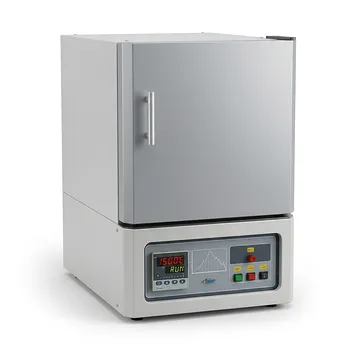
High Temperature 1500C Benchtop Muffle Furnace 3.6L Alumina Fiber Chamber Programmable Controller Sintering Annealing Carbonization Thermal Processing System
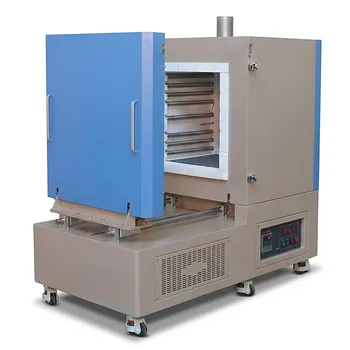
1200C Five Side Heating Muffle Furnace with Sliding Door 125L Volume High Temperature Heat Treatment System for Large Scale Sintering and Annealing
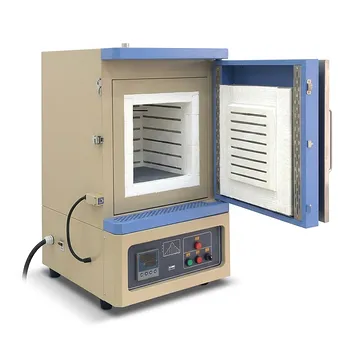
Five Side Heating Muffle Furnace High Purity Alumina Fiber 27L Chamber 1200C High Temperature Thermal Processing System for Sintering Annealing and Materials Research
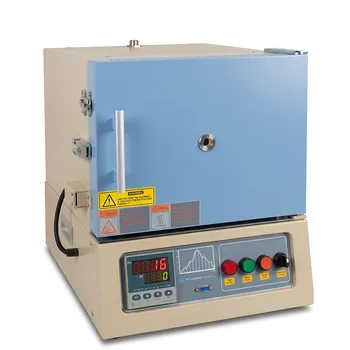
1200C Muffle Furnace 12x8x5 7.2L Heating Chamber with Quartz Observation Window and Vent Port
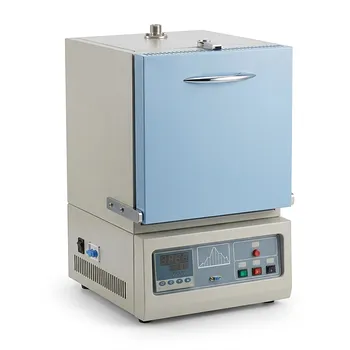
1750C Compact Muffle Furnace 1.7L Ultra High Temperature Laboratory Sintering System for Advanced Ceramics and Material Science Research
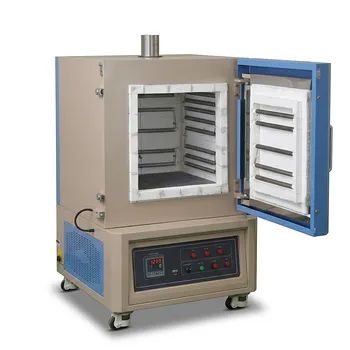
1200C High Temperature 125L Muffle Furnace 5 Side Heating for Large Batch Sintering with Optional Alloy Debinding Chamber
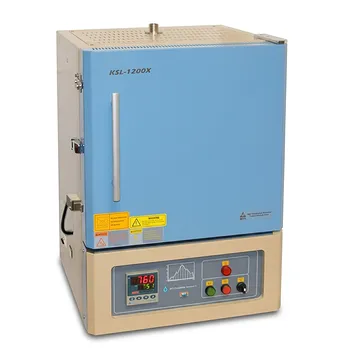
High Temperature 1200C Muffle Furnace 27L Volume 12x12x12 Chamber with Programmable PID Controller for Laboratory Material Science
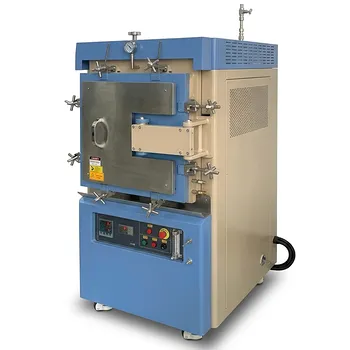
Atmosphere Controlled Muffle Furnace 1700C Maximum Temperature 80L High Capacity Vacuum Inert Gas Box Furnace
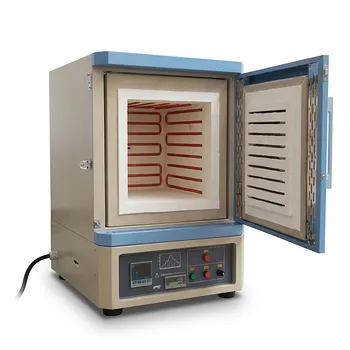
Five Side Heating Muffle Furnace 1200C High Uniformity 64L Chamber 16x16x16 Inch Industrial Heat Treatment
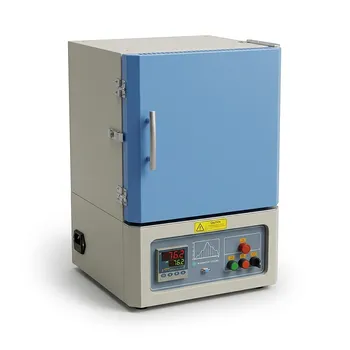
1750C Bench Top Muffle Furnace 3.6L High Grade Molybdenum Disilicide Heating Elements Laboratory Heat Treatment Equipment
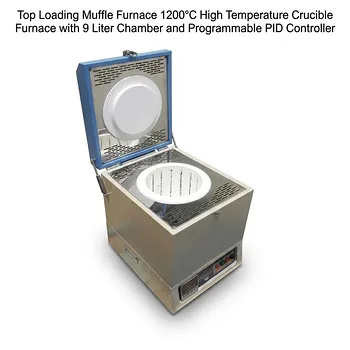
Top Loading Muffle Furnace 1200°C High Temperature Crucible Furnace with 9 Liter Chamber and Programmable PID Controller
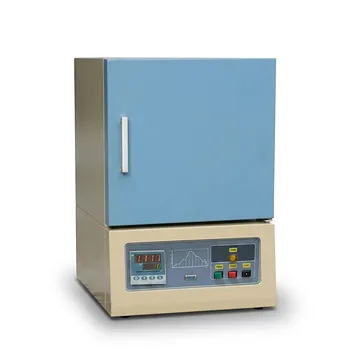
Ultra High Temperature Bench Top Muffle Furnace 1750C Sintering System with Kanthal Super Heating Elements and Precision Digital Control
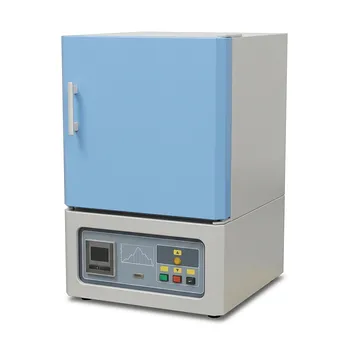
1800C Bench Top Muffle Furnace with Kanthal Super 1900 Heating Elements and 3.6L Alumina Fiber Chamber
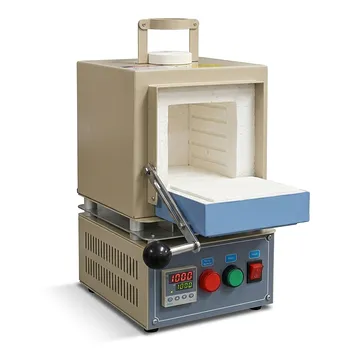
Compact 1000C Muffle Furnace with Programmable Controller and 2 Inch Top Port for Vacuum and Atmosphere Material Research
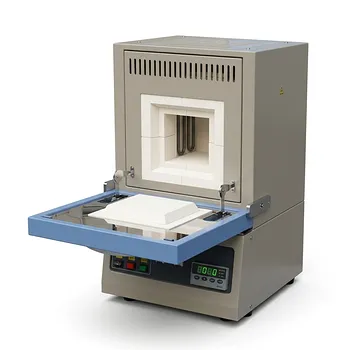
Five Sided Heating Muffle Furnace High Uniformity 1200C Lab Box Furnace 27L Alumina Fiber Chamber
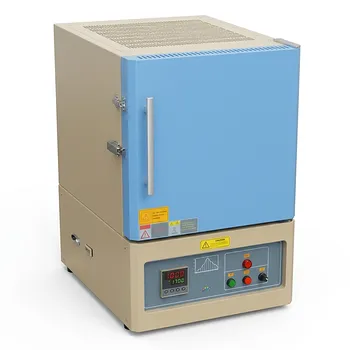
Large Bench Top 1700C High Temperature Muffle Furnace with 19L Chamber for Advanced Material Sintering and Annealing
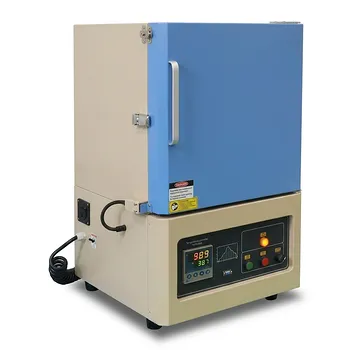
1200°C High Temperature Muffle Furnace 19L Chamber with 50 Segment Programmable Controller
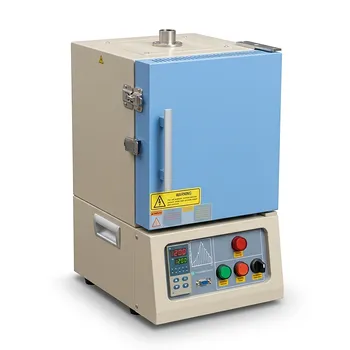
1200°C Small Box Furnace 4.2 Liter Programmable Muffle Furnace with High Purity Alumina Insulation and PID Control
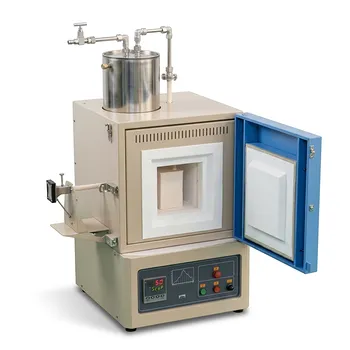
High Temperature Bench Top Muffle Furnace 1700C with Integrated Evaporating Particle Collection and 8x8x8 Alumina Fiber Chamber