The Architect of Absence: Why Atomic Hydrogen Defines Diamond Growth
Apr 26, 2026

The Paradox of Creation
In materials science, we often focus on what we add. We think of growth as a process of accumulation.
But in Microwave Plasma Chemical Vapor Deposition (MPCVD), the secret to perfection lies in what we remove. To grow a diamond, you must ruthlessly destroy anything that isn't one.
Atomic hydrogen is the tool of this "selective destruction." It acts as both a chemical guard and a structural architect, ensuring that only the most resilient carbon bonds survive.
The Selective Etcher
Graphite is the natural state of carbon at low pressures. It is the path of least resistance—the "thermodynamic default."
Atomic hydrogen reverses this destiny. It reacts with $sp^2$-bonded carbon (graphite) significantly faster than it reacts with $sp^3$-bonded carbon (diamond).
Think of it as a relentless editor. It continuously "etches" away the mistakes in the lattice. By the time a layer of carbon is finalized, only the diamond structure remains, scrubbed clean of graphitic impurities.
The Chemistry of Stability
Without a guard, the surface of a growing diamond is unstable. Carbon atoms have "dangling bonds"—empty hands reaching out for a partner. Left alone, these hands would collapse into the easier, weaker structure of graphite.
Atomic hydrogen performs two critical stabilization tasks:
- Saturation: It occupies those dangling bonds, providing the chemical pressure needed to keep the surface in an $sp^3$ configuration.
- Abstraction: It occasionally strikes the surface to pull a hydrogen atom away, creating a "reactive site" where a new methyl radical ($CH_3$) can land.
It is a high-speed choreography: protecting the surface until the exact moment a new carbon atom is ready to join the lattice.
The Cost of Control
Quality is never free. In MPCVD, the price is paid in thermal management and energy.
Generating high concentrations of atomic hydrogen requires intense microwave power. This dissociation of $H_2$ gas into its atomic form produces extreme heat.
If the heat is not managed, the substrate cracks. If the hydrogen concentration is too high, it etches faster than it grows, and the process reverses. The engineer’s job is to find the "Goldilocks zone"—where growth outpaces etching without sacrificing the structural integrity of the crystal.
Strategic Decision Matrix

| Objective | Hydrogen Strategy | Resulting Property |
|---|---|---|
| Optical Clarity | High $H_2$ concentration | Zero $sp^2$ contamination; no tinting. |
| Industrial Speed | Moderate $H_2$ concentration | Faster deposition for heat sinks or tools. |
| Large Scale Scaling | Uniform Plasma Stability | Consistent lattice across large boules. |
Engineering the Environment
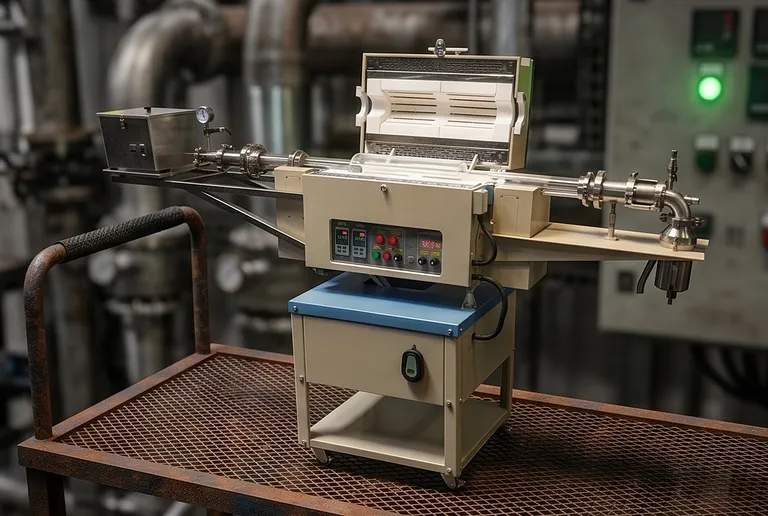
The magic of atomic hydrogen cannot happen in a vacuum—or rather, it requires a very specific kind of vacuum and thermal control.
At THERMUNITS, we understand that the furnace is more than a box; it is a pressurized stage for atomic-level precision. Our CVD and PECVD systems are engineered to handle the intense microwave loads and thermal gradients required for high-concentration hydrogen environments.
Whether you are scaling single-crystal diamond boules or researching high-performance ceramics via Hot Pressing, the integrity of your material depends on the stability of your thermal system.
Master the environment, and you master the material.
Ready to optimize your diamond growth or heat treatment process? Contact Our Experts
Quick Links
Suggested Products
Cylindrical Resonator MPCVD Machine System for Microwave Plasma Chemical Vapor Deposition and Lab Diamond Growth 915MHz MPCVD Diamond Machine Microwave Plasma Chemical Vapor Deposition System Reactor High Temperature 1200C Automatic Sliding Dual Zone Tube Furnace for 2D Transition Metal Dichalcogenides Growth and Material Sublimation Research 1200C Sliding Tube Furnace for Rapid Thermal Processing and CVD Graphene Growth with 100mm OD Capacity High Temperature 1700C Vertical Split Tube Furnace for Material Quenching and Single Crystal GrowthFurther Reading
The Invisible Architecture: Balancing Purity and Intensity in MPCVD Systems The Architecture of Resonance: Why the Cavity is the Heart of MPCVD Success The Choreography of Carbon: Why CVD Precision Defines the Next Era of Material Science The Architecture of Inertness: Why Nitrogen is the Silent Guardian of CVD Synthesis The Geometry of Silence: Why Depth Demands a Chemical Solution
ThermUnits
Last updated on Apr 15, 2026
Related Products
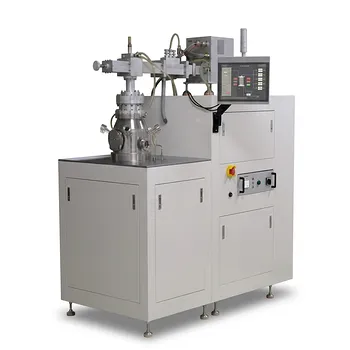
Cylindrical Resonator MPCVD Machine System for Microwave Plasma Chemical Vapor Deposition and Lab Diamond Growth
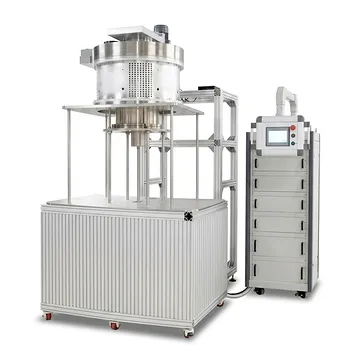
915MHz MPCVD Diamond Machine Microwave Plasma Chemical Vapor Deposition System Reactor
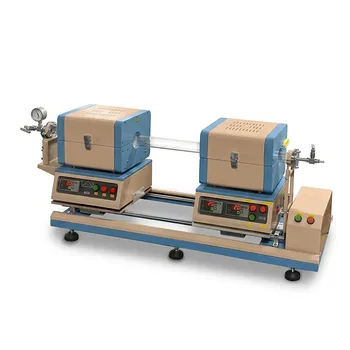
High Temperature 1200C Automatic Sliding Dual Zone Tube Furnace for 2D Transition Metal Dichalcogenides Growth and Material Sublimation Research
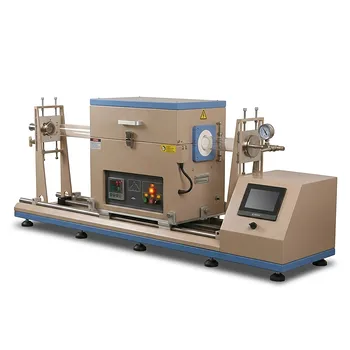
1200C Sliding Tube Furnace for Rapid Thermal Processing and CVD Graphene Growth with 100mm OD Capacity
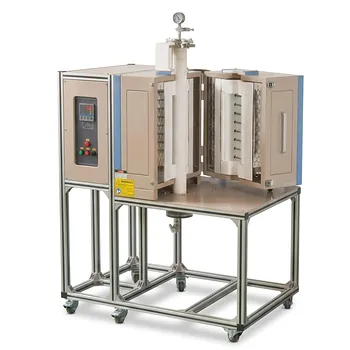
High Temperature 1700C Vertical Split Tube Furnace for Material Quenching and Single Crystal Growth
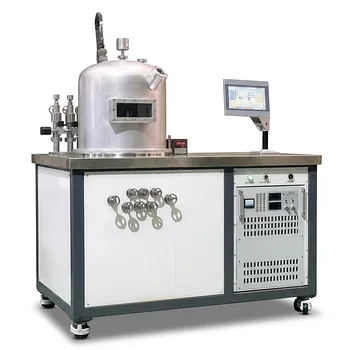
HFCVD Machine System for Nano Diamond Coating on Drawing Dies and Industrial Tools