The Geometry of Passivation: Why Linear Injection Defines APCVD Precision
May 18, 2026
The Invisible Wall of Surface Recombination
In semiconductor research, the surface is often the enemy.
Unprotected silicon surfaces are riddled with "dangling bonds"—sites where electrons and holes recombine and vanish, killing device efficiency. The solution is passivation: growing a thin, dense layer of Titanium Dioxide (TiO2).
But in Atmospheric Pressure Chemical Vapor Deposition (APCVD), the challenge isn't just the chemistry; it is the geometry. How do you move from a single point of gas supply to a perfectly uniform plane of reaction across a wide wafer?
The answer lies in the engineering of the stainless steel linear injector.
From Point Source to Molecular Curtain
Traditional gas inlets often act as "point sources." They create a radial distribution that naturally favors the center, leaving the edges of a wafer thin and inconsistent.
In a high-stakes R&D environment, "mostly uniform" is a failure.
The Linear Advantage
- Edge-Effect Elimination: By distributing precursors along a line rather than a point, the injector creates a "curtain" of reactive gas.
- Synchronized Arrival: The internal nozzle array ensures that TPT (titanium tetraisopropoxide) and water vapor reach the substrate at the exact same moment across its entire width.
- Spatial Predictability: It transforms a three-dimensional fluid dynamics problem into a two-dimensional laminar flow problem.
The Chemistry of Distance
Chemistry is often a matter of timing. In APCVD, the goal is controlled hydrolysis.
If the TPT and water vapor meet too early, they react inside the hardware, creating dust and clogs. If they meet too late, the film is porous.
The linear injector acts as a tactical separator. It keeps the precursors isolated until the final moment of delivery. This ensures the reaction happens on the substrate, not above it. The result is a film density that provides superior electrical insulation and chemical stability.
Material Choice: The Logic of Stainless Steel
Engineers choose materials based on what they can survive. In the heart of a furnace, the injector faces a brutal combination of high heat and reactive precursors.
| Property | Engineering Impact |
|---|---|
| Thermal Stability | Prevents structural warping that would distort the gas flow. |
| Chemical Resistance | Resists the corrosive nature of hydrolyzed precursors. |
| Thermal Mass | Helps eliminate "cold spots" that cause precursor condensation. |
Stainless steel provides the necessary rigidity to maintain a precise internal nozzle geometry. If the nozzle changes shape by even a few microns due to heat, the film uniformity on the wafer disappears.
The Cost of Precision: Trade-offs and Maintenance
In engineering, there is no such thing as a free lunch. The high performance of a linear injector comes with a "maintenance debt" that must be paid.
Pressure Sensitivity
A linear injector is a balanced system. If the internal pressure drops across the length of the assembly, the film becomes "lean" at the ends. Maintaining a perfectly constant pressure profile requires sophisticated upstream mass flow control.
The Clogging Risk
Because the nozzles are designed for precision, they are narrow. Any pre-reaction buildup can lead to particulate contamination. A rigorous purging schedule isn't just a recommendation; it is a requirement for system survival.
Choosing Your Strategic Priority
When configuring an APCVD system, your injector setup should reflect your primary research goal:
- For Maximum Uniformity: Focus on internal nozzle calibration and laminar flow stability.
- For High Throughput: Utilize multi-slot injectors to create a wider reaction zone.
- For Peak Passivation Quality: Prioritize the precise mixing ratio of water vapor to TPT.
The Systemic Solution

A great film is not the result of a single component, but the harmony of the entire thermal environment. At THERMUNITS, we design the systems that make this precision possible.
From advanced CVD and PECVD systems to high-performance Tube and Vacuum furnaces, we provide the hardware foundation for material science breakthroughs. Whether you are working on solar cell passivation or advanced semiconductor layers, our equipment is engineered to handle the complexities of the molecular curtain.
Quick Links
Suggested Products
Radio Frequency Plasma Enhanced Chemical Vapor Deposition RF PECVD System for Laboratory and Industrial Thin Film Growth Chemical Vapor Deposition CVD System Slide PECVD Tube Furnace with Liquid Gasifier PECVD Machine Inclined Rotary Plasma Enhanced Chemical Vapor Deposition PECVD System for Thin Film Deposition and Nanomaterial Synthesis 915MHz MPCVD Diamond Machine Microwave Plasma Chemical Vapor Deposition System Reactor Versatile Chemical Vapor Deposition Tube Furnace System for Advanced Material Research and Industrial Coating ProcessesFurther Reading
The Geometry of Silence: Why Depth Demands a Chemical Solution The Low-Temperature Alchemy: Navigating the Thermal Budget with PECVD The Alchemy of Cold Fire: Decoupling Energy from Temperature in Thin Film Deposition The Choreography of Carbon: Why CVD Precision Defines the Next Era of Material Science The Architecture of Ions: Decoding the Geometry of Plasma Coupling
ThermUnits
Last updated on Apr 14, 2026
Related Products
Radio Frequency Plasma Enhanced Chemical Vapor Deposition RF PECVD System for Laboratory and Industrial Thin Film Growth
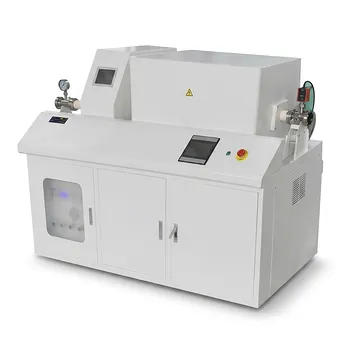
Chemical Vapor Deposition CVD System Slide PECVD Tube Furnace with Liquid Gasifier PECVD Machine
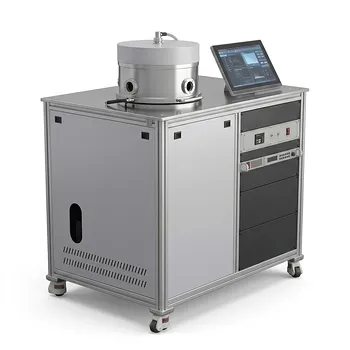
Inclined Rotary Plasma Enhanced Chemical Vapor Deposition PECVD System for Thin Film Deposition and Nanomaterial Synthesis
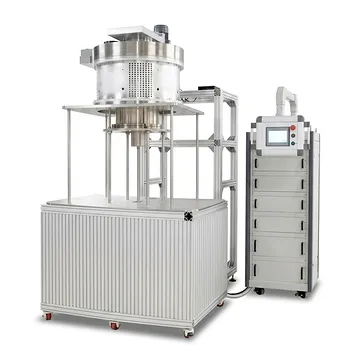
915MHz MPCVD Diamond Machine Microwave Plasma Chemical Vapor Deposition System Reactor
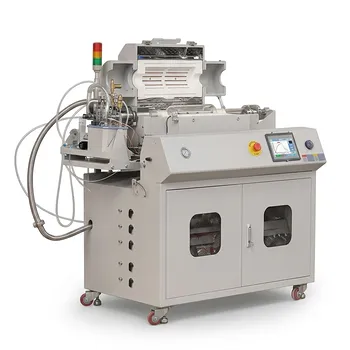
Versatile Chemical Vapor Deposition Tube Furnace System for Advanced Material Research and Industrial Coating Processes
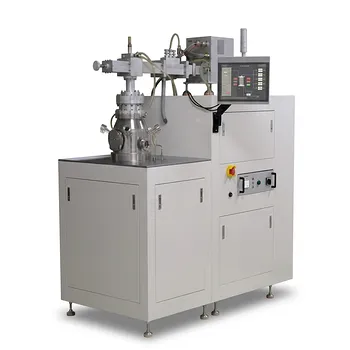
Cylindrical Resonator MPCVD Machine System for Microwave Plasma Chemical Vapor Deposition and Lab Diamond Growth
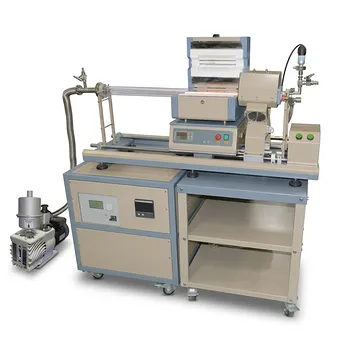
1200C Max Compact Auto-Sliding PECVD Furnace with 2 Inch Tube and Vacuum Pump
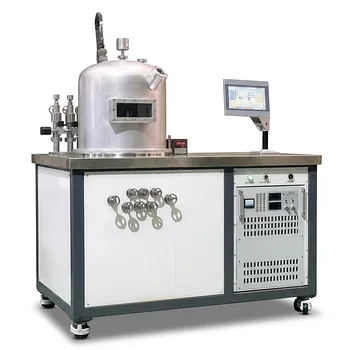
HFCVD Machine System for Nano Diamond Coating on Drawing Dies and Industrial Tools
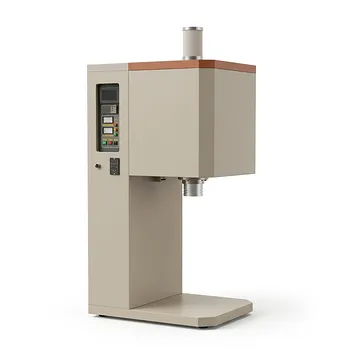
Vertical Openable Tube Furnace 0-1700c High Temperature Laboratory System for CVD and Vacuum Heat Treatment
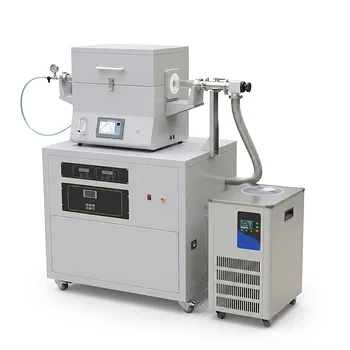
Split Chamber CVD Tube Furnace with Vacuum Station Chemical Vapor Deposition System Machine
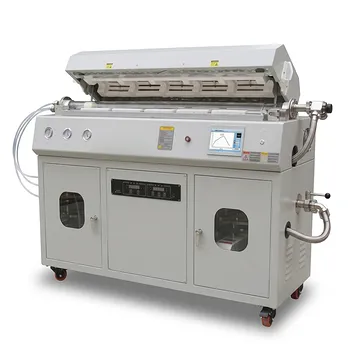
Multi Heating Zones CVD Tube Furnace System for Precision Chemical Vapor Deposition and Advanced Material Synthesis
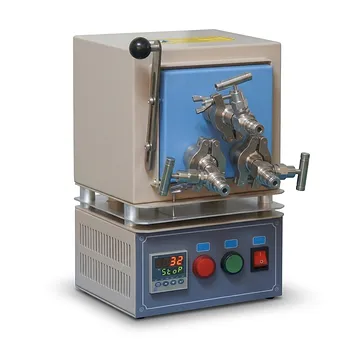
Triple Tube Compact Hybrid Muffle Furnace 1000C High Vacuum Thermal Processing System
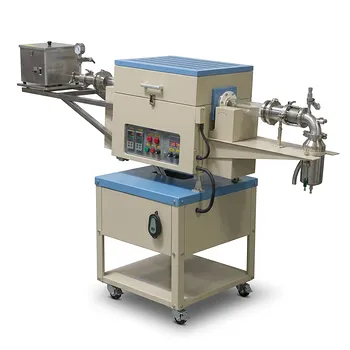
Two Zone Rotary CVD Furnace with Automatic Feeding and Receiving System for Powder Processing
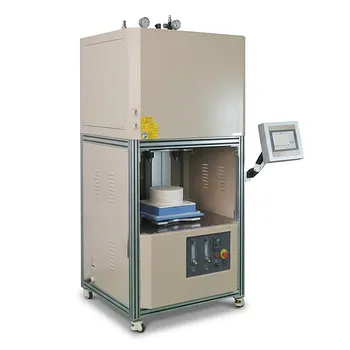
High Temperature Vertical Atmosphere Controlled Furnace 1700C Automatic Bottom Loading 13 Liter Vacuum Thermal System
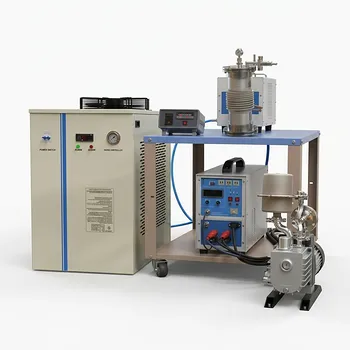
Induction Heating System with Temperature Control for High Temperature Vacuum Sintering and Melting