The Architecture of Invisible Chemistry: Engineering the Parallel-Plate CCP Reactor
Apr 21, 2026
The Low-Thermal Budget Paradox
In traditional material science, heat is the primary driver of change. To grow a film, you usually need to vibrate atoms into place with sheer thermal energy. But many modern substrates—polymers, delicate semiconductors, or advanced optics—cannot survive the kiln.
This is the central problem of the "thermal budget." How do you synthesize high-quality materials without destroying the foundation they sit upon?
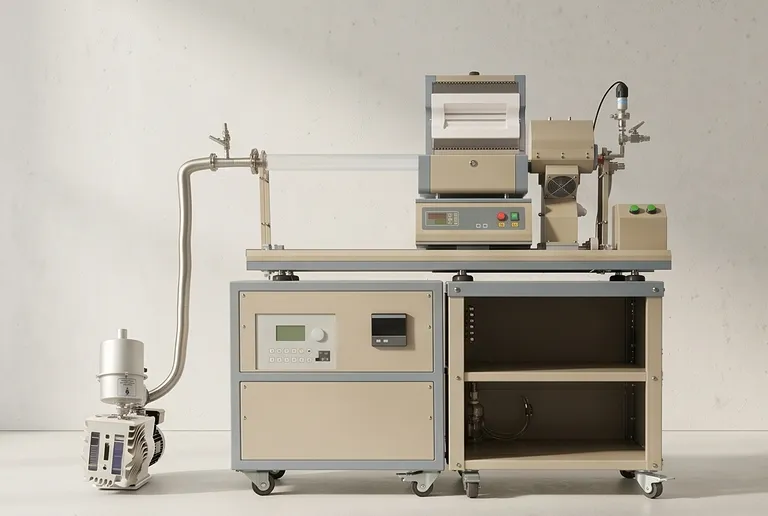
The Capacitively Coupled Plasma (CCP) reactor is the engineering answer. It replaces raw heat with a controlled storm of ionized gas, allowing chemistry to happen at hundreds of degrees lower than would otherwise be possible.
The Sacred Void: Vacuum Integrity
A PECVD process begins with what isn't there. Before a single precursor gas enters the chamber, the system must achieve a base pressure of $10^{-6}$ Torr.
This isn't just about cleanliness; it is about the psychology of the environment. At this pressure, the "mean free path" of a molecule is long enough that it won't collide with atmospheric contaminants like oxygen or water vapor.
If the vacuum fails, the film is no longer a pure layer of silicon nitride or dioxide; it becomes a messy archive of every leak in the plumbing. Precision in thin-film R&D is, first and foremost, the art of maintaining a void.
The 13.56 MHz Pulse: Managing Invisible Energy
In a CCP reactor, the "magic" happens between two parallel plates. We apply a Radio Frequency (RF) field, typically at 13.56 MHz.
At this frequency, electrons—the light, agile messengers of the plasma—are whipped back and forth, colliding with neutral gas molecules to create a reactive plasma. The heavier ions, meanwhile, stay relatively still, providing a stable background for the reaction.
The Impedance Bridge
The plasma is a fickle load. Its electrical resistance and capacitance change the moment the gas ignites. Without an impedance matching network, the RF power would simply bounce back toward the generator, wasting energy and potentially damaging the hardware.
The matching network acts as a translator. It ensures that the power sent is the power absorbed, maintaining the delicate "plasma sheath" that governs how ions strike the substrate.
The Geometry of Distribution: Showerheads and Chucks
Chemical vapor deposition is a game of statistics. To get a uniform film, every square millimeter of the wafer must see the same number of precursor molecules.
- The Showerhead: The upper electrode is more than a plate; it is a precision-machined "showerhead." By distributing gases like Silane ($SiH_4$) through hundreds of micro-holes, we prevent "gas depletion"—the phenomenon where the center of the wafer gets all the nutrients while the edges starve.
- The Heated Chuck: The lower electrode serves as the substrate's anchor. Even in "low-temperature" PECVD, we need precise thermal control. The chuck provides just enough energy to help atoms find their proper lattice positions, ensuring the film is dense rather than porous.
The Engineering of Compromise
Every engineer knows that optimization is a series of trade-offs. In a CCP reactor, you are constantly balancing three competing forces:
- Ion Bombardment vs. Surface Integrity: High-energy ions help densify the film, but too much energy causes "lattice damage."
- Deposition Rate vs. Uniformity: Pumping more gas might speed up the process, but it risks creating turbulent flows that ruin the film's thickness profile.
- Purity vs. Throughput: Higher vacuum levels mean better films, but they increase the cycle time for every batch.
The "process window" is that narrow middle ground where these forces find an equilibrium.
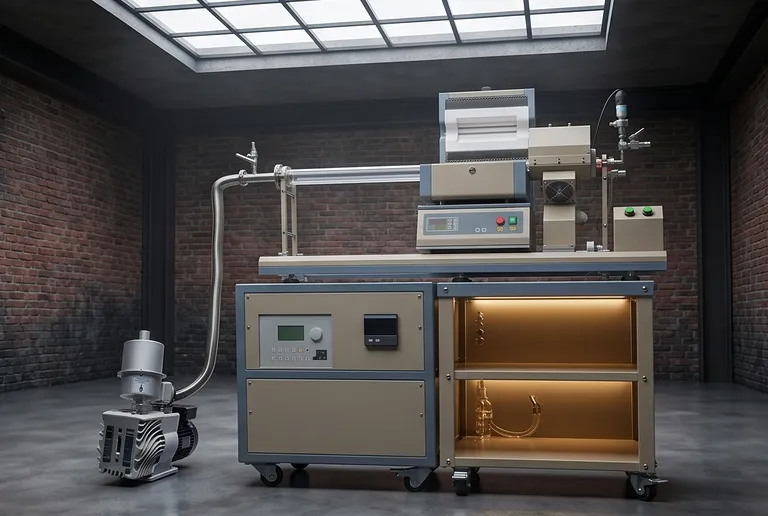
Hardware Summary of the CCP Ecosystem
| Component | Engineering Role | Critical Metric |
|---|---|---|
| Vacuum Chamber | Elimination of atmospheric "noise" | $10^{-6}$ Torr Base Pressure |
| RF Power Supply | Ionization of precursor gases | 13.56 MHz Stability |
| Matching Network | Power transfer efficiency | Reflected power $\approx$ 0 |
| Showerhead | Mass flow distribution | Thickness uniformity (%) |
| Heated Chuck | Surface reaction activation | Temperature precision ($\pm$1°C) |
Reliability in the Laboratory
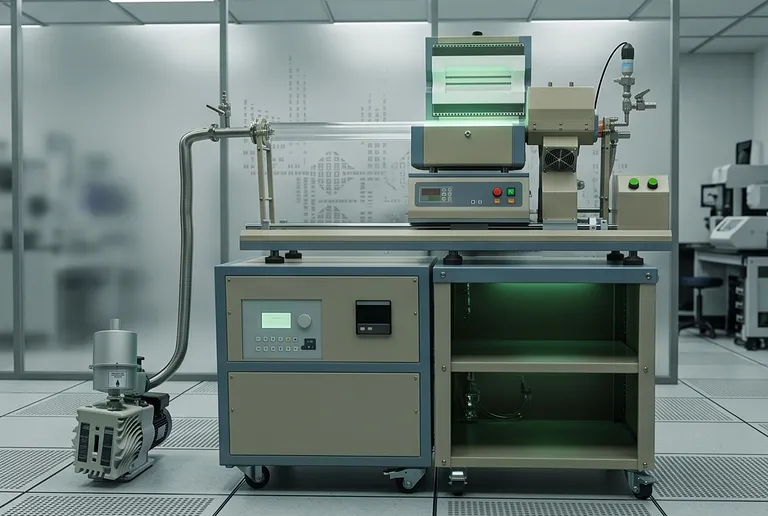
Building a reactor that works once is science. Building one that works every day for a decade is engineering.
At THERMUNITS, we understand that the integrity of your thin-film research depends on the reliability of the hardware. From our high-precision CVD and PECVD systems to our specialized Vacuum Induction Melting (VIM) furnaces, we focus on the systematic details—vacuum seals, RF stability, and thermal uniformity—that allow you to focus on the science.
Whether you are scaling up industrial R&D or pushing the boundaries of material science in a university lab, our thermal processing solutions are built to provide the "sacred void" and the "precise pulse" your work demands.
Quick Links
Suggested Products
Compact Atmosphere Controlled Rapid Thermal Processing RTP Furnace with 4 Inch ID Quartz Tube 1100C Multi Heating Zones CVD Tube Furnace System for Precision Chemical Vapor Deposition and Advanced Material Synthesis Two Zone Rotary CVD Furnace with Automatic Feeding and Receiving System for Powder Processing Dual Tube 100mm 80mm CVD Sliding Furnace with 4 Channel Gas Mixing and Vacuum System 915MHz MPCVD Diamond Machine Microwave Plasma Chemical Vapor Deposition System ReactorFurther Reading
The Calculus of Heat: Why Precision Control is the Soul of Material Science The Invisible Barrier: Why Precision Thermal Control Requires Chemical Silence The Physics of Redemption: Surface Restoration of Violet Phosphorus in the Thermal Field The Silent Cost of Efficiency: Healing Plasma-Induced Damage via Thermal Precision The Architecture of Silence: Why Atmosphere Control Defines the TiO2/In2S3 Heterojunction
ThermUnits
Last updated on Apr 15, 2026
Related Products
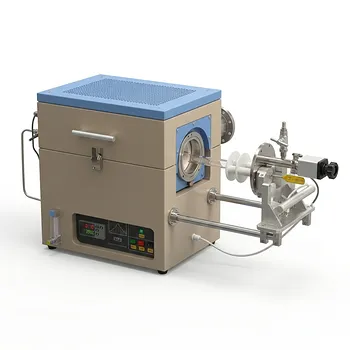
Compact Atmosphere Controlled Rapid Thermal Processing RTP Furnace with 4 Inch ID Quartz Tube 1100C
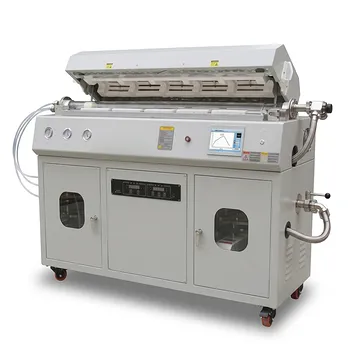
Multi Heating Zones CVD Tube Furnace System for Precision Chemical Vapor Deposition and Advanced Material Synthesis
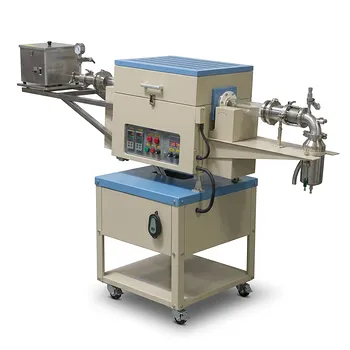
Two Zone Rotary CVD Furnace with Automatic Feeding and Receiving System for Powder Processing
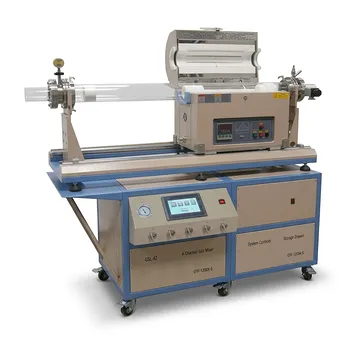
Dual Tube 100mm 80mm CVD Sliding Furnace with 4 Channel Gas Mixing and Vacuum System
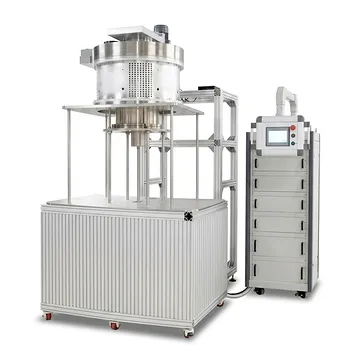
915MHz MPCVD Diamond Machine Microwave Plasma Chemical Vapor Deposition System Reactor
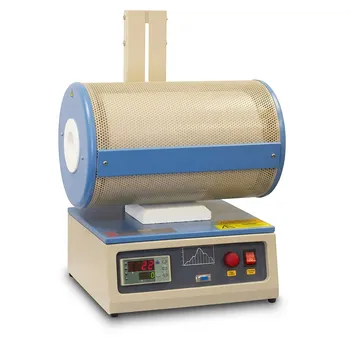
Multi Position Tube Furnace 1100C for Laboratory Material Research and Advanced Industrial Thermal Processing
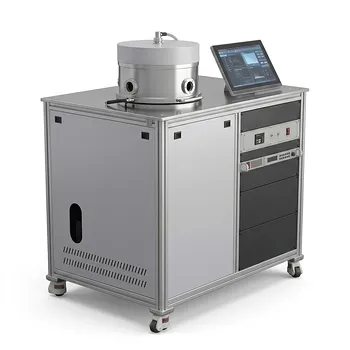
Inclined Rotary Plasma Enhanced Chemical Vapor Deposition PECVD System for Thin Film Deposition and Nanomaterial Synthesis
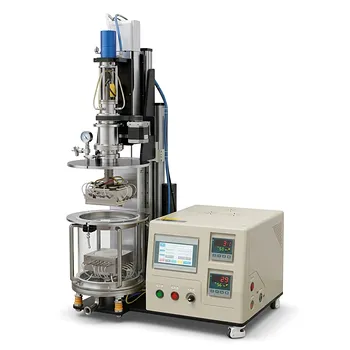
High Temperature 800C Rapid Thermal Processing Furnace with Rotating Sample Holder for Close Spaced Sublimation and Thin Film Solar Cell Research
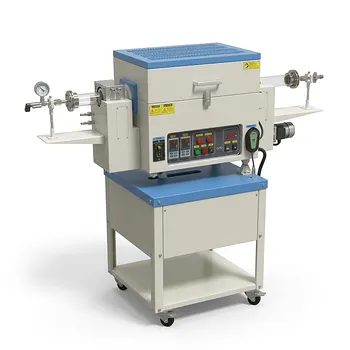
4 Inch Two Zone Rotary CVD Tube Furnace for High Temperature Battery Material Synthesis and Advanced Material Calcination
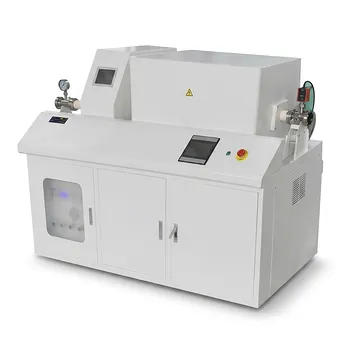
Chemical Vapor Deposition CVD System Slide PECVD Tube Furnace with Liquid Gasifier PECVD Machine
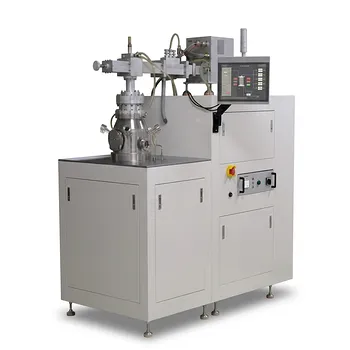
Cylindrical Resonator MPCVD Machine System for Microwave Plasma Chemical Vapor Deposition and Lab Diamond Growth
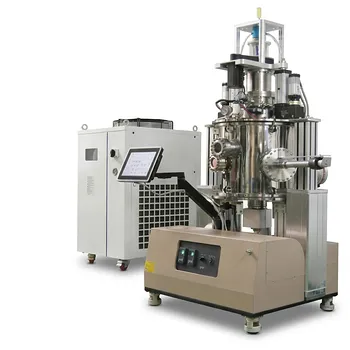
950C Rapid Thermal Processing Furnace for 12 Inch Wafer CSS Coating with Rotating Substrate Holder
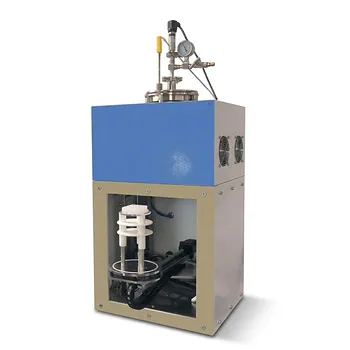
Rapid Thermal Processing Furnace 1100C Atmosphere Controlled Bottom Loading RTP System for Wafer Annealing and Catalysis Research
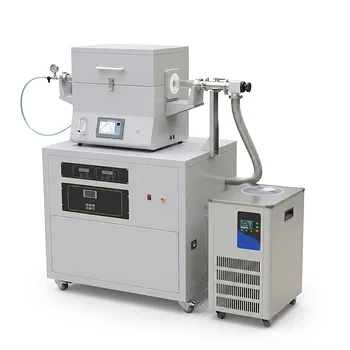
Split Chamber CVD Tube Furnace with Vacuum Station Chemical Vapor Deposition System Machine
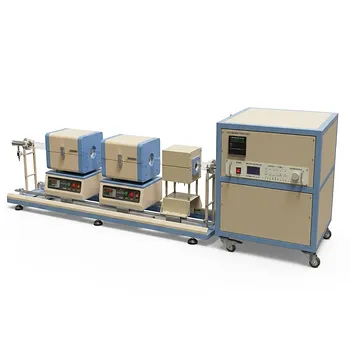
1200C Dual Sliding Tube Furnace with Dual Tubes and Flanges for PECVD Processes